

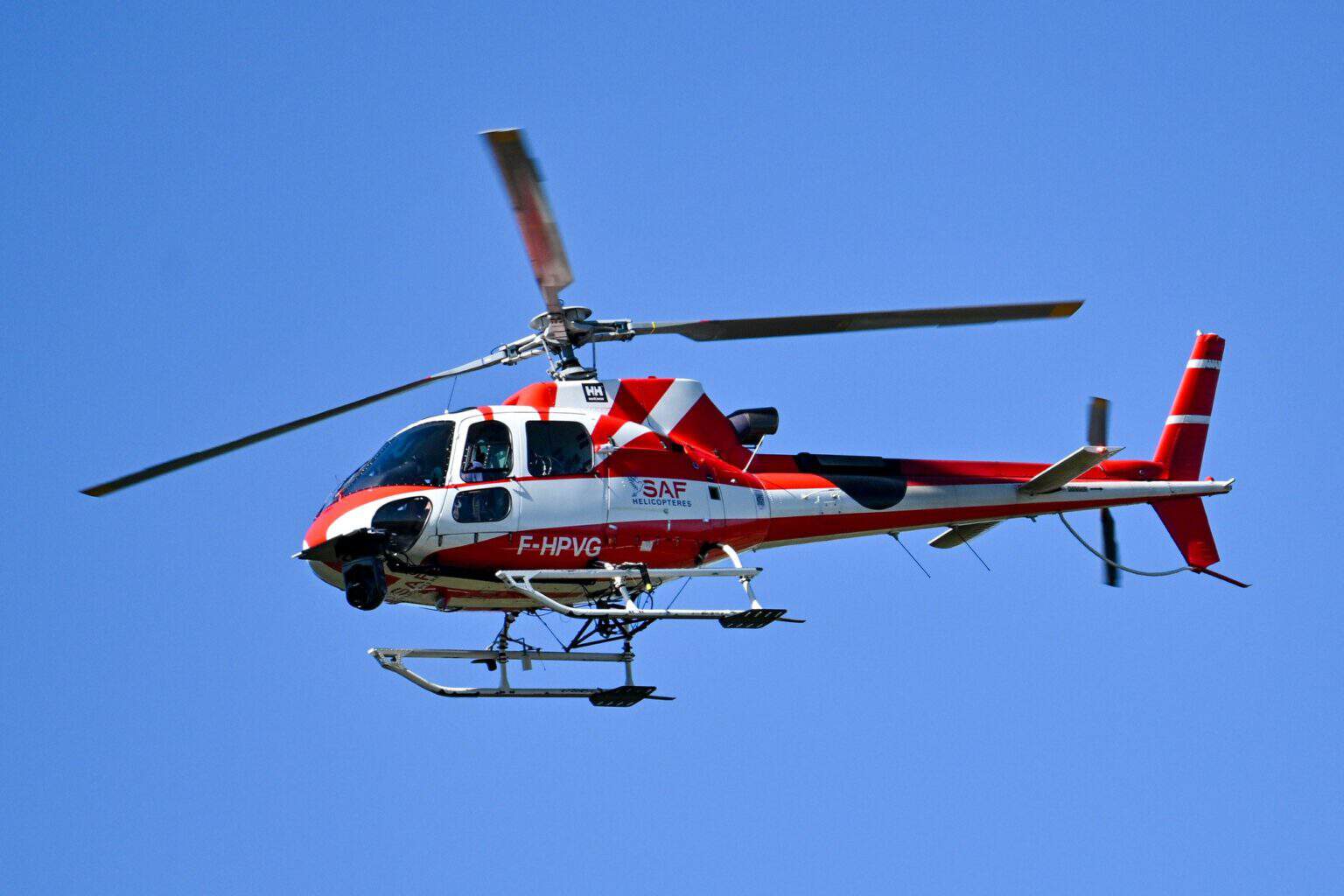
On October 19, 2026, the FAA proposed an airworthiness directive that would require a torque check on all three main rotor servo-controls of every Airbus Helicopters AS350B3 and EC130 in the US fleet, plus five AS355 twin models. The agency estimates the rule would reach 980 US-registered helicopters.
It is a proposal, not yet a binding rule. The FAA is taking comments on docket FAA-2026-11814 until December 3, 2026, and only a final rule published after that would set the compliance clock running.
What prompted the proposal
According to the FAA’s notice, the proposal follows a report of a loss of tightening torque between the upper ball bearing end and one main rotor servo-control. In other words, the nut securing that joint was no longer as tight as specified.
The European Union Aviation Safety Agency (EASA), the design-state regulator for these Airbus types, says further investigation found the root cause: paint or protective coating on the nut retainer, or lock-washer. EASA says the defect can occur on any of the three servo-controls, the forward, left and right units.
If the condition is not caught, the ball bearing end could disconnect from the servo-control, which the FAA says could result in loss of control of the helicopter.
The proposal covers the AS350 B3, the twin-engine AS355F, F1, F2, N and NP, and the EC130 B4 and T2, all serial numbers. Airbus now calls the AS350 B3e the H125, so H125 owners should read the AS350B3 line as theirs to check.

What owners and mechanics would have to do
The FAA would adopt EASA AD 2026-0132 by reference, so the European directive sets the steps and the timing. It requires a one-time torque check of the upper ball bearing end nut on all three servo-controls within 165 flight hours or six months, whichever comes first.
In the US version, that clock would start at the FAA rule’s own effective date, and flight hours become hours time-in-service. EASA’s AD has applied in Europe since July 22, 2026.
Every time a servo-control carrying an affected part is installed or reinstalled, the nut has to be checked again after at least 2 flight hours and before 10.
If the torque is out of limits, the corrective work comes before the next flight, followed by a fresh check in the same 2 to 10 hour window. Depending on the reading, the fixes range from inspecting and cleaning the threads to replacing the ball bearing end or the whole servo-control.
A third bad reading sends the operator back to the manufacturer. Where EASA says to contact Airbus Helicopters, the FAA would instead require a repair method approved by the FAA, EASA or Airbus Helicopters’ design organization.
The results of the initial check have to be reported to Airbus Helicopters within 30 days, even when nothing is wrong. Operators who already did the work under Airbus service bulletins AS350-67-30-0002, AS355-67-30-0001 or EC130-67-30-0001, dated April 1, 2026, would get credit for it.
What it costs
The FAA puts the check at one work-hour plus $190 in parts, or $275 per helicopter, and the report at another $85. Across the US fleet, that is about $269,500 for the inspections and $83,300 for the reporting.
The bill climbs only if a check fails. Replacing a ball bearing end is estimated at up to $615, while a new main rotor servo-control runs up to $54,640. Airbus told the FAA that some of these costs may be covered under warranty.
Why a loose nut matters here
The main rotor servo-controls are actuators in the chain that carries the pilot’s inputs to the rotor. They move the swashplate, which converts cyclic and collective inputs into blade pitch, and the cyclic is how helicopters turn.
EASA says a disconnection at any one of the three servo-controls could lead to loss of control. That is why the directive asks for all three to be checked, not just the unit where the problem was first found.
The fleet behind the numbers is a busy one. Airbus markets the H125 for tour flying, emergency medical services, law enforcement, firefighting and powerline work, and says more than 7,200 helicopters of the Ecureuil family have been delivered worldwide.

An interim fix, and a familiar one
Both regulators call this an interim action. EASA says the checks are meant to cover the fleet while Airbus Helicopters certifies a design change to the nut retainer that removes the paint or protection from it, and further directives may follow.
The same symptom has surfaced on a different Airbus line before. In 2025 the FAA adopted AD 2025-13-09 for the Dauphin family and the EC155, after EASA reported two cases of lost torque between the same two parts, one of which ended with them disconnecting.
At the time, EASA said the root cause on those helicopters was still under investigation. The AStar family has its own recent run of rules, including the tail rotor directive that took effect in July.
June 6, 2024
Dauphin family first. EASA issues AD 2024-0110 for the Dauphin family and EC155 after two cases of lost torque at the upper ball bearing end.
August 14, 2025
US rule for the Dauphins. FAA AD 2025-13-09 takes effect.
April 1, 2026
Airbus bulletins. Airbus Helicopters issues torque-check bulletins for the AS350, AS355 and EC130.
July 22, 2026
Europe acts. EASA AD 2026-0132, issued July 8, takes effect.
October 19, 2026
FAA proposal. The FAA publishes its proposed AD for 980 US helicopters.
December 3, 2026
Comments close. The deadline for comments on docket FAA-2026-11814.
Owners and operators can read the proposal and file comments at regulations.gov under docket FAA-2026-11814.
Sources and references used for research and fact-checking.
- FAA (Federal Register), Airworthiness Directives; Airbus Helicopters (proposed rule, FR Doc 2026-21387, 91 FR 66019)
- EASA, AD 2026-0132: Rotors Flight Controls, Upper Ball Bearing Ends of the Main Rotor Servo-controls, Inspection
- FAA (Federal Register), Airworthiness Directives; Airbus Helicopters (final rule, AD 2025-13-09, FR Doc 2025-12873)
- Airbus, H125
- Regulations.gov, Docket FAA-2026-11814
Get the Newsletter
The latest aviation news and stories sent to your inbox.
About the Author

AeroCorner News is the aviation news desk of AeroCorner.com. It covers accidents and incidents, safety rulings, airline and airport disruption, and new aircraft. It works from primary sources such as the NTSB, FAA, EASA and the manufacturers' own announcements.