

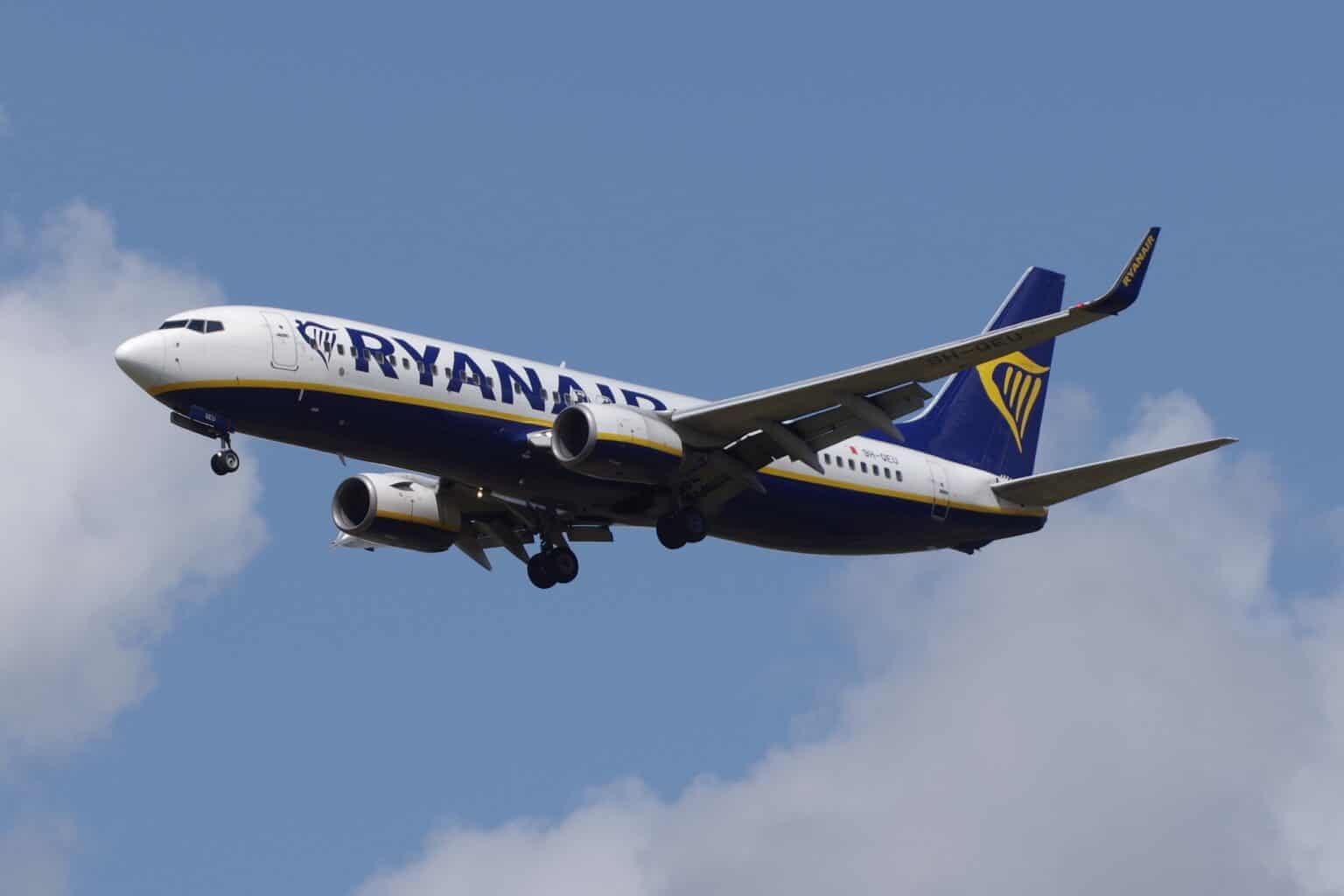
On October 26, 2026, the European Union Aviation Safety Agency issued a proposed airworthiness directive, PAD 26-130, that would require a one-time visual inspection of every fan blade on CFM International CFM56-7B engines. The CFM56-7B powers the Boeing 737 Next Generation family, from the 737-600 to the 737-900ER.
The proposal follows the July 10 fan-blade-out on a Malta Air 737-800, registered 9H-QEU and flying as Ryanair FR1879, in which engine fragments broke through a cabin window and the lower fuselage.
What EASA Is Proposing
The proposal covers every CFM56-7B sub-variant, all serial numbers. Operators would have 400 flight cycles or 90 days from the directive’s effective date, whichever comes first, to visually inspect each fan blade on installed engines.
The instructions come from a new CFM service bulletin, SB 72-1119, dated September 8, 2026. Any engine installed on an aircraft after the effective date would need the same check before its next flight.
If the inspection finds a discrepancy, as the bulletin defines it, the operator must take the corrective action the bulletin sets out. Any findings must also be reported to CFM within 30 days.
Blade sets get credit if they had an inspection under CFM SB 72-1033 Revision 3 or later, or a shop manual piece-part inspection, within 100 cycles before September 8, or went through an earlier bulletin, SB 72-1118, dated June 22, 2026.
It is still a proposal. EASA takes comments until November 23, 2026, and a final directive would normally take effect 14 days after issue, so the terms could still change.
The Failure Behind It
EASA does not name the flight. Its stated reason is a CFM56-7B fan blade failure in which the case first contained the released blade, then debris escaped forward, from a fracture that started in the blade’s dovetail.
That description closely matches what the NTSB’s preliminary report found on 9H-QEU, and FlightGlobal reported the proposal as a response to the Malta Air event.
According to the NTSB preliminary report, the Boeing 737-800 was climbing through about 16,000 feet (4,900 m) out of Thessaloniki, near Polykastro, Greece, when its right engine, a CFM56-7B26, shed a fan blade.
Fragments punched through the passenger window at row 11 and through the lower fuselage skin behind the right wing-to-body fairing, and the cabin depressurized. One of the 155 people on board was seriously injured, and the crew returned to Thessaloniki.
The NTSB found no evidence of debris escaping radially through the engine cases. Instead, the inlet cowl, which sits ahead of the fan, had two holes forward of the fan’s plane of rotation, each about 13 to 14 inches (33 to 36 cm) around and 10 inches (25 cm) long.
Greek investigators handed the case in full to the NTSB on July 16, the day before our first report on FR1879.
Fatigue, Birds, or Both
The No. 10 fan blade fractured through its dovetail, the root that locks it into the fan disk. About 37 percent of the fracture surface showed features consistent with fatigue, traced to an origin on the concave side near the trailing edge, with heavy fretting on the contact face next to it.
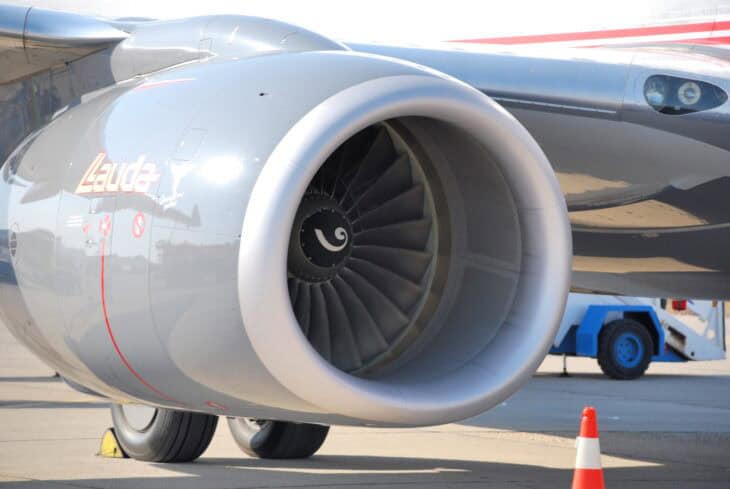

The NTSB described the cracking as consistent with high amplitude fatigue. In fan blades, it says, that is linked to loads that cycle faster than once per flight, at stress levels above those usually associated with high-cycle fatigue.
Investigators also recovered bird remains, including feathers, from an oil cooler, a thrust reverser part and the fan case, and sent them to the Smithsonian’s Feather Identification Lab. Crews had reported four suspected bird strikes on that engine in the previous 12 months, with no damage found.
Not yet settled
The NTSB’s preliminary report describes both the fatigue fracture and the bird remains, but it does not say how they relate or name a cause. Its findings are labeled preliminary and subject to change, and the investigation is ongoing.
Why Add a Visual Check Now
The maintenance history stands out. The engine’s fan blades had passed ultrasonic inspections under SB 72-1033 Revision 3 on November 11, 2025, and again on May 24, 2026, just 253 cycles before the failure, with no findings.
SB 72-1033 is the inspection CFM introduced in 2018 after the fan-blade-out that killed a passenger, and it targets cracks in both sides of the dovetail. EASA’s proposal does not say what the new visual check looks for, and CFM’s bulletin is not public.
Regulators were already reworking the ultrasonic regime. EASA’s earlier PAD 26-091, dated July 30, would widen the area that inspection covers and supersede EASA AD 2019-0018, World Airnews reported. Its consultation closed on August 27.
Whether EASA has adopted it could not be confirmed, as its directive database was offline for maintenance at the time of writing. PAD 26-130 would supersede nothing, so it would add to the ultrasonic program rather than replace it.
In the US, the FAA’s July 31 proposal, covered in our story on deeper 737NG fan blade checks, would likewise expand the ultrasonic inspection area and supersede AD 2018-26-01. Its comment period closed on August 31, and no final rule or US equivalent of the visual check had appeared in the Federal Register by October 27.
The NTSB also noted that FAA-ordered fastener upgrades to the inlet cowl, fan cowl and exhaust nozzle, from ADs 2025-04-01 through 2025-04-03, had not been fitted. Operators have until July 2028.
Sources and references used for research and fact-checking.
- European Union Aviation Safety Agency, Proposed Airworthiness Directive PAD 26-130: CFM56-7B engines, Engine - Fan Blades - Inspection (issued 26 October 2026)
- National Transportation Safety Board, Aviation Investigation Preliminary Report DCA26FA274, Malta Air (Ryanair 1879) Boeing 737-8AS 9H-QEU
- Federal Aviation Administration, Airworthiness Directives; CFM International, S.A. Engines (NPRM 2026-15532, Docket FAA-2026-7232)
Get the Newsletter
The latest aviation news and stories sent to your inbox.
About the Author

AeroCorner News is the aviation news desk of AeroCorner.com. It covers accidents and incidents, safety rulings, airline and airport disruption, and new aircraft. It works from primary sources such as the NTSB, FAA, EASA and the manufacturers' own announcements.