

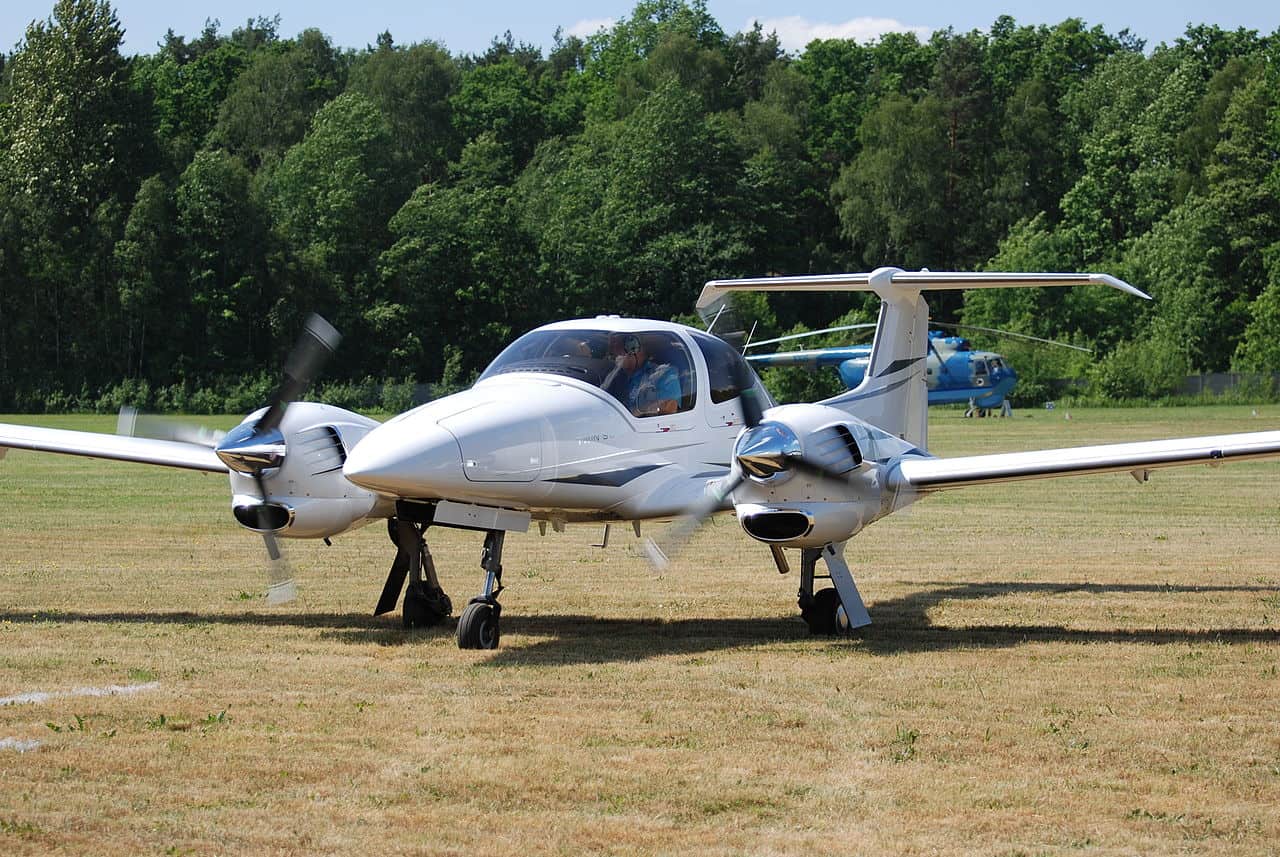
The Federal Aviation Administration issued an airworthiness directive covering the Diamond DA42 family of light twins, effective July 20, 2026, after a cracked nose landing gear part was linked to uncommanded rudder movement. The order requires repeat inspections across the US fleet.
What the directive requires
The directive, numbered 2026-14-08, applies to all DA42, DA42 NG, and DA42 M-NG airplanes on the US register. According to the FAA, a crack in the nose landing gear hydraulic actuator rod end can lead to failure of the actuator and interference with the rudder control system.

To address the risk, the FAA is requiring operators to revise the airplane flight manual with new operating limitations, to inspect the actuator rod ends on a repeating schedule, and to replace affected parts. The directive is mandatory, not advisory.
The FAA action mirrors an EASA emergency airworthiness directive, 2026-0125-E, issued on June 29, 2026. European regulators warned that a failed rod end could force the rudder into a left-hand deflection.
How an accident in Australia reached the US fleet
The chain began with a crash. The Australian Transport Safety Bureau is investigating a DA42 that lost control at Parafield Airport in South Australia on April 29, 2026, and found that a nose landing gear component had failed from fatigue.
The DA42 is a diesel-powered light twin used heavily by flight schools and for survey and surveillance work. That means the fleet flies frequent, short cycles, precisely the pattern of repeated loads that drives metal fatigue in a component like this one.
That finding matters beyond Australia because the DA42, built by Diamond Aircraft, is certified and flown worldwide, often as a twin-engine trainer. When one authority uncovers a fatigue or design problem, others move quickly to protect the same type on their own registers.
An airworthiness directive is the legal tool that makes a fix compulsory. Unlike a manufacturer service bulletin, which a shop can choose whether to act on, an AD restricts or grounds an aircraft until the required work is completed. This is the same mechanism regulators use on the largest airliners.
The rudder link is what makes a landing-gear crack a flight-safety problem. Because the rod end sits close to the rudder control run, its failure could deflect or jam the rudder, the surface that keeps an aircraft coordinated and pointed straight. Our guide to how an airplane rudder works explains why that control is so important.
Why regulators treated this as urgent
A cracked landing-gear rod end sounds like a ground-handling issue. The concern is that the same part sits close enough to the rudder controls that its failure could deflect the rudder in flight, which is why EASA labeled its directive an emergency AD and the FAA followed within weeks.
Sources and references used for research and fact-checking.
Get the Newsletter
The latest aviation news and stories sent to your inbox.
About the Author

Tim is the owner and lead editor of AeroCorner since 2019, overseeing aviation content covering aircraft, airlines, airports, and the broader aviation industry. Through years of researching, writing, editing, and publishing aviation-focused content, he has developed extensive practical knowledge of commercial aviation and air travel. Based in Asia and a frequent traveler himself, Tim also brings firsthand passenger experience to AeroCorner’s coverage. Outside of publishing, he has also explored aviation firsthand through hands-on flight training in New Zealand.