

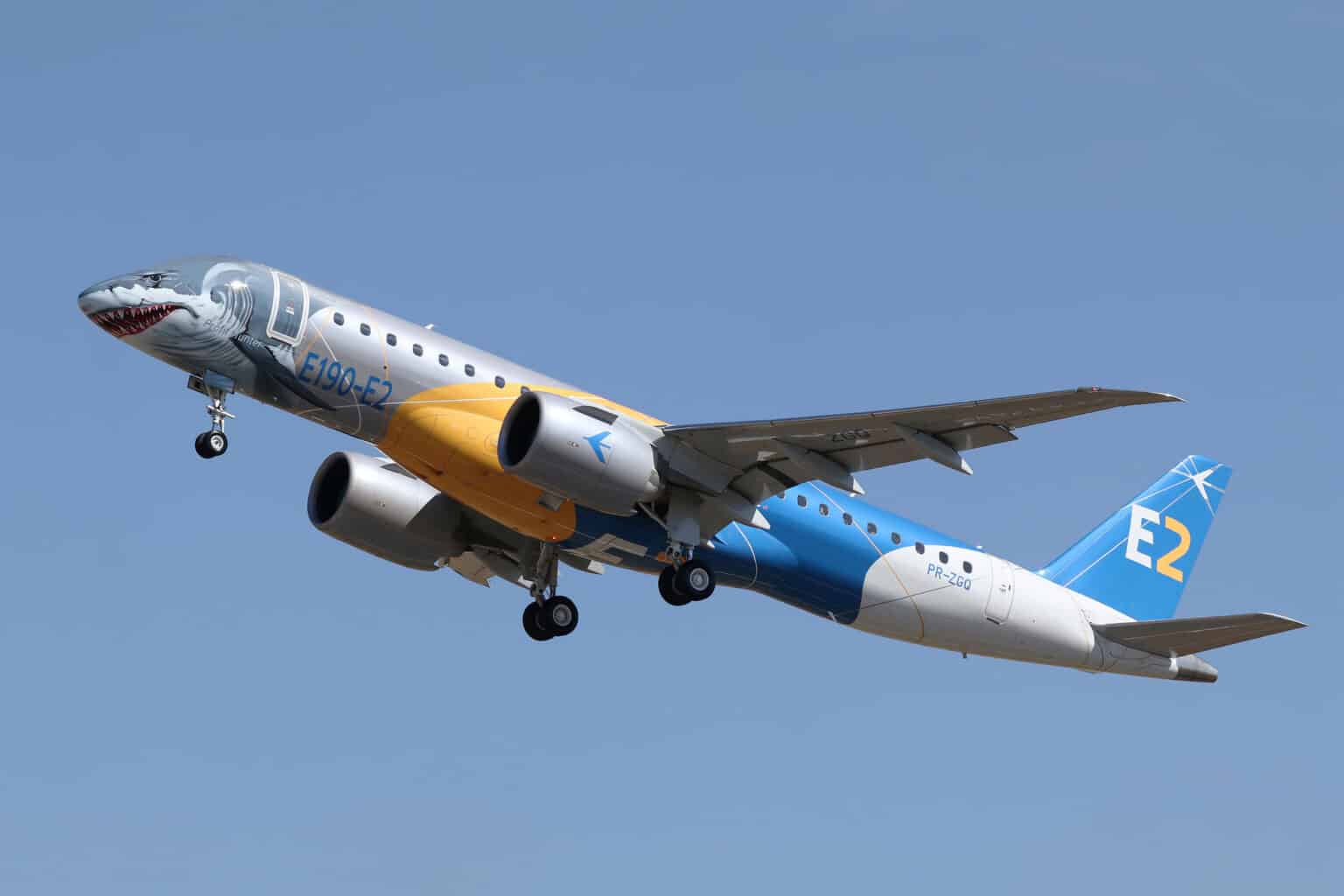
On July 21, 2026, the second day of the Farnborough International Airshow, Embraer announced firm orders and commitments for dozens of its E-Jet family aircraft from a spread of airlines and one leasing company. Taken together, the deals pushed the re-engined E2 program past 500 cumulative orders, a threshold Embraer had been chasing since the type entered service.
The biggest single commitment came from Latin America’s Abra Group, the parent of GOL and Avianca. Abra placed its first-ever E2 order: 20 firm E195-E2s plus 10 options and purchase rights for 15 more, with deliveries to GOL beginning in 2027.
A Spread of Buyers on Day Two
Beyond Abra, several existing operators topped up their books. Spain’s Binter Canarias signed for 5 firm E195-E2s plus rights to 4 more, its fourth follow-on order for the type, according to Embraer.
Luxair converted purchase rights into 3 firm E190-E2s, the smaller 100-seat member of the family, and added a right to one more. Japan’s Fuji Dream Airlines used the show to disclose a previously unannounced order for 2 first-generation E175s, due in 2027 and 2028.
The order that actually carried the program past the 500 mark came from Azorra, a Florida-based lessor. Azorra added 15 firm E195-E2s and 15 options, lifting its firm E2 backlog from 39 to 54 jets, and separately booked conversion slots for 20 E190F freighters with rights to 20 more.
The number that mattered
“Surpassing 500 E2 orders is a proud moment for Embraer and reflects the growing momentum behind right-sized, fuel-efficient aircraft,” said Arjan Meijer, president and CEO of Embraer Commercial Aviation.
Why the E2 Keeps Finding Buyers
The E2 is Embraer’s re-engined update of its E-Jet line, built around Pratt & Whitney geared turbofan engines that cut fuel burn and noise. The E190-E2 seats roughly 100 passengers and the larger E195-E2 around 120 to 146, placing the family in the gap below the smallest Airbus and Boeing narrowbodies.
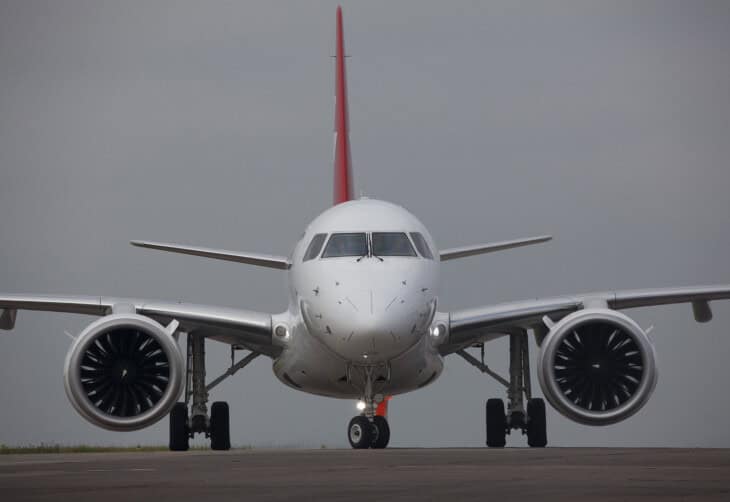
That is a deliberately narrow niche. In the 100-to-150-seat segment the E2’s main rival is the Airbus A220, and both aircraft sell on the idea of “right-sizing,” matching a smaller, more efficient jet to routes that a full narrowbody would fly half-empty.
The mix of buyers is telling. Airline orders from Abra, Binter and Luxair show carriers replacing older regional jets, while the Azorra deal shows lessors willing to hold E2s on their own books, a vote of confidence in future demand. The proposed E190F freighter conversions point to a second life for the airframe once passenger jets age out, and the family has kept adding capability, including a recently certified runway-overrun alert system.
Reality check
Airshow tallies blur firm orders, options, purchase rights and memoranda of understanding, and only firm orders are contractually binding. The Azorra freighter commitment in particular is a conversion booking, not a delivered aircraft, and its executives said freighter customers were still being lined up.
Sources and references used for research and fact-checking.
Get the Newsletter
The latest aviation news and stories sent to your inbox.
About the Author

Tim is the owner and lead editor of AeroCorner since 2019, overseeing aviation content covering aircraft, airlines, airports, and the broader aviation industry. Through years of researching, writing, editing, and publishing aviation-focused content, he has developed extensive practical knowledge of commercial aviation and air travel. Based in Asia and a frequent traveler himself, Tim also brings firsthand passenger experience to AeroCorner’s coverage. Outside of publishing, he has also explored aviation firsthand through hands-on flight training in New Zealand.