
Mid Size Passenger Jets
Embraer E190-E2
ICAO: E290
The largest E-Jet, and the one that finally put the E2 on airline order books.
Updated: by Tim de Vries
The latest aviation news and stories sent to your inbox.
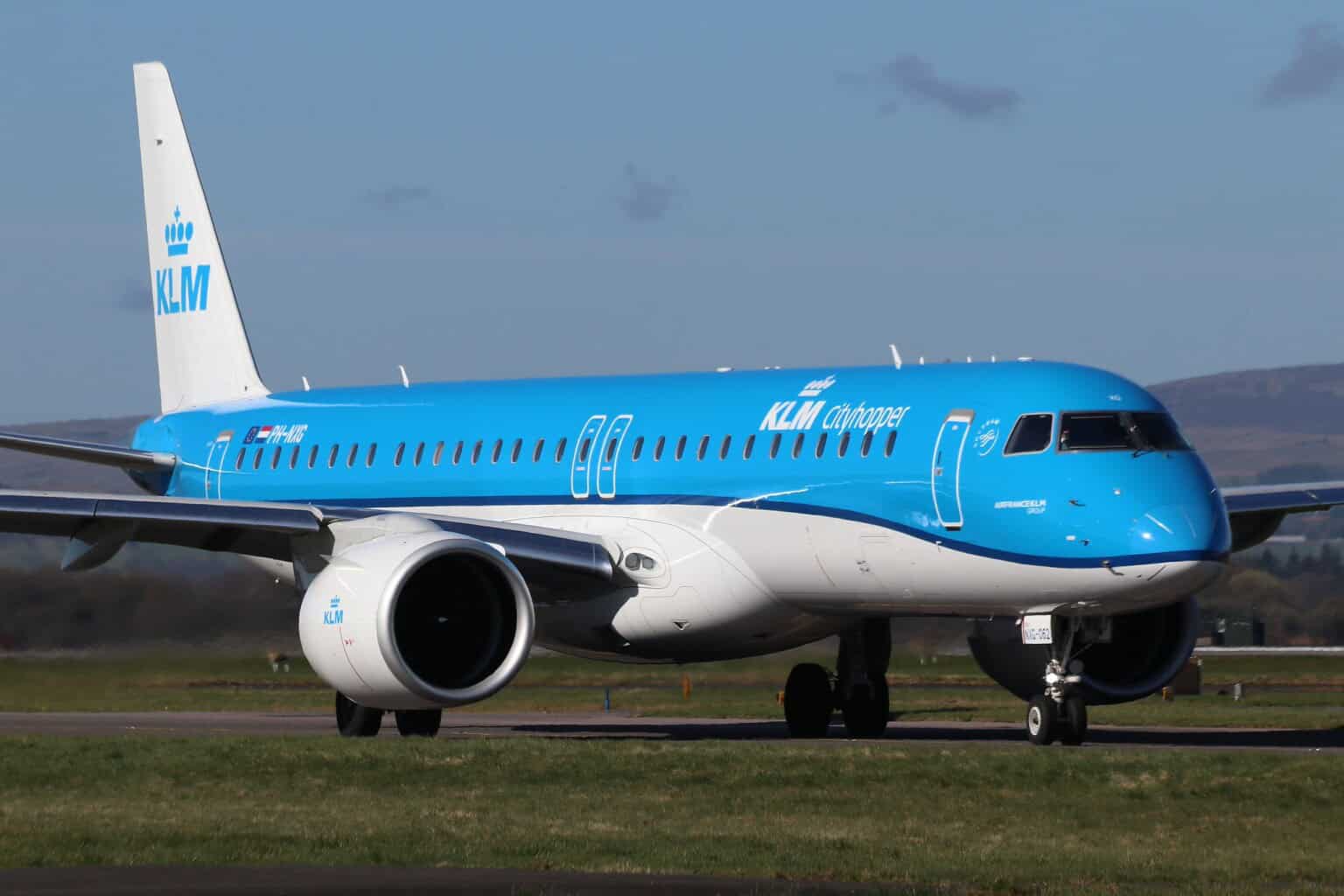
The Embraer E195-E2 is the largest member of the E-Jet E2 family, a twin-engine single-aisle airliner built in Brazil and certified in April 2019. Officially designated the ERJ 190-400, it seats up to 146 passengers in a two-by-two cabin with no middle seat, and flies on Pratt & Whitney PW1900G geared turbofans that cut fuel burn by around 29 percent against previous-generation E-Jets. It is a stretch of the E195, three seat rows longer, and competes with the Airbus A220-300.
Live Fleet Activity (E295)
Fetching live data…


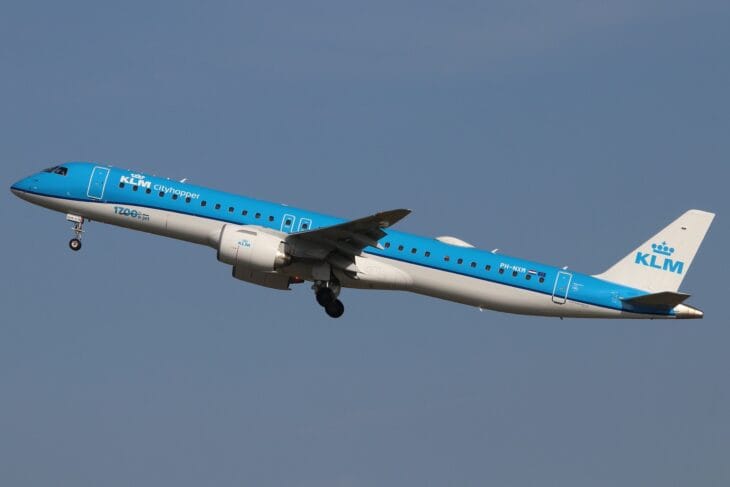
The Embraer E195-E2 is the biggest member of the E-Jet E2 family, a four-abreast narrow-body airliner built in Brazil for short and medium-haul routes. Its official model designation is the ERJ 190-400, and the EASA type certificate records “Embraer 195-E2” as a marketing name rather than part of the formal designation.
Air traffic control and airline systems know it as the E295. The full specification table for the aircraft is on this page, so the sections below explain what those numbers mean rather than repeating them.
It is a genuinely successful aeroplane. On 2 September 2026 Embraer delivered the 2,000th E-Jet of all types, and the milestone aircraft was an E195-E2 handed to Azul Linhas Aereas, which was also Azul’s 50th E2.
The E2 programme was launched at the Paris Air Show in June 2013 as a re-engined, re-winged development of the first-generation E-Jets rather than a clean-sheet design. That was the lower-risk path after Embraer had considered building an all-new five-abreast airliner to challenge the Bombardier CSeries, now the Airbus A220.
The E195-E2 is a stretch of the Embraer E195, lengthened by three seat rows, and it carries dual overwing exits on each side where the E190-E2 has a single one. That extra pair of Type III exits is what certifies the higher seat count.
In February 2016 Embraer revised the design before it ever flew, adding about 4 ft 7 in (1.4 m) of wingspan for extra lift and raising the maximum takeoff weight by roughly 2 tons. The payoff was about 450 nm of additional range from sea-level airports and 250 nm in hot and high conditions.
The aircraft rolled out on 7 March 2017 and first flew on 29 March 2017, ahead of schedule. Brazil’s ANAC and EASA both certified it on 15 April 2019, and Azul took the first delivery and became the launch operator that year.
The E2 wing is a new high-aspect-ratio design with raked wingtips instead of winglets, and the E195-E2 uses a longer wingtip than its smaller sibling. The wing is a gull-wing shape in part to give ground clearance for a fan that is far larger than the CF34 it replaced.
Power comes from two Pratt & Whitney PW1900G geared turbofans, the engine family that uncouples the fan from the low-pressure spool through a reduction gearbox so each can turn at its own best speed. If you want the underlying idea, we cover it in our explainer on turbojet versus turbofan engines.
Embraer also fitted a fourth-generation full fly-by-wire flight control system, which allowed a smaller tail. Avionics are Honeywell’s Primus Epic 2 suite with large landscape displays and synthetic vision.
One practical consequence of that shared design heritage: EASA records the pilot licence endorsement for the ERJ 190-400 as “EMB170”, so the whole E-Jet line sits on a common type rating.
The cabin is four abreast in a two-by-two layout, which means there is no middle seat anywhere on the aircraft. That is the single feature passengers notice most, and it is why the type turns up so often in “best economy cabin” conversations.
Embraer publishes three reference layouts: 120 seats in three classes, 132 seats in a single class at 31-inch pitch, and 146 seats at 28-inch pitch. The 146-seat figure is the certified maximum, approved with three cabin crew.
Real airlines sit in the middle of that range. Porter Airlines fits 132 seats in three comfort tiers, with seat width of 18.3 in (46.5 cm) and pitch from 30 in up to 36 in in the front rows, while KLM fits up to 136.
The E2 cabin also brought overhead bins about 30 percent larger than the first-generation E-Jets, sized so every passenger can stow a standard roll-aboard wheels-first.
Range is the figure most often quoted inconsistently. Embraer’s own specification gives 3,000 nm with a full passenger load, long-range cruise, typical reserves and a 100 nm alternate, while ICAO’s type database lists 2,600 nm and Porter advertises about 2,519 nm for its own operation.
Those are not contradictions so much as different payload and reserve assumptions, and the spec panel uses Embraer’s own published figure.
Speed is stored in knots but Embraer publishes it as a Mach number. Maximum cruise is Mach 0.82 and normal cruise is Mach 0.78, both measured at 35,000 feet, which is where the panel’s 473-knot and 450-knot values come from.
Thrust depends on which engine an operator buys. The type certificate approves the PW1921G, the PW1923G and the PW1923G-A, and the panel carries the PW1923G’s normal takeoff rating of 23,815 lbf (105.9 kN), the standard fit for the aircraft at its highest weights.
Maximum takeoff weight is worth a note too. EASA certifies a long ladder of weights that operators unlock by service bulletin, topping out at 137,789 lb (62,500 kg), and that top figure is what Embraer’s current specification sheet quotes even though its own website still shows a slightly lower number.
Takeoff field length is the one figure where sources genuinely disagree: Embraer’s April 2025 sheet says 5,823 ft (1,775 m) at maximum weight in standard conditions at sea level, while other references publish 1,805 m or 1,840 m. The manufacturer’s current number is the one used here.
As of Embraer’s 24 July 2026 order book, the E195-E2 had 439 firm orders, 175 deliveries and a backlog of 264 aircraft, plus 234 options and purchase rights. During that quarter the E2 programme passed 500 firm orders across all variants.
Porter Airlines of Canada is the largest customer by a wide margin, with 75 firm orders and 54 aircraft delivered. Azul, Binter Canarias of the Canary Islands, KLM Cityhopper, Air Peace of Nigeria, Helvetic Airways, Royal Jordanian, Luxair, Mexicana and Airlink are among the other operators.
The order book has also broadened considerably since 2025. Avelo Airlines has 50 firm orders, SAS 45, Azul another 25, LATAM 24, TrueNoord 20 and Finnair 18, with lessors including Azorra, AerCap and Aircastle holding large positions.
Avelo matters because United States regional carriers were largely closed to the E2. Scope clauses in American pilot contracts cap the weight and seat count of aircraft a regional affiliate may fly, which is why the smaller E175-E2 stalled. The E195-E2 sidesteps that by being a mainline aircraft flown by a mainline operator.
The E195-E2’s hardest years had nothing to do with the airframe. Problems across the Pratt & Whitney geared turbofan programme left operators short of serviceable engines, and some almost-new aircraft ended up on the ground for want of a powerplant.
KLM Cityhopper parked four E195-E2s at Twente Airport in the Netherlands from 2024, stripping engines, auxiliary power units and batteries and wrapping the airframes in protective film. One had been stored for close to two years.
That situation has been easing. KLM began pulling aircraft back out of storage in April 2026, and its managing director said in 2026 that all four were expected to be flying again during the year as overhaul capacity and spare engine supply improved.
KLM Cityhopper now plans to retire its Embraer 190 fleet over roughly four to five years and to replace it largely with more E195-E2s, reconfigured with an extra row to 136 seats to squeeze more capacity out of each slot at Amsterdam Schiphol.
The E195-E2’s direct competitor is the Airbus A220-300, and the two aircraft approach the same market from opposite directions. The A220 is a clean-sheet five-abreast design, while the E195-E2 is an extensively reworked derivative of a proven regional jet.
Embraer’s pitch has always been cost per trip rather than cost per seat. It has claimed a 120-seat E195-E2 carries about a 2 percent higher trip cost but a 10 percent lower seat cost than a 106-seat A220-100.
Against larger mainline aircraft, Embraer has claimed E195 trip costs around 22 percent below a 154-seat A320neo and 24 percent below a 160-seat 737-8. Those are manufacturer figures, and because airlines usually install more seats than the reference layouts assume, the per-seat gap is narrower than the per-trip gap.
Embraer currently advertises a 29 percent reduction in fuel burn against previous-generation E-Jets, which is the comparison that matters most to an airline replacing E190s and E195s.
As of September 2026 there is no recorded fatal accident or hull loss involving an E195-E2. Occurrence databases for the type list incidents rather than accidents, and no aircraft has been written off.
The events on record are the ordinary kind. A KLM Cityhopper aircraft had its flaps jam on a departure from Amsterdam in August 2026, a Porter aircraft shed part of a tyre on departure in February 2026, and an Azul aircraft was involved in a near-collision with a Boeing 737 at Sao Paulo Congonhas in April 2026.
The most serious airframe damage so far came in August 2021, when an Azul E195-E2 registered PR-PJN struck its tail on landing at Caxias do Sul. Nobody was hurt and the aircraft was repaired.
A clean record is encouraging but it is also a young one. The type entered service in 2019 and the in-service fleet is still a fraction of the size of the first-generation E-Jet fleet, so the statistical base is small.
Yes, on the evidence available. No E195-E2 has been lost or involved in a fatal accident since the type entered service in 2019, and recorded events are incidents such as a flap jam, a tyre failure and a 2021 tail strike, all of which ended without injuries.
It is a modern design certified to current standards, with full fly-by-wire flight envelope protection. The caveat is that the fleet is young and relatively small, so its record rests on fewer flight hours than older types.
The two build different aircraft for different missions, so a single ranking is misleading. The E-Jet family’s record is unusually good: in its first two decades only two aircraft were lost in fatal accidents, in 2010 and 2013, across a fleet that has now passed 2,000 deliveries and roughly 48 million flight hours.
A third E-Jet was lost in December 2024, when an Azerbaijan Airlines E190 crashed in Kazakhstan after damage that Azerbaijan’s government attributed to external anti-aircraft fire rather than any fault of the aircraft. None of the three involved the E2 generation, and the E195-E2 has no fatal accidents at all.
Boeing operates a vastly larger and older fleet across many more types, which makes raw accident counts incomparable. By the measure that matters, modern jets from both manufacturers are extremely safe.
That reputation is now out of date, and it mostly belonged to a different variant. The smallest E175-E2 genuinely stalled because United States scope clauses cap the weight of aircraft regional carriers may fly, and SkyWest cancelled a 100-aircraft launch order in 2018.
The E195-E2 has done much better. It had 439 firm orders and a 264-aircraft backlog as of July 2026, and recent years brought large commitments from Avelo, SAS, LATAM, Finnair, Abra and several lessors. Sales were also held back for years by the Pratt & Whitney geared turbofan shortage rather than by the aircraft itself.
It is generally considered one of the more comfortable narrow-body cabins in service, mainly because the two-by-two layout means there is no middle seat. Seats are 18.3 in (46.5 cm) wide, which is competitive with much larger aircraft.
Overhead bins are about 30 percent larger than on the first-generation E-Jets and are sized for a standard carry-on loaded wheels-first. Pitch depends entirely on the airline, ranging from 28 in in the densest certified layout to 36 in in Porter’s front rows.
The certified maximum is 146 passengers, approved with three cabin crew. Embraer’s reference layouts are 120 seats in three classes and 132 in a single class at 31-inch pitch.
In practice most operators fit between 132 and 136 seats. Porter uses 132 and KLM up to 136.
Two Pratt & Whitney PW1900G geared turbofans. The type certificate approves the PW1921G, PW1923G and PW1923G-A models, with the PW1923G rated at 23,815 lbf (105.9 kN) for normal takeoff.
The fan is 73 in (185 cm) across, giving a bypass ratio of roughly 12 to 1, which is where most of the fuel saving over the older CF34 comes from.
Embraer publishes 3,000 nm, about 3,452 miles (5,556 km), with a full passenger load, long-range cruise, typical reserves and a 100 nm alternate. Lower figures you may see quoted, such as 2,600 nm, reflect different payload and reserve assumptions.
The E195-E2 is three seat rows longer than the E195, with a completely new high-aspect-ratio wing, raked wingtips, new landing gear, a new cabin and full fly-by-wire controls. It also swaps the older CF34 engines for Pratt & Whitney geared turbofans.
The result is a significantly more efficient aircraft, with Embraer claiming a 29 percent reduction in fuel burn against previous-generation E-Jets. Around 75 percent of the parts are new.
Technically it sits in between, which is why Embraer markets the E2 family as a crossover. At up to 146 seats it is larger than most aircraft people picture as regional jets and overlaps the smaller end of the Airbus A320 and Boeing 737 families.
In the United States it is too heavy for regional carriers to operate under pilot scope clauses, so it is flown by mainline operators such as Avelo. Elsewhere, airlines such as Porter and Azul use it as a mainline aircraft on trunk routes.
Sources and references used for research and fact-checking.