

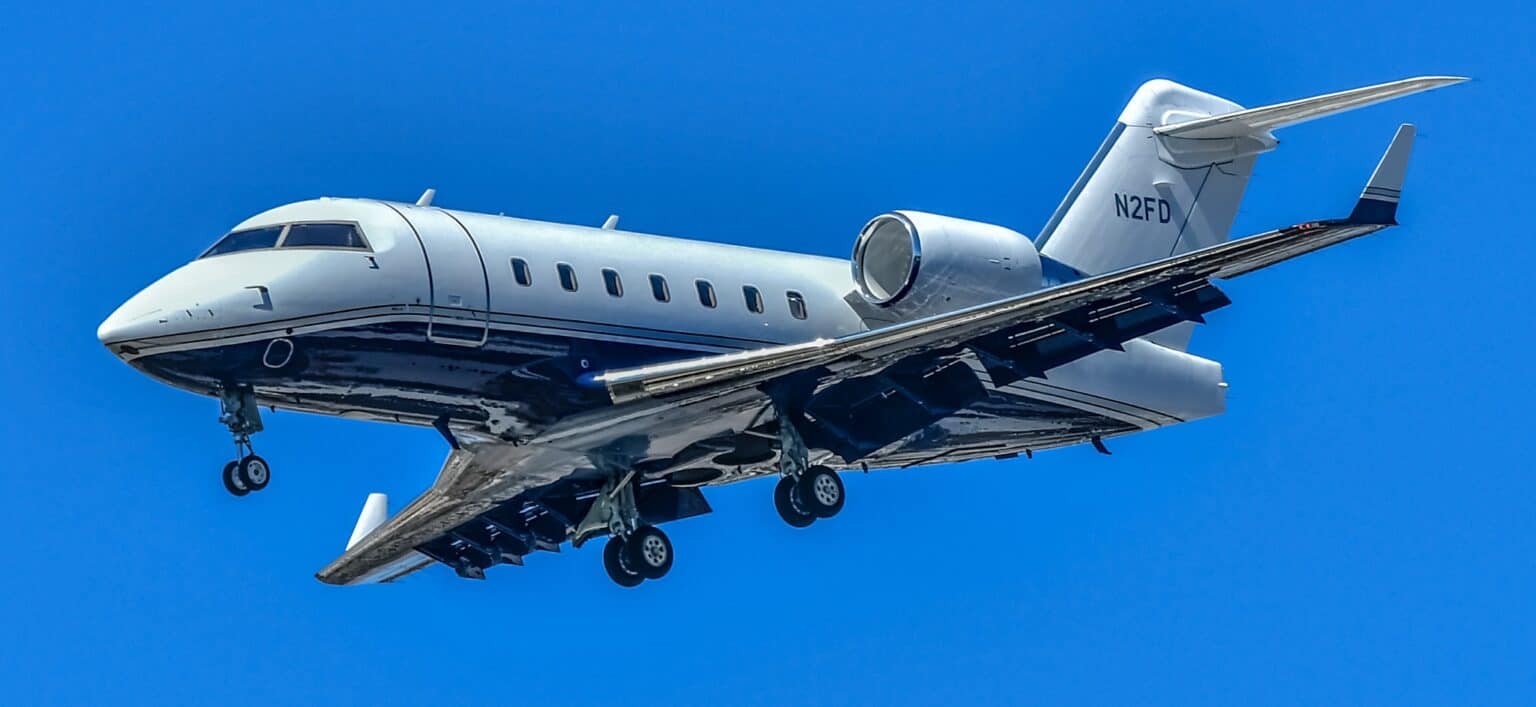
The FAA has proposed an airworthiness directive that would require new crack inspections on the Bombardier Challenger 604, covering the lower wing, a pressure bulkhead and a tail fitting. The notice of proposed rulemaking was published in the Federal Register on November 10, 2026, and comments are due by December 28, 2026.
The FAA estimates the rule would affect 201 US-registered airplanes. It would adopt Transport Canada AD CF-2024-47, issued on December 23, 2024, which covers model CL-600-2B16 serial numbers 5301 through 5665.
Why the inspections are changing
According to Transport Canada, cracks were found on three airplanes in the lower wing plank at the rear spar, between wing stations 59 and 65, in the web and/or flange. A follow-up investigation by Bombardier then found that six non-destructive testing procedures tied to the jet’s airworthiness limitation tasks potentially could not detect cracks.
Both regulators say undetected cracks could lead to structural failure of the airplane. That is why the directive reaches beyond the wing, where the cracks were found, to a pressure bulkhead and a tail fitting.
The Challenger 604’s maintenance program already contains inspection tasks for these areas. The concern is that the methods written up for them may not have been able to find a crack where one existed, so a jet could pass an inspection while carrying one.
The directive therefore names the exact ultrasonic and eddy current procedures, by number and date, from the Challenger 604 Non-Destructive Testing Manual. Ultrasonic testing sends sound waves through the metal to find flaws below the surface, while eddy current testing uses an electromagnetic field to find cracks at or near the surface.
What owners would have to do
The work falls into three parts, each with its own deadline counted in flight cycles, where one cycle is a takeoff and a landing. The Canadian directive sets them out as follows.
| Area inspected | Applies to | First inspection | Repeat |
|---|---|---|---|
| Lower wing plank at the rear spar, wing stations 59 to 65 (ultrasonic and eddy current) | All serials 5301 to 5665 | Before 5,297 total flight cycles, or within 5,297 cycles of the last inspection under maintenance task 57-10-00-114 | Every 5,297 cycles |
| Vertical stabilizer front spar to frame attachment fitting lower legs, fuselage station 755 (ultrasonic and eddy current) | All serials 5301 to 5665 | 7,000 cycles or fewer: before 7,800 total. Over 7,000 and under 10,500: before 11,500 total or within 1,500 cycles, whichever comes first. 10,500 or more: within 1,000 cycles | None specified |
| Pressure bulkhead web between buttock lines 9 left and right, fuselage station 409 (ultrasonic and eddy current) | 11 listed serials | Before 6,419 total flight cycles, or within 843 cycles of the last inspection under maintenance task 53-20-00-148 | Every 843 cycles |
The bulkhead check applies only to serial numbers 5357, 5380, 5381, 5382, 5397, 5398, 5402, 5407, 5415, 5421 and 5424. Its 843-cycle repeat interval is the shortest in the directive.
The tail fitting inspection is not needed if maintenance task 55-30-00-111 was already done using the procedures the directive names. Under the FAA version, the cycle thresholds for the tail are measured at the US rule’s effective date, not Canada’s January 6, 2025.
Any crack found must be repaired, or rectified with Bombardier’s instructions, before further flight. The FAA’s version drops one step from the Canadian material: it does not require operators to send information to the manufacturer.
Cost, timing and what comes next
The FAA puts the inspections at up to 24 work-hours per airplane, or up to $2,040 at $85 an hour, with no parts cost. Across the 201 US jets, that comes to up to $410,040.
That estimate leaves out repairs. The agency says it has no definitive data on which to base the cost of fixing any cracks the inspections turn up.
Both regulators describe the directive as interim action. Transport Canada says further AD action may follow, and the FAA says it might consider more rulemaking if a final fix is identified.
The US proposal arrives almost two years after the Canadian directive took effect. Under its bilateral agreement with the FAA, Transport Canada, as the design authority for Bombardier’s jets, notified the US agency of the unsafe condition.
The FAA would incorporate the Canadian directive by reference rather than restate its inspection steps. Comments go to regulations.gov under docket FAA-2026-13808.
The proposal follows the FAA’s October Global 7500 fuel line rule, which also adopted a Transport Canada directive.
An aging but busy fleet
Bombardier built the Challenger 604 from 1996 to 2006, so the jets in this serial range are now roughly 20 to 30 years old. The type was followed in 2006 by the Challenger 605, which added larger cabin windows and an updated flight deck.
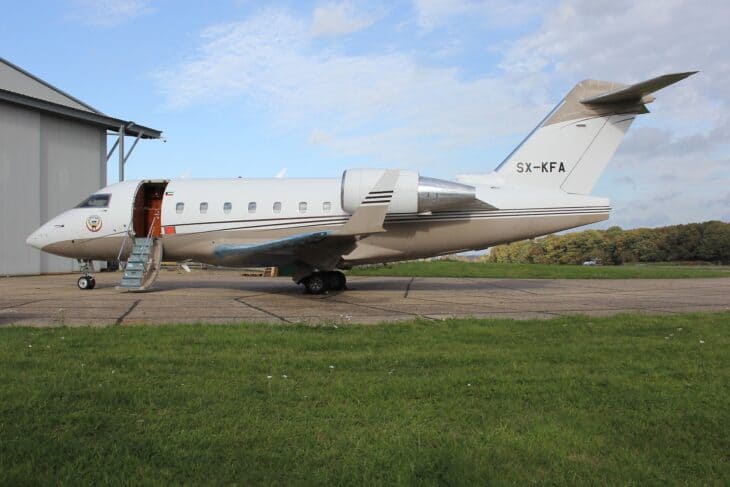
The FAA’s count of 201 US-registered jets is more than half of the 365 serial numbers the directive lists. The type was last in the news in October, when Challenger 604 T7-SEI lost a door after departing Abuja, an event unrelated to these inspections.
Sources and references used for research and fact-checking.
Get the Newsletter
The latest aviation news and stories sent to your inbox.
About the Author

AeroCorner News is the aviation news desk of AeroCorner.com. It covers accidents and incidents, safety rulings, airline and airport disruption, and new aircraft. It works from primary sources such as the NTSB, FAA, EASA and the manufacturers' own announcements.