

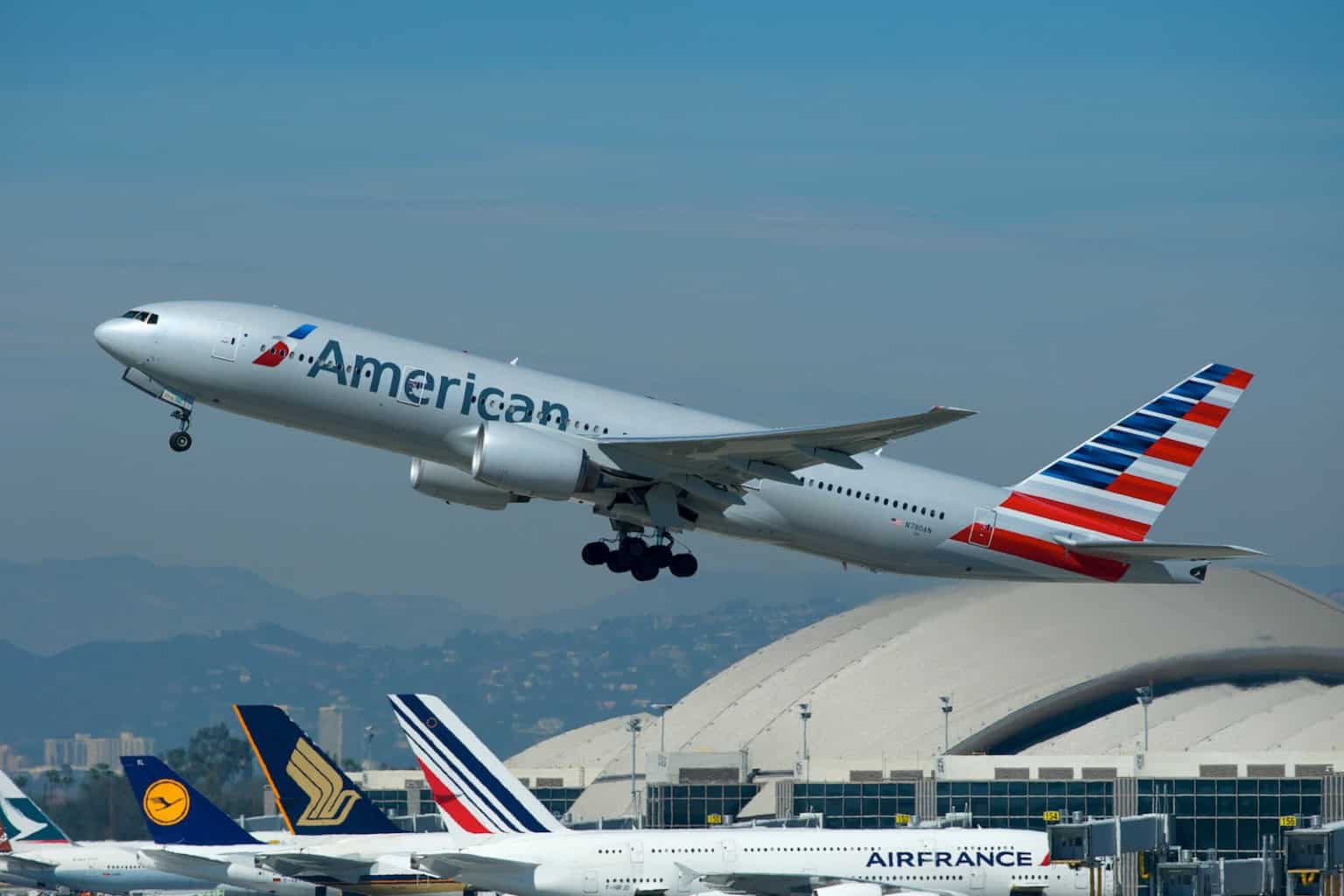
An American Airlines Boeing 777 bound for London diverted to New York’s John F. Kennedy International Airport late on July 22, 2026, after hitting severe turbulence that injured two flight attendants. The aircraft, operating flight AA174 from Raleigh-Durham, landed safely and the crew were treated on the ground.
According to The Aviation Herald, which first reported the event, the widebody was cruising at 37,000 feet about 70 nautical miles southwest of New York when it encountered the turbulence. The crew declared a diversion and landed at JFK roughly 30 minutes later.
What happened
The aircraft was a Boeing 777-200ER, registration N785AN, one of the long-haul twinjets American uses on transatlantic routes. It had climbed out of Raleigh-Durham on the first leg of an overnight crossing to London Heathrow when the encounter forced it back down.
Only the two injured flight attendants were reported hurt, and no passenger injuries were noted. The onward flight to London was cancelled, and the jet stayed on the ground at JFK for about 13 hours before repositioning to Charlotte.
A diversion after this kind of event is standard practice rather than an overreaction. Once crew members are injured, the priority shifts to getting them medical attention quickly, and continuing across the Atlantic would have put hours of open ocean between the aircraft and a hospital.
Why turbulence hurts crew more than passengers
Turbulence rarely damages a modern airliner, which is built to flex and absorb far more load than a rough patch of air delivers. The danger is almost entirely about people and objects that are not secured when the aircraft drops.
That is why cabin crew are the most exposed. They are often up and working the aisles, galleys, and carts while passengers stay belted, so a sudden jolt throws them against ceilings and fixtures. It is also why airlines and the FAA repeatedly stress keeping seatbelts fastened even when the sign is off.
The seatbelt point
In severe turbulence, an aircraft can lose or gain altitude in an instant. Passengers who stay belted are almost never seriously hurt; the injuries fall on people who are unrestrained, which usually means the working cabin crew.
Some turbulence gives no warning at all. Clear-air turbulence forms in cloudless sky, often near jet streams, and does not show up on the weather radar pilots rely on to steer around storms. Crews lean on forecasts, ride reports from other aircraft, and experience, but a smooth-looking sky is no guarantee, as this account of turbulence and aircraft safety explains.
The incident adds to a run of unrelated American widebody diversions into New York in recent weeks, including one where a 777 diverted with its gear stuck down. Each had a different cause, and turbulence injuries in particular remain one of the most common reasons a long-haul flight turns back.
Still developing
Details come from flight-tracking and industry reporting rather than an official investigation. The injuries were described as non-life-threatening, but neither American Airlines nor the FAA had released a detailed statement at the time of writing, and figures could change.
Get the Newsletter
The latest aviation news and stories sent to your inbox.
About the Author

Tim is the owner and lead editor of AeroCorner since 2019, overseeing aviation content covering aircraft, airlines, airports, and the broader aviation industry. Through years of researching, writing, editing, and publishing aviation-focused content, he has developed extensive practical knowledge of commercial aviation and air travel. Based in Asia and a frequent traveler himself, Tim also brings firsthand passenger experience to AeroCorner’s coverage. Outside of publishing, he has also explored aviation firsthand through hands-on flight training in New Zealand.