

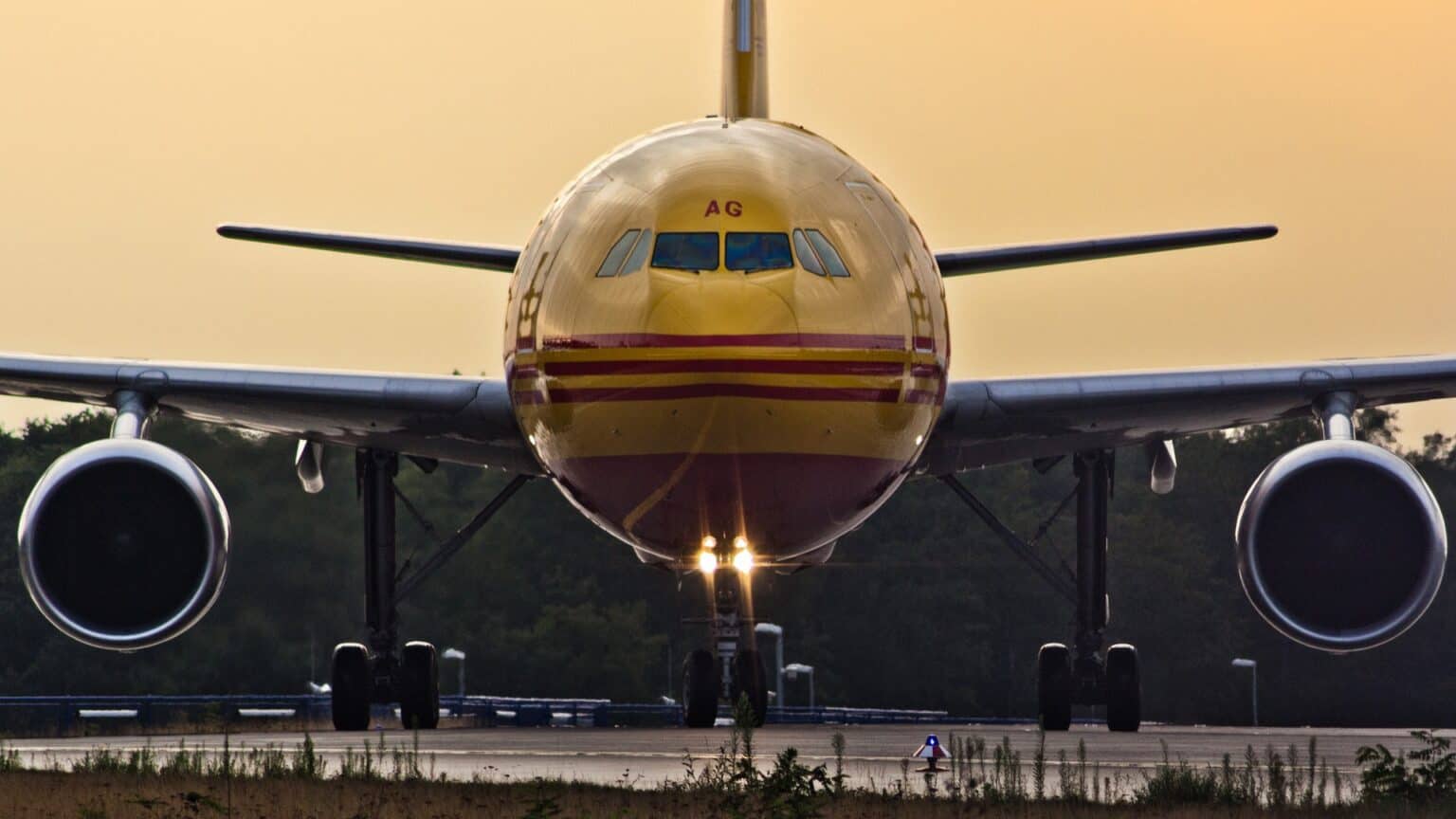
D-AEAG, an Airbus A300-600F freighter, struck its tail on Runway 09L at London Heathrow on October 12, 2025, and its captain then went around with the thrust reversers already selected. The UK Air Accidents Investigation Branch (AAIB) published its bulletin on the accident on November 12, 2026.
The two pilots, the only people on board, were not hurt. The jet was not so lucky: the AAIB says the damage to its underside and internal structure left it beyond economical repair, and it has been retired.
What happened on Runway 09L
The freighter was flying from Leipzig/Halle in Germany to Heathrow. At the time, aeroTELEGRAPH reported that it was operated by EAT, a DHL subsidiary, as flight QY2212, and that DHL said all crew members were unharmed.
The captain flew a stable ILS approach and took manual control late in the approach, as the operator’s procedures require. The weather was calm, with a light wind and visibility of more than 6 miles (10 km).
The left main gear touched first, then the right, and the A300-600F bounced briefly. As the throttles reached idle, the ground spoilers began to extend and the captain selected reverse idle.
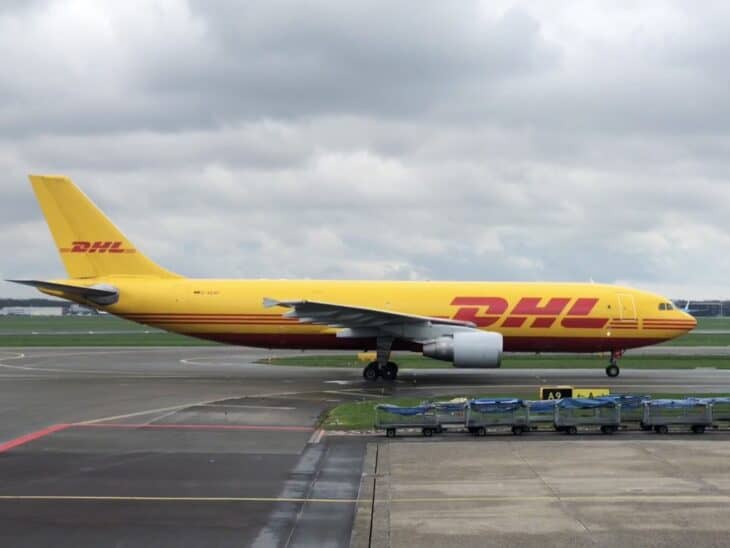
After a second touchdown, the captain pulled back on the control column to keep the nosewheel from landing hard. Combined with the nose-up effect of the extending spoilers, that raised the pitch to 12.3 degrees, and the tail hit the runway.
About three seconds after the first touchdown, the captain called “go around”. Roughly 1.5 seconds later the co-pilot called “pitch, pitch”, at about the moment the throttles reached takeoff/go-around thrust.
Why the engines did not answer at once
The thrust reversers had already begun to open. The A300’s engine computers will not raise thrust until the reverser sleeves are closed and latched again, so the engines stayed at idle while the sleeves moved back.
By the time engine power began to rise, the airspeed had dropped to 107 knots. The jet lifted off at about 110 knots but did not start climbing for another eight seconds.
Climbing through about 850 feet, the crew saw a reverser unlock warning for the No. 1 (left) engine. The data showed it sensed as unlocked until about 1,200 feet, a fault the AAIB could not explain, though video and flight data showed the reversers had closed and stayed closed.
Neither pilot said anything on the cockpit voice recording to show they knew about the tailstrike, and the A300 has no tailstrike detection system. When the Heathrow tower relayed a report from someone on the ground, a crew member called it “a possibility”.
After a standard go-around and radar vectors, they landed on Runway 09R.
The rule a go-around broke
Airbus and the operator split bounces into two kinds.
After a light bounce of 5 feet or less, the crew holds a normal pitch, keeps the thrust at idle and lands. After a high bounce, they go around, because the runway left may be too short to stop.
Both sets of manuals add one condition: once reverse thrust is selected, the crew must finish with a full-stop landing. The AAIB notes that going around after selecting reverse delays engine spool-up, which is what happened here.
The captain told investigators the second bounce felt like a high bounce he had experienced as the monitoring pilot. He had not realized that he had already selected reverse idle, which he put down to “muscle memory”.
The AAIB found that explanation reasonable. Airbus guidance calls for reverse thrust immediately on main wheel touchdown, and the AAIB said the selection was likely an automatic, habitual action, made without deliberate thought.
Four seconds to decide
Only four seconds passed between the first touch of the left main gear and the captain pushing the throttles fully forward. Airbus told the AAIB there are no predefined parameters for telling a light bounce from a high one, so the call rests on the crew’s judgment.
Airbus considered this bounce a light one. The AAIB does not think the reverse selection contributed to the tailstrike, but it calls a go-around after selecting reverse contrary to standard procedures.
The margins were thin. With the wings level, the A300’s tail skid touches the runway at 11.2 to 12.8 degrees of pitch, depending on how far the main gear struts are compressed.
The AAIB also warned that had the reversers reopened during the go-around, handling could have suffered and the outcome could have been significantly worse. The bulletin makes no safety recommendations.
The end of a 1992 airframe
D-AEAG was built in 1992 and delivered as a passenger jet, then converted to a freighter in 2011. It had flown for its current operator under the same registration since the conversion.
The tail section buckled inward at frame 77, with rivets separated from the skin and the tail skid scraped. Inside, a non-structural bulkhead frame was bent inward and the cleats holding it to the skin had sheared.
The jet sat at London Heathrow for several months while the operator and Airbus assessed a repair, before it was retired. aeroTELEGRAPH noted that another EAT A300, D-AZMO, had struck its tail at Leipzig/Halle in February 2024.
Thrust and pitch changes in the first seconds after touchdown also ended in a tail strike for the ANA 787 at Houston, which began with an accidental press of the go-around switch.
Sources and references used for research and fact-checking.
Get the Newsletter
The latest aviation news and stories sent to your inbox.
About the Author

AeroCorner News is the aviation news desk of AeroCorner.com. It covers accidents and incidents, safety rulings, airline and airport disruption, and new aircraft. It works from primary sources such as the NTSB, FAA, EASA and the manufacturers' own announcements.