

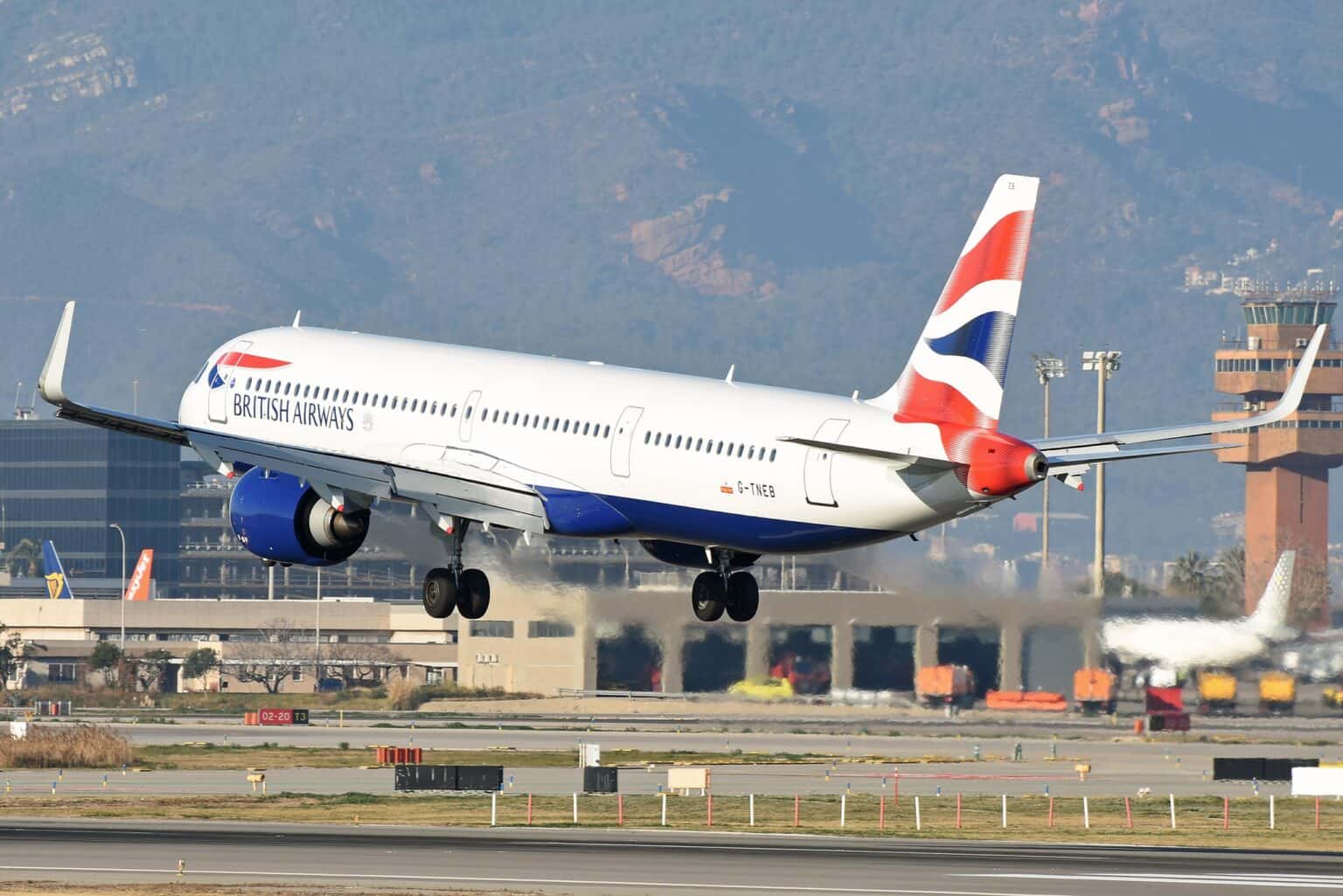
British Airways flight BA431 from Amsterdam struck its tail on the runway at London Heathrow on Thursday, November 12, 2026, after the crew of the Airbus A321neo began a go-around once the wheels had already touched down. The jet, registered G-TNEB, climbed away and landed safely on its second approach.
British Airways says it is assisting the UK Air Accidents Investigation Branch (AAIB) with an investigation. The aircraft has been taken out of service for inspection.
What happened on Runway 27L
According to The Aviation Herald, the A321neo was landing on Runway 27L at about 10:35 a.m. local time (5:35 a.m. ET). The crew initiated a go-around after touchdown, and the tail contacted the runway surface.
The jet climbed to 4,000 feet, positioned for a second approach to the same runway and landed without further trouble.
The sequence was filmed live by the plane-spotting channel Big Jet TV, which titled its video a “double tail strike.” RNZ, describing the same footage, said the rear of the aircraft appeared to strike the ground twice.
Whether there were one or two contacts is for the investigators to confirm.
“The aircraft landed safely, and we’re assisting the AAIB with its investigation,” British Airways said in a statement reported by Paddle Your Own Kanoo. The same report says passengers left the aircraft normally and that the jet was pulled from service for maintenance checks, with a provisional return set for November 14 depending on what the inspection finds.
The airline has not said how many people were on board. Neither its statement nor the reports so far mention any injuries.
The weather was not dramatic. Heathrow’s routine weather reports at 10:20 and 10:50 a.m. show a northerly wind of 8 to 11 knots with no gusts, visibility of 6 miles (10 km) or more, and no cloud below 4,000 feet.
That put a modest crosswind from the right across the westerly runway.
Why a go-around after touchdown can put the tail on the runway
A go-around is a routine maneuver, usually flown from higher on the approach. The risk rises when it starts in the flare or after the wheels are down, because the aircraft is slow, nose-high and close to the ground, and its engines are near idle.
Engines near idle need time to spool up to go-around thrust. If the pilot pitches up to the climb attitude before that thrust arrives, the nose rises but the aircraft does not yet climb, and the tail swings down toward the concrete.
The aviation safety reference SKYbrary lists a go-around started in the flare or after a bounce as a common precursor to a tail strike.
Length makes it worse. SKYbrary notes that stretched versions of a type are generally more prone to tail strikes, and the A321neo is the stretched member of the A320neo family.
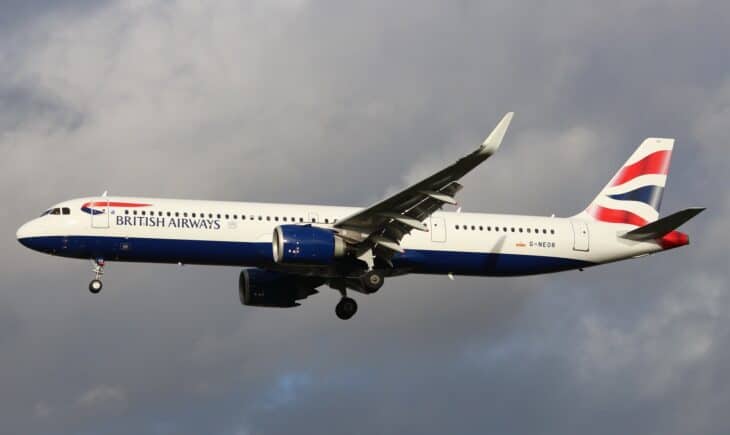
British Airways has been here before. In January 2022 its Airbus A350-1000 G-XWBC struck its tail at Heathrow on the same runway, 27L, during a go-around started from low height after the jet floated in the flare. The AAIB found the aircraft lacked the energy to climb at once, touched down during the go-around, and a pitch-up by the co-pilot brought the tail into contact.
Low-energy go-arounds and bounces sit behind other recent tail strikes, too. American Airlines flight AA806 struck its tail during a go-around at Santa Ana in October, and the NTSB traced Delta DL1181’s tail strike, also on an A321, to too much nose-up input after a bounce at LaGuardia.
BA431’s tail strike also came on the same day the AAIB published its report on the D-AEAG A300 freighter, which hit its tail landing at Heathrow in October 2025 and then went around with reverse thrust already selected. That jet was damaged beyond economical repair.
What happens next
The AAIB had not published anything on the event at the time of writing. The A321neo’s recorded flight data should show when the crew chose to go around, how far the nose rose and how the tail met the runway.
British Airways has not said whether the strike damaged the jet. Its return to service depends on what the engineering inspection finds.
Sources and references used for research and fact-checking.
Get the Newsletter
The latest aviation news and stories sent to your inbox.
About the Author

AeroCorner News is the aviation news desk of AeroCorner.com. It covers accidents and incidents, safety rulings, airline and airport disruption, and new aircraft. It works from primary sources such as the NTSB, FAA, EASA and the manufacturers' own announcements.