

Table of Contents
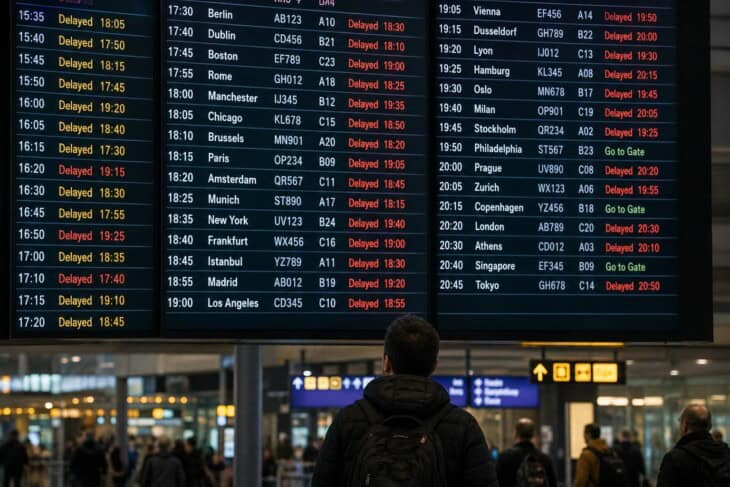
The notification comes through about an hour before the scheduled departure. The flight is now showing a new time, twenty minutes later than the original. At the gate, the screen has been updated but no one is sure what changed. The aircraft is not there yet. The crew is not there yet either. Forty minutes later, another update pushes the time out further. By the time the passengers finally board, the original schedule is a memory and the connecting flights for half the cabin are in jeopardy.
Most flight departure delays are not caused by anything dramatic. There is rarely a snowstorm or a strike. Far more often, the cause is a slip somewhere upstream in the system that has worked its way down to this specific aircraft and this specific gate. Airlines categorise delays into a handful of formal reasons, and most of those reasons are dwarfed by a single one: the inbound aircraft was late, for a reason that has nothing to do with this particular flight.
Here is how airline operations actually classify delays, why one of those categories is so much bigger than the others, and what happens inside the operation when a delay first appears, then spreads.
The five categories of delay
The US Bureau of Transportation Statistics, which collects delay data from every major US airline, sorts every reported delay into one of five categories. These categories are the formal language that airlines, regulators and analysts use to talk about why flights run late. They are simpler than they sound, and once you know what each one means, an airport departure board becomes a lot more readable.
The first category is air carrier delay. This covers anything the airline itself is responsible for: a maintenance issue with the specific aircraft, a missing or sick crew member, a fuelling problem, baggage handling that ran long, a catering truck that did not show up. If something the airline controls held the flight up, it goes here. The second category is national aviation system delay, usually abbreviated NAS. This is the catch-all for things the air traffic control and airport system imposes on the operation: non-extreme weather, heavy traffic at the destination, runway closures, ATC flow restrictions, airport equipment outages. A surprising amount of weather-related delay actually ends up in this bucket rather than the weather bucket, because most weather slows flights down rather than stopping them outright.
The third category is extreme weather. This is reserved for the genuinely severe events: a tornado, a blizzard, a hurricane, fog so thick the airport effectively closes. The fourth category is security delay, which covers things like terminal evacuations or screening incidents. Security delays are by far the smallest category in normal operations. The fifth category, and the one that turns out to matter the most, is late arriving aircraft. This is the delay code for a flight that left late because the aircraft that was supposed to fly it arrived late from somewhere else. The cause of the original delay is recorded against the upstream flight, not this one. The late arriving aircraft category exists specifically to capture the cascade.
The five BTS delay categories
Air carrier delay: anything within the airline’s control. Maintenance, crew, fuelling, baggage, catering.
National aviation system (NAS) delay: ATC, airport operations, heavy traffic, non-extreme weather, runway issues.
Extreme weather delay: severe events like tornadoes, blizzards, hurricanes, dense fog that effectively closes the airport.
Security delay: terminal evacuations, screening incidents. The smallest category in normal operations.
Late arriving aircraft delay: this flight is late because the aircraft was late inbound from another flight. The upstream cause is recorded separately.
Why one delay creates more
The late arriving aircraft category is consistently one of the largest single sources of US domestic flight delay, in many years sharing the top spot with air carrier delays. The reason is structural. A typical narrow-body aircraft in a short-haul network is scheduled to fly four to six flights in a day, each separated by a short turnaround at an airport. If the first flight of the day is delayed by 30 minutes, the aircraft arrives at the next station 30 minutes late. The turnaround can absorb some of that, but only some. The aircraft pushes back later than scheduled, the next flight is delayed, and so on. By the early afternoon, an aircraft that started the day 30 minutes behind can easily be running an hour late or more.
The cascade is worst at hub airports. A hub schedule is built so that dozens of flights arrive within a short window, passengers connect, and then a comparable wave of flights departs. The whole system depends on aircraft, crews and bags being where they need to be at the right time. When the inbound bank is delayed, the outbound bank cannot leave on time without leaving passengers behind. If the airline holds the outbound flights to let connecting passengers make it, those flights become late aircraft for whatever they are flying next. If it lets them go, the stranded passengers need rebooking, hotels and food. Either way, the disruption moves through the network. The slip that started on the morning’s first flight in Phoenix can show up on a late evening flight in Boston, and the operations centre is watching it travel.
Airlines build buffer into the schedule precisely to absorb this. A ground time of 60 minutes at a hub may only need 35 to physically turn the aircraft around, which means 25 minutes of slack to soak up a late inbound. A block time, the scheduled flight duration, is usually a few minutes longer than the typical actual flying time, so a flight that lands a few minutes late might still arrive at the gate on schedule. Crews are sometimes scheduled with extra time between duty periods so that one late flight does not trigger a crew rest violation on the next one. None of this is free: every minute of buffer is a minute the aircraft is not generating revenue. Airlines settle on a buffer level that, statistically, absorbs most of the daily variation. When the variation exceeds the buffer, the cascade begins.
The longer the cascade runs, the harder it is to recover. A specific aircraft that has fallen four hours behind may start hitting crew duty time limits under FAR Part 117 crew rest rules, forcing the airline to swap in another crew or cancel the rest of the day’s flights for that aircraft. Spare aircraft, kept at major hubs precisely for this kind of situation, can be substituted in, but only up to the point where the spares run out. By late evening, the operation either resets overnight or carries the disruption into the next morning’s schedule.
When a delay becomes a cancellation, and what passengers are owed
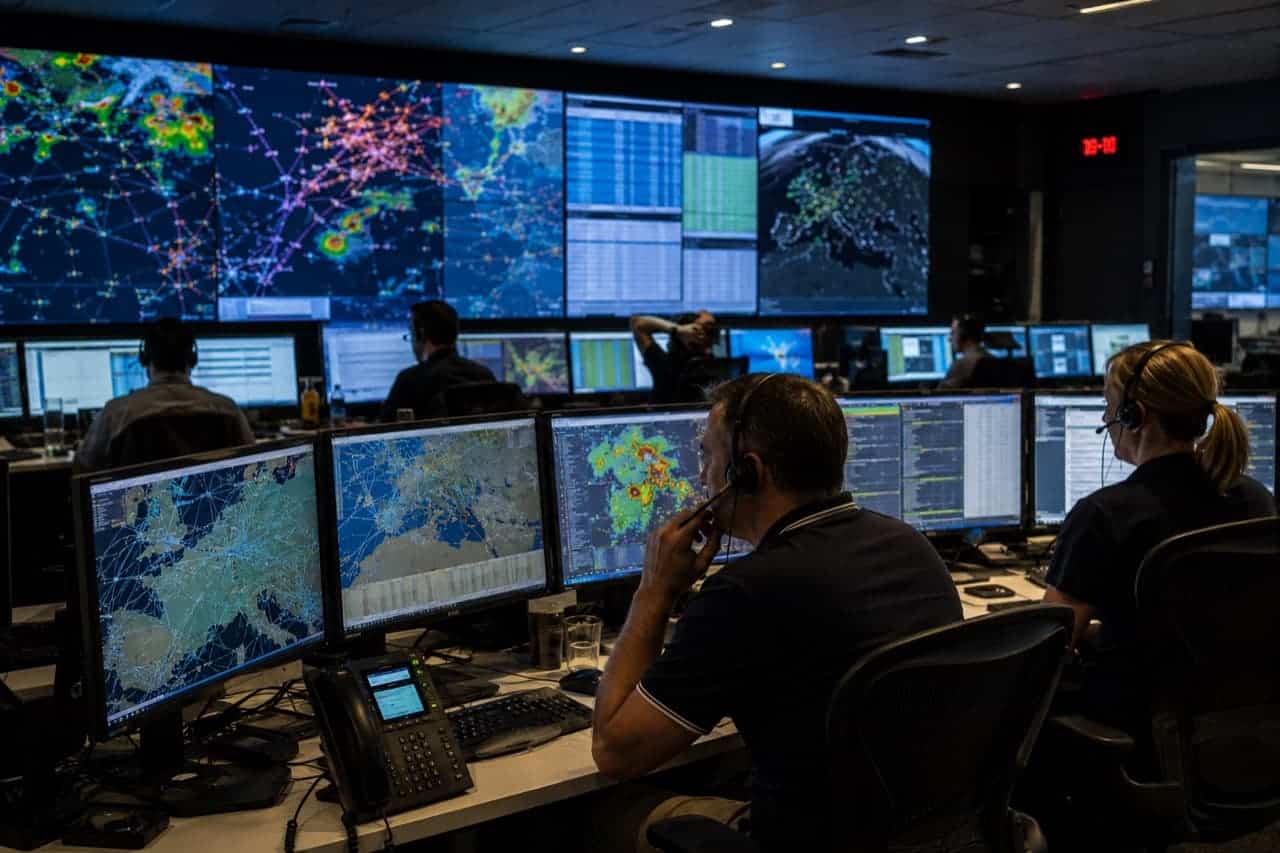
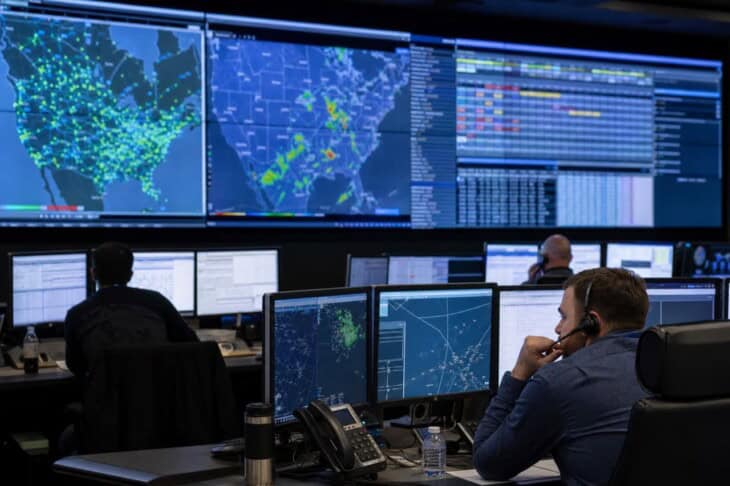
From the airline’s operational perspective, a cancellation is not just a longer delay. It is a different kind of decision. A delayed flight is one the operation still intends to run: an aircraft, a crew and a slot are still being held for it. A cancelled flight has been removed from the schedule entirely, and the passengers, crew and aircraft are being released into other parts of the plan. The decision to cancel rather than delay is taken in the operations control centre when the airline concludes that the flight cannot realistically be operated within a workable time window, either because the crew will hit duty time limits, because the aircraft is needed elsewhere to break a cascade, or because the inbound aircraft is simply not coming. A cancellation is often a deliberate choice to absorb one bad outcome to prevent several worse ones.
What passengers are entitled to when their flight is delayed or cancelled varies sharply by jurisdiction. In the European Union, EU regulation 261/2004 (commonly known as EU261) gives passengers on flights departing the EU, or operated by EU carriers into the EU, a set of statutory rights. For delays of three hours or more on the affected flight, passengers may be entitled to cash compensation of up to 600 euros, depending on the flight distance and the cause of the delay. For longer delays, the airline must provide meals, refreshments and, if needed, overnight accommodation. The compensation does not apply when the cause is genuinely outside the airline’s control, such as severe weather or air traffic control restrictions, but the duty of care does.
The US framework is different. The Department of Transportation does not currently require US airlines to pay cash compensation for delays, regardless of length or cause. What it does require is a refund for passengers on significantly delayed or cancelled flights if the passenger chooses not to travel: a domestic flight delayed more than three hours, or an international flight delayed more than six hours, triggers the right to a full refund. US airlines are also required to provide certain customer service commitments during controllable delays, such as meals and hotel rooms, but the rules around what counts as “controllable” are narrower than under EU261. Proposed legislation has periodically suggested moving the US framework closer to the European one, but as of now the gap is substantial.
Southwest Airlines holiday meltdown, December 21 to 29, 2022
A severe winter storm during the busiest travel week of the year initially disrupted operations across the US airline industry. Most carriers recovered within a few days. Southwest Airlines did not. The airline’s point-to-point network, combined with crew scheduling software that could not keep up with the volume of out-of-position crews, triggered a cascade that the operation could not stop. Over the eight-day period, Southwest cancelled roughly 16,700 flights and stranded an estimated two million passengers. The US Department of Transportation later fined Southwest 140 million dollars and required 600 million dollars in compensation to affected passengers. The incident became a textbook example of how a delay cascade combined with insufficient operational tooling can take down an entire airline, even when other carriers operating in the same conditions recover normally.
The Southwest episode also illustrated one of the harder questions in this part of the industry: how much slack is enough? Building more buffer into the schedule reduces the risk of a cascade but also reduces aircraft utilisation, which directly affects what the airline can charge. Building less buffer drives down costs but leaves the operation exposed when something unusual happens. Every airline calibrates this differently, and the calibration shows up most clearly in how the operation behaves on the worst days of the year.
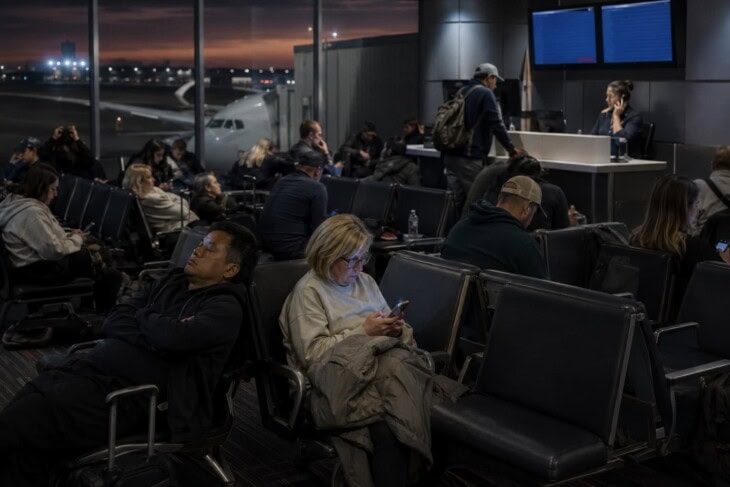
The next time a flight is showing an updated time on the departures board, it is worth checking which aircraft is meant to fly it and where it is coming from. More often than not, the delay you are about to experience started somewhere else hours ago, and the gate agent in front of you is dealing with the last link in a chain that runs across the network. The cause that finally gets recorded against your specific flight is one of five short categories, and the largest of those categories is, in effect, just the bookkeeping for the cascade.
The delay cascade is one of the operational facts that shapes much of the rest of how airlines run. The reason ground times are tight, and the reason a slip during one of them matters, is covered in the 45-minute miracle of the aircraft turnaround. The crew duty time limits that often turn long delays into outright cancellations are explained in why a crew issue can cancel your flight. The full picture of how the operation holds together, and what happens when it does not, lives in the How Airlines Actually Work series.
FAQ
Sources and references used for research and fact-checking.
- Understanding the Reporting of Causes of Flight Delays and Cancellations - US Bureau of Transportation Statistics
- Airline On-Time Performance and Causes of Flight Delays - US Bureau of Transportation Statistics
- Regulation (EC) No 261/2004 - EUR-Lex / European Union
- Aviation Consumer Protection: Flight Delays and Cancellations - US Department of Transportation
- IATA delay codes - Wikipedia
- Flight Delay Compensation: US vs EU Legal Requirements - Air Law Group
- Southwest Airlines flight cancellations of December 2022 - Wikipedia
- DOT issues largest penalty in its history against Southwest Airlines - US Department of Transportation
Get the Newsletter
The latest aviation news and stories sent to your inbox.
About the Author

Tim is the owner and lead editor of AeroCorner since 2019, overseeing aviation content covering aircraft, airlines, airports, and the broader aviation industry. Through years of researching, writing, editing, and publishing aviation-focused content, he has developed extensive practical knowledge of commercial aviation and air travel. Based in Asia and a frequent traveler himself, Tim also brings firsthand passenger experience to AeroCorner’s coverage. Outside of publishing, he has also explored aviation firsthand through hands-on flight training in New Zealand.