

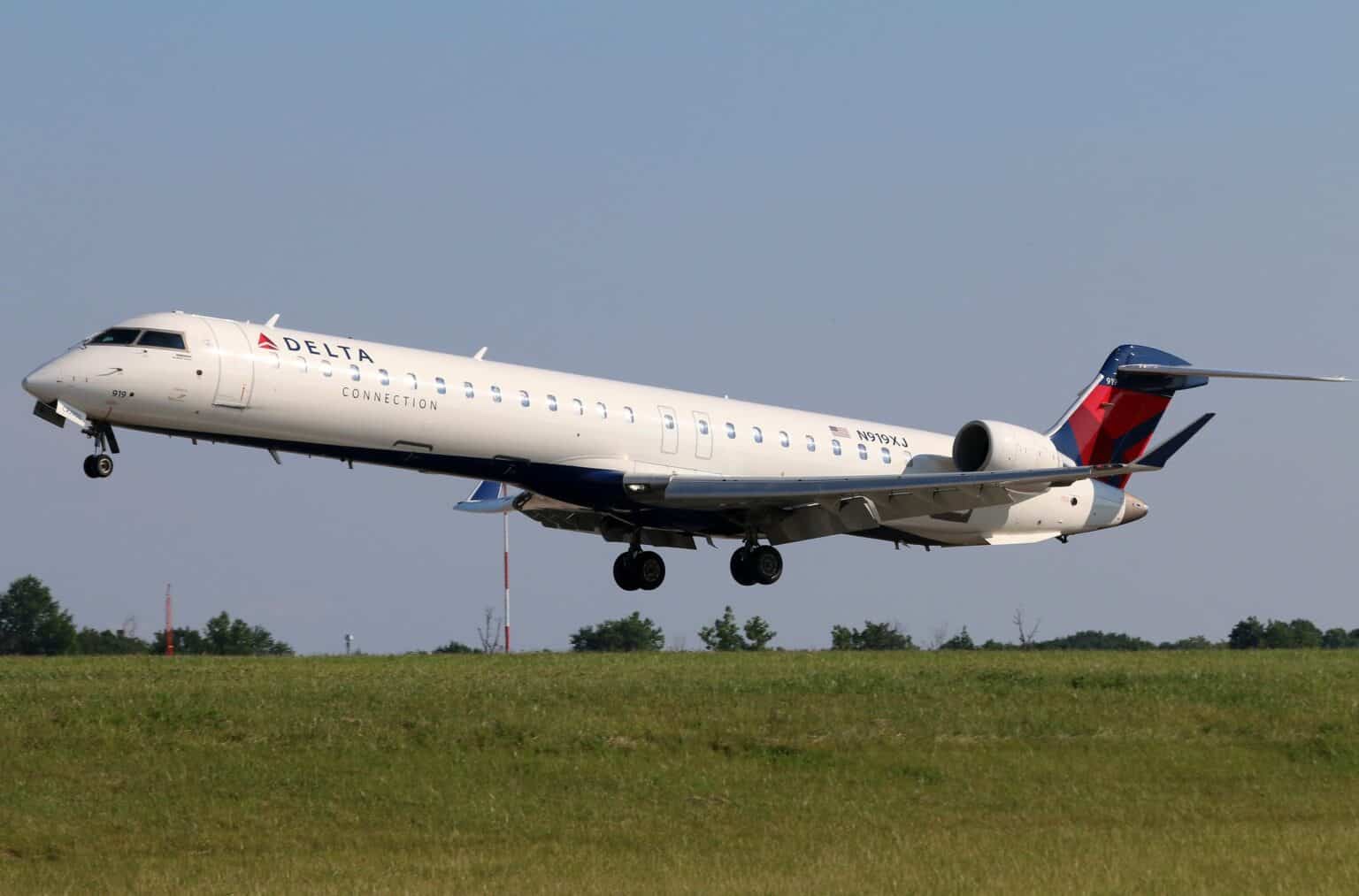
Delta Connection flight DL5015 turned back to New York’s JFK airport on Saturday, November 14, 2026, after its crew reported smoke in the cabin. The Endeavor Air jet, a CRJ900 registered N919XJ, was flying to Charleston, South Carolina, with 74 people on board.
The jet landed back at JFK less than 20 minutes after takeoff. Neither Delta nor the FAA had published a statement on the flight by November 17, and no cause has been made public.
What happened on the flight
The return was first reported by The Aviation Herald on November 16. It said the jet climbed out of runway 04L and the crew stopped the climb at 5,000 feet, reporting smoke in the cabin.
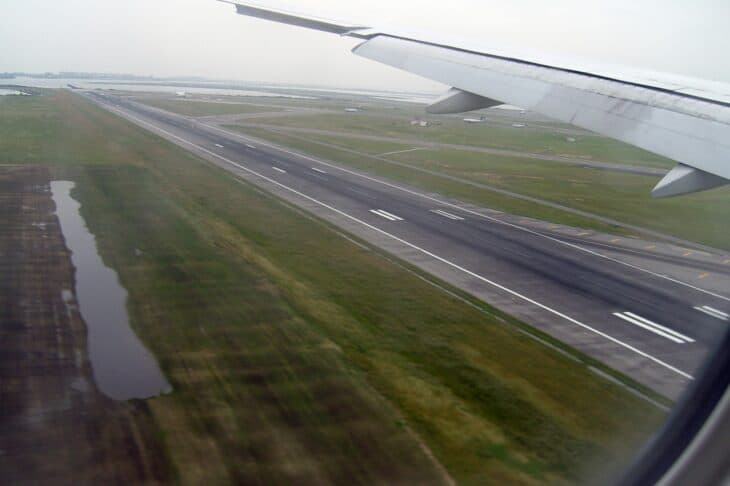

According to that report, the crew put on their oxygen masks and told controllers they would probably stop on the runway after landing. In the end they cleared runway 04L and stopped beside it so emergency services could inspect the jet, then taxied to the apron about half an hour later.
Tracking data from Flightradar24 fills in the times. The CRJ900, flying under the Endeavor callsign EDV5015, took off at about 11:18 a.m. Eastern time, more than two hours after its scheduled 9:05 a.m. departure.
Its recorded altitude topped out at about 4,650 feet as the jet headed south over the water. It turned back toward the airport and was on the ground again at about 11:35 a.m., roughly 17 minutes after takeoff.
The tracking data does not say why the flight left late. It ran on the morning after the FAA’s nationwide ground stop, when Delta told customers to expect delays as it repositioned crews and aircraft.
Back in service the next morning
The Aviation Herald said the jet’s return trip from Charleston was canceled. N919XJ itself was flying again within a day: Flightradar24 shows it leaving JFK for Raleigh-Durham as DL4775 at about 9:10 a.m. on Sunday, November 15.
Neither the airline nor the FAA has said what produced the smoke, or what the inspection and any maintenance work in between found.
FAA records list the Bombardier CRJ900 as a 2008 CL-600-2D24 registered to Delta Air Lines. Endeavor, which describes itself as a wholly owned subsidiary of Delta, flies it under the Delta Connection brand.
Later the same day, the crew of American Eagle AA5230, another CRJ900, reported smoke in the cockpit on the runway at Dallas Fort Worth, according to the FAA. Nothing links the two events beyond the aircraft type.
Why pilots reach for the masks
DL5015’s crew had an easy choice of airport: when they stopped climbing, the jet was only a few miles from the runway it had just left.
Crew masks are separate from the drop-down masks passengers see in the safety briefing. Federal rule 14 CFR 121.337 requires airlines to carry protective breathing equipment that shields the flight crew from smoke and harmful gases while they keep flying.
That equipment must supply 15 minutes of breathing gas and still let the pilots use the radio and talk to each other and the cabin. Putting it on early is a precaution, because a crew that cannot breathe or see cannot land the airplane.
Stopping clear of the runway after landing is a precaution too. It lets emergency crews check the jet before it taxis to the gate, while keeping the runway open for other traffic.
Will the NTSB investigate?
That depends on what the smoke turns out to have been. Under 49 CFR 830.5, an in-flight fire is a serious incident the operator must report to the NTSB immediately, but smoke alone is not on that list.
If inspectors found smoke but no fire, the event may stay a matter for the airline and the FAA. Whether the NTSB was notified has not been reported.
Still unknown
The source of the smoke, whether anyone needed medical attention, and what the inspection at JFK found have not been published. The flight details here come from The Aviation Herald and from Flightradar24 tracking data.
Sources and references used for research and fact-checking.
Get the Newsletter
The latest aviation news and stories sent to your inbox.
About the Author

AeroCorner News is the aviation news desk of AeroCorner.com. It covers accidents and incidents, safety rulings, airline and airport disruption, and new aircraft. It works from primary sources such as the NTSB, FAA, EASA and the manufacturers' own announcements.