

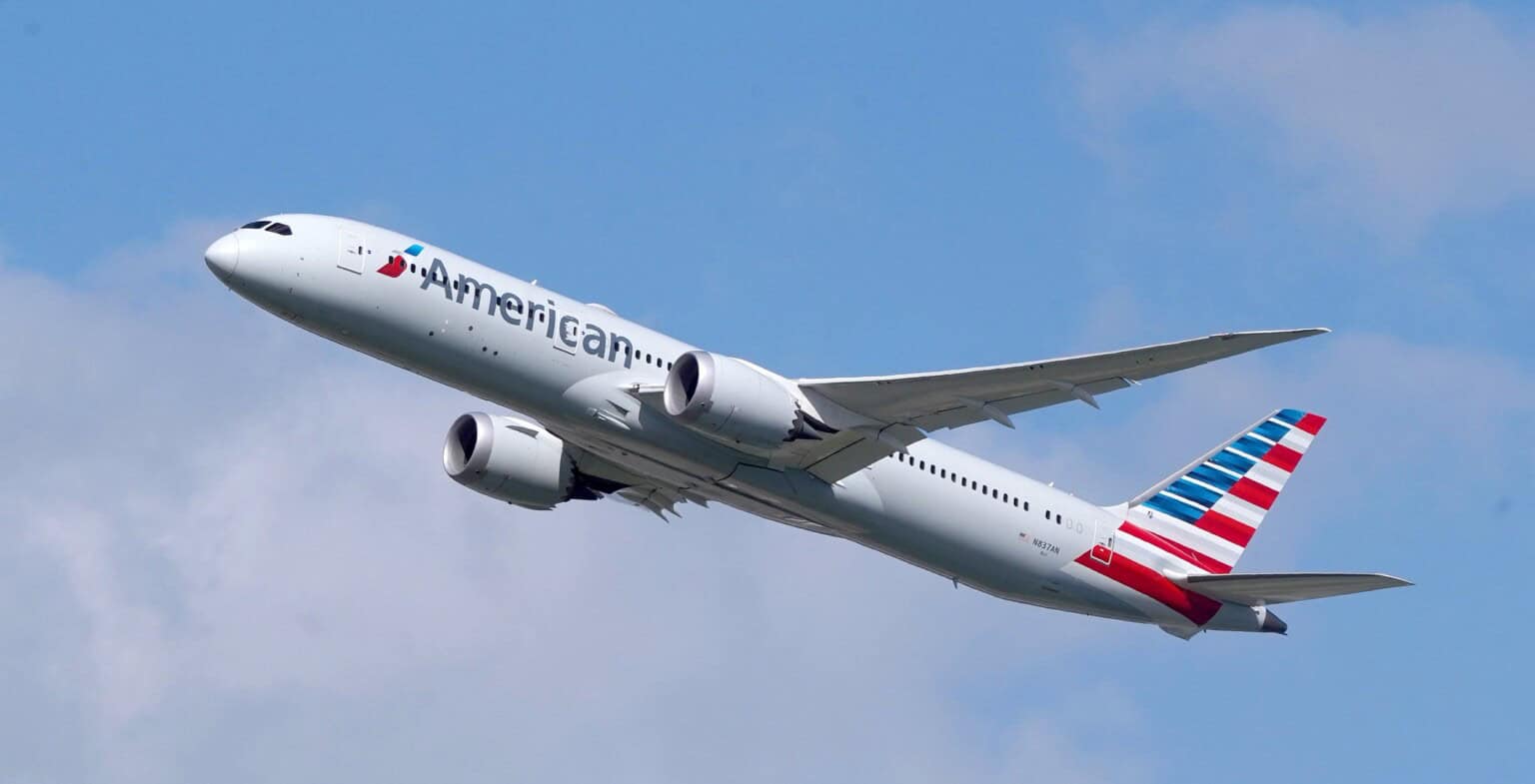
An American Airlines Boeing 787-9 flying from Delhi to New York landed at London Heathrow early on September 18, 2026, after a passenger became seriously ill roughly six hours into the flight. Flight AA293 touched down on runway 27L at 4:15 am with paramedics waiting at the aircraft.
The aircraft, a Boeing 787-9 registered N837AN, had left Indira Gandhi International Airport late on the evening of September 17. The diversion was first reported by AIRLIVE.
The crew looked at Munich first, then flew on
AA293 was cruising at 36,000 feet over Italian airspace when the crew told air traffic control it had a medical emergency on board. The aircraft began a descent and the pilots started evaluating Munich as a place to put it down.
It got as low as 30,000 feet. Then, instead of continuing into Munich, the crew climbed back to 36,000 feet and turned northwest for the United Kingdom, adding roughly another hour of flying before the wheels touched the ground.
Paramedics met the aircraft at Heathrow and treated the passenger. The Mirror reported that it had approached American Airlines for comment.
What is not confirmed
American Airlines has not issued a public statement, and the nature of the illness and the passenger’s condition have not been disclosed. It is also unconfirmed whether the crew squawked 7700. The times, altitudes and routing above come from flight tracking relayed by secondary outlets rather than from the airline.
Why a crew descends, then changes its mind
The descent to 30,000 feet followed by a climb back to cruise is the most revealing part of this flight. Something changed between those two decisions, and on a medical diversion it is usually the medical picture.
Airline crews do not make this call alone. Large carriers can patch a flight attendant, and often a volunteer doctor from the cabin, through to a ground-based emergency physician who assesses the patient remotely and advises on whether the aircraft needs to land immediately.
MedAire, which runs the MedLink service used widely across the industry, says its physicians work by separating high-risk presentations from lower-risk ones, and that a “continue with monitoring” finding is a normal outcome rather than an exception.
MedAire is also explicit that the doctor does not order the diversion. It says MedLink “provides clinical recommendations that support pilot-in-command and operator decision-making” and that the diversion decision itself stays operational.
Once a patient is judged stable enough for another hour of flight, the question stops being “what is the nearest suitable airport” and becomes “what is the best suitable airport.” Those are frequently not the same place.
What Heathrow offers American that Munich does not
Heathrow is American’s largest station in Europe and the center of its transatlantic joint business with British Airways. Munich is not an American destination at all.
That gap matters the moment the patient is off the jet. A diverted widebody still has a few hundred people on it who need rebooking, hotels, customs handling and, eventually, a crew that has not run out of legal duty hours.
At Heathrow, American has its own ground staff, its own gates, established maintenance and fuel arrangements, and a partner airline flying the same transatlantic markets many times a day. At Munich it would have had a handling agent and a phone number.
This is the part of diversion planning passengers never see. The captain picks the airport in the moment, but the shortlist was built long before the aircraft left Delhi.
It weighs runway length, customs and immigration hours, hospital access, and whether the airline can actually recover the flight from there.
It is also why two superficially similar emergencies produce different answers. A condition judged time critical puts the aircraft into Munich; one assessed as stable buys the hour it takes to reach an airport where the airline can look after everyone else too.
The same trade-off landed the other way when a Delta flight turned back to Dublin mid-Atlantic, and again when PIA declared a medical emergency into Manchester.
The route
AA293 is the westbound leg of American’s only route to India, a Delhi to New York JFK nonstop flown with 787-9s. The eastbound leg operates as AA292.
It is a long overnight sector of roughly 14 to 15 hours, which puts the aircraft over Europe in the small hours with a cabin full of sleeping passengers.
Sources and references used for research and fact-checking.
Get the Newsletter
The latest aviation news and stories sent to your inbox.
About the Author

Tim is the owner and lead editor of AeroCorner since 2019, overseeing aviation content covering aircraft, airlines, airports, and the broader aviation industry. Through years of researching, writing, editing, and publishing aviation-focused content, he has developed extensive practical knowledge of commercial aviation and air travel. Based in Asia and a frequent traveler himself, Tim also brings firsthand passenger experience to AeroCorner’s coverage. Outside of publishing, he has also explored aviation firsthand through hands-on flight training in New Zealand.