

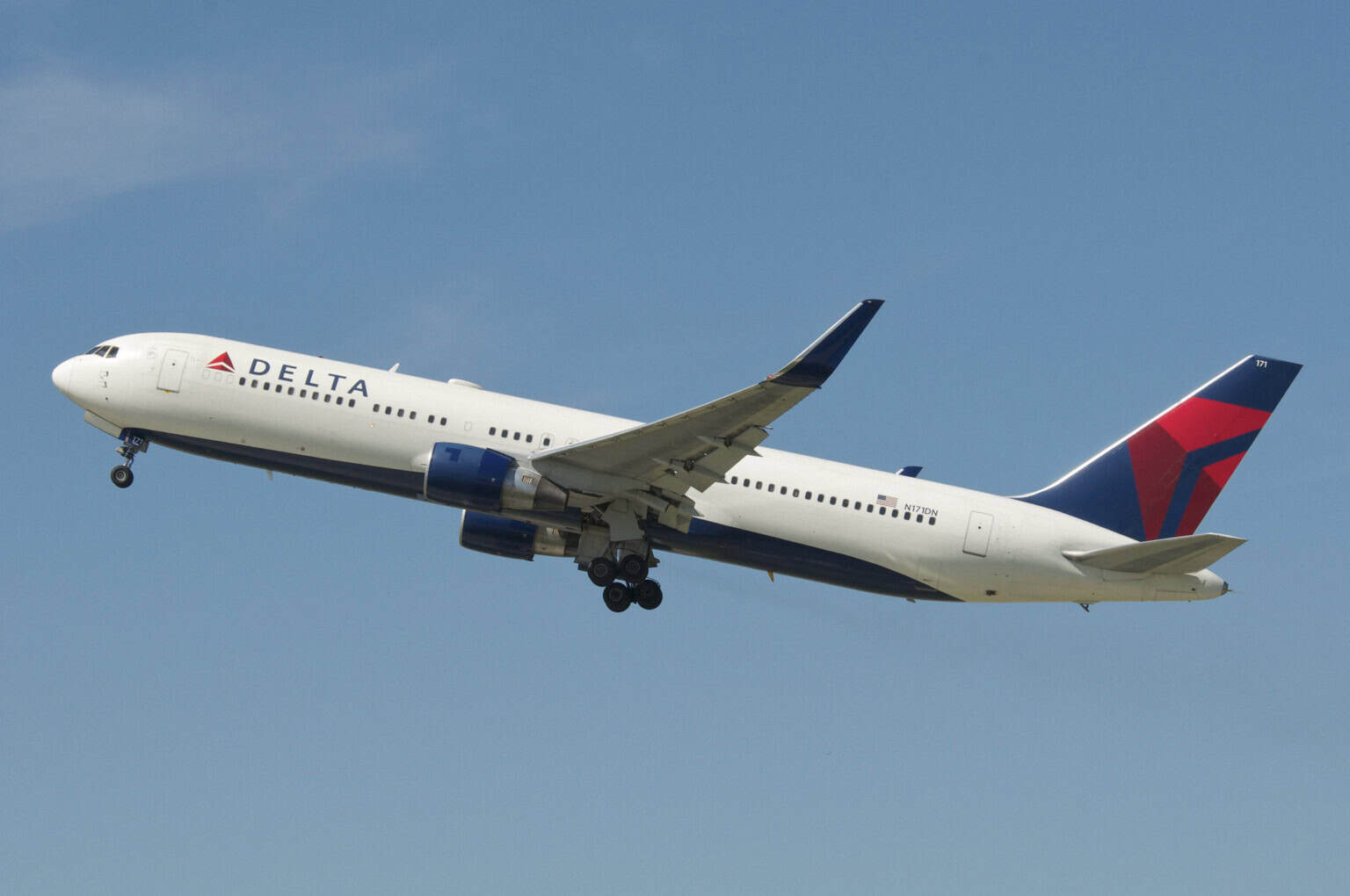
Delta Air Lines flight DL45 turned back to Dublin Airport on September 15, 2026, roughly 90 minutes into its crossing to New York, after a medical emergency on board. The Boeing 767 landed safely and everyone stayed with the aircraft to the gate.
What happened on DL45
The Boeing 767-300ER left Dublin at 13:15 local time bound for John F. Kennedy International Airport. It had reached 35,000 feet and was out over the Atlantic when the crew began a wide turn back toward Ireland.
The aircraft transmitted squawk 7700, the transponder code for a general emergency. Controllers gave it priority for the run back in.
It touched down on runway 28L at 16:19 and reached gate 306 at Terminal 1 eight minutes later. Emergency services had been placed on standby ahead of the arrival.
Delta said in a statement reported by AOL that the flight returned “due to a customer medical situation onboard,” and thanked its crew and customers. The airline has not said anything further about the passenger’s condition.
What squawk 7700 actually does
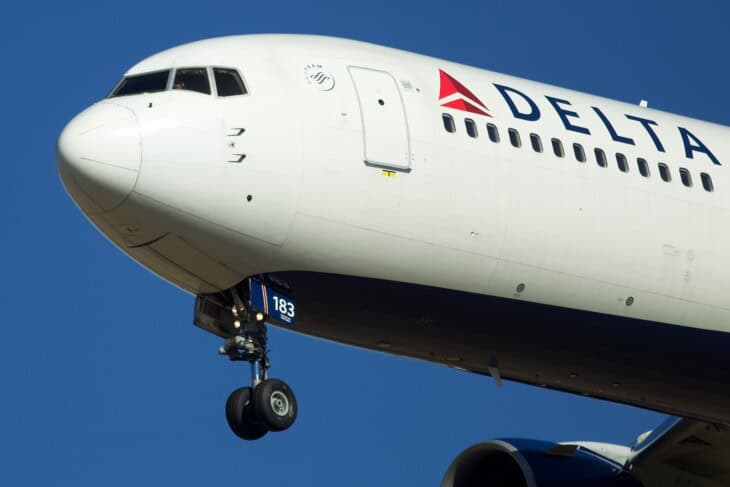
A transponder code of 7700 is the universal signal for an aircraft in distress. Setting it makes the flight stand out on every controller’s display in range, without the crew needing to explain themselves first.
It is not reserved for burning engines or structural failure. A time-critical medical case qualifies, because the value of the code is the priority handling it buys.
Controllers clear a direct track, hold other traffic out of the way and line up the arrival. Minutes saved on an oceanic turnback are minutes a sick passenger is not waiting for an ambulance.
Why turning back is a weight problem, not just a U-turn
A 767 leaving Dublin for New York departs with a full transatlantic fuel load. Ninety minutes later it has burned only a fraction of it, so it is still well above its maximum landing weight.
Long-range 767s can jettison fuel to get down to a safe figure. The alternative is an overweight landing, which is permitted in an emergency but triggers a structural inspection afterward.
Reporting on DL45 has not said whether the crew dumped fuel or accepted the heavier landing. Either way, the decision is made in the cockpit within minutes, usually with advice from a ground-based medical service on the radio.
The other half of the calculation is geography. Ninety minutes west of Ireland, the nearest good runway is usually the one behind you, which is why so many transatlantic turnbacks end in Dublin or Shannon rather than continuing on.
Medical events are the most common reason airliners divert, ahead of weather and mechanical faults. The pattern is routine enough that Dublin handled a similar case in July, when an American 787 diverted there with crew illness.
What makes these flights look dramatic on a tracking site is the shape of the track, a long arc reversing itself over open water. The mechanics of a diversion are considerably more ordinary than the picture suggests.
Get the Newsletter
The latest aviation news and stories sent to your inbox.
About the Author

Tim is the owner and lead editor of AeroCorner since 2019, overseeing aviation content covering aircraft, airlines, airports, and the broader aviation industry. Through years of researching, writing, editing, and publishing aviation-focused content, he has developed extensive practical knowledge of commercial aviation and air travel. Based in Asia and a frequent traveler himself, Tim also brings firsthand passenger experience to AeroCorner’s coverage. Outside of publishing, he has also explored aviation firsthand through hands-on flight training in New Zealand.