

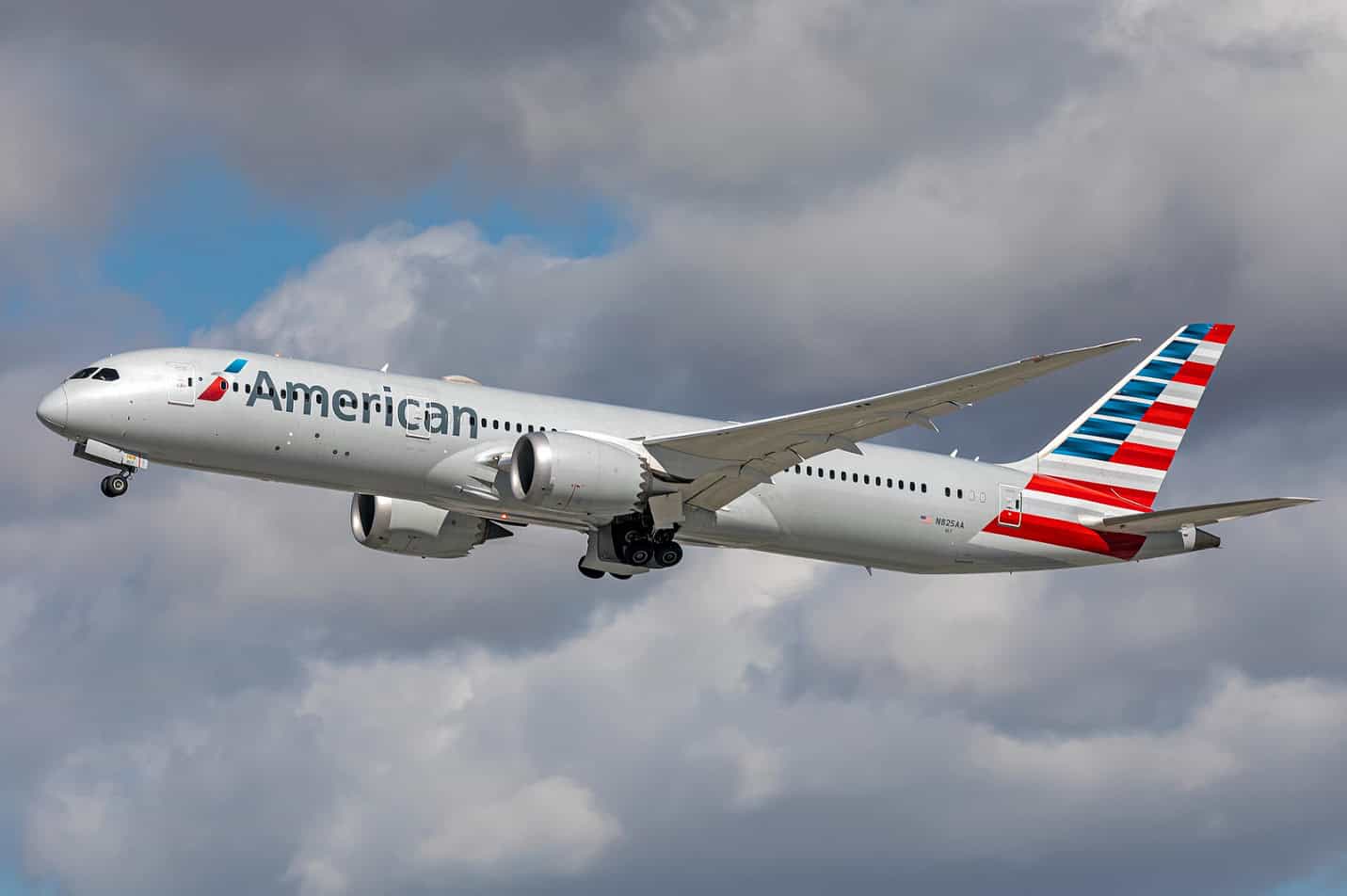
On July 25, 2026, an American Airlines Boeing 787-9 flying from Rome to Philadelphia diverted to Dublin, Ireland, after crew members became unwell partway across the Atlantic. Flight AA719 landed safely at Dublin Airport with everyone on board accounted for.
The 787-9, registration N840AN, had departed Rome Fiumicino around 12:40pm local time carrying as many as 284 passengers. About three to four hours into the roughly 8.5-hour flight, while cruising near 39,000 feet over the North Atlantic, the crew told air traffic control it needed to divert.
What happened
According to flight-tracking accounts from AirLive and Aviation A2Z, six of the flight’s eight or nine working flight attendants reported feeling dizzy or unwell during the crossing. The reporting does not agree on the exact headcount, and neither American Airlines nor Irish aviation authorities had confirmed a cause at the time of writing.
The jet landed on runway 28L at Dublin Airport roughly six hours after leaving Rome. Emergency medical personnel met the aircraft to check on the affected crew.
With no replacement flight attendants available in Dublin, American cancelled the onward leg to Philadelphia rather than continue with a reduced crew. Passengers were deplaned and rebooked, and the aircraft remained in Dublin overnight.
Why a sick crew grounds a flight faster than a sick passenger
A single unwell passenger does not usually force a diversion outright; a crew shortage can. FAA rules require at least one flight attendant for every 50 passenger seats actually filled, and that minimum has to hold for the whole flight, not just at boarding.
If six of a widebody’s eight or nine flight attendants become too unwell to work, the aircraft can drop below that legal minimum. At that point continuing is not really a judgment call for the captain, it is a dispatch requirement that has already been violated.
The 1-in-50 rule
US carriers must staff at least one flight attendant per 50 occupied passenger seats for the entire flight. Losing enough crew to illness or injury can force a diversion even when every passenger is fine.
Being over the North Atlantic narrowed the options further. Without radar coverage or a dense network of airports below, a crew mid-ocean has to commit to the nearest suitable landing site well before the problem becomes an emergency, which is why Dublin and Shannon see so many transatlantic diversions.
The 787 is also one of the few widebodies that does not pull cabin air from the engines. It uses electric compressors instead of traditional bleed air, a design change Boeing made partly to reduce the risk of fume events tied to engine oil or hydraulic fluid contaminating the cabin supply.
That does not rule out an air quality issue on this flight, but it means the more familiar bleed-air fume event explanation fits less neatly here than it would on an older jet. What actually made the crew unwell remains unknown.
Still developing
Some early reports described the event as a single passenger’s medical emergency rather than several flight attendants falling ill. The cause, exact number affected, and condition of those involved were unconfirmed at the time of writing.
Get the Newsletter
The latest aviation news and stories sent to your inbox.
About the Author

Tim is the owner and lead editor of AeroCorner since 2019, overseeing aviation content covering aircraft, airlines, airports, and the broader aviation industry. Through years of researching, writing, editing, and publishing aviation-focused content, he has developed extensive practical knowledge of commercial aviation and air travel. Based in Asia and a frequent traveler himself, Tim also brings firsthand passenger experience to AeroCorner’s coverage. Outside of publishing, he has also explored aviation firsthand through hands-on flight training in New Zealand.