

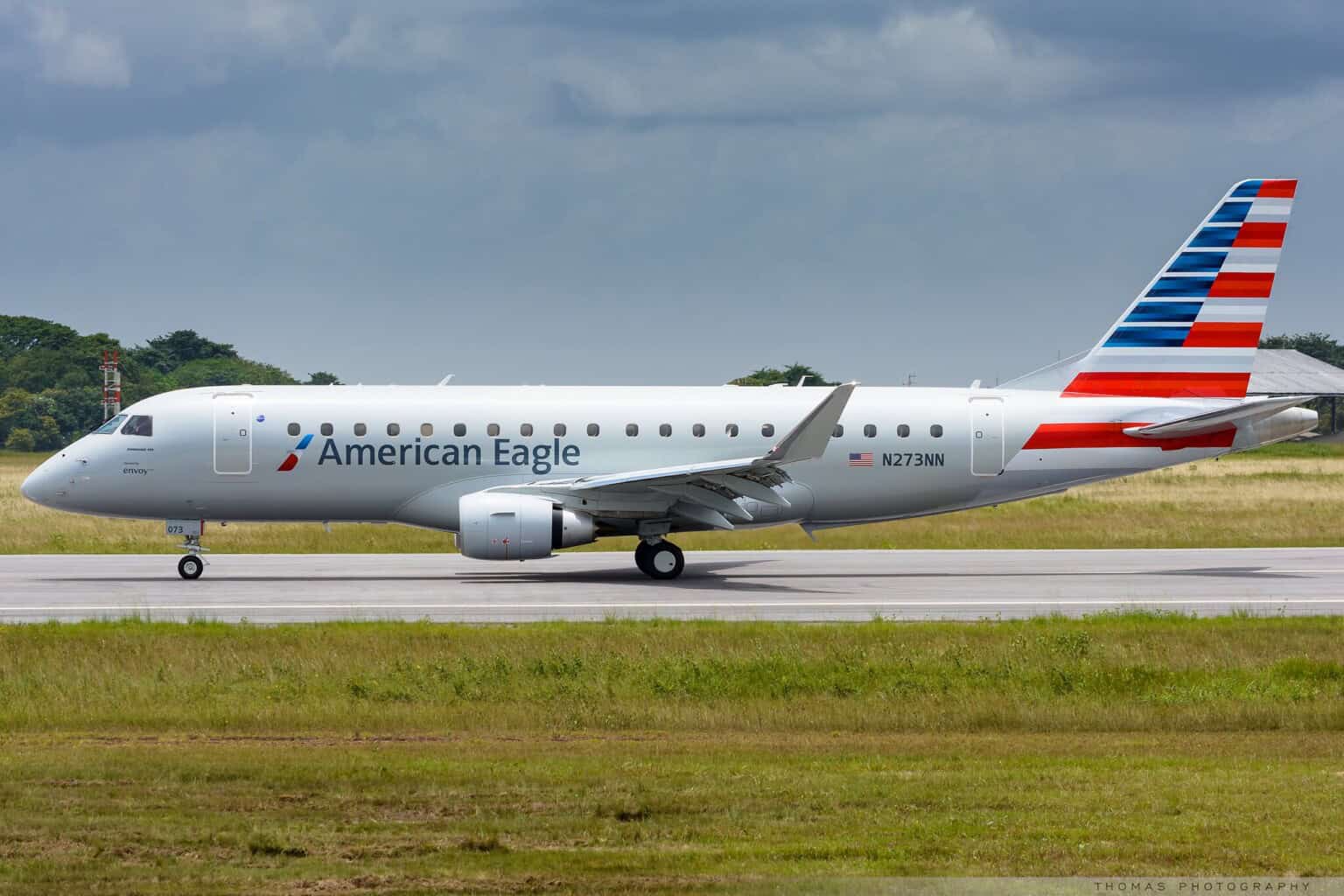
An Envoy Air Embraer E170 flying as American Eagle returned to Chicago O’Hare on September 10, 2026, after the captain reported that the control yoke had come loose shortly after takeoff. The first officer flew the jet back, and the passengers reached Minneapolis hours later on a different aircraft.
Flight 3551 was carrying 52 people, according to AvBrief. Neither published account mentions any injuries.
What happened after takeoff
The Aviation Herald reports that the E170, registered N781EJ, was climbing out of runway 9C when the crew stopped the climb at 9,000 feet because the captain’s yoke was loose. The first officer took over and landed on runway 10C about 25 minutes after departure.
“I just don’t feel comfortable flying this thing around anymore,” the captain told the controller, according to AvBrief, which also reports that the crew declared an emergency.
The jet stayed on the ground at O’Hare for about 23 hours of testing, The Aviation Herald says. A second E170, N748RR, flew the passengers to Minneapolis with a delay of about 7 hours and 40 minutes.
Envoy has not said publicly what came loose or why. AeroCorner found no statement on the flight from the airline, the FAA or the NTSB as of September 14.
How the E170’s two sets of controls work
Each pilot on the E170 has a yoke, and the two do different jobs through different paths. In pitch, the jet is fly-by-wire: moving the yoke fore and aft sends an electronic command to the elevators. In roll, the ailerons are still driven by conventional control cables, while the roll spoilers are electronic.
That split was described by the Air Line Pilots Association after its safety team test-flew the E170 before it entered service. ALPA wrote that the jet’s “elevators, rudder, and roll spoilers are FBW. The ailerons are controlled mechanically.”
The captain’s and first officer’s controls are linked, so both yokes normally move together. Embraer built that link so it can be broken on purpose, through an elevator disconnect handle and an aileron disconnect handle in the cockpit.
According to E-Jet pilot training material, pulling a handle leaves the pilot on the working side in charge of the surface on their own side. The split stays in place for the rest of the flight, and maintenance has to reconnect it on the ground.
Those handles are designed for a jammed control, not a loose one, and nothing published says whether this crew used either. What the crew did do was hand the jet to the pilot whose yoke was not in question.
Why a loose yoke is a reportable event
US rules treat this kind of problem as serious even when nobody is hurt. Under 49 CFR 830.5, an operator must “immediately” notify the NTSB of a list of serious incidents, and the first item on that list is “flight control system malfunction or failure.”
A notification does not mean the NTSB will investigate. The board has not said whether it will look into Flight 3551.
Envoy flies only Embraer E-Jets, the E175 and E170, after moving to an all-E-Jet fleet in 2023, according to the airline’s fleet page. It was also the carrier behind an August fuel emergency at Evansville, when storms blocked three landing attempts.
What is still unknown
Neither Envoy nor the FAA has said what failed in the captain’s yoke, whether it affected pitch, roll or both, or whether the crew used a disconnect handle. The account here comes from AvBrief and The Aviation Herald, not from an official report.
Sources and references used for research and fact-checking.
Get the Newsletter
The latest aviation news and stories sent to your inbox.
About the Author

Tim is the owner and lead editor of AeroCorner since 2019, overseeing aviation content covering aircraft, airlines, airports, and the broader aviation industry. Through years of researching, writing, editing, and publishing aviation-focused content, he has developed extensive practical knowledge of commercial aviation and air travel. Based in Asia and a frequent traveler himself, Tim also brings firsthand passenger experience to AeroCorner’s coverage. Outside of publishing, he has also explored aviation firsthand through hands-on flight training in New Zealand.