
Light Passenger Jets
Embraer ERJ 145
ICAO: E145
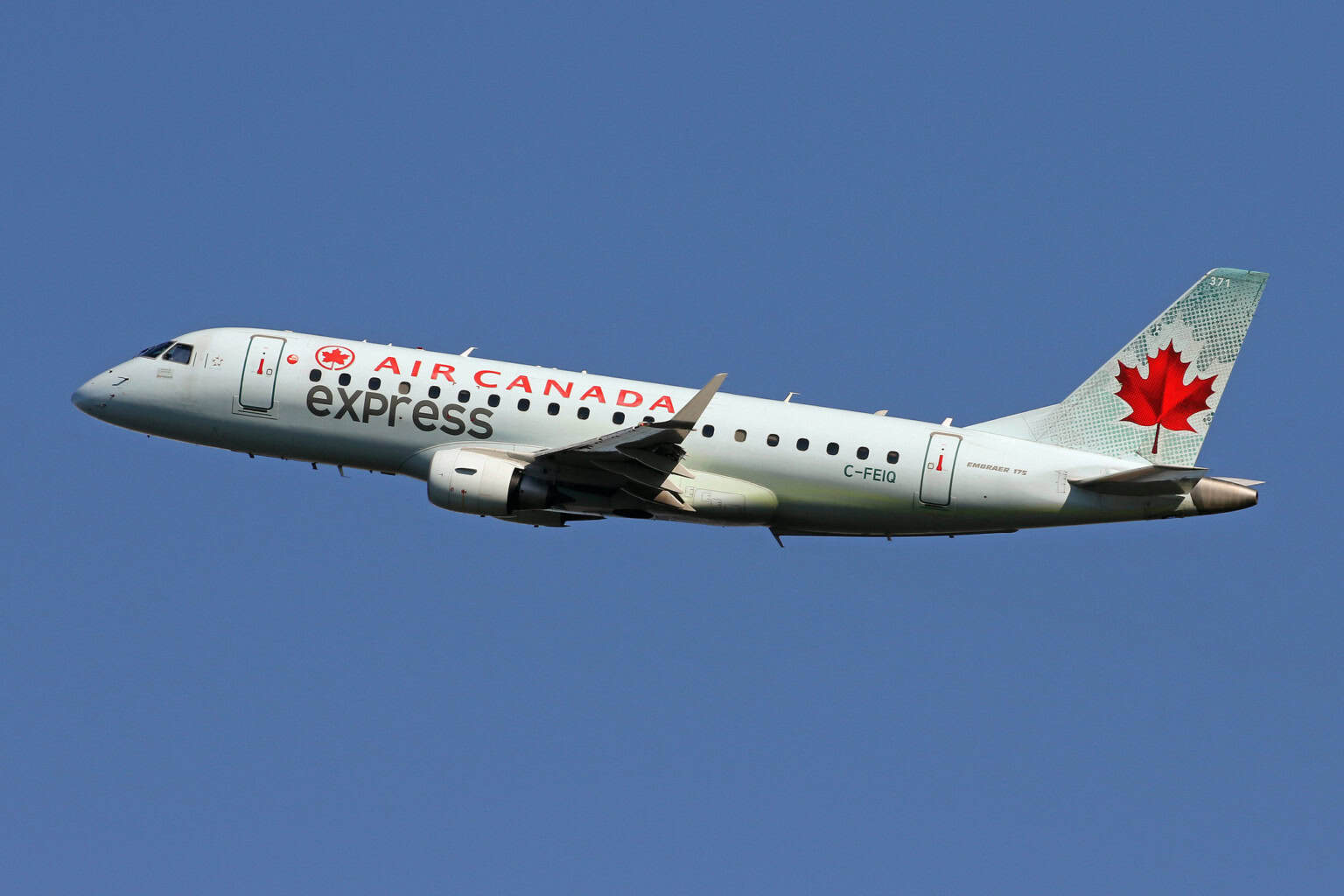
The Embraer 175 is a twin-engine regional jet that bridged the gap between 50-seat regional jets and full-size narrowbodies, and it became the most widely flown regional jet in North America.
Updated: by Tim de Vries
The latest aviation news and stories sent to your inbox.
The Embraer 175, commonly known as the E175, became one of the most successful regional jets of the 21st century. Blending modern avionics, efficient performance, and a spacious cabin layout, it offered airlines a premium regional product that felt closer to a narrowbody experience than a traditional regional aircraft.
Live Fleet Activity (E75S)
Fetching live data…
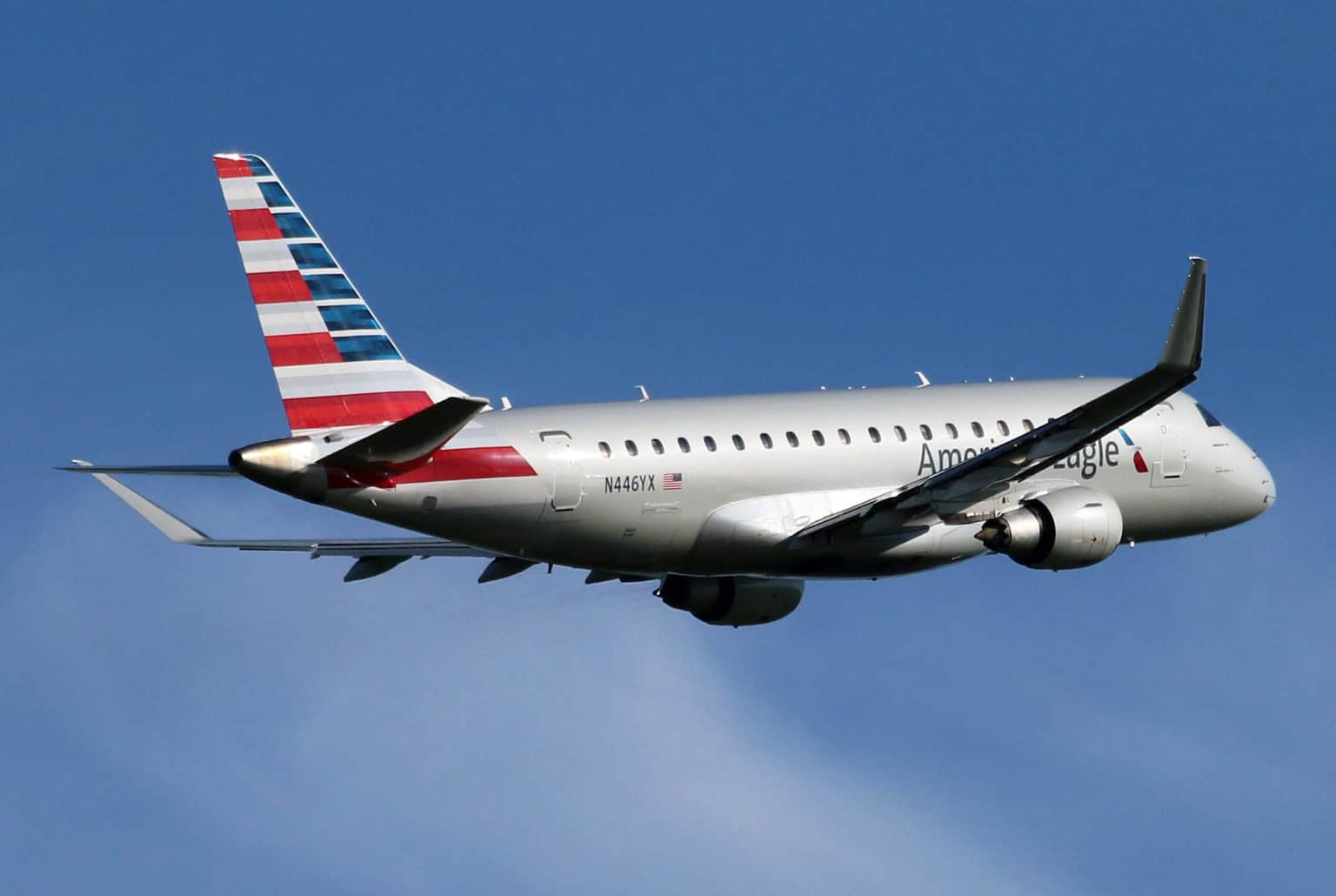

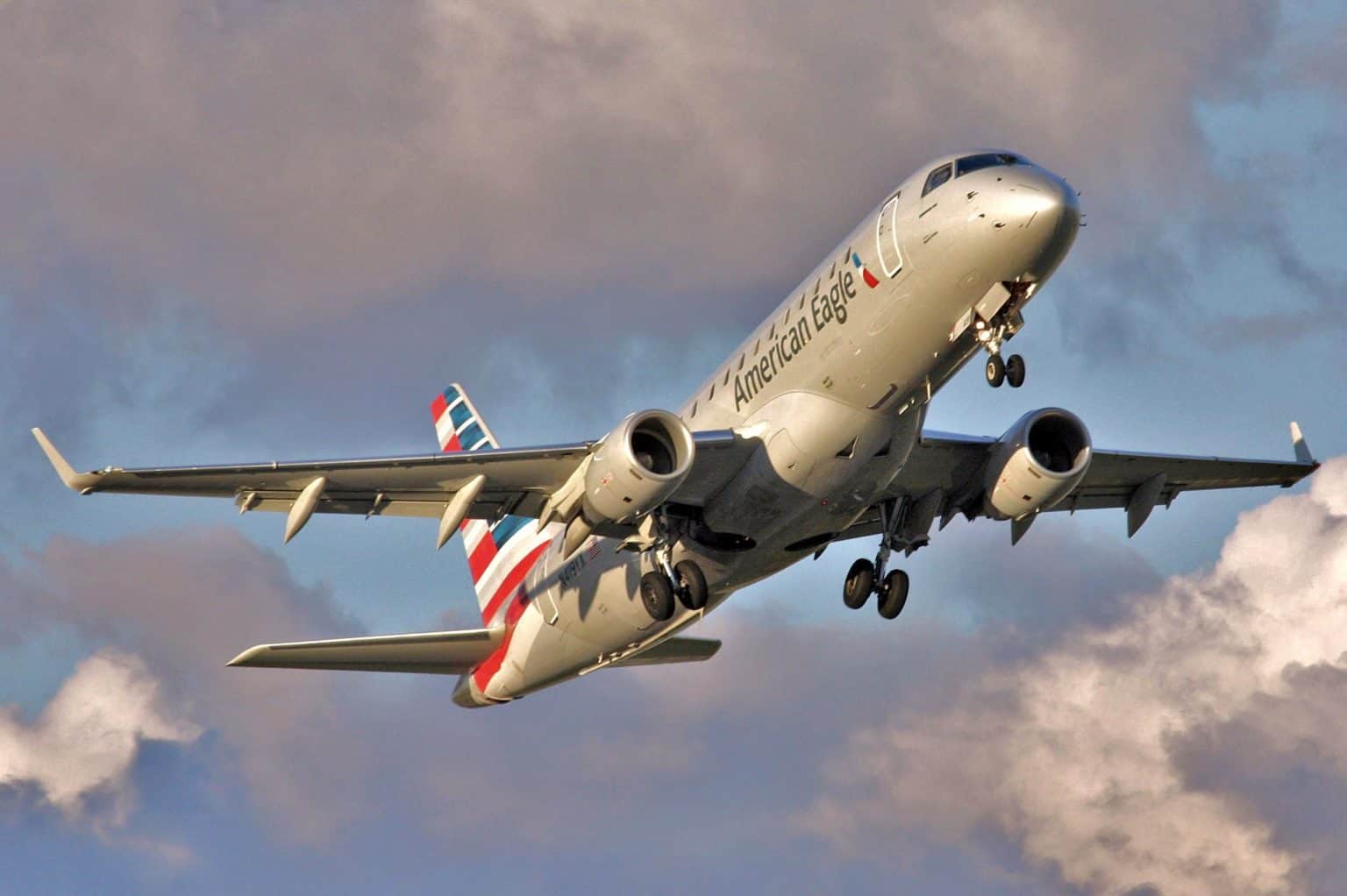




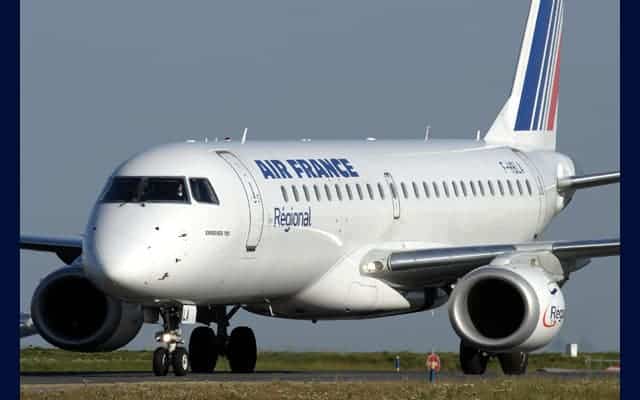

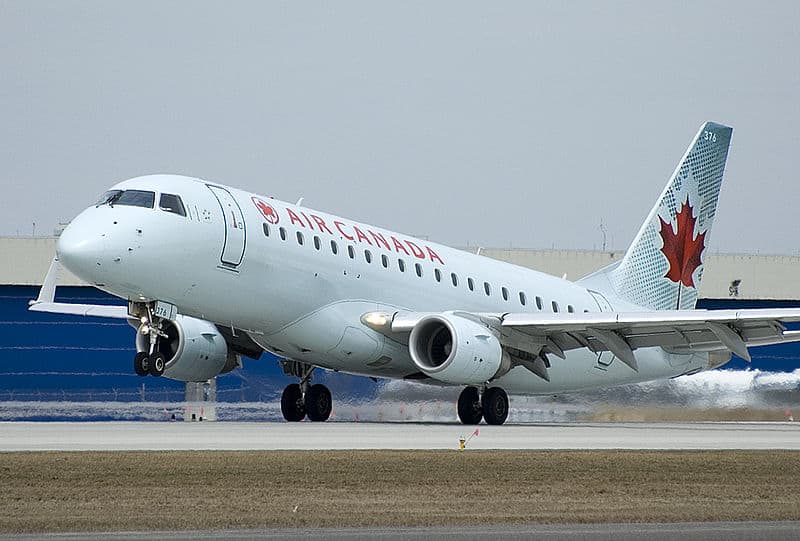


The Embraer 175, marketed as the E175, is a twin-engine regional jet built by the Brazilian manufacturer Embraer. It seats 76 passengers in a typical two-class layout and up to 88 in a single class, and it has become the most widely flown regional jet in North America.
First flown in June 2003 and entering service in July 2005 with Air Canada, the E175 was designed to bridge the gap between 50-seat regional jets and full-size narrowbody airliners. Its wide cabin, two-by-two seating, and mainline-style comfort made it a favorite for the regional feeder flights that connect smaller cities to major hubs.
The E175 is part of Embraer’s first-generation E-Jet family, which also includes the smaller E170 and the larger E190 and E195. The E175 is a stretched version of the E170, sharing the same wing, systems, and cockpit but adding two fuselage plugs for extra seats.
That commonality is a major selling point. Roughly 86 percent of the E175’s spare parts are shared with other members of the E-Jet family, which keeps maintenance fast and inventory costs low for airlines that operate a mixed E-Jet fleet.
Embraer later developed the E175-E2, a re-engined version with new geared turbofans and a larger wing. Because the E2 is heavier than the scope-clause limits in most U.S. pilot contracts allow, American regional carriers have kept buying the original E175, and the first-generation jet remains in production more than 20 years after its debut.
Most E175s in the United States are flown by regional carriers under the brand of a major airline, such as American Eagle, Delta Connection, and United Express. The reason the E175 dominates this market comes down to scope clauses.
Scope clauses are rules in mainline pilot union contracts that cap the size and weight of aircraft a regional partner is allowed to fly. The E175 sits right at the maximum weight those clauses permit, which makes it the largest and most comfortable jet a U.S. regional airline can operate. That single fact has driven thousands of orders.
The E175 has a double-bubble fuselage that gives it a wide cabin with a two-by-two seat layout, so there is no dreaded middle seat. Passengers sit four across, with the aisle running down the center.
A typical two-class layout carries 76 passengers, with a first-class or premium cabin up front. In an all-economy configuration the jet can hold up to 88 seats, and most economy seats are about 18.5 inches wide.
The cabin measures 69 ft 7 in (21.20 m) long and 9 ft 0 in (2.74 m) wide. Cabin height is 6 ft 7 in (2.00 m). Near-vertical sidewalls, large windows, and full-size overhead bins give the E175 an interior that feels closer to a mainline narrowbody than a traditional regional jet.
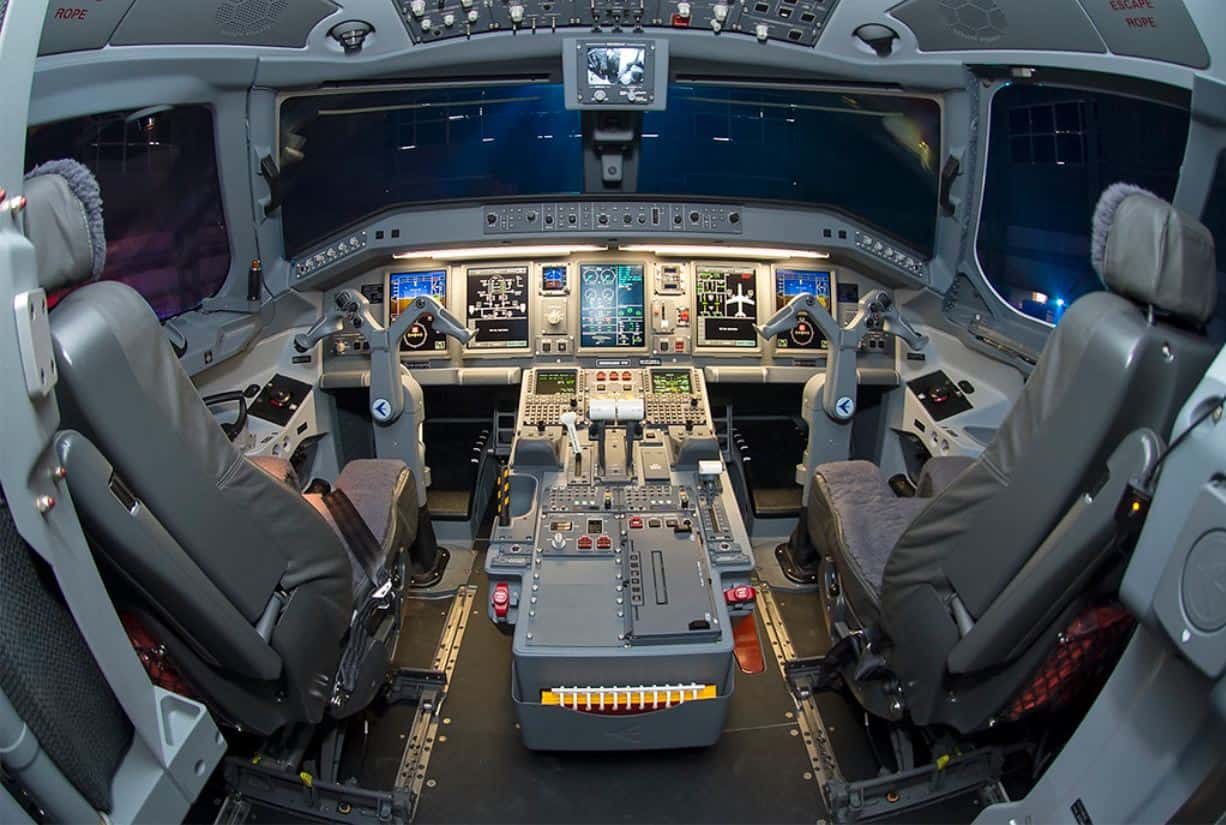
The E175 is flown by a two-pilot crew from a modern glass cockpit built around the Honeywell Primus Epic avionics suite. Large multifunction displays replace the dials of older regional aircraft and lower pilot workload.
The jet uses fly-by-wire controls for the rudder and spoilers, with conventional controls for the ailerons and elevators. A locking, reinforced door separates the flight deck from the cabin.
The E175 is powered by two General Electric CF34-8E turbofan engines, mounted under the wings and each producing about 14,200 pounds of thrust. The engines are fully interchangeable between the left and right positions, which simplifies spares.
Top speed is Mach 0.82, roughly 541 mph (870 km/h). Normal long-range cruise is around Mach 0.75. The jet has a service ceiling of 41,000 ft (12,500 m).
Range is about 2,200 nautical miles (2,530 miles / 4,070 km), enough to link most city pairs across the continental United States. The E175 needs about 7,350 ft (2,240 m) of runway to take off at maximum weight and 4,150 ft (1,260 m) to land.
The E175 has a maximum takeoff weight of 89,000 lb (40,400 kg) and a maximum landing weight of about 75,000 lb (34,000 kg). Operating empty weight is roughly 48,259 lb (21,890 kg), and maximum payload is around 22,300 lb (10,100 kg).
The aircraft is 103 ft 11 in (31.68 m) long. Since 2014, new-build E175s carry larger, angled winglets that give a wingspan of 94 ft 0 in (28.65 m). Earlier E175s, with the original winglets, span 85 ft 4 in (26.00 m). Overall height at the tail is 32 ft 4 in (9.86 m).
The E175 is a common sight across North America, flown on behalf of American Airlines, United Airlines, Delta Air Lines, and Alaska Airlines by regional partners such as SkyWest, Republic Airways, Envoy, and Horizon Air. It also serves airlines in Europe, Asia, and the Middle East.
Since orders began in earnest around 2012, the E175 has racked up more than a thousand deliveries and remains one of the best-selling regional jets ever built. Its combination of comfort, reliability, and scope-clause compliance has kept the order book full even as newer designs have appeared.
The E175’s main historical rival was the Bombardier CRJ900, a stretched member of the CRJ regional-jet family. In the larger regional and small-mainline segment it competes with the Airbus A220-100, though that jet sits above most scope-clause limits.
Other regional jets, including the Comac ARJ21 and the now-cancelled Mitsubishi SpaceJet, were positioned against the E-Jet family but never seriously challenged the E175’s grip on the U.S. market. For most American regional operators, the E175 has no direct equivalent that fits within their contracts.
The Embraer 175 is a twin-engine, single-aisle regional jet airliner built by Embraer of Brazil. It typically carries 76 passengers in two classes and up to 88 in an all-economy layout, and it is used mainly on short and medium-haul routes that feed major airline hubs.
Yes. The E175 has an excellent safety and reliability record and is popular with passengers because its two-by-two seating means no middle seats. Its wide cabin, quiet ride, and full-size overhead bins make it one of the most comfortable regional jets flying today.
The E175 uses a two-by-two layout, with two seats on each side of a single aisle and no middle seat. Two-class versions add a first-class cabin of larger seats up front, while all-economy versions fill the cabin with the same 2-2 arrangement.
It is a medium-sized regional jet. The E175 is much larger than a business jet or a 50-seat regional aircraft, but smaller than a mainline narrowbody like a Boeing 737 or Airbus A320. At 76 to 88 seats, it sits at the upper end of the regional-jet category.
The E175 has a top speed of about Mach 0.82, or roughly 541 mph (870 km/h). It normally cruises near Mach 0.75. That makes it about as fast as the larger jets it feeds passengers to.
The E175 has a range of about 2,200 nautical miles, or roughly 2,530 miles (4,070 km). That is enough to fly nonstop across most of the continental United States.
The E170 is the shorter member of the pair and seats about 70 to 78 passengers, while the E175 is stretched to seat 76 to 88. They share the same wing, engines, and cockpit, so pilots can fly both with a common type rating.
In the United States the E175 is flown by regional partners for American Airlines, United Airlines, Delta Air Lines, and Alaska Airlines, operated by carriers such as SkyWest, Republic Airways, Envoy, and Horizon Air. It is also used by airlines in Europe, Asia, and the Middle East.
Both Embraer and Boeing build aircraft to the same strict certification standards, and the E175 has an outstanding safety record with no fatal accidents in airline service. Comparing manufacturers overall is difficult, but the E175 is considered one of the safest airliners in operation.
A new E175 has a list price of roughly 45 to 55 million dollars, though airlines typically pay less through fleet discounts. Prices vary with configuration, engines, and the size of the order.
Sources and references used for research and fact-checking.