
Light Passenger Jets
Embraer ERJ 140
ICAO: E135
The Embraer ERJ 145 is the 50-seat regional jet that took airlines off turboprop routes in the late 1990s, and one of the few types to carry millions of passengers with no fatal accident.
Updated: by Tim de Vries

The latest aviation news and stories sent to your inbox.
The Embraer ERJ 145 is a 50-seat, twin-engine regional jet built in Brazil from the mid-1990s until 2020. Its rear-mounted engines and one-by-two cabin made it a regional-airline staple, and it still flies for carriers such as JSX, Piedmont and CommuteAir.
Live Fleet Activity (E145)
Fetching live data…
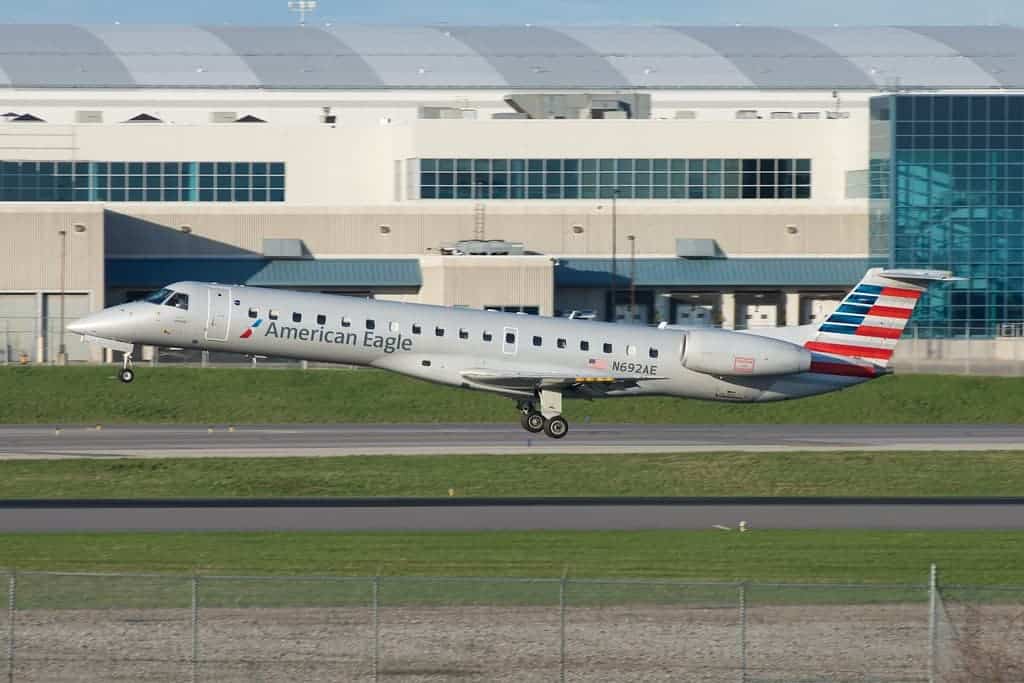




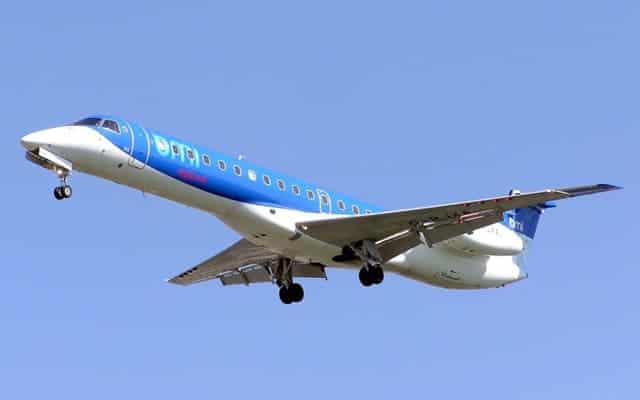


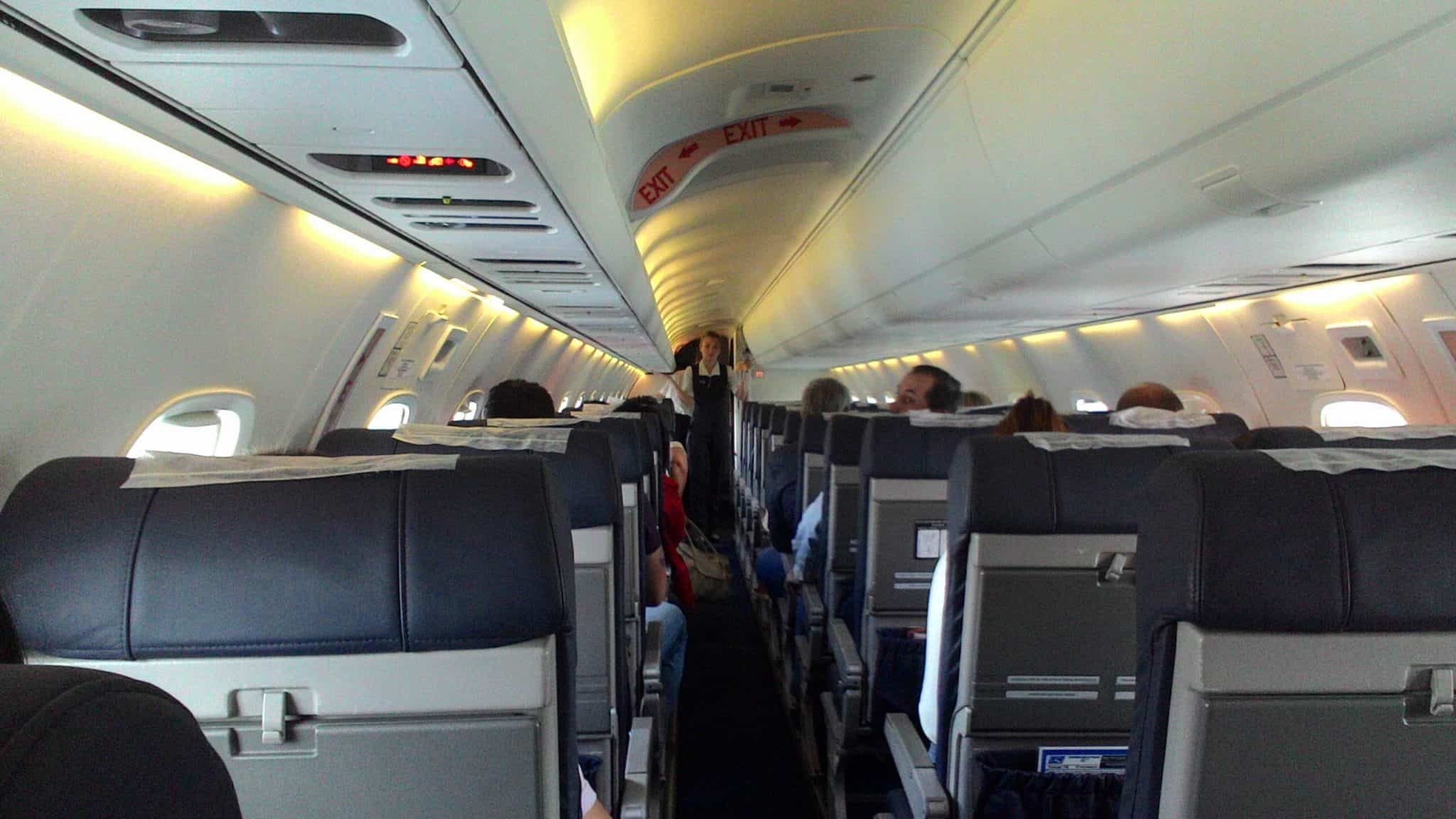

The Embraer ERJ 145 is a twin-engine regional jet that seats 50 passengers. Embraer announced the program at the 1989 Paris Air Show, first flew it on 11 August 1995 and delivered the first aircraft in December 1996.
It entered airline service on 6 April 1997 with ExpressJet Airlines. The full specification table for the aircraft is on this page, so the sections below explain what the numbers mean in practice.
The ERJ 145 began as a jet successor to the EMB 120 Brasilia turboprop.
Production ended in 2020. By then the ERJ family, which includes the smaller ERJ 135 and ERJ 140, had reached 1,231 aircraft built. A joint venture in China added about 41 more between 2003 and 2016.
The base ERJ 145 seats 50. Embraer shortened the fuselage to make the 44-seat ERJ 140 and the 37-seat ERJ 135, and sold the 145 in extended-range (ER), long-range (LR) and extra-long-range (XR) versions.
The ERJ 145XR is the one that looks different. It adds winglets, more powerful AE 3007A1E engines and extra fuel, which lifts its range to about 2,000 nm. The standard ERJ 145 has no winglets.
The same airframe also became the Legacy 600 business jet and a family of military aircraft, including airborne early warning and remote sensing versions flown by Brazil, Greece and India.
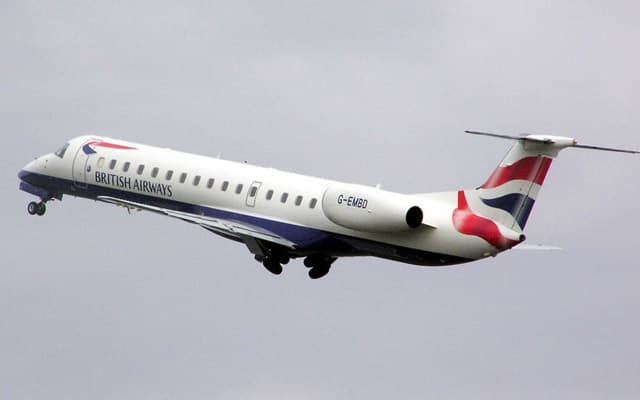
The ERJ 145 has low-mounted swept wings, a T-tail, a circular fuselage cross-section and two Rolls-Royce AE 3007 turbofans on the rear fuselage. Rear engines keep the cabin quiet and the wing clean, and the aircraft sits low enough for built-in airstairs.
Embraer built it with partners. Gamesa of Spain makes the wings, ENAER of Chile the tail, and Liebherr and Hamilton Sundstrand supply systems.
The cockpit uses a Honeywell Primus 1000 avionics suite and is flown by a two-pilot crew.
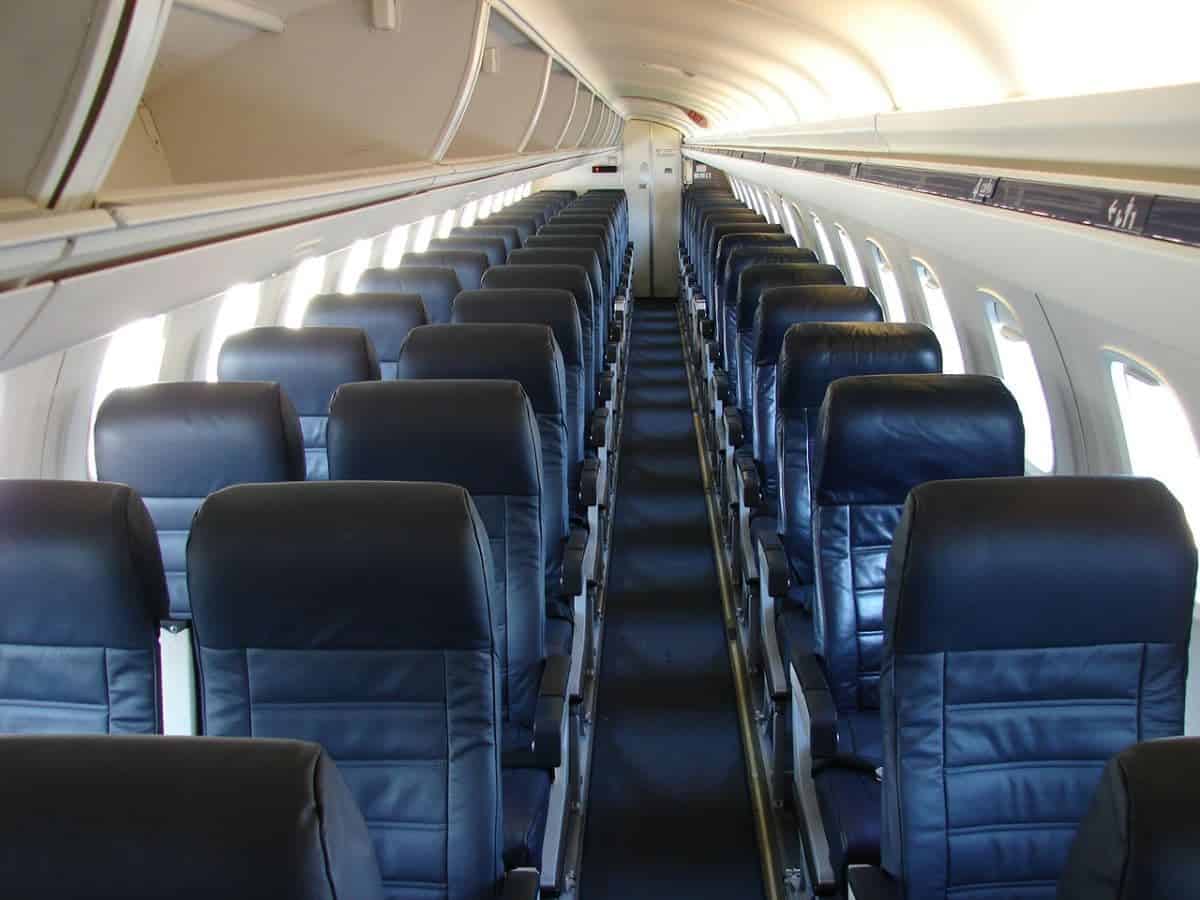
The cabin is laid out one-by-two, so every passenger has either a window or an aisle seat and nobody sits in a middle seat.
Most airlines fit it with a single class of 50 seats. Some United Express aircraft carry a handful of Economy Plus rows, but the ERJ 145 does not have a first class cabin in the usual sense.

The cabin height is 6 ft 0 in · 1.82 m, so the cabin is low, and the baggage volume is small.
The panel shows a range of 1,550 nm · 1,780 mi · 2,870 km, which is Embraer’s figure for the long-range version with a full passenger load. That covers most regional sectors comfortably, such as Chicago to Boston or London to Zurich.
It does not cover the North Atlantic. London to New York is roughly twice the stated range, so the ERJ 145 cannot fly it with passengers and is not used for transatlantic service.
The service ceiling is 37,000 ft · 11,300 m.

The ERJ 145 is 98 ft 0 in · 29.87 m long with a wing span of 65 ft 9 in · 20.04 m. It is a small airliner, noticeably smaller than the Embraer 175 that replaced it on many routes.
Most of the world’s ERJ 145s are still in service, though many majors have swapped them for larger regional jets. According to Wikipedia’s May 2025 operator list, the biggest fleets were JSX with 79, Piedmont Airlines with 61 and CommuteAir with 53.
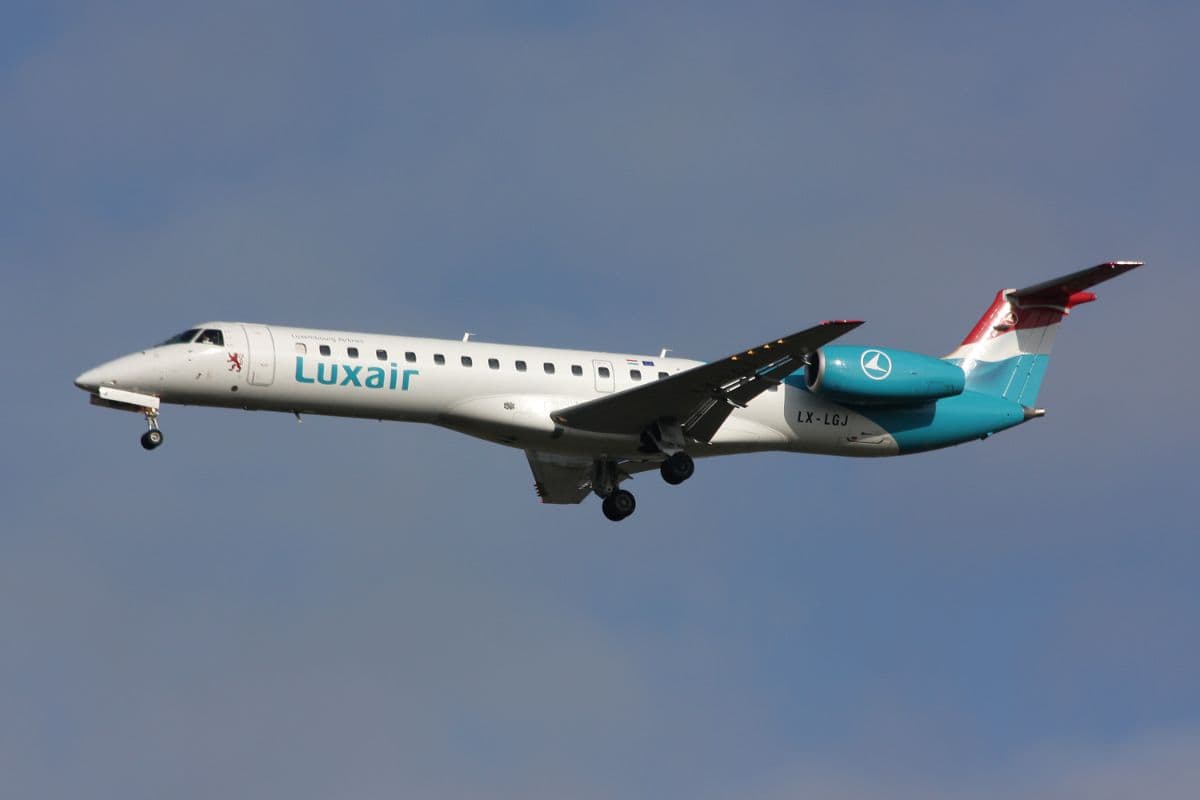
Others include Airlink in South Africa, Contour Airlines and Loganair. Luxair and Air Namibia are among the airlines that have ordered it in the past.

Wikipedia lists 26 accidents and incidents involving the family, including 11 hull losses, with no fatalities recorded in those events at the time it was checked.
One of the best known is CommuteAir (United Express) Flight 4933 on 4 March 2019, when pilots misidentified the runway at Presque Isle, Maine, in snow and did not abort the approach. A later loss, AirJet Angola Flight 100, came on 17 November 2025 at Kolwezi.
The main rival was the Bombardier CRJ line. The 50-seat CRJ200 competed directly with the ERJ 145 for regional contracts.
Both are 50-seat regional jets with rear-mounted engines. The ERJ 145 stands out for its built-in front airstairs and its one-by-two cabin.
Most airline versions have 50 seats. The shorter ERJ 140 has 44 and the ERJ 135 has 37.
Almost never. Most airlines fly it in a single economy cabin, although some carriers sell extra-legroom seats in the front rows.
No. Its range is 1,550 nm · 1,780 mi · 2,870 km, and even the 145XR, at about 2,000 nm, falls well short of a typical North Atlantic crossing.
The ERJ 145 family has had hull losses, but Wikipedia lists no fatalities in its 26 recorded accidents and incidents. Safety also depends on the operator and the pilots, not only the type.
Embraer stands for Empresa Brasileira de Aeronáutica, or Brazilian Aeronautics Company. The company was founded on 19 August 1969.
No. Production ended in 2020, but the aircraft remains in service with airlines around the world.
It uses two Rolls-Royce AE 3007 turbofans mounted on the rear fuselage. The XR version has the uprated AE 3007A1E.
Sources and references used for research and fact-checking.