


Two people were killed on Tuesday, November 3, 2026, when a Cirrus SR22 crashed in Lake of the Ozarks State Park in Missouri. Flight-tracking data from FlightAware points to the aircraft being N313DG, an SR22 that had landed at nearby Lee C. Fine Memorial Airport earlier that day.
The FAA said the plane went down around 2:15 p.m. local time with two people on board. The National Transportation Safety Board will lead the investigation, with the FAA taking part.
Latest updates
Nov. 3, 11:10 p.m. ET
Patrol says the two who died were from Simpsonville, Kentucky. In a final update, the Missouri State Highway Patrol said the plane crashed shortly after takeoff from Lee C. Fine and identified the occupants as a 51-year-old woman and a 52-year-old man, without naming them. The NTSB confirmed it is investigating the crash of a Cirrus SR22 near Lake Ozark, and investigators are expected at the scene Wednesday afternoon, ABC 17 News reported.
What is known about the crash
Missouri State Highway Patrol Troop F posted at 3 p.m. that troopers were responding to a crash near Public Beach Drive in Camden County. The small plane was fully engulfed in flames, and first responders were searching for survivors.
About 90 minutes later, the patrol confirmed two fatalities. It said first responders were working to identify the occupants and notify their families, and that FAA and NTSB officials were expected to arrive on Wednesday.
In a final update that evening, the patrol said the plane crashed shortly after taking off from Lee C. Fine Memorial Airport. It identified the two occupants as a 51-year-old woman and a 52-year-old man, both from Simpsonville, Kentucky, but did not release their names.
Osage Beach Mayor Richard Ross told ABC 17 News that city staff told him the plane had left Lee C. Fine Airport and that a mayday call followed shortly after. It was then found crashed not far from the end of the runway.
Ross told KRCG that the plane had stopped at the airport to refuel and came down about a mile away.
The Miller County Coroner’s Office said preliminary identifications had been made and next of kin notified, with positive identification still pending, ABC 17 News reported.
What the tracking data shows
FlightAware’s record for N313DG shows it leaving Clark Regional Airport in Jeffersonville, Indiana, at 11:01 a.m. Eastern on a flight to Wichita, Kansas. It landed at Lee C. Fine at 12:57 p.m. Central, and FlightAware logs that leg as diverted.
The aircraft departed Lee C. Fine again at 2:09 p.m. Central. Only one position from the plane’s own ADS-B transmitter reached FlightAware: at 2:09 p.m., about a quarter mile beyond the runway’s southwest end, at 1,400 feet and 65 knots.
With the airport at 869 feet, that puts the plane roughly 530 feet above the field. Every later point on FlightAware’s map is marked “approximate”, meaning estimated rather than received, so the data does not show where the flight ended. The NTSB has not confirmed any of it.
FAA registry records list N313DG as a 2005 Cirrus SR22, serial number 1592, with a Continental IO-550-series piston engine. It is registered to a limited liability company in Louisville, Kentucky.
What is not known yet
The FAA, the NTSB and the patrol have not published the registration, and the link to N313DG rests on FlightAware data. The occupants have not been named, and who was flying, what prompted the mayday and whether the SR22’s airframe parachute was used have not been reported. The NTSB has drawn no conclusions.
The airport and the SR22
Lee C. Fine Memorial Airport (AIZ) sits inside Lake of the Ozarks State Park in Miller County, near the Camden County line. FAA records list it as owned by the City of Osage Beach, with a single 6,497-foot (1,980 m) runway, 4/22, and no control tower.
Public Beach Drive, where the patrol placed the crash, lies southwest of the airport, according to KOMU 8. FAA airport data lists both avgas and jet fuel for sale at the field.
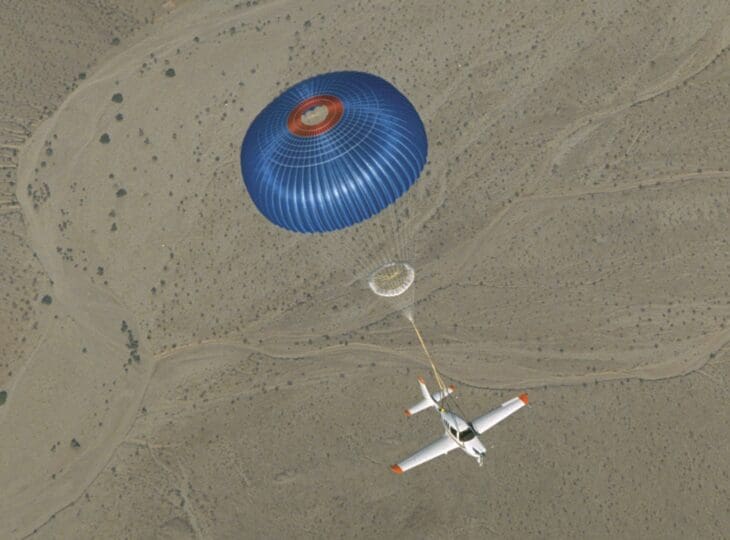
The SR22 is a single-engine piston aircraft. Cirrus fits every certified model with the Cirrus Airframe Parachute System, a whole-plane ballistic parachute designed to lower the aircraft to the ground in an emergency.

ABC 17 noted that two earlier crashes in Osage Beach, in August 2020 and July 2023, each killed two people. The 2023 crash involved a different airport, Grand Glaize-Osage Beach, about 6 nautical miles west of Lee C. Fine.
What happens next in the NTSB investigation
The NTSB confirmed Tuesday evening that it is investigating the crash of a Cirrus SR22 near Lake Ozark. The board said its investigators were expected at the site Wednesday afternoon and would look at the pilot, the aircraft and the operating environment, according to ABC 17 News.
The NTSB’s investigators first gather facts at the site and beyond it, including flight logs, maintenance records and interviews, according to the board’s description of its process. Its preliminary report sets out the facts known so far, without a cause, and the board told ABC 17 to expect it within 30 days.
That first report can come quickly. After the July 2023 Osage Beach crash, the NTSB published its preliminary report one week later, ABC 17 reported at the time.
The final report, with a probable cause, takes far longer. The NTSB says it generally aims to finish an investigation within 12 to 24 months, depending on its complexity and the investigators’ workload.
Sources and references used for research and fact-checking.
- FAA, Statements on aviation accidents and incidents: General Aviation / Lake Ozark, Missouri (Nov. 3, 2026)
- Missouri State Highway Patrol, Troop F, Plane Crash at Lake of the Ozarks (X post, 3:00 p.m. CST)
- Missouri State Highway Patrol, Troop F, Plane Crash at Lake of the Ozarks: UPDATE (X post, 4:33 p.m. CST)
- FAA Aircraft Registry, N-Number inquiry: N313DG
- NTSB, The Investigative Process
- Cirrus Aircraft, SR22
Get the Newsletter
The latest aviation news and stories sent to your inbox.
About the Author

AeroCorner News is the aviation news desk of AeroCorner.com. It covers accidents and incidents, safety rulings, airline and airport disruption, and new aircraft. It works from primary sources such as the NTSB, FAA, EASA and the manufacturers' own announcements.