

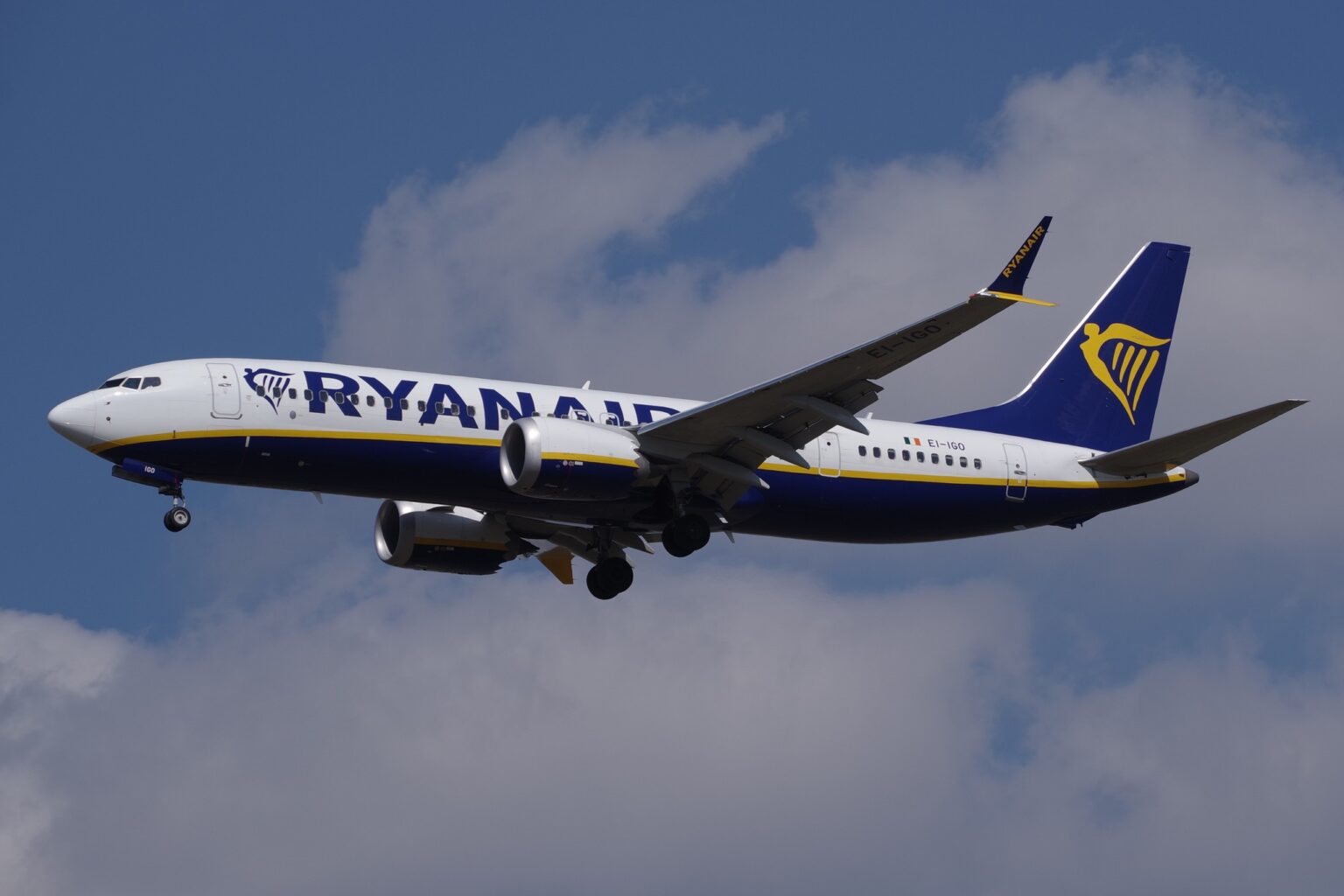
Ryanair flight FR4116 from Manchester landed at Región de Murcia International Airport in southeastern Spain on the morning of Tuesday, November 3, 2026, after a bomb threat was reported against it. The Guardia Civil searched the aircraft and found no explosives, Spain’s government delegate in the region, Francisco Lucas, said.
It was one of at least seven European flights hit by threats that day, including two Ryanair services into Rome Fiumicino. One of them, FR9611 from Dublin, was escorted by Italian Air Force fighters until it landed. No explosives were found on any of the aircraft.
What happened on the Manchester to Murcia flight
FlightAware data shows FR4116 taking off from Manchester at 7:11 a.m. GMT and landing at Murcia at 10:31 a.m. local time, about a quarter of an hour ahead of schedule. The aircraft was the Boeing 737-8200 EI-IGO, according to The Aviation Hub, which cited Flightradar24 data.
The 737-8200 is the high-density version of the Boeing 737 MAX 8 that Ryanair flies. FlightAware does not publish the aircraft’s registration for this flight.
The alert came while the jet was still in the air. Emergency services sources told El Español that Ryanair’s control chief in Murcia called the 112 emergency line shortly after 10 a.m.
Firefighters, ambulances, the Guardia Civil and the National Police were waiting on the airfield when the 737 landed, the paper reported. Seven ambulances were sent, and six were later stood down.
All 114 passengers and seven crew left the aircraft and went through a security check, the delegate said, as reported by COPE. Airport operator Aena said no flights were canceled.
At 1:12 p.m. local time, Lucas posted that the Guardia Civil had ruled out explosives on the aircraft from Manchester and that the airport had returned to normal operations. Who made the threat, and how, had not been made public at the time of writing.
Two Ryanair threats at Fiumicino
At Rome Fiumicino, the first Ryanair flight in question arrived from Lisbon at about 9:40 a.m. after an emailed report of a bomb on board, a Fiumicino official told Reuters. Police bomb disposal teams checked the passengers, crew and baggage and found nothing.
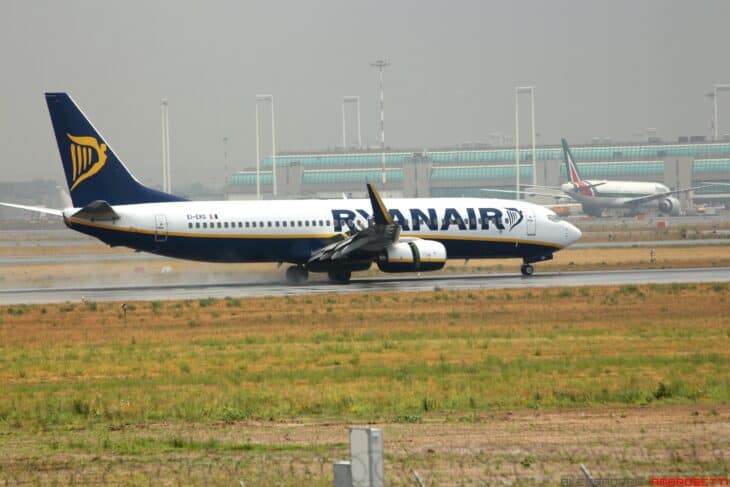

A second email named the Dublin flight. FlightAware shows FR9611 leaving Dublin at 7:06 a.m. and landing at Fiumicino at 10:44 a.m. local time.
“The Italian Air Force escorted Ryanair flight FR9611,” an airport spokesperson said, according to AFP reporting carried by TheJournal.ie. The same ground checks followed, with the same negative result.
Italian reports differ on the escort. Sky TG24 said two fighters escorted both flights, and Quotidiano La Voce identified them as Eurofighters, while the airport accounts tie the escort to FR9611 only.
The searches ended shortly after noon, Sky TG24 reported. Fiumicino kept operating throughout.
Poland and Bulgaria on the same morning
In Poland, LOT flight LO286 from Heathrow diverted to Warsaw-Modlin, and an SAS flight from Copenhagen was checked at Warsaw Chopin. LOT later said “nothing was found on the aircraft,” the Polish news agency PAP reported, and SAS said it had referred the matter to the Polish police.
Bulgaria’s Transport Ministry said threats were made against two flights into Sofia, a Wizz Air service from Bergamo with 176 passengers and a Ryanair service from Dublin with 185. Both landed safely, and inspections found no explosive devices, Reuters reported.
Early reports had described a plane from Israel being searched at Sofia. The ministry’s account, as Reuters reported it, named only the Bergamo and Dublin flights.
The threats followed one the day before, when Wizz Air W64302 from Luton to Sofia was escorted into Budapest by a Hungarian Gripen. Bulgarian officials said on Tuesday they were still trying to identify who sent that threat, the Associated Press reported.
Why a hoax still gets the full response
The threats described so far were sent from outside the aircraft. In Rome they came by email, and in Sofia, Bulgaria’s transport minister, Georgi Peev, said one was first flagged by a pilot who had learned of it through the airline, the AP reported.
That is what makes a mass hoax effective. There is little way to tell a fake message from a real one in the minutes before landing, so each flight named got the same treatment: emergency crews waiting, the jet parked, the passengers taken off and the aircraft and bags searched.
The responses still varied. FR4116, both Rome flights and the two Sofia arrivals continued to their destinations, while LO286 was sent to Modlin instead of Chopin, and Modlin closed for a time.
A fighter escort is a separate call, made by the military of the country whose airspace the flight is in. Hungary sent a Gripen on Monday, and Reuters counted one escort among Tuesday’s flights, the Italian one into Rome.
No explosives have been found on any of the flights. The cost is counted in hours instead: at Murcia, about two and a half hours passed between landing and the all-clear.
Sources and references used for research and fact-checking.
Get the Newsletter
The latest aviation news and stories sent to your inbox.
About the Author

AeroCorner News is the aviation news desk of AeroCorner.com. It covers accidents and incidents, safety rulings, airline and airport disruption, and new aircraft. It works from primary sources such as the NTSB, FAA, EASA and the manufacturers' own announcements.