

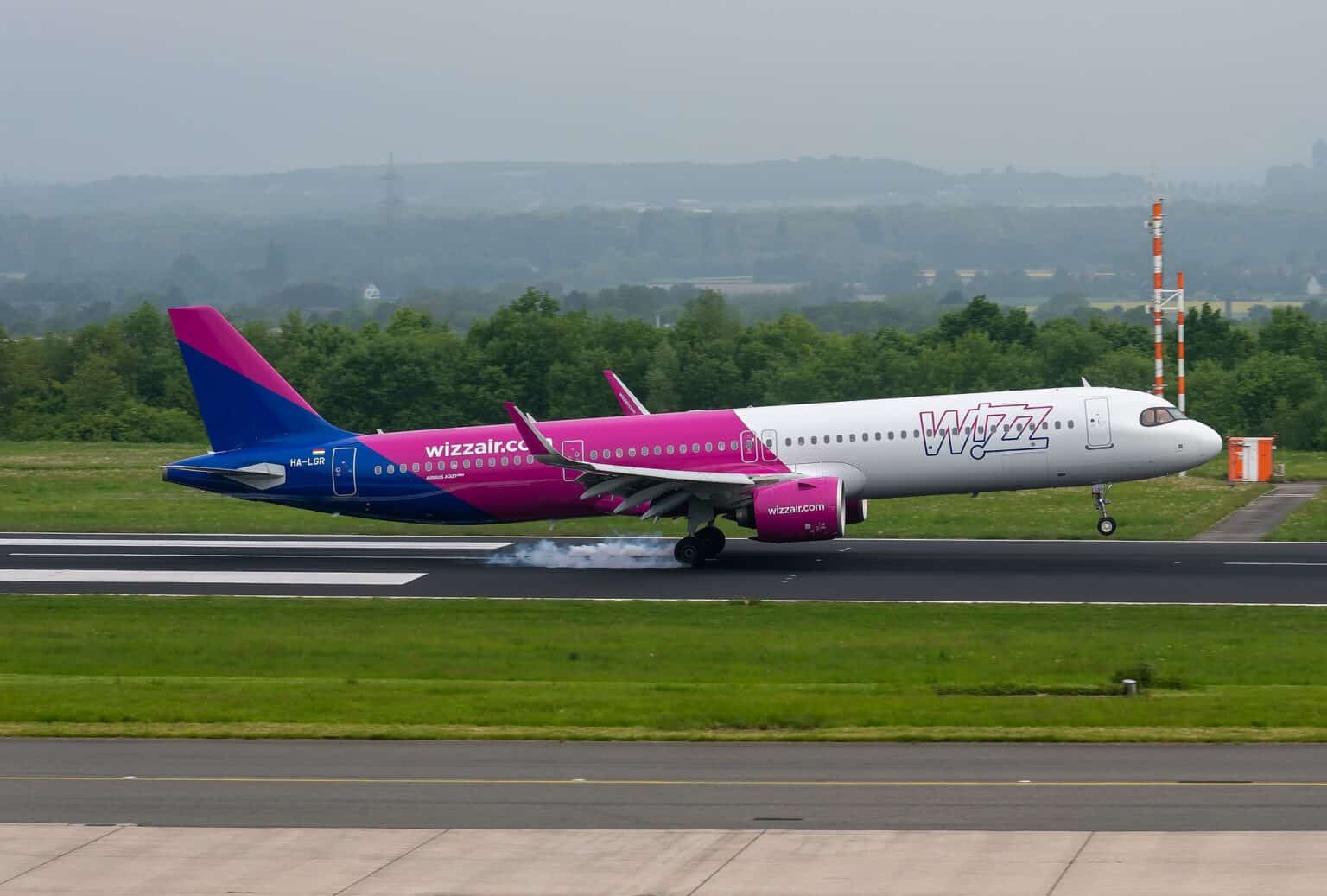
Wizz Air flight W64302 from London Luton to Sofia diverted to Budapest on Monday, November 2, 2026, after a bomb threat was received during the flight. A Hungarian Air Force Gripen was scrambled to escort the airliner in, Hungary’s defense minister said.
The Airbus A321neo landed safely at Budapest Liszt Ferenc International Airport at about 12:08 p.m. local time, where police and counter-terrorism officers were waiting. At the time of writing, no authority had said whether anything was found on board.
What happened on the Luton to Sofia flight
Wizz Air confirmed that the day’s London Luton to Sofia flight was diverted after a bomb threat came in during the flight, in a statement carried by LBC. The airline said the aircraft taxied to a designated stand, where the authorities carried out security checks, and that it was cooperating fully with them.
The airline did not give a flight number. FlightAware’s tracking history shows Wizz Air’s WZZ4302 (W6 4302) leaving Luton at 8:33 a.m. GMT that morning, marked as diverted from Sofia and arriving in Budapest at 12:09 p.m. local time.
FlightStats lists the aircraft on that sector as HA-LGR, an A321neo. Neither Wizz Air nor the Hungarian authorities have named the registration.
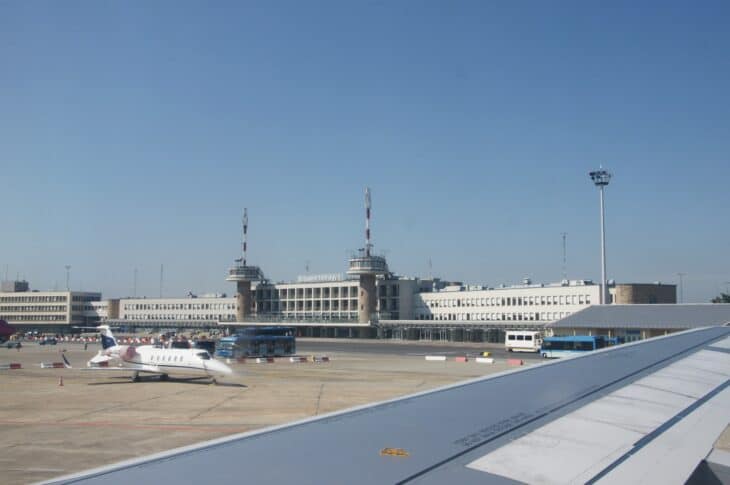
According to Index, the jet turned back toward Budapest over Bosnia and Herzegovina and landed on Runway 2. The Hungarian news site reported that it parked at stand B5, with the airport fire service, police and counter-terrorism units at the aircraft.
Runway 2 was closed while the response was under way, and all arrivals and departures used the airport’s other runway, Index reported. How long the closure lasted has not been published.

Why a fighter jet met the airliner
Defense Minister Romulusz Ruszin-Szendi announced the military side of the response on Facebook, and Hungary’s Ministry of Defence published his account. NATO’s air defense readiness service ordered an ALPHA alert, and a Hungarian Saab Gripen took off within minutes.
The fighter made sure the airliner could land in Budapest, then returned to its base at Kecskemét, after which the police took over. The minister said the readiness service had proved itself in a real situation.
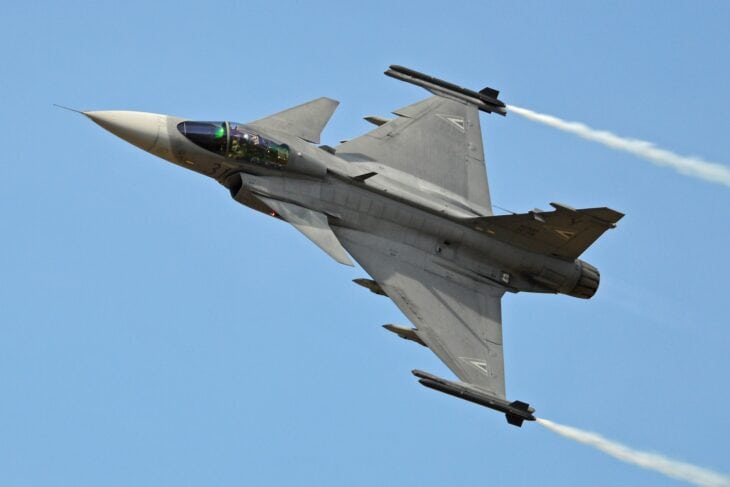
An ALPHA scramble is a real-world launch of the fighters NATO keeps on short-notice alert to police member states’ airspace, as opposed to a practice launch. In a bomb-threat case the fighter’s job is to find the airliner, keep watch on it and stay with it until it is on the ground.
Wizz Air has not explained why the crew chose Budapest for the diversion rather than an airport nearer the point where it turned, or Sofia itself.
Hungary’s Gripens have done this before. In November 2022 they escorted a passenger jet flying from Poland to Israel from the moment it entered Hungarian airspace until it landed in Debrecen, the Ministry of Defence said at the time, as reported by the Budapest Times.
Britain handled a similar case the same way in July, when RAF Typhoons escorted a Qatar Airways 777 to Manchester after a threat that proved to be a hoax.
Budapest’s last Wizz Air bomb-threat landing
Budapest has handled a Wizz Air bomb threat before. On July 20, 2022, an A321neo registered HA-LGA, flying from Bari to Kraków, interrupted its flight after a bomb threat and landed in Budapest, taxiing to the same B5 holding bay, according to the record held by France’s BEA.
That landing ended in an evacuation down all eight emergency slides, and the preliminary record lists two serious and eight minor injuries. The record classifies the event as an accident, with Hungary’s investigators responsible for it.
No injuries or evacuation have been reported from Monday’s landing, and the authorities have not said whether passengers have been flown on to Sofia. The police investigation of the threat was continuing at the time of writing.
Sources and references used for research and fact-checking.
Get the Newsletter
The latest aviation news and stories sent to your inbox.
About the Author

AeroCorner News is the aviation news desk of AeroCorner.com. It covers accidents and incidents, safety rulings, airline and airport disruption, and new aircraft. It works from primary sources such as the NTSB, FAA, EASA and the manufacturers' own announcements.