

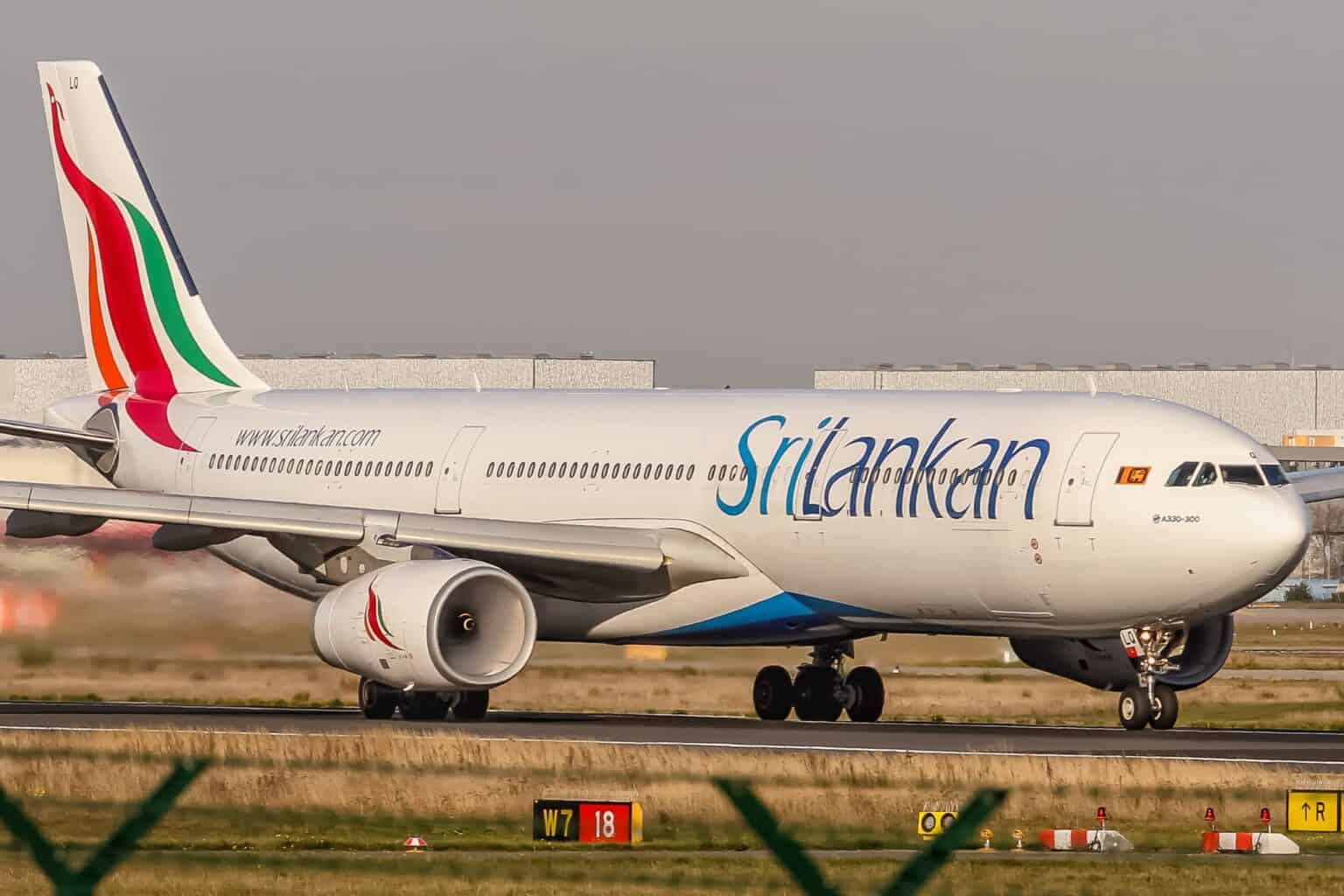
SriLankan Airlines flight UL605 from Melbourne declared an emergency on its approach to Colombo on Sunday night, November 1, 2026, after a smoke alarm went off in its cargo hold. The Airbus A330 landed safely at Bandaranaike International Airport with 258 passengers and 15 crew on board.
The airline’s head of corporate communications, Deepal Perera, said inspections after landing traced the smoke to dry ice packed around a consignment of meat in the hold, The Morning reported.
What happened on approach to Colombo
The alert came about 15 minutes before the flight was due to land, according to Ada Derana. The pilot notified the airport’s operations control centre, which put fire engines, ambulances, rescue crews, doctors and nurses on standby and told nearby hospitals to be ready.
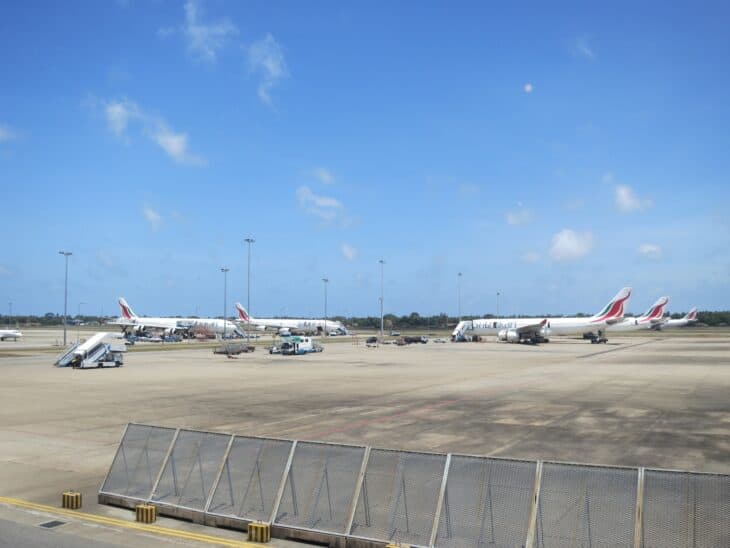

Ada Derana reported that the jet landed without damage or injuries, and the airline said all passengers and crew disembarked safely.
Accounts of the timing differ slightly. Local reports put the arrival at about 10:38 p.m., while the airline’s statement, carried by Hiru News, said the aircraft had been scheduled to touch down around 11:20 p.m.
In that statement, SriLankan described the trigger as a smoke alarm in the cargo hold and said it has opened an investigation. Neither the aircraft’s registration nor the exact A330 variant has been published.
After further checks, the aircraft left Colombo again on Monday morning for another destination, Hiru News reported.
It is SriLankan’s second notable event in a week. On October 28, flight UL503 to London rejected its takeoff at Colombo after a suspected bird strike.
Why dry ice is a regulated cargo
Dry ice is solid carbon dioxide, and airlines carry it routinely to keep perishables cold. The FAA’s Safety Alert for Operators 20017 notes that it turns straight from solid to gas at temperatures above minus 108.4°F (minus 78°C) at normal atmospheric pressure, and does so faster at reduced pressure.
That gas is the hazard. The FAA warns that carbon dioxide can displace oxygen in aircraft compartments, dull the thinking of anyone in that space without them noticing, and in high concentrations become an asphyxiation risk.
For that reason dry ice travels under dangerous goods rules, like the lithium batteries in passengers’ bags. Aircraft manufacturers publish the maximum quantity each type’s ventilation can handle, and the FAA says the cargo load has to be planned around how fast the ice sublimates.
Why a cargo smoke alarm can fire without a fire
Cargo hold smoke detectors raise far more false alarms than real fires. A 2001 report by the US National Institute of Standards and Technology (NIST) cited a study that put the false-alarm ratio for cargo smoke detection at 200 to 1 over five years.
NIST said a significant share of those false alarms is thought to come from nuisance sources such as condensed water vapor. Neither the airline nor the authorities have said exactly what the detector picked up on UL605.
The same flight number had a genuine smoke event in February 2024. According to the Australian Transport Safety Bureau, A330-300 4R-ALQ, flying Melbourne to Colombo, had smoke and fumes in the flight deck and cabin during the climb.
The crew declared a MAYDAY and returned to Melbourne, and an engineering inspection found a failed air cycle machine. There were no injuries.
Sunday’s event looks very different on what is known so far, but SriLankan’s investigation is still open at the time of writing.
Sources and references used for research and fact-checking.
- FAA, SAFO 20017: Transportation of COVID-19 Vaccines Requiring Large Quantities of Dry Ice (Dec 10, 2020)
- NIST, Aircraft Cargo Compartment Fire and Nuisance Source Test in the FE/DE (NIST SP 965), Cleary and Donnelly, 2001
- ATSB, AA-2024-002: smoke and fumes event involving Airbus A330-300, 4R-ALQ, 60 NM north-west of Melbourne Airport, 12 February 2024
Get the Newsletter
The latest aviation news and stories sent to your inbox.
About the Author

AeroCorner News is the aviation news desk of AeroCorner.com. It covers accidents and incidents, safety rulings, airline and airport disruption, and new aircraft. It works from primary sources such as the NTSB, FAA, EASA and the manufacturers' own announcements.