

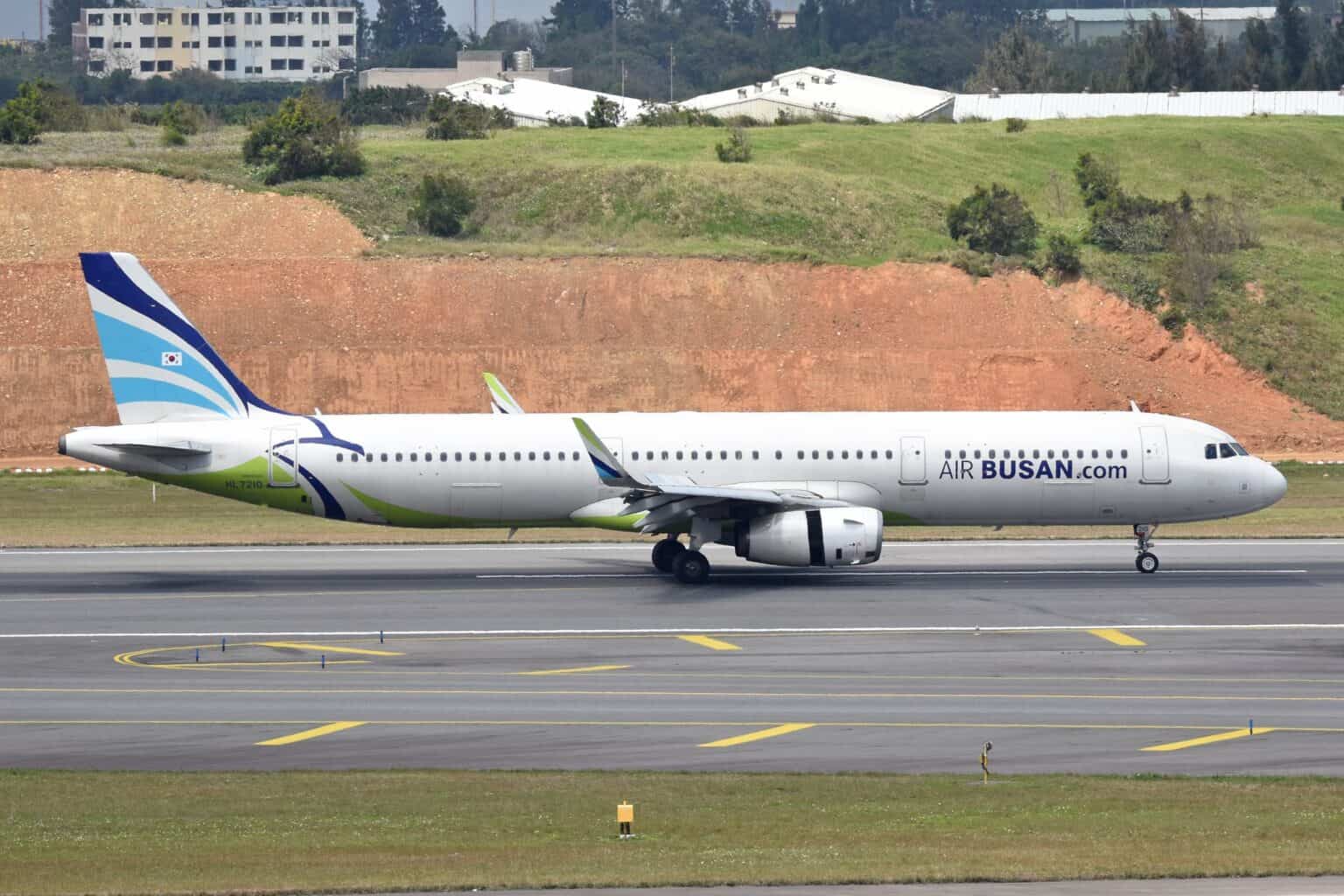
Air Busan flight BX717 from Gimhae International Airport in Busan to Tokyo Narita turned back on the morning of Monday, November 2, 2026, after a fault in its fuel control system. About 200 passengers finally left for Japan on a replacement jet more than six and a half hours behind schedule.
The airline called the return “an unavoidable measure for safety” and apologized for the delay, according to Financial News. It gave waiting passengers food and drink coupons at the airport.
What Happened on BX717
The flight was scheduled to leave at 8:20 a.m. and departed at 8:55 a.m., Seoul Shinmun reported, citing Korea Airports Corporation data. The paper put 209 people on the first aircraft and 206 on the replacement, without explaining the difference.
Korean reports say the problem appeared over the East Sea, the body of water also called the Sea of Japan. Financial News said a warning light for the fuel control system came on and the captain decided to turn back at once.
The aircraft was an Airbus A321-200 registered HL7210, according to The Aviation Herald. It reported that the crew stopped the climb at FL230, about 23,000 feet, and landed back on Gimhae’s runway 36L about an hour after takeoff.
FlightAware tracking for HL7210 matches that timing: off at 8:55 a.m. and back on the ground at 9:56 a.m. local time.
Air Busan has not said which part failed. The Korean reports do not say whether the fault was in an engine’s fuel control or elsewhere in the jet’s fuel system, and no cause had been published by the time of writing on November 3.
Why the Replacement Took Six Hours
Turning back put the A321 on the ground at Gimhae, Air Busan’s hub, rather than at Narita, and Gimhae is where Air Busan found its spare jet.
Finding the spare took most of the day. FlightAware data for the replacement A321, HL8365, shows it flew two round trips to Jeju that morning and landed back at Gimhae at 1:47 p.m.
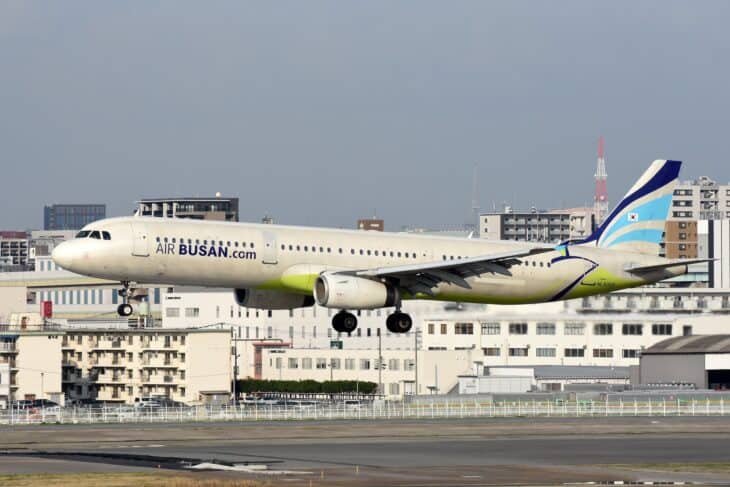
It then left for Narita at 3:11 p.m. and landed at 4:51 p.m. local time, the tracking log shows. Seoul Shinmun gave the departure as 2:59 p.m., 6 hours and 39 minutes after the scheduled time.
The Aviation Herald put the replacement’s arrival delay at about 2 hours and 40 minutes. That figure does not fit the airport and tracking times, which point to a delay of more than six hours.
For the passengers, the swap meant most of a day at Gimhae for a flight of less than two hours. HL7210 had flown the same route a day earlier in 1 hour and 36 minutes, FlightAware shows.
A Busy Year for Air Busan
The turnback comes as Air Busan prepares to disappear as a brand. Its board, with those of Jin Air and Air Seoul, approved a merger in August 2026 that folds all three into Jin Air, with the combined carrier set to begin flying on March 17, 2027, Herald Business reported.
The deal still needs shareholder votes in December and a single air operator certificate from South Korea’s transport ministry. It follows the Korean Air and Asiana merger: Air Busan was an Asiana subsidiary, and folding it into Korean Air’s low-cost arm Jin Air was part of that plan.
Air Busan has had other notable events at home and abroad. In January 2025, a fire destroyed its A321 HL7763 at Gimhae before departure for Hong Kong as Flight 391, and investigators pointed to a power bank in an overhead bin.
In May 2026, flight BX791 scraped its tail during one of two failed landing attempts in strong wind at Taoyuan, Taiwan, and diverted to Kaohsiung, Busan broadcaster KNN reported. Nothing published so far links either event to the BX717 fault.
Get the Newsletter
The latest aviation news and stories sent to your inbox.
About the Author

AeroCorner News is the aviation news desk of AeroCorner.com. It covers accidents and incidents, safety rulings, airline and airport disruption, and new aircraft. It works from primary sources such as the NTSB, FAA, EASA and the manufacturers' own announcements.