

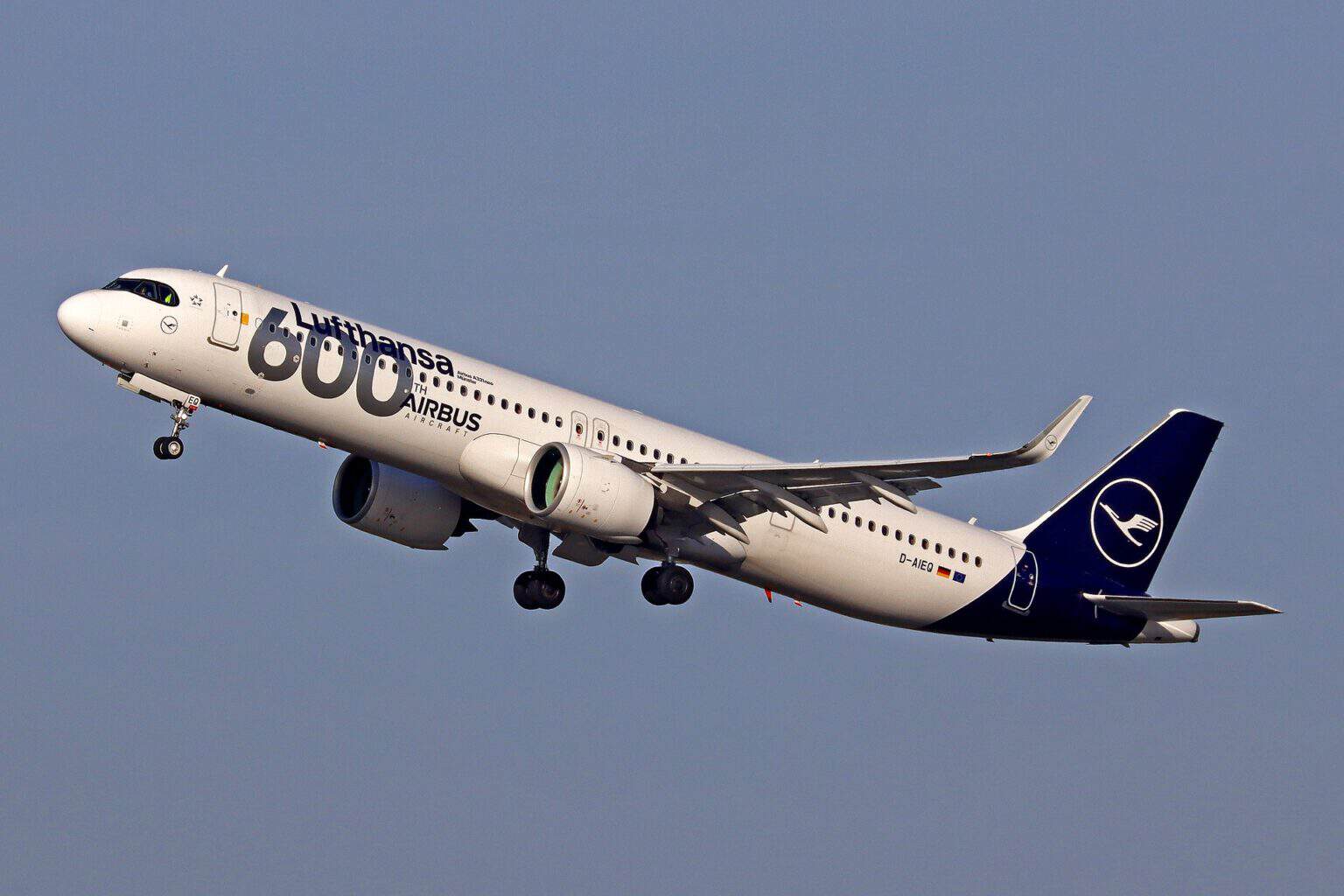
Lufthansa flight LH687 from Tel Aviv to Frankfurt diverted to Belgrade Nikola Tesla Airport on Sunday, November 15, 2026, after a male flight attendant went into a severe allergic reaction to sesame. A passenger, Israeli intensive care physician Dr. Uriel Trahtemberg, injected him with epinephrine from the aircraft’s medical kit.
Lufthansa confirmed the unscheduled landing in an emailed statement to Paddle Your Own Kanoo, saying only that “a crew member became ill.” The airline added that the safety of passengers and crews is always its highest priority.
What happened on board LH687
The jet was an Airbus A321neo registered D-AIEQ, Flightradar24’s log for the aircraft shows. It is a notable airframe: Lufthansa took delivery of it on May 24, 2023 as its 600th Airbus, named “Münster,” with 215 seats, according to the Lufthansa Group newsroom.
Tracking data show LH687 leaving Tel Aviv at 5:13 p.m. local time. FlightAware records the landing in Belgrade at 7:06 p.m. local time, a little under three hours later.
The flight attendant had eaten food containing sesame, to which he is severely allergic, according to Israeli reports. VINnews, citing Trahtemberg’s interview with Israel’s Channel 12, said he first took steroids and antihistamines, then lost consciousness as his condition worsened.
A gynecologist and a neurologist were already helping when Trahtemberg, who directs the intensive care unit at Galilee Medical Center in Nahariya, joined them. A colleague said he had already given the patient his epinephrine auto-injector.
Trahtemberg asked to see how it had been used. According to JNS, which carried his phone interview with the Israel Press Service, the colleague accidentally fired the device into the air while demonstrating it, so the patient had never received the dose.
The doctor then opened the aircraft’s emergency medical kit, prepared the epinephrine and injected it. Allergic Living reports that the kit held the drug as a vial, which he drew up by syringe and injected into the thigh.
“I gave someone medical treatment. I don’t know if that’s heroism,” Trahtemberg told the Israel Press Service. “There was no heroism here. There was professionalism.”
Why the pilots turned for Belgrade
Trahtemberg has said that epinephrine’s effect is temporary, which is why an anaphylaxis patient still needs a hospital after a dose. He told the pilot the reaction was life-threatening and that he could not say whether the improvement would last, and the pilot decided to divert, Allergic Living reports.
The jet was on the ground in Belgrade about 20 to 25 minutes later, the doctor told the Israel Press Service. Paramedics were waiting and took the flight attendant to a local hospital. His condition since then had not been reported at the time of writing.
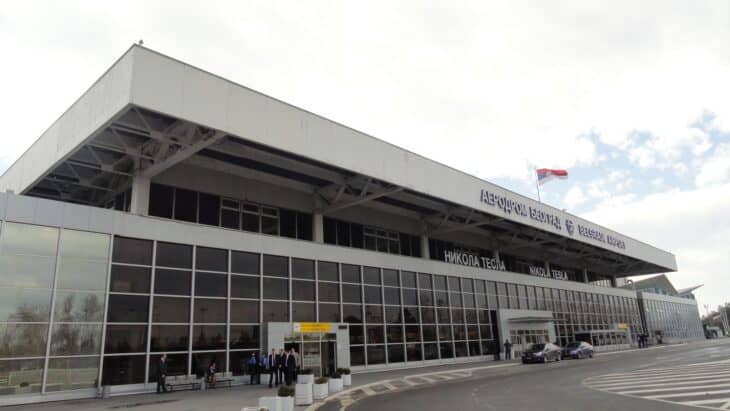

For the passengers, the night was far from over. Lufthansa said refueling was not possible in Belgrade, and a replacement crew was flown in, according to Paddle Your Own Kanoo.
Flightradar24 data show the A321neo leaving Belgrade at about 2:14 a.m. on Monday, stopping in Vienna for fuel, and landing in Frankfurt at about 5:11 a.m. local time. Its scheduled arrival had been 8:15 p.m. on Sunday, a delay of roughly nine hours.
A medical diversion trades that delay for time: Belgrade was 20 to 25 minutes away, while LH687, normally a flight of about four hours, still had well over an hour to go to Frankfurt.
What airline medical kits carry, and who may use them
The episode turned on a detail most passengers never see: the epinephrine in an airliner’s emergency medical kit need not be an auto-injector. When it comes as a vial or ampule, someone has to find the right strength, draw up the right dose and inject it.
For a European airline such as Lufthansa, EU air operations rules require an emergency medical kit on aircraft with more than 30 passenger seats when any point on the route is over 60 minutes from an airport with qualified medical help. The same rule says the captain must ensure drugs are given only by appropriately qualified people.
US rules, in 14 CFR Part 121 Appendix A, spell out the contents for American carriers. The kit must hold two single-dose ampules (or equivalent) of 1:1,000 epinephrine and two of 1:10,000, along with syringes, needles and injectable antihistamine.
US flight attendants are trained in where the kit is and what is in it, and drilled in CPR and defibrillator use. The regulation states that this training does not have to reach the level of professional emergency medical staff.
Those US rules are now under review. On August 5, 2026, the FAA proposed replacing the fixed list of kit contents with a performance-based standard, under docket FAA-2026-9178, with comments closing October 5.
Allergic Living, which argues the FAA should explicitly require epinephrine, notes that the proposal says treatment for anaphylaxis “could include” it. The outlet also asked Lufthansa which form of epinephrine LH687 carried and had no answer.
LH687 joins a run of recent in-flight medical cases, including an Etihad flight where a passenger says the crew turned away two doctors. On this flight, three volunteer physicians and a nearby airport were enough.
Sources and references used for research and fact-checking.
- eCFR (FAA), 14 CFR Part 121, Appendix A: First Aid Kits and Emergency Medical Kits
- eCFR (FAA), 14 CFR 121.805 Crewmember training for in-flight medical events
- Federal Register (FAA), Improving Emergency Medical Kit Efficacy and Flexibility in Commercial Airline Operations (NPRM, Docket FAA-2026-9178)
- EUR-Lex, Commission Regulation (EU) No 965/2012, Annex IV, CAT.IDE.A.225 Emergency medical kit
- Lufthansa Group, Lufthansa and Airbus mark delivery of 600th Lufthansa aircraft at Airbus's Hamburg-Finkenwerder site
Get the Newsletter
The latest aviation news and stories sent to your inbox.
About the Author

AeroCorner News is the aviation news desk of AeroCorner.com. It covers accidents and incidents, safety rulings, airline and airport disruption, and new aircraft. It works from primary sources such as the NTSB, FAA, EASA and the manufacturers' own announcements.