

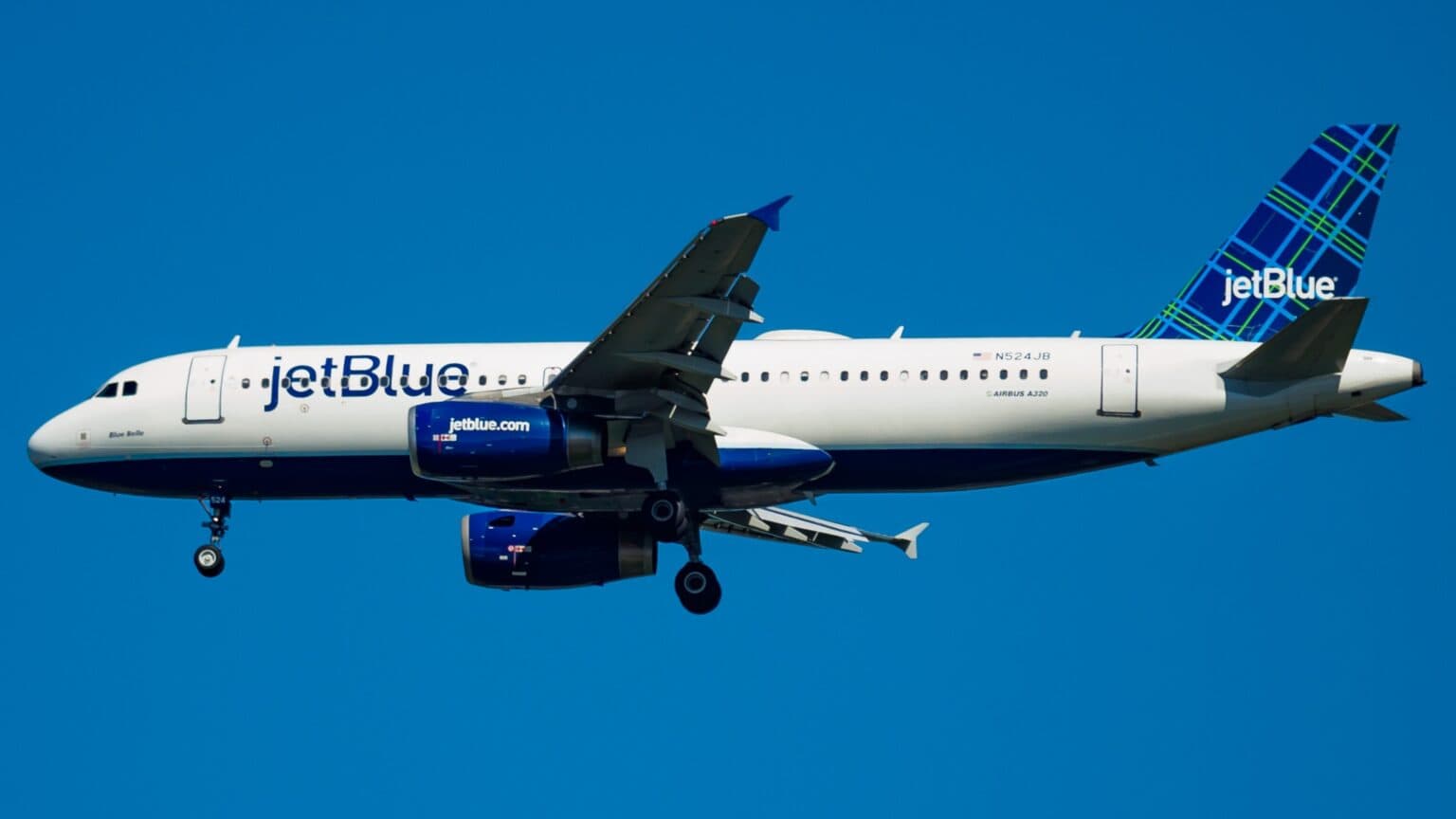
JetBlue flight B61717, an Airbus A320 registered N524JB, hit turbulence on its way from Ponce, Puerto Rico, to Fort Lauderdale on Tuesday, November 17, 2026. Broward Sheriff Fire Rescue said five people reported injuries or needed evaluation after it landed.
All five declined to be taken to a hospital, and JetBlue said no one was transported to one. Neither the airline nor fire rescue has said how many of the five were passengers and how many were crew.
What JetBlue and fire rescue said
Broward Sheriff Fire Rescue said it received reports of multiple injuries on the arriving flight at about 6:25 a.m. Eastern time, and that the flight had met severe turbulence, according to NBC 6 South Florida.
The jet landed at approximately 6:58 a.m. and taxied to Terminal 3, where crews were waiting, and no structural damage to the aircraft was reported, according to CNN’s report carried by WSVN.
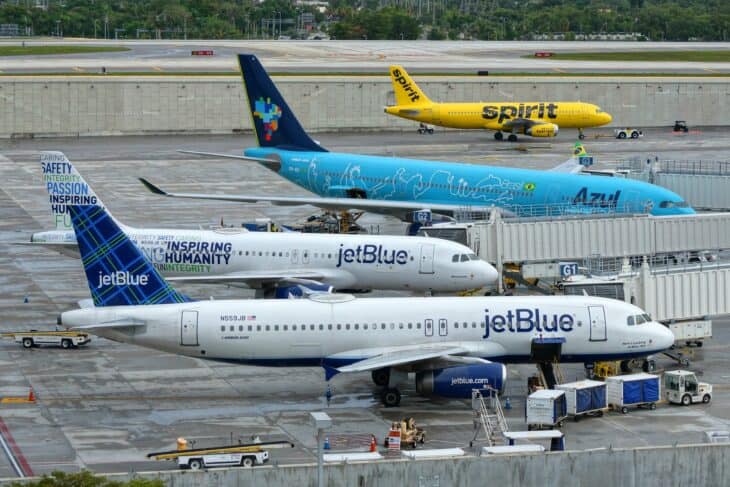

Fire rescue added that it had no other reports of turbulence-related injuries on flights landing at Fort Lauderdale-Hollywood International that morning.
JetBlue’s own statement uses the word turbulence without the “severe”. “The aircraft landed safely, where medical personnel evaluated customers and crewmembers for injuries,” the airline said, adding: “No one was transported to a hospital.”
What the flight track shows
FlightAware’s data has the jet leaving the gate in Ponce at 5:01 a.m. local time and taking off at 5:13 a.m. It landed at 6:57 a.m. Eastern and reached the gate at 7:00 a.m., 14 minutes behind schedule.
The route was longer than usual. FlightAware logs 1,129 nautical miles flown, against 980 for the same flight the day before and 898 for the direct line.
On November 17 the A320 headed northwest from Puerto Rico, then turned southwest north of the Dominican Republic, cut across Hispaniola and continued northwest past eastern Cuba toward the Bahamas. On November 16 it had flown a far straighter line farther north.
The Weather Channel noted the turn and said the crew may have been steering around storms, which it could not confirm. JetBlue has not explained the routing.
Around 6:25 a.m., when fire rescue got its report, the track puts the jet at 32,000 feet over the Bahamas, about half an hour from landing. That is when the report reached the ground, not necessarily when the turbulence struck.
The track cruises at 34,000 and then 36,000 feet, steps down to 32,000 feet at about 6:15 a.m. and starts the final descent around 6:26 a.m. Its readings come roughly every 30 seconds, so a jolt lasting a few seconds would not necessarily show.
What is still unknown
No official source has said where or at what altitude the turbulence struck, whether the seat belt sign was on, how many of the five were crew, or what injuries they had. Meteorologists point to thunderstorms along the route, but no investigator has named a cause as of November 18.
Storms on the route
Thunderstorms were active that morning over the southeastern Bahamas, the Turks and Caicos and the waters north of Haiti, according to The Weather Channel’s satellite read. It said storm tops in the flight’s path reached 45,000 to 50,000 feet.
CNN meteorologist Brandon Miller said the flight likely passed through storms over the Turks and Caicos and the southern Bahamas, and that other aircraft in the area were reporting light to moderate turbulence.
That fits the most common pattern in airline turbulence injuries. In a safety study of US airline turbulence accidents from 2009 through 2018, the NTSB found convective turbulence, from storms and towering clouds, in 64 of 111 accidents, and clear air turbulence in 32.
The same study found that about half of those accidents happened in the descent and approach phases, and that flight attendants made up 97 of the 123 people seriously injured. Only one of those 123, a passenger, was documented as wearing a seat belt.
That is the core of why turbulence hurts people far more often than it damages airplanes: none of the 111 accidents in the study involved substantial damage to the aircraft.
Incident or accident?
Under US rules, a turbulence encounter becomes an accident that must be reported to the NTSB at once if someone on board suffers a serious injury. Federal regulation 49 CFR 830.2 defines that as an injury needing more than 48 hours in a hospital, a broken bone other than a simple fracture of a finger, toe or nose, or damage to an internal organ, among other tests.
Nobody from B61717 went to a hospital, so the 48-hour test is not met. Whether any of the five has an injury that meets another part of the definition is not public, and AeroCorner found no NTSB announcement of an investigation at the time of writing.
JetBlue has had a worse one into the same airport. In September 2023 its flight 1256 from Guayaquil, Ecuador, met what the airline called “sudden severe turbulence” on the way to Fort Lauderdale, and eight people, seven customers and one crew member, were taken to hospital, ABC News reported. The NTSB said it would investigate that one.
Last month, United flight UA1157 hit turbulence on its descent into Los Angeles and four flight attendants were hurt, the pattern the NTSB numbers describe.
Sources and references used for research and fact-checking.
- JetBlue, Statement on flight 1717 PSE-FLL (via NBC 6 South Florida)
- FlightAware, JBU1717 PSE-FLL, November 17, 2026 flight history and track
- NTSB, Preventing Turbulence-Related Injuries in Air Carrier Operations Conducted Under Title 14 CFR Part 121 (NTSB/SS-21/01)
- eCFR, 49 CFR 830.2 Definitions and 830.5 Immediate notification
Get the Newsletter
The latest aviation news and stories sent to your inbox.
About the Author

AeroCorner News is the aviation news desk of AeroCorner.com. It covers accidents and incidents, safety rulings, airline and airport disruption, and new aircraft. It works from primary sources such as the NTSB, FAA, EASA and the manufacturers' own announcements.