

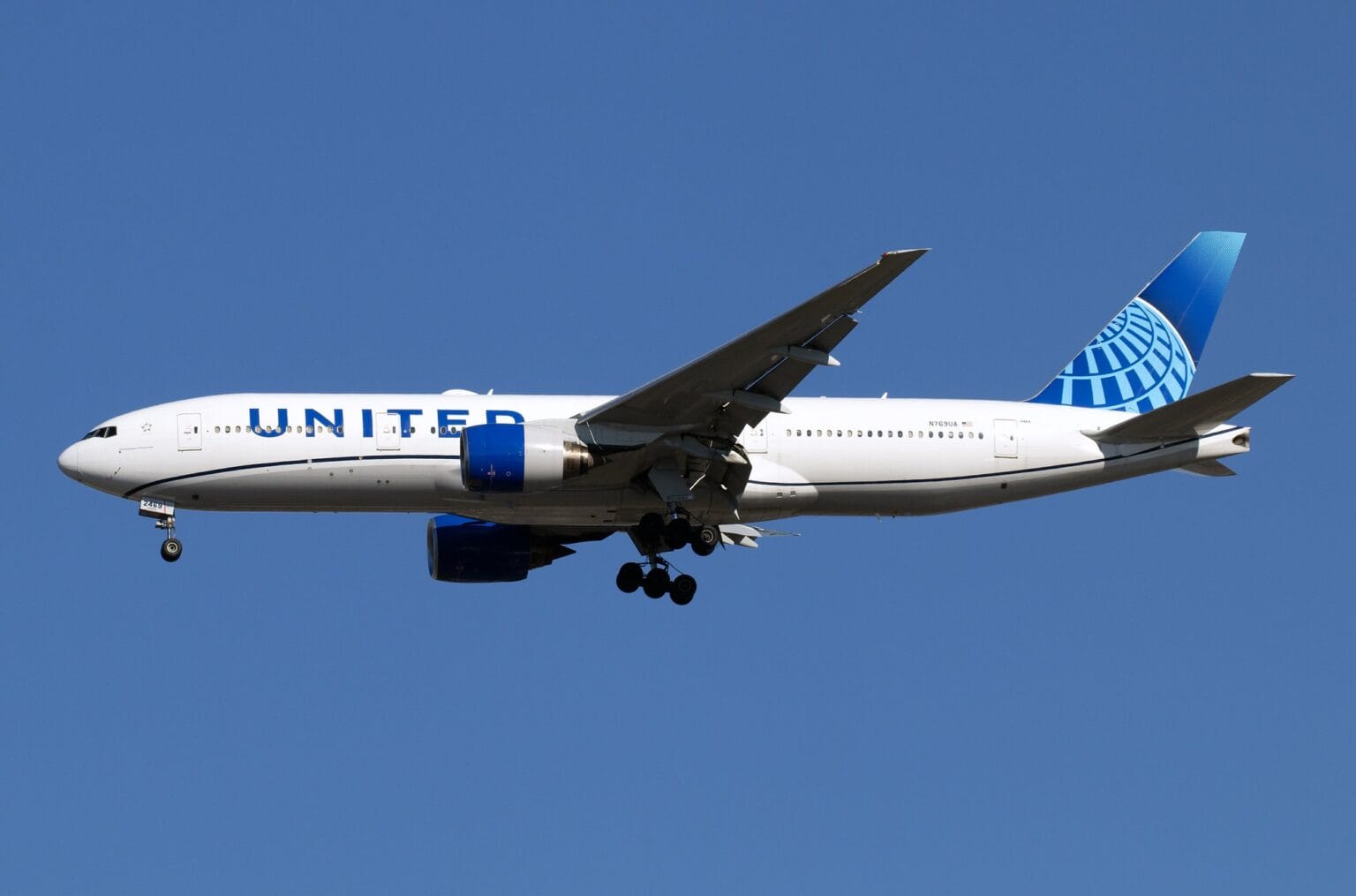
United Airlines flight UA1157 from Honolulu to Los Angeles hit a short burst of turbulence on its descent on the evening of Wednesday, October 21, 2026. Four flight attendants were seen by medical staff after landing, and one was taken to a hospital.
The Boeing 777-200, registration N769UA, was carrying 190 passengers and 10 crew. United said no passengers were hurt.
What happened on the way into Los Angeles
The jet pushed back from the gate in Honolulu at 12:48 p.m. local time and took off at 1:07 p.m., according to FlightAware, for a scheduled flight of about five and a half hours.
The crew hit the turbulence while descending through about 25,000 feet, The Aviation Herald reported. FlightAware’s track shows the 777 passing that height at about 8:27 p.m. Pacific time, roughly 70 miles (113 km) west of the airport over the ocean.
The captain played it down on the radio. “It only lasted a couple of seconds, it felt like wake turbulence, but we’re smooth now,” the pilot told air traffic control, in audio quoted by the California Post.
Passengers described it differently. “I was watching a movie, and all of a sudden we just drop,” Marly Wadlington told ABC7, which also spoke to a passenger who saw a flight attendant with blood on her head and leg.
The 777 touched down at Los Angeles International at 8:51 p.m. and reached its gate at 9:44 p.m., FlightAware’s data shows. That 53-minute gap matches ABC7’s report that the jet sat on the tarmac for at least 30 minutes waiting for a gate, with the injured crew still aboard.
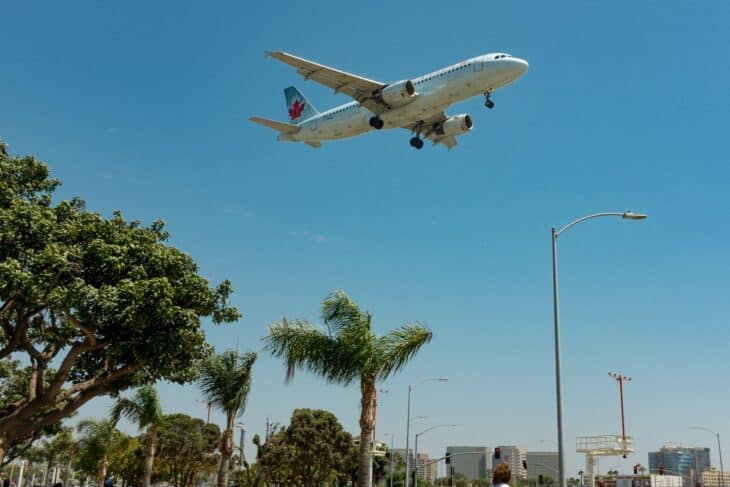

Several early reports gave 9:44 p.m. as the landing time. That is the gate arrival, 20 minutes behind schedule.
“Four flight attendants were seen by medical personnel, including one being transported to the hospital for further treatment,” United said in a statement carried by NBC Los Angeles. ABC7 and the California Post reported that at least two of them had neck and back injuries.
There was no public update on the hospitalized crew member’s condition at the time of writing.
The aircraft did not stay on the ground long. Plane Finder’s flight history lists N769UA leaving Los Angeles again the next night, as UA418 to Washington Dulles.
Wake turbulence, or something else?
Wake turbulence comes from the pair of spinning vortices that trail from an aircraft’s wingtips. The FAA’s Aeronautical Information Manual says they are strongest behind an aircraft that is heavy, clean and slow, and that vortices from larger jets sink at several hundred feet per minute.
A wake encounter needs another aircraft ahead and above. The Aviation Herald, though, says ADS-B data shows no other aircraft near the 777 at the time.
The pilot’s “felt like” is a first impression, not a finding. The NTSB lists several sources of turbulence, from convection and wind shear in clear air to mountain waves and aircraft wakes, and nobody has named the cause of this one yet.
The California Post’s flight data puts the descent at up to 3,675 feet per minute, and FlightAware’s 30-second samples show the jet going from 22,800 to 14,000 feet in two and a half minutes. Those numbers describe the overall descent, not the jolt itself: a bump lasting seconds is too short to show up at that sampling rate.
What is still unknown
United has not said where in the cabin the four flight attendants were, whether they were seated, or whether the seat belt sign was on. The hospitalized crew member’s condition has not been released, and AeroCorner found no statement on the flight from the FAA or the NTSB as of October 23.
Why flight attendants take the hits
Crew hurt and passengers unhurt fits what the NTSB found nationally. Turbulence seldom damages the airplane: most turbulence accidents in its study caused serious injuries but no aircraft damage.
An NTSB safety study of US airline accidents from 2009 through 2018 found that turbulence caused more than a third of them. About half happened during descent or approach, and 60% of those below 20,000 feet.
Flight attendants were the most commonly injured group, the NTSB found, and the aft cabin accounted for more than three-quarters of their injuries. The board concluded that seating flight attendants with belts fastened for more of the descent would cut those injuries.
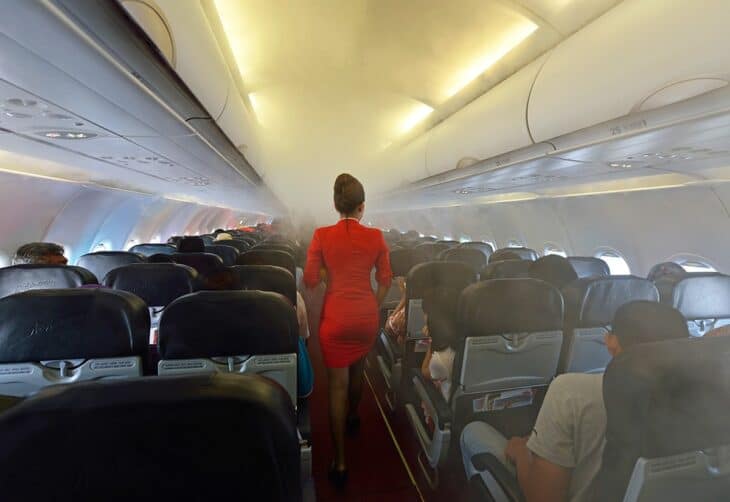

It asked the FAA, in recommendation A-21-38, to spell out the phases of flight and altitudes at which cabin crew should be seated. UA1157’s encounter came at about 25,000 feet, on the descent, the stretch that recommendation was written about.
Earlier this month, a British Airways flight attendant was hurt the same way, in turbulence on the approach to Heathrow on October 7.
Under federal rules, the NTSB treats an injury as serious if it needs more than 48 hours in hospital or involves a fracture, among other tests. Whether any of the four injuries meets that bar, and so whether the NTSB opens an investigation, is not yet known.
Sources and references used for research and fact-checking.
- United Airlines, Statement on flight 1157 (via City News Service / NBC Los Angeles)
- FlightAware, UAL1157 HNL-LAX, October 21, 2026 flight history and track
- NTSB, Preventing Turbulence-Related Injuries in Air Carrier Operations Conducted Under Title 14 CFR Part 121 (Safety Research Report NTSB/SS-21/01)
- FAA, Aeronautical Information Manual, Chapter 7, Section 4: Wake Turbulence
Get the Newsletter
The latest aviation news and stories sent to your inbox.
About the Author

AeroCorner News is the aviation news desk of AeroCorner.com. It covers accidents and incidents, safety rulings, airline and airport disruption, and new aircraft. It works from primary sources such as the NTSB, FAA, EASA and the manufacturers' own announcements.