

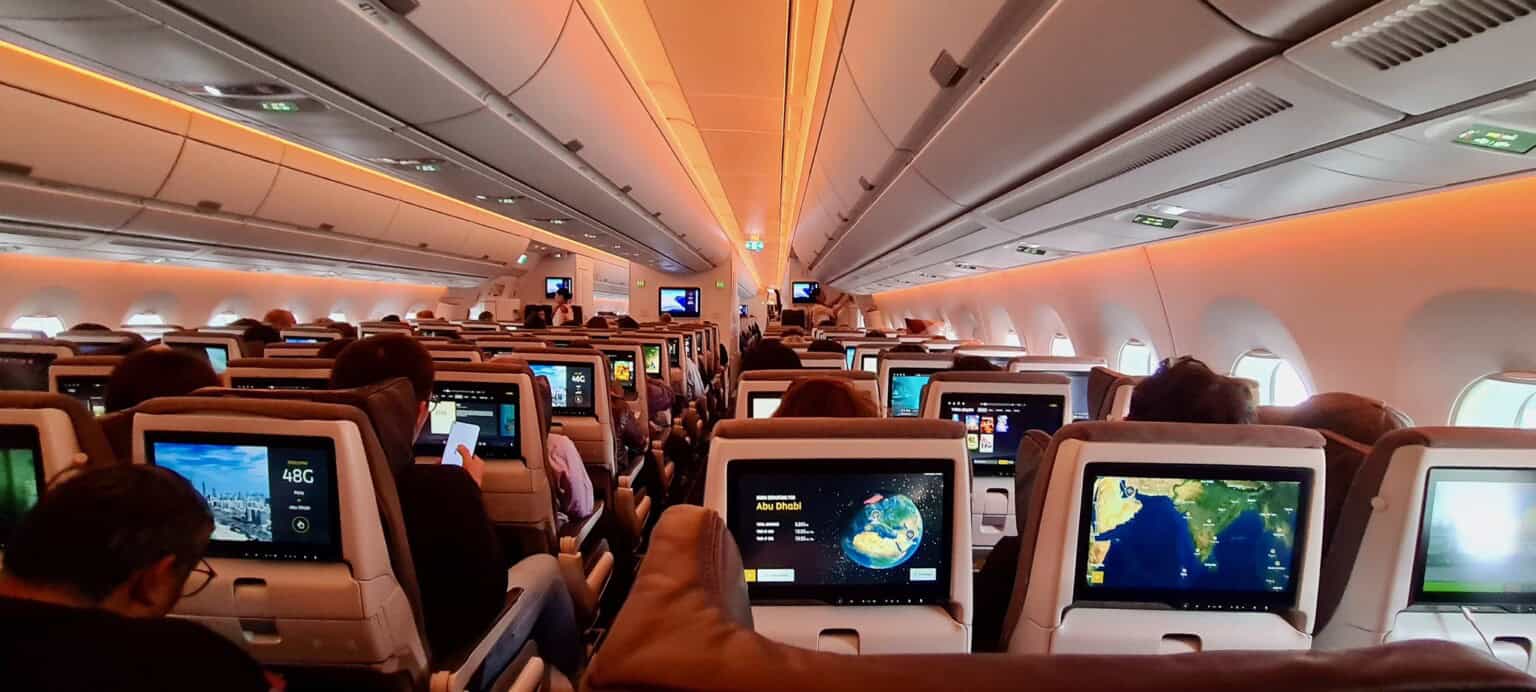
A US physician says Etihad Airways cabin crew stopped her and a second doctor from helping a passenger who collapsed during an in-flight medical emergency. In posts published on August 27, 2026, Dr. Gretchen Winter wrote that the cabin manager on flight EY16, an Etihad service bound for Abu Dhabi, told her to sit down because he was first-aid trained and did not need her.
Winter, who describes herself as a quadruple board-certified physician, says she identified herself to the crew and asked for the medical kit, then was sent back to her seat twice. A second female physician was refused in the same way. The account was picked up by View from the Wing and other outlets over the following days.
By her account, the cabin manager instead had nearby passengers give the patient oxygen. She wrote that 10 to 15 minutes after the person first went down, they were still on the floor in an aisle, and that a flight attendant later apologized and said the manager was following protocol. Aviation A2Z reported that Etihad had not responded to requests for comment.
One side of the story so far
This account comes from one passenger’s social-media posts. Etihad has not given its version of events, the patient’s condition and outcome are not known, and there is no crew or cockpit account on the record. Whether the crew were in contact with ground-based medics, and what those medics advised, is also unknown.
How “is there a doctor on board” is meant to work
Medical events in the air are not rare. A review in American Family Physician puts them at roughly one flight in 600, and cabin crew resolve about 70 percent with their own first-aid training. When they need more, they call for a volunteer medical professional, and a doctor is aboard and steps in in close to half of those cases.
The crew has tools to hand them. US carriers must carry an emergency medical kit to an FAA-set specification plus a defibrillator, and large international airlines carry similar equipment. Most also pay for a ground-based medical advisory service, where an emergency physician on the ground advises the crew by satellite phone and helps the captain decide whether to divert.
Final authority rests with the captain, not with any volunteer, and crews can decline offered help. Some airline manuals also ask crew to check a volunteer’s credentials first. What makes this case unusual is that two people identifying themselves as physicians say they offered and were turned down outright.
Why airlines usually accept the help
In the United States, the 1998 Aviation Medical Assistance Act shields a medically qualified person who volunteers in good faith, without payment, from liability unless they are grossly negligent. It also protects the airline for relying on that volunteer. That legal cover is one reason US crews lean toward accepting qualified help.
Etihad is a UAE carrier, and the law that would govern an incident like this is less clear-cut. Still, using a qualified volunteer when one is available is the operational norm across the industry, and it is the practice most major airlines describe in their own passenger guidance.
For passengers, the practical point is a narrow one. The response to an in-flight emergency can turn on a single crew member’s judgment in the moment, and there is no passenger right to insist that a volunteer be allowed to treat someone. AeroCorner has covered what cabin crew are trained to do in a medical crisis, and how ground medics shape decisions like the mid-Atlantic diversion a Delta crew made this month.
Get the Newsletter
The latest aviation news and stories sent to your inbox.
About the Author

Tim is the owner and lead editor of AeroCorner since 2019, overseeing aviation content covering aircraft, airlines, airports, and the broader aviation industry. Through years of researching, writing, editing, and publishing aviation-focused content, he has developed extensive practical knowledge of commercial aviation and air travel. Based in Asia and a frequent traveler himself, Tim also brings firsthand passenger experience to AeroCorner’s coverage. Outside of publishing, he has also explored aviation firsthand through hands-on flight training in New Zealand.