

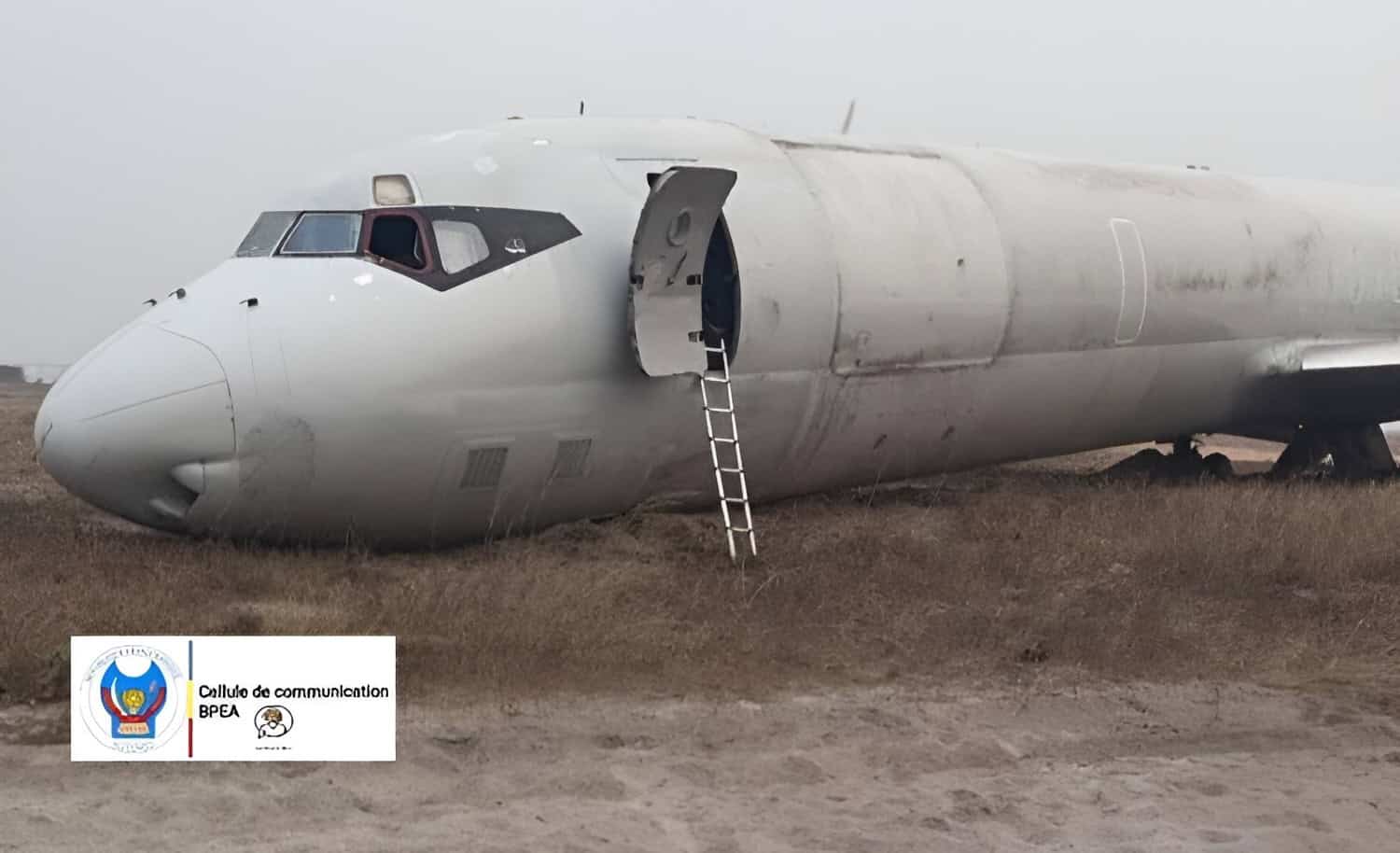
A Trans Air Cargo Service Douglas DC-8 freighter, registration 9S-AJO, veered off runway 24 at Kinshasa N’Djili International Airport in the Democratic Republic of the Congo on the morning of September 8, 2026. The aircraft came to rest on soft ground with its nose landing gear collapsed and sustained substantial damage. No fatalities have been reported.
The airframe was one of only two Douglas DC-8s still known to be doing commercial work anywhere in the world, and it was the only active aircraft in its operator’s fleet.
What Happened on Runway 24
The freighter was departing N’Djili for Kisangani, an internal cargo run of the kind Trans Air Cargo Service flies across the DRC. It left the paved surface to the left at roughly 07:30 local time and stopped on the ground alongside the runway.
The DRC’s Permanent Bureau of Investigation of Aviation Accidents and Incidents, the BPEA, classified the occurrence as an accident and sent investigators to N’Djili. It also directed that the aircraft and other evidence be left undisturbed until its team completes an initial examination.
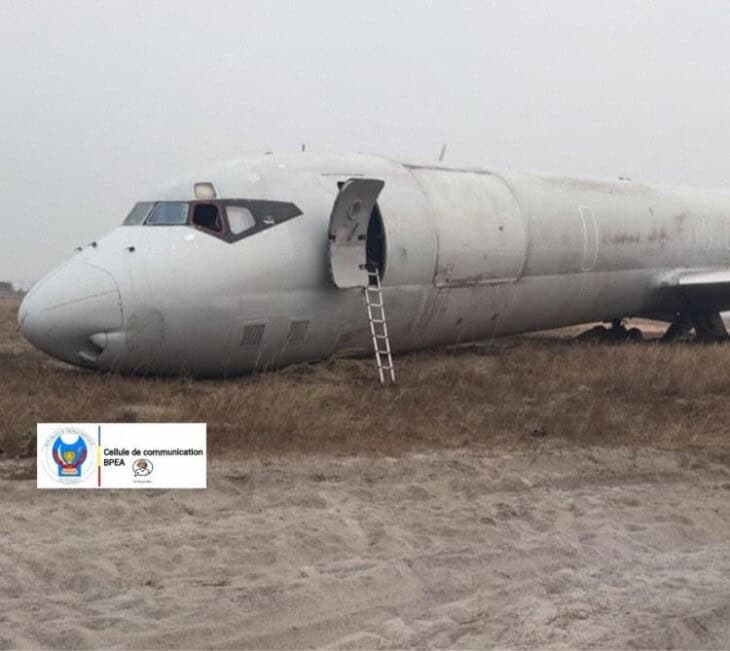
Early accounts disagreed on something basic: whether the jet was arriving or leaving. Several outlets initially described a landing overrun, and the phase of flight only settled later as a rejected takeoff. Preliminary information reported by The Aviation Herald points to a possible hydraulic fault, which the BPEA has not confirmed.
Weather is an open question rather than an established factor. The nearest available observation for N’Djili that day came about 90 minutes after the accident and recorded roughly 1.5 miles (2,500 m) of visibility in mist, with broken cloud at 1,600 feet.
Still preliminary
Nothing about the cause is settled. The BPEA has only dispatched investigators, no findings have been published, and the reported hydraulic fault is early information rather than a determination. Treat the sequence described here as provisional.
Why a Half-Century-Old Jet Was Still Hauling Freight
Douglas and McDonnell Douglas built 556 DC-8s, and the line closed in 1972. Passenger operators moved on decades ago, but a handful of airframes stayed employable because of one modification.
9S-AJO started life as a DC-8-63, part of the stretched Super 60 family, and was later converted to DC-8-73 standard. That conversion swapped the original engines for CFM56 turbofans, cutting fuel burn and noise enough to keep an aging Douglas Aircraft design commercially viable long after its contemporaries were parked.
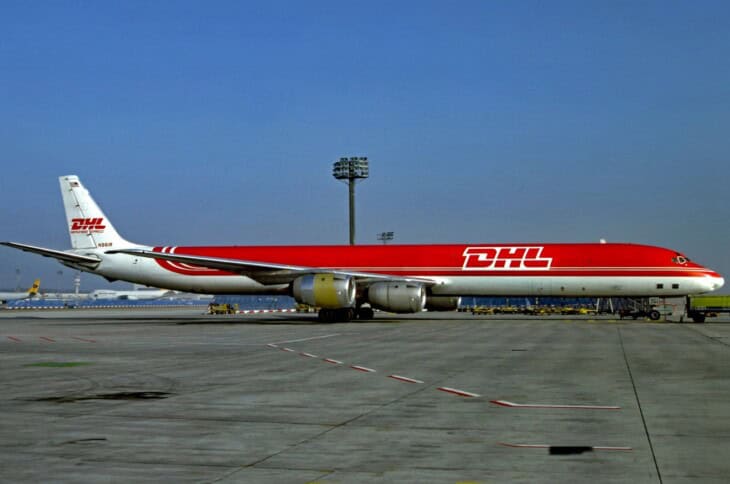
That is the economics behind most surviving vintage jets. A cargo operator serving thin domestic routes does not need a new airplane, it needs a cheap one that can carry a payload into short and rough fields.
Trans Air Cargo Service serves 16 destinations inside the DRC and, according to Air Cargo Week, was operating 9S-AJO as its sole active aircraft at roughly 56 years old. Reporting on the carrier’s fleet indicates it holds two further DC-8s in storage as parts donors, which with the production line long gone is close to the only source of major components left.
The operator’s regulatory standing is worth stating plainly. The European Commission’s air safety list, in its June 9, 2026 edition, bans all air carriers certified by the DRC’s oversight authorities from operating into the European Union, a blanket restriction that has applied to the country’s carriers for years.
What This Leaves of the DC-8 Fleet
If 9S-AJO does not fly again, the commercially active DC-8 population drops to a single aircraft: OB-2231P, a DC-8-73 freighter operated by Peru-registered Skybus Jet Cargo, which works short runs out of Miami to Port-au-Prince and Santo Domingo.
Whether the aircraft is repaired is an open commercial question, not just an engineering one. A collapsed nose gear and the structural damage that comes with it demand specialist work, and on an airframe of this age that bill can exceed what the jet is worth.
Runway excursions remain one of the most common serious event types in commercial aviation, and they are not confined to old airframes or small operators. A modern Boeing 767 freighter was involved in a fatal runway overrun at Miami only days earlier. What makes this one notable is the airplane rather than the accident: a type that stopped rolling off the line in 1972, still earning its keep among converted freighters until Tuesday morning.
Sources and references used for research and fact-checking.
Get the Newsletter
The latest aviation news and stories sent to your inbox.
About the Author

Tim is the owner and lead editor of AeroCorner since 2019, overseeing aviation content covering aircraft, airlines, airports, and the broader aviation industry. Through years of researching, writing, editing, and publishing aviation-focused content, he has developed extensive practical knowledge of commercial aviation and air travel. Based in Asia and a frequent traveler himself, Tim also brings firsthand passenger experience to AeroCorner’s coverage. Outside of publishing, he has also explored aviation firsthand through hands-on flight training in New Zealand.