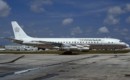
McDonnell Douglas · United States · ICAO: DC87 · 1969–1988 ·
$10 million (1998)

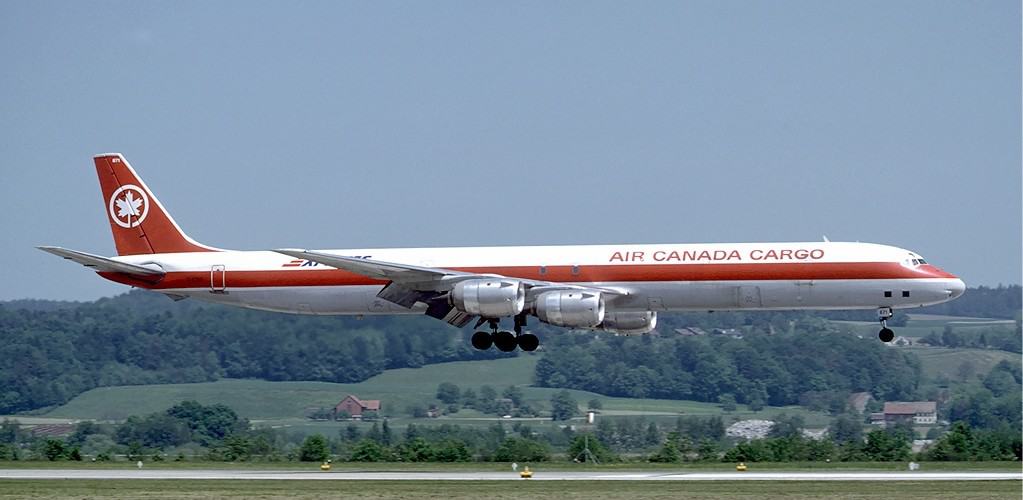
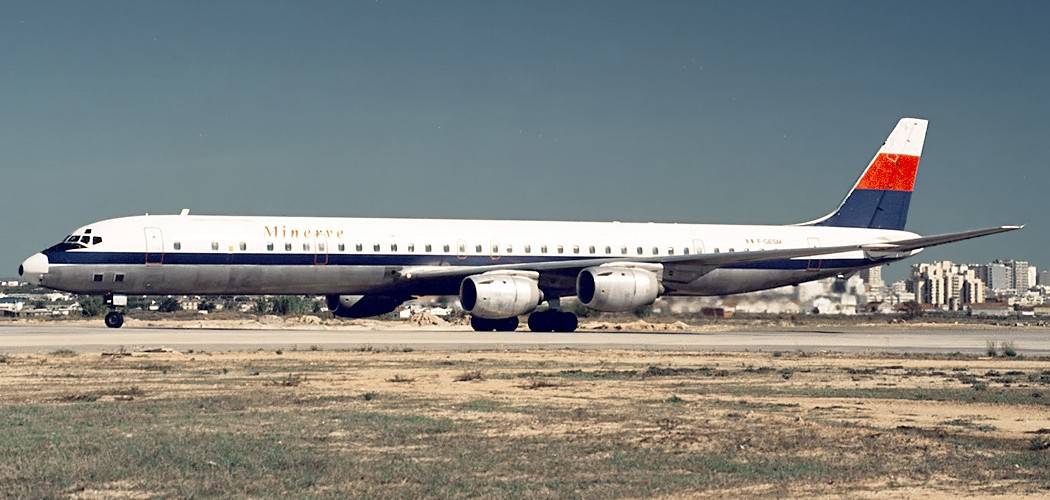
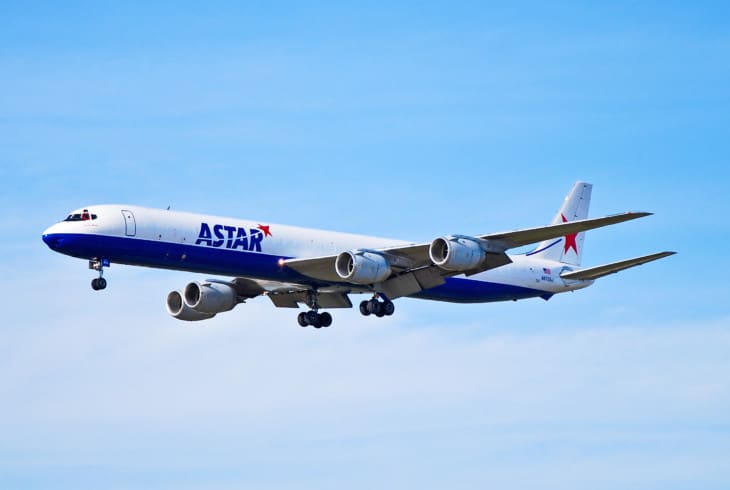
The McDonnell Douglas DC-8-73 is one of the variants of the magnificent DC-8 narrow-body airliner built by the Douglas Aircraft Company. It was a straightforward conversion of the -60 series powered by CFM56-2 turbofan engines.

Live Fleet Activity
Fetching live data…
DC87's currently in the air: --
No aircraft of this type are airborne right now.
Average speed: -- kt (-- mph / -- km/h)
Most activity in: --
Jump to Details
Engine:
4× CFM 56-2 C6
Engine type:
Turbofan
Thrust:
4 × 22,000 lbf  ·  98 kN
Avionics:
Dual Collins VHF 21D, HF 628T-1 , TDR-94D
Wing Tips:
No winglets
Seats:
259
Cabin width:
11 ft 6 in · 3.50 m
Cabin height:
ft 3 in · 2.21 m
Cabin length:
164 ft 1 in · 50.00 m
Exterior length:
187 ft 0 in · 57.00 m
Tail height:
42 ft 12 in · 13.10 m
Fuselage diameter:
12 ft 3 in · 3.74 m
Wing span / rotor:
142 ft 5 in · 43.40 m
Baggage volume:
2,472 ft³  ·  70.0 
Max takeoff weight:
355,000 lb  ·  161,000 kg
Max landing weight:
275,000 lb  ·  124,500 kg
Max Payload:
107,500 lb  ·  48,800 kg
Fuel capacity:
24,250 gal  ·  91,800 L  ·  73,500 kg  (Jet A)
Max cruise speed:
488 kt  ·  562 mph  ·  904 km/h
Approach speed (Vref):
145 kt  ·  167 mph  ·  269 km/h
Range:
4,500 nm  ·  5,180 mi  ·  8,330 km
Ceiling:
42,000 ft  ·  12,800 m
Rate of climb:
2,200 ft/min  ·  11 m/s
Takeoff distance:
10,000 ft  ·  3,050 m
Landing distance:
6,550 ft  ·  2,000 m
Live Fleet Activity Details (DC87)
Fetching live data…
Flight Airline Registration Altitude Speed Heading Vertical Rate Squawk Last Seen
Loading…
No aircraft of this type are airborne right now.

The McDonnell Douglas DC-8 was the glamour intercontinental airline of its day. From the Series 10 to Series 50, until the Super Series 60 and 70 emerged, the American manufacturing company never ceased to develop the magnificent DC-8 into an airliner that marked the history.

After the Series 50 of the DC-8, Douglas made further developments in the airliner with the Super Series versions. In April 1965, the first Super Series designated as the Super 60 was announced to the public. In the early 1980s, McDonnell Douglas started a re-engining program of the Super 60 series aircraft equipped with more powerful engines. Designated as the Super 70, the new series was proposed with the quieter and more fuel-efficient CFM56 high-bypass turbofan engines.

In August 1981, the first converted airframe conducted its maiden flight. There were three produced conversions of the Super 70 designated as the DC-8-71, DC-8-72, and DC-8-73. These were straightforward conversions of the previous DC-8-61, DC-8-62, and DC-8-63 series, mainly incorporating the replacement of the previous JT3D engine with a more fuel-efficient CFM56-2 engine. The new conversion also features newer nacelles and pylons designed by Grumman Aerospace, and fairing of the air intake under the nose.

The DC-8-73 is powered by four CFM56-2 turbofan engines which produce a maximum thrust of 22,000 lbf each. The aircraft can cruise at speeds of 488 knots within a 4,500 nautical mile range. It has a service ceiling of 42,000 feet and a rate of climb of 2,200 feet per minute.

The DC-8-73 has an exterior length of 57 meters, an exterior height of 6.8 meters, a tail height of 13.1 meters, and a fuselage diameter of 3.74 meters. It has a wingspan of 43.4 meters and a wheelbase of 20.6 meters. The aircraft is designed to accommodate 259 passengers in its 50-meter long, 3.5-meter wide, and 2.21-meter high cabin.

In 1982, the DC-8-73, together with the DC-8-71 and DC-8-72 received its type certification. There were 110 Super 60 series converted into Super 70s. In 1988, the program has ended.

Want More of This?
We'll send you our latest and best content straight to your inbox
Featured Image