Military Helicopters
Boeing Vertol CH-46 Sea Knight
ICAO: H46
The Vietnam War's light observation helicopter, nicknamed the Loach
Updated: by Tim de Vries

The latest aviation news and stories sent to your inbox.
The Hughes OH-6 Cayuse is a single-engine light observation helicopter that the U.S. Army flew as a low-level scout in Vietnam. Pilots called it the Loach, from the LOH (Light Observation Helicopter) program that bought it. Its egg-shaped fuselage and four-bladed rotor later became the basis of the MH-6 and AH-6 Little Bird special operations helicopters.


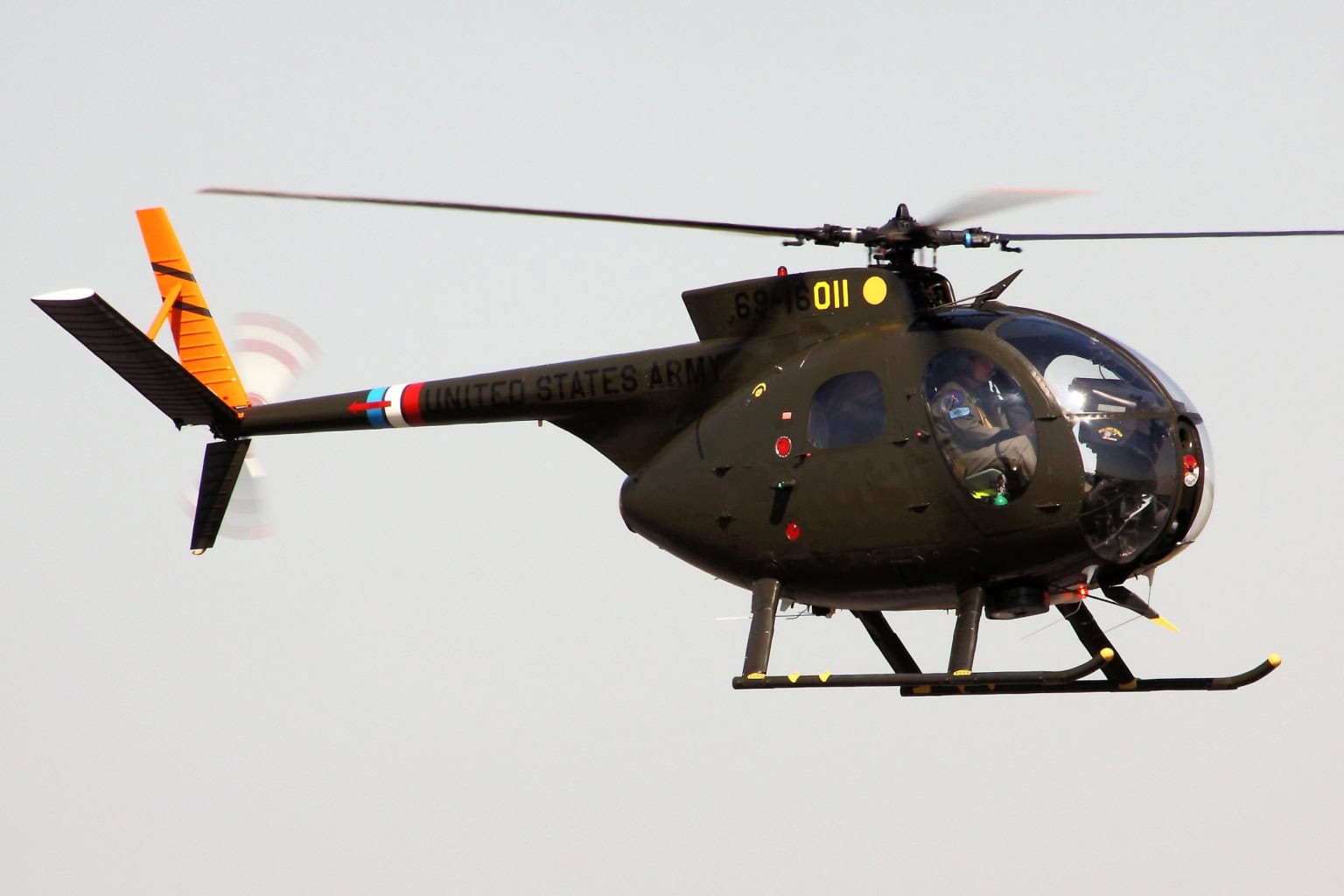
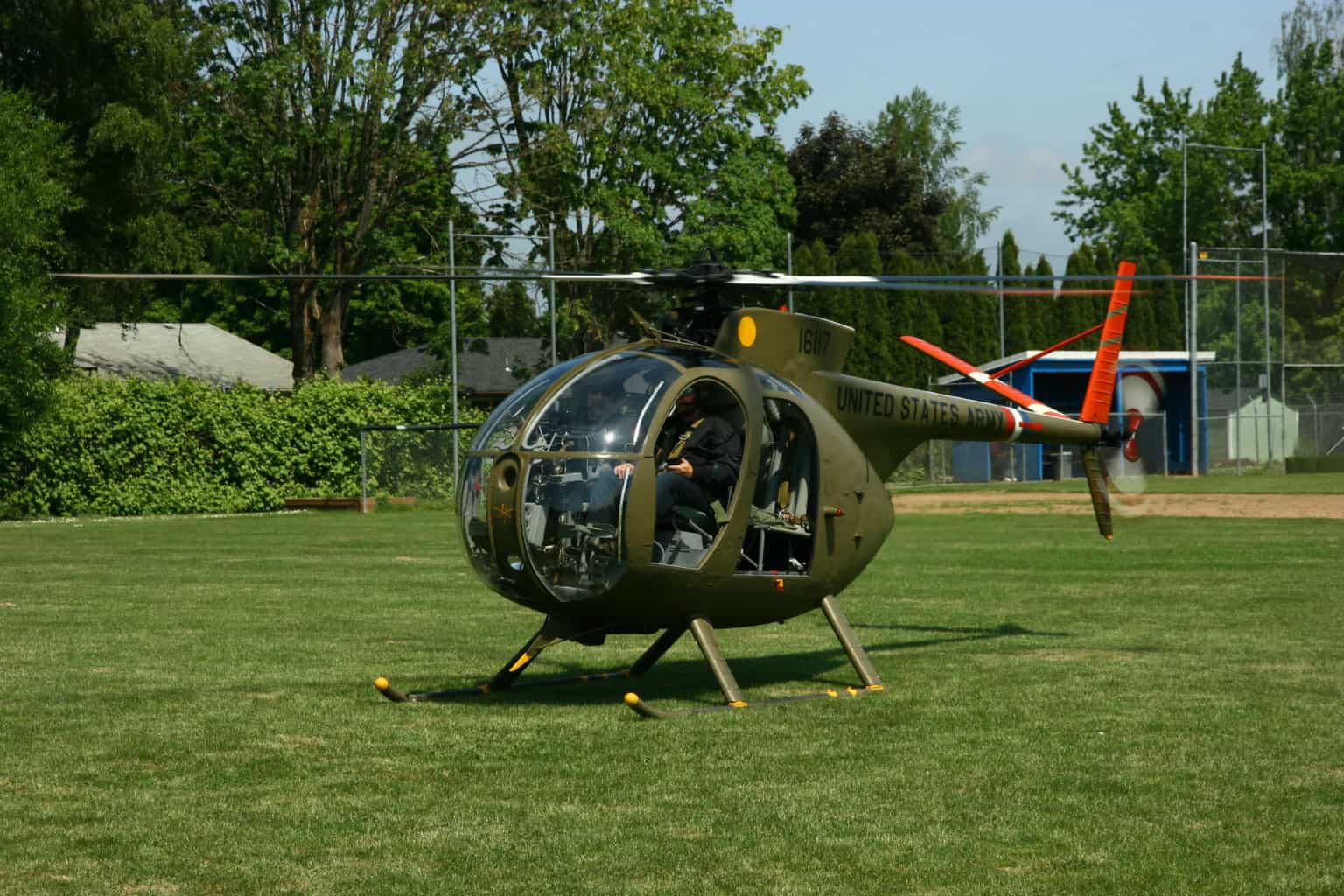
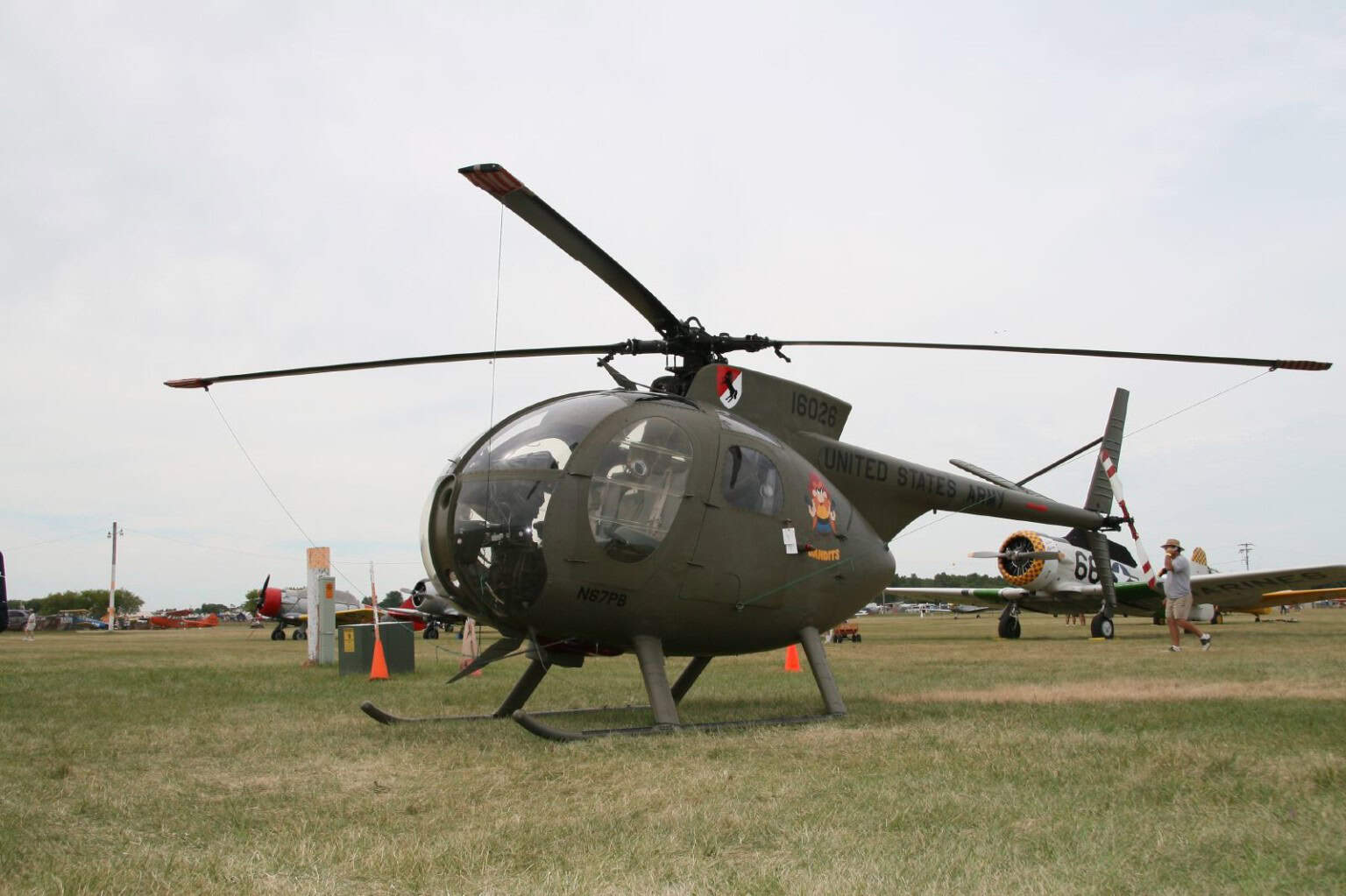

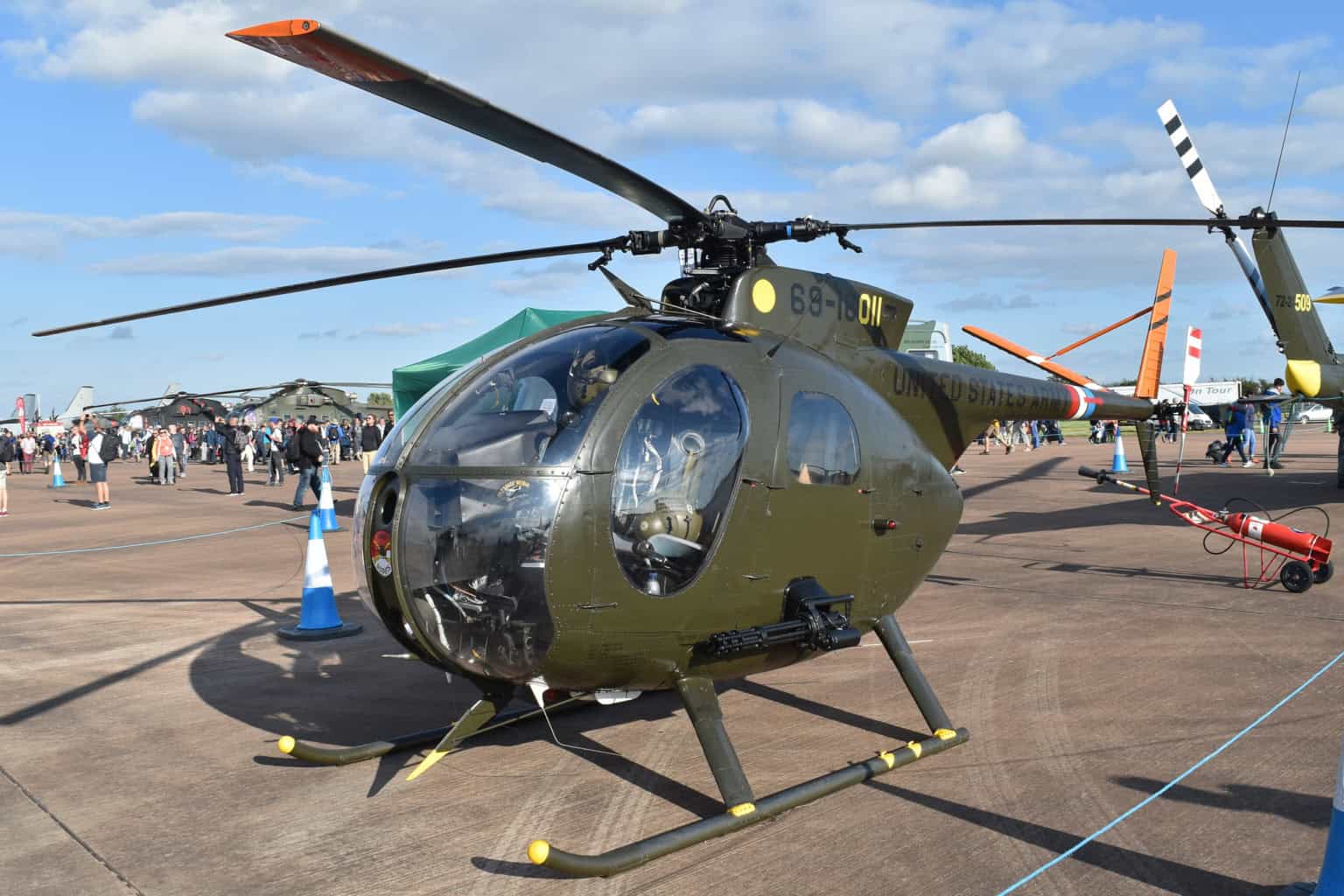
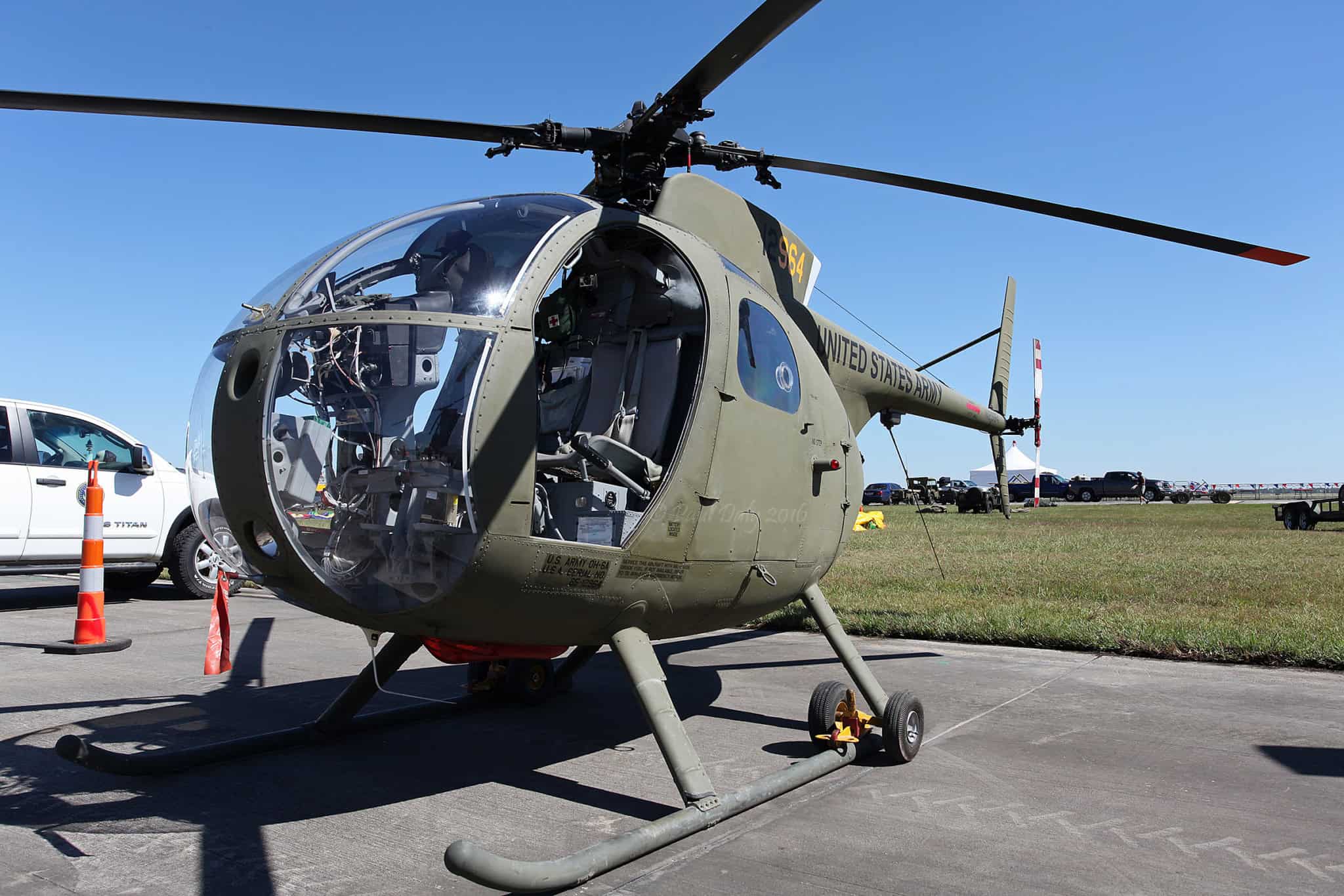

The Hughes OH-6 Cayuse is a small, egg-shaped scout helicopter that the U.S. Army bought for the Vietnam War. Crews called it the Loach, a spoken form of LOH, short for Light Observation Helicopter.
It flew low, found the enemy and drew fire so that gunships could hit back. That job made it one of the most-used and most-lost aircraft of the war, and its design lives on in the MH-6 and AH-6 Little Bird.
The Army issued Technical Specification 153 in 1960 for a light observation helicopter that could carry out observation, escort, attack and casualty evacuation work. Hughes entered its Model 369 against designs from Fairchild-Hiller and Bell.
The first Model 369 prototype flew on February 27, 1963. The Army picked it in May 1965 at $19,860 per airframe without the engine, well under Fairchild-Hiller’s $29,415 bid.
Hughes built about 1,420 OH-6As for the Army, and production peaked at about 100 helicopters a month during the Vietnam buildup. Kawasaki later built another 387 under license in Japan.

By MD Helicopters’ count, the OH-6A set 23 world records for speed, distance and altitude in 1966.
On March 26, 1966, a YOH-6A flew 1,739.96 miles (2,800.20 km) around a closed circuit without landing. The next day, one reached 26,447 feet in level flight.
A separate flight from California to Florida covered 1,923.08 nautical miles, according to the Connecticut Air & Space Center. That is about 2,213 statute miles, flown in roughly 15 hours.
The first OH-6As reached South Vietnam in December 1967. Their job was scouting: fly at treetop height, find the enemy and mark him.
Scouts worked in teams with Bell AH-1 Cobra gunships. The OH-6 acted as bait to draw fire, and the Cobra attacked whoever shot at it. You can see how that pairing worked on our page for the Bell AH-1 Cobra.
The cost was heavy. Wikipedia reports that 964 of the 1,422 OH-6As built for the Army were destroyed in Vietnam, while the Connecticut Air & Space Center puts it at 842 of 1,419 Army aircraft. The two sources disagree on the totals, but both describe huge losses, mostly to ground fire.
Pima Air & Space Museum says the same low altitude and slow speed that made the OH-6 effective also caused its high losses and heavy casualties.
The CIA also used modified OH-6s. According to the Connecticut Air & Space Center, aircraft flown through Air America in 1972 carried out covert wiretapping missions in Laos.
Hughes had won the first round on price, but costs climbed. In 1967 the Army reopened the contest for 2,700 more helicopters.
Bell’s Model 206, the OH-58 Kiowa, bid $54,200 per helicopter against Hughes’ $56,550 and won the follow-on order in 1968. Bell’s scout carried on in Army service for decades, and our page on the OH-58D Kiowa Warrior covers the later version.
The OH-6 did not disappear. After Operation Eagle Claw failed in April 1980, the Army chose the OH-6A for the new special operations aviation task force that became the 160th Special Operations Aviation Regiment.
That unit turned it into the MH-6 for carrying troops and the AH-6 for light attack. Little Birds flew as light assault and light attack helicopters with Task Force Ranger in Mogadishu in October 1993.
The modern MH-6M Little Bird is a direct descendant, and the military versions are easy to tell from civilian 500-series helicopters by their rounded noses and arrow-shaped tail fins.

The production OH-6A used the Allison T63-A-5A turboshaft. The OH-6B was a re-engined version, the OH-6C a proposed five-blade one, and the Navy used a trainer derivative called the TH-6B.
Kawasaki built the OH-6J, and later the OH-6D based on the Hughes Model 500D, for the Japan Ground Self-Defense Force.

Former operators also include the Royal Danish Army, the U.S. Border Patrol and the U.S. Navy. Pima Air & Space Museum notes that retired military models remain popular with private pilots and law enforcement.
The full specification table for the aircraft is on this page, so this section covers only the figures that need context.
The OH-6A’s main rotor is 26 ft 4 in (8.03 m) across. Wikipedia lists a maximum takeoff weight of 2,700 lb (1,250 kg) for the OH-6A,.
The 317 shp (236 kW) Allison engine gave a top speed of 130 kt (150 mph, 241 km/h), which is also the never-exceed speed at sea level. Its range of 330 nm (380 mi, 610 km) is quoted at 5,000 feet , and the ceiling is 15,800 ft (4,800 m) with a climb rate of 2,067 ft/min.
Two lengths are in circulation. Wikipedia gives 30 ft 3.75 in with the rotors turning, while Pima Air & Space Museum lists the fuselage at 23 ft.
No. The AH-6 Little Bird came after Vietnam, when the 160th Special Operations Aviation Regiment adapted the OH-6 after 1980. In Vietnam the aircraft was the OH-6A scout, which worked alongside AH-1 Cobra gunships.
There is no official ranking. The OH-6A is one of the most heavily lost types, with Wikipedia reporting 964 of 1,422 destroyed in Vietnam, but the Connecticut Air & Space Center counts 842 of 1,419 and the sources do not agree.
The Army has retired its Hueys, but the family is still in service: the Marine Corps flies the upgraded UH-1Y Venom.
Yes. Military Machine reports that civilians can legally buy surplus Hueys, with airworthy examples selling for roughly $150,000 to $600,000, but they usually fly in a restricted or experimental exhibition category that bars flights over congested areas or for hire.
Loach is the spoken form of LOH, the Army’s abbreviation for Light Observation Helicopter, the program that bought the aircraft.
Sources and references used for research and fact-checking.