

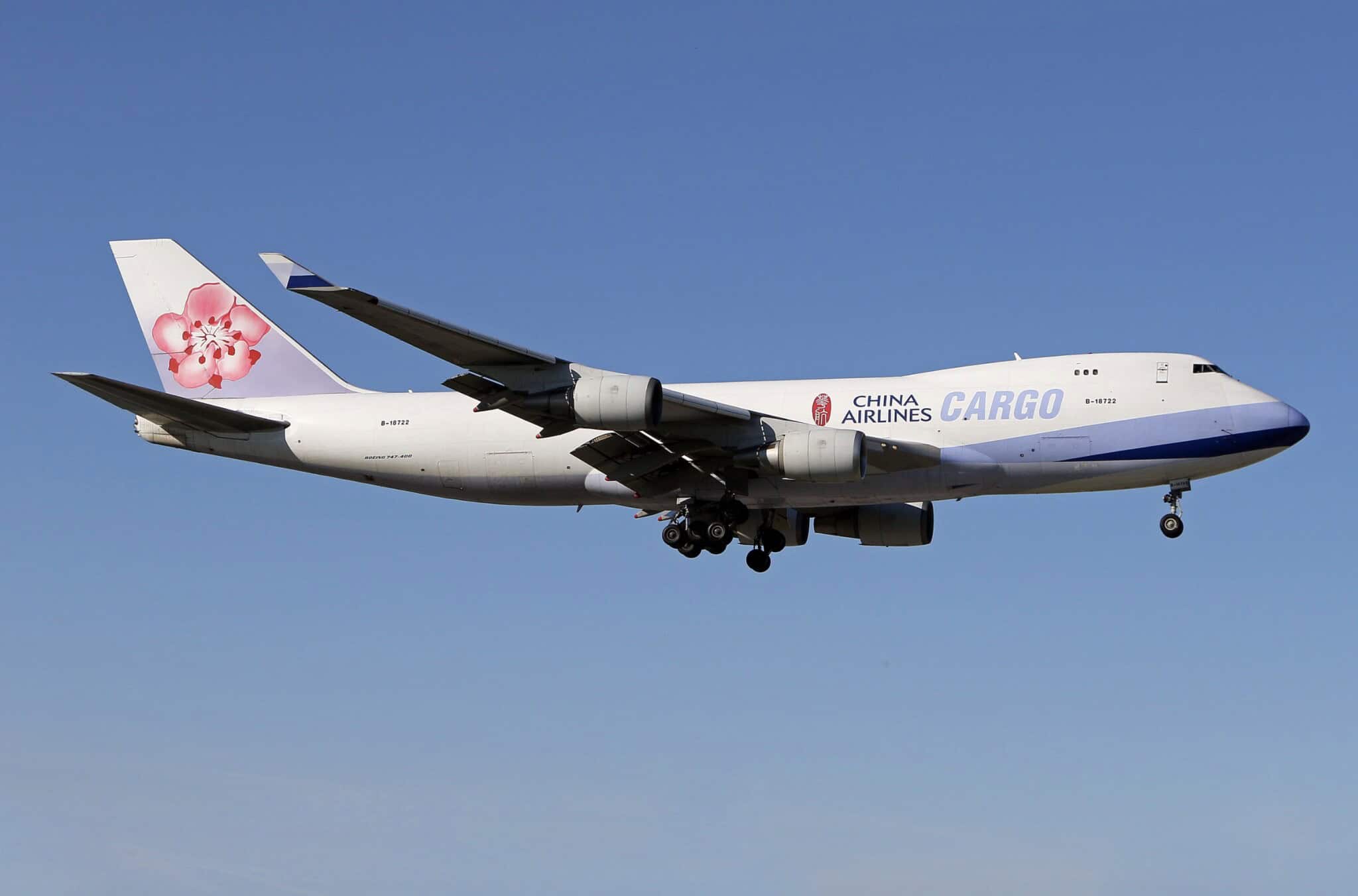
On August 14, 2026, a China Airlines Boeing 747-400 freighter declared Mayday for an engine fire shortly after departing Anchorage, Alaska, then dumped fuel and returned to land safely.
A Mayday Call Nine Minutes Into the Climb
Flight CI-5265, a Boeing 747-400 freighter registered B-18725, was climbing out of Ted Stevens Anchorage International Airport for Taipei when the crew reported a fire in the inboard right engine, according to flight-track and radio data reported by Aviation Herald.
The crew declared Mayday, shut the engine down, and halted the climb at 9,000 feet rather than continuing toward cruise altitude. Aviation Herald’s report identifies the affected engine as a General Electric CF6, one of four powering the freighter.
Before turning back, the crew jettisoned fuel to bring the heavily loaded jet down to a safe landing weight. The aircraft landed on runway 07R about one hour and fifty minutes after it had first departed.
Why a freighter dumps fuel first
A 747 freighter can take off far heavier than it is allowed to land, since burning fuel is the only way to shed that weight in flight. Jettisoning it in the air lets the jet return well under its structural landing-weight limit instead of risking a hard, overweight touchdown.
No Injuries, Aircraft Grounded for Days
There were no reported injuries among the crew. The freighter remained grounded in Anchorage for roughly 89 hours, close to four days, before it was cleared to fly again, per Aviation Herald.
The outlet also reports that the NTSB classified the event as an incident and opened an investigation. AeroCorner has not been able to independently confirm that classification, since the case does not yet appear in the NTSB’s public docket system.
Anchorage sits on the great circle route between East Asia and much of North America, which makes it one of the world’s busiest cargo refueling stops. Flight CI-5265 was on the Anchorage leg of a longer run from Taipei toward the US mainland when the crew turned back.
The CF6 family of engines has powered 747, 767, and A330 freighters and airliners for decades and remains one of the most widely flown widebody engines in service. A single confirmed fire report on one engine does not point to a fleet-wide problem on its own.
Engine Fires Are Rare, But the Drill Is Well Rehearsed
An engine fire warning triggers one of the most heavily drilled emergency checklists in aviation: cut fuel and hydraulics to the engine, discharge a built-in fire-suppression bottle, and confirm the warning clears. Crews train for it in the simulator every recurrent cycle.
Mayday, rather than the lesser Pan-Pan call, signals to air traffic control that the aircraft needs immediate priority handling, the same distress protocol an Alaska Airlines 787 used over the UK last month before its own fuel-dump diversion.
What we don't know yet
Neither China Airlines nor the NTSB has published an official account of what caused the fire warning. This report is based on flight-tracking and radio data compiled by Aviation Herald; AeroCorner will update if an official investigation record becomes available.
Get the Newsletter
The latest aviation news and stories sent to your inbox.
About the Author

Tim is the owner and lead editor of AeroCorner since 2019, overseeing aviation content covering aircraft, airlines, airports, and the broader aviation industry. Through years of researching, writing, editing, and publishing aviation-focused content, he has developed extensive practical knowledge of commercial aviation and air travel. Based in Asia and a frequent traveler himself, Tim also brings firsthand passenger experience to AeroCorner’s coverage. Outside of publishing, he has also explored aviation firsthand through hands-on flight training in New Zealand.