

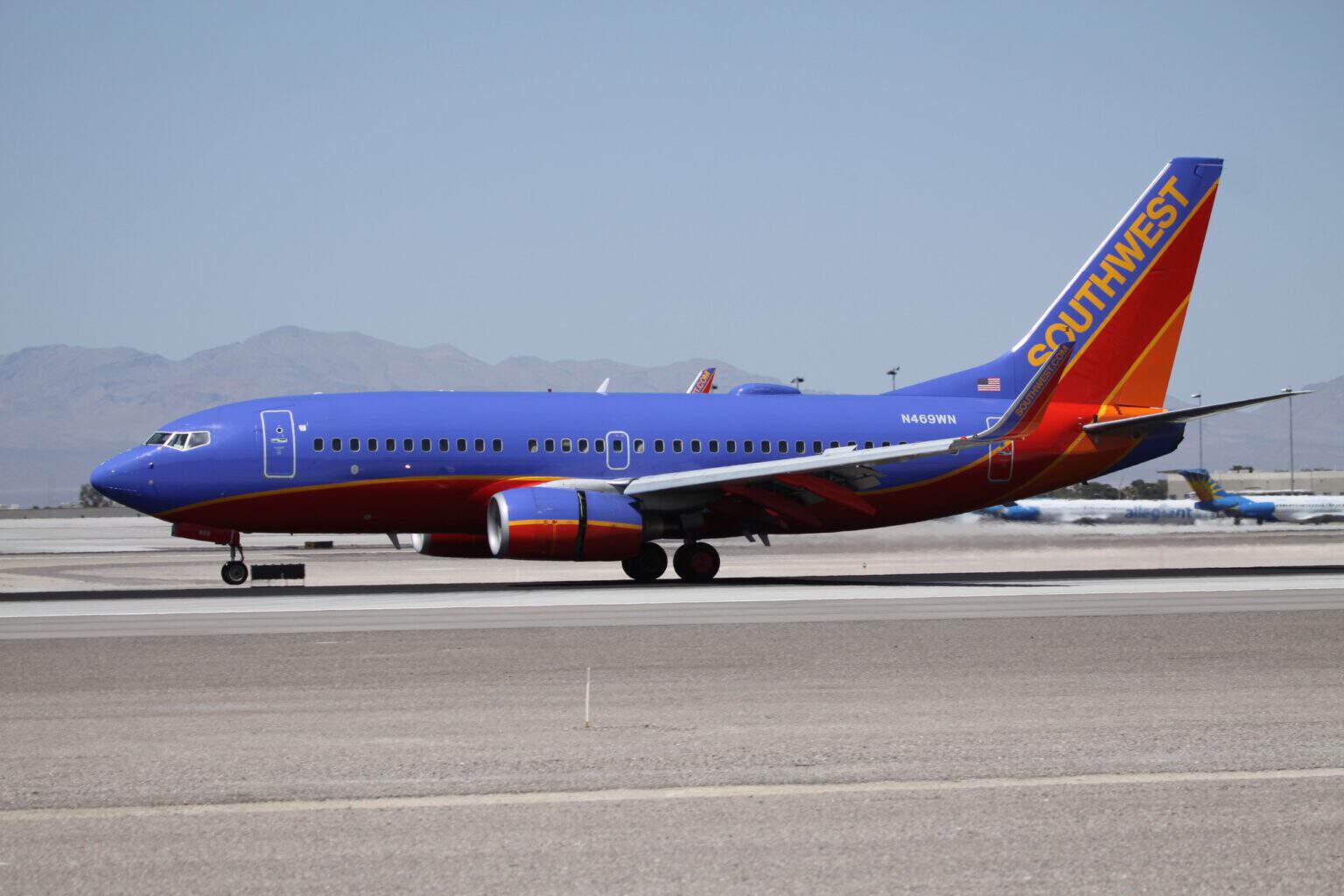
Southwest Airlines flight WN759 from Las Vegas to Chicago Midway was towed back to its gate at Harry Reid International Airport on Friday, October 9, 2026, after smoke was reported at the Boeing 737’s landing gear as it taxied out. The jet never reached the runway, and its passengers flew to Chicago hours later on a replacement aircraft.
Southwest told local station KSNV News 3 that it had concerns about a “possible hydraulic issue” and that there were no reports of a fire.
What happened on the way to the runway
The flight was scheduled to leave the gate at 12:15 p.m. local time, and FlightAware logged its gate departure at 12:33 p.m. The smoke was reported during the taxi, before the jet reached the runway.
An airport spokesperson confirmed by email to KSNV News 3 that the plane was returning to its gate instead of continuing to the runway. The station reported that emergency vehicles responded, that the aircraft was towed in, and that no injuries were reported.
The alarm came from crews behind it in the departure line, according to the radio exchange described by Simple Flying. The crew of Southwest flight 334 to Houston Hobby, waiting for Runway 26R, told controllers that “it looks like the right landing gear’s on fire” and asked for fire trucks.
In the same account, another pilot reported heavy smoke from the right main gear. A pilot also reported pieces of brake on the taxiway and a trail of fluid behind the jet.
Southwest spokesperson Lynn Lunsford gave the airline’s version to KSNV: concern about a possible hydraulic problem, and no reports of a fire. “Nothing is more important to Southwest than the Safety of our Customers and Employees,” he said in an email to the station.
FlightAware shows the replacement, a Boeing 737 MAX 8, taking off at 4:45 p.m. local time against a scheduled 12:25 p.m. It landed at Midway at 9:41 p.m. Central time and reached the gate at 9:49 p.m., about four hours behind schedule.
Why a hydraulic problem shows up at the wheels
The 737’s main wheel brakes are applied by hydraulic pressure, so a hydraulic fault can surface at the wheels. For a refresher on how the system works, see our explainers on how airplanes use hydraulics and on whether airplanes have brakes at all.
France’s accident investigator, the BEA, set out the layout in a report on an older 737-400. On that model, the normal brakes are fed by hydraulic system B, with an accumulator that holds enough pressure for a few brake applications, and the alternate brakes switch to system A if normal pressure is lost.
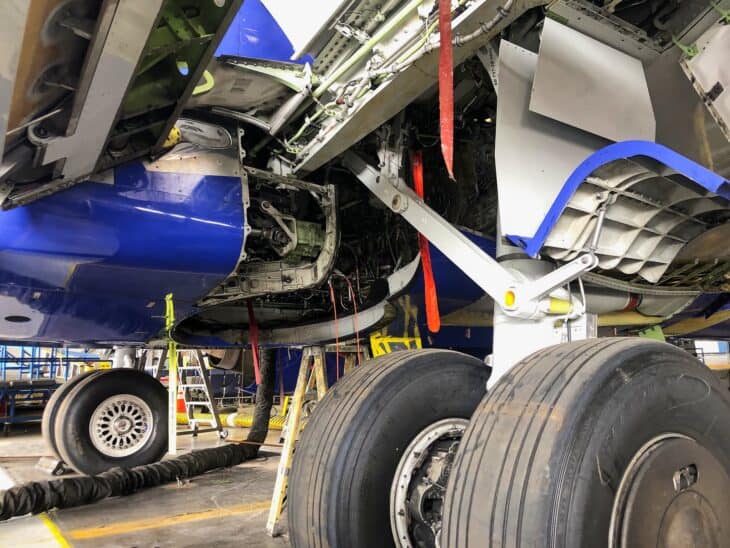
Southwest has not said which system, component or wheel was involved, or what produced the smoke. The pilots’ radio calls described what looked like a fire, the airline says none was reported, and no published source has yet reconciled the two.
Las Vegas has seen a Southwest brake event before. On May 9, 2025, a Southwest 737 MAX 8, N8765Q, arriving from San Jose had two left main tires destroyed by fire from hot brakes after landing, according to FAA wording quoted by Aeroinside.
That jet was back in service about 32 hours later. The 2025 case happened on landing, while Friday’s came on the taxi out, so the two are not directly comparable.
In July, AeroCorner covered another Southwest 737 leak scare, when a jet diverted to Charleston with a suspected fuel leak. Friday’s event played out on the ground at Harry Reid International, in full view of the crews queued behind it.
What is still unknown
The registration and exact 737 variant of the aircraft that returned to the gate have not been published; FlightAware’s public record shows only the replacement MAX 8. The cause of the smoke is unconfirmed beyond Southwest’s mention of a possible hydraulic issue. The FAA’s accident and incident notices had no entry for the event when checked on the morning of October 10, 2026.
Sources and references used for research and fact-checking.
Get the Newsletter
The latest aviation news and stories sent to your inbox.
About the Author

Tim is the owner and lead editor of AeroCorner since 2019, overseeing aviation content covering aircraft, airlines, airports, and the broader aviation industry. Through years of researching, writing, editing, and publishing aviation-focused content, he has developed extensive practical knowledge of commercial aviation and air travel. Based in Asia and a frequent traveler himself, Tim also brings firsthand passenger experience to AeroCorner’s coverage. Outside of publishing, he has also explored aviation firsthand through hands-on flight training in New Zealand.