

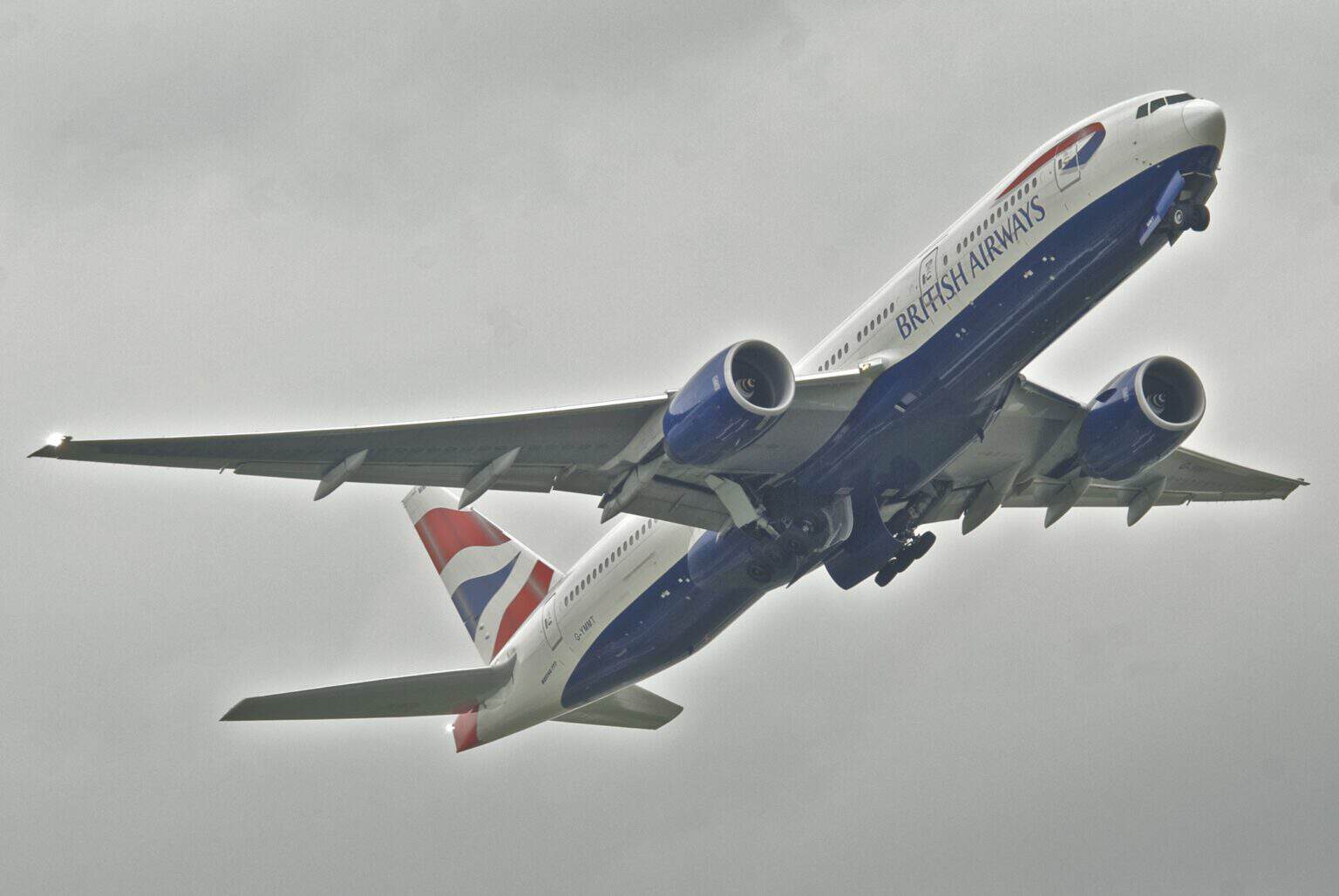
British Airways flight BA2044 from Colombo landed safely at London Gatwick on Tuesday, November 3, 2026, after its crew reported an indication of a flat tire during the descent. The Aviation Herald reported that the Boeing 777-200, registered G-YMMT, stopped on a taxiway after landing so emergency services could inspect it.
The jet was back in the air about five hours later on its next scheduled flight, to Bangkok. AeroCorner found no statement on the flight from British Airways or Gatwick Airport at the time of writing.
What happened on BA2044
According to The Aviation Herald, the crew reported the indication while descending toward London. Emergency services moved into their standby positions, and the 777 continued to a safe landing on runway 08R.
The aircraft then vacated the runway and stopped on the taxiway, where emergency services inspected it. The report does not say which tire triggered the indication, whether any tire was actually damaged, or how many people were on board, and it mentions no injuries.
Flightradar24’s record for G-YMMT shows the November 3 sector from Colombo landing at London Gatwick at 4:42 p.m. GMT, a little ahead of its 5:00 p.m. scheduled arrival, after about 11 hours and 20 minutes in the air.
The same record shows the jet leaving Gatwick at 9:47 p.m. GMT that evening as BA2231 to Bangkok, where it landed the next afternoon. Aviation A2Z reported the same arrival and departure times from tracking data.
A new route and a busy Gatwick 777
The route is less than two weeks old. British Airways launched its seasonal Gatwick service to Colombo’s Bandaranaike International Airport on October 23, 2026, flying it three times a week through the 2026/27 winter, Travel Extra reported.
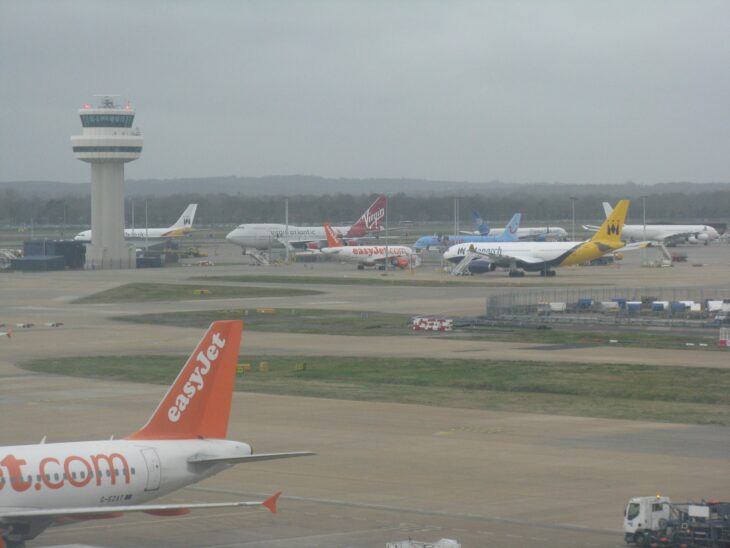

The route is flown with Boeing 777s offering Club World, World Traveller Plus and World Traveller cabins, according to RusTourismNews, which described it as the airline’s return to Sri Lanka after an 11-year absence.
G-YMMT’s past week shows how hard a Gatwick 777 works. Since October 29, Flightradar24 lists it on two Gatwick round trips to Colombo, two to Bangkok and one to Kingston, Jamaica, and it is scheduled back on the Colombo route on November 6.
Why crews treat a tire indication with care
An indication in the cockpit is not proof of a flat tire. Crane Aerospace, which says it has supplied the 777’s standard tire pressure monitoring system since 2007, says the system gives the cockpit a continuous pressure reading whenever the aircraft is powered.
Whether the reading was a faulty sensor or a genuine pressure loss has not been reported. Either way, the crew could not confirm it from the flight deck, and the report describes the cautious sequence: land, clear the runway and wait for emergency services to look.
The reason is what an underinflated tire can do. EASA’s rulemaking terms of reference call underinflation a major contributing factor to tire and wheel failures and say that on a multi-wheel gear it raises the risk of the neighboring tire failing too.
The same document says a single underinflated tire on a multi-wheel assembly is nearly impossible to spot in a visual check, because its correctly inflated partner carries the load. That is the case for pressure monitoring on large jets.
Gatwick has seen the bad version. On October 3, 2000, a Boeing 757-300 registered 4X-BAU burst two tires on landing there, and the investigation concluded that one of them had probably been underinflated, according to the UK Air Accidents Investigation Branch and EASA.
That event led the AAIB to recommend that regulators consider requiring tire pressure monitoring and warning systems. EASA has since folded the idea into its rulemaking on keeping large aircraft tires within their specified pressures.
Stopping clear of the runway also keeps it open for other traffic. In October 2022, a Gatwick spokesperson said the main runway was closed for 19 minutes after a deflated tire on British Airways flight BA2272 from New York JFK, as Sussex News reported.
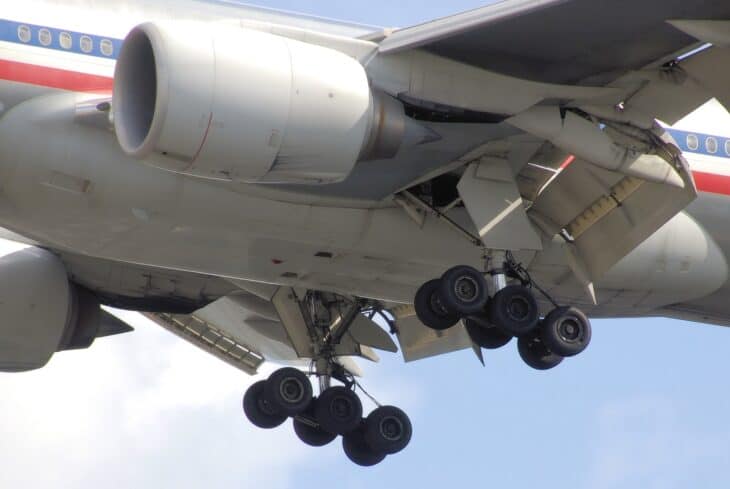

Such indications can end quietly. In March 2024, an American Airlines 777 crew landing at Los Angeles received a low pressure indication for one tire, and the airline said the jet taxied to the gate under its own power, NBC News reported.
BA2044 came two days after another British Airways jet headed back to Gatwick. On November 1, BA2672 to Palma turned back over France after a reported landing gear control fault.
Sources and references used for research and fact-checking.
- Flightradar24, G-YMMT aircraft flight history
- EASA, Terms of Reference RMT.0586, Tyre pressure monitoring
- UK AAIB, Boeing 757-300 4X-BAU, Gatwick, 3 October 2000: safety recommendations 2002-013 and 2002-014
- Crane Aerospace & Electronics, Integrated Tire Pressure and Brake Temperature Monitoring Systems (Boeing 777 tab)
Get the Newsletter
The latest aviation news and stories sent to your inbox.
About the Author

AeroCorner News is the aviation news desk of AeroCorner.com. It covers accidents and incidents, safety rulings, airline and airport disruption, and new aircraft. It works from primary sources such as the NTSB, FAA, EASA and the manufacturers' own announcements.