

Table of Contents
Pick JFK for Brooklyn, Queens or Long Island, for the widest choice of international flights, or for the cheapest ride to Midtown: $11.75 by AirTrain and subway, against $17.25 by AirTrain and NJ Transit from Newark.
Pick Newark if you fly United, are staying in New Jersey, or want the more punctual airport right now. Under an FAA cap on its hourly flights, Newark ran 76.3% of its domestic arrivals on time from January to July 2026, against 72.7% at JFK.
Below, the two are compared on getting to Manhattan, where you can fly, delays, fares and the terminals, as of October 2026. The numbers come from the Port Authority, NJ Transit, the MTA, the NYC Taxi and Limousine Commission, the FAA, the Bureau of Transportation Statistics (BTS) and our own airport database.
| Criterion | JFK | Newark | Edge |
|---|---|---|---|
| Distance to Midtown | About 15 miles (24 km) | About 16 miles (26 km) | Even |
| Rail to Midtown* | $11.75 by AirTrain and subway; $14 to $16 by AirTrain and LIRR, 20 min from Jamaica to Penn Station | $17.25 by AirTrain and NJ Transit, about 30 min from the airport station to Penn Station | JFK |
| Four adults to Midtown by rail* | $47.00 | $69.00 | JFK |
| Taxi to Midtown* | $70 flat, $76.75 with fees, before tip and tolls | $60 to $80 metered, plus a $1.75 pickup fee, round-trip tolls and tip | JFK |
| Nonstop destinations | 226, of them 124 international | 205, of them 94 international | JFK |
| Largest airline, 2025 | Delta, 29.6% of passengers | United, 67.9% of passengers | JFK (more choice) |
| Domestic arrivals on time** | 75.5% in 2025, 72.7% Jan to Jul 2026 | 70.6% in 2025, 76.3% Jan to Jul 2026 | Newark (2026) |
| Domestic flights canceled, Jan to Jul 2026** | 4.6% | 3.9% | Newark |
| Average domestic fare, Q2 2026 | $497.23 | $495.84 | Even |
| Traveler rankings, 2026 | J.D. Power 8th of mega airports (626 points); Skytrax 85th in the world | J.D. Power tied for last (585 points); Skytrax 65th in the world | Even |
How we compared
Fares are the ones NJ Transit, newarkairport.com, the MTA, jfkairport.com and the NYC Taxi and Limousine Commission listed on October 11, 2026, for adults heading to Midtown; the four-adult figure is four of the cheapest rail fares. On-time, cancellation and taxi-out figures are our own count from the BTS Reporting Carrier On-Time Performance files for January 2024 to July 2026, using the DOT definition: within 15 minutes of schedule, with canceled and diverted flights counted as late. Our December 2025 count for Newark, 69.4%, matches the DOT’s own published airport table. BTS covers only domestic flights by US airlines, which leaves out most international traffic at both airports. Destination counts come from the AeroCorner airport database, updated October 6 (JFK) and October 9 (Newark), 2026.
Getting to Manhattan
Distance is a wash. NYC Tourism puts JFK about 15 miles from Midtown and Newark about 16, with a taxi taking 40 to 60 minutes from JFK and 45 to 60 minutes from Newark, depending on traffic.
Newark’s train is simple. The AirTrain runs from the terminals to the Newark Liberty International Airport station, where NJ Transit reaches New York Penn Station in about 30 minutes for $17.25, a fare that already includes the $8.75 AirTrain fee.
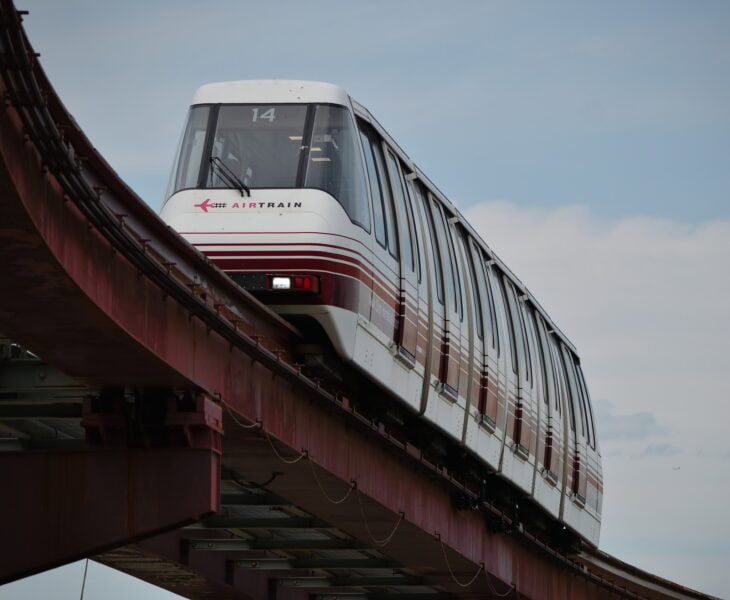

Add the AirTrain ride to the station, which takes 7 minutes from Terminal C, 11 from Terminal B and 20 from Terminal A, and the terminal-to-Penn Station trip comes to roughly 37 to 50 minutes before any wait for a train.
Newark also suits Lower Manhattan: NJ Transit plus the PATH train reaches the World Trade Center in about 45 minutes for $11.75, according to the airport. A CoachUSA express bus to Grand Central, Bryant Park and the Port Authority Bus Terminal costs $23.50 and takes about 50 minutes.
JFK is cheaper by rail. The AirTrain costs $8.75 and meets the subway, so the subway route is $11.75 and 40 to 60 minutes to Midtown, while the Long Island Rail Road (LIRR) route is $14 off-peak or $16 at peak, all-in, according to the MTA.
The LIRR leg takes about 20 minutes between the AirTrain at Jamaica and Penn Station or Grand Central Madison, and LIRR trains from Jamaica also serve Atlantic Terminal in Brooklyn.
The gap grows with every traveler. Four adults pay $47.00 to reach Midtown from JFK by subway and $69.00 from Newark by NJ Transit, so the whole JFK cab, $76.75 before tip and tolls, costs only $7.75 more than four NJ Transit tickets from Newark.
That cab is a flat $70 from JFK to anywhere in Manhattan, $76.75 with the fees for a Midtown drop-off, before tip and tolls. From Newark, NYC Tourism estimates $60 to $80 on the meter, plus a $1.75 pickup fee, the tolls in both directions and the tip.
Going the other way costs more. A New York yellow cab to Newark runs on the meter plus a $20 Newark surcharge, and the rider pays the tolls both ways, including the driver’s return, under the Taxi and Limousine Commission’s rules.
Travelers vote with their feet. In the 2025 survey of departing passengers published in the Port Authority’s traffic report, 15.9% reached JFK by rail or subway, against 5.0% at Newark, while 29.2% of Newark’s travelers came by Uber or another ride-hail app.
Edge: JFK. It is the cheaper airport to reach by rail and has a fixed taxi fare, although Newark is the easy choice from New Jersey and quick to Lower Manhattan.
Size, destinations and airlines
JFK is the bigger airport. It handled 62.6 million passengers in 2025 to Newark’s 47.0 million, and it covers 4,930 acres with 125 gates, five terminals and four runways, against Newark’s 2,027 acres, 110 gates, three terminals and three runways, according to the Port Authority.

Newark is the busier domestic airport
JFK’s lead is international. Count only domestic travelers and Newark carried more in 2025, 31.6 million to JFK’s 28.1 million, according to the Port Authority’s 2025 traffic report. Newark also set its own record that year with 15.4 million international passengers.
For destinations, JFK still leads. Our JFK airport page counts about 655 flights a day to 226 destinations in 78 countries, 124 of them international, while our Newark airport page counts about 595 flights a day to 205 destinations in 53 countries, 94 of them international.
Both reach the far side of the world. The longest nonstop from each airport goes to Singapore, about 18 hours 20 minutes, and JFK’s longest runway runs 14,514 feet against 11,017 feet at Newark.
The real difference is the airline mix. Newark is a United fortress: United carried 31.9 million of its 47.0 million passengers in 2025, or 67.9%, according to the Port Authority.
JFK is split. Delta carried 29.6% of its passengers and JetBlue 23.2%, with American third, and the rest of its top 20 is mostly foreign airlines, from British Airways and Virgin Atlantic to Emirates, Cathay Pacific and Korean Air.
Edge: JFK. It flies to more places on more airlines, unless you are loyal to United, in which case Newark is your home airport.
Delays and cancellations
Newark’s reputation comes from 2025. On April 28, controllers at the Philadelphia TRACON facility that guides Newark’s traffic lost radar and radio contact with the aircraft they were handling, and about half of the roughly 16 flights involved diverted to nearby airports, CNN reported.
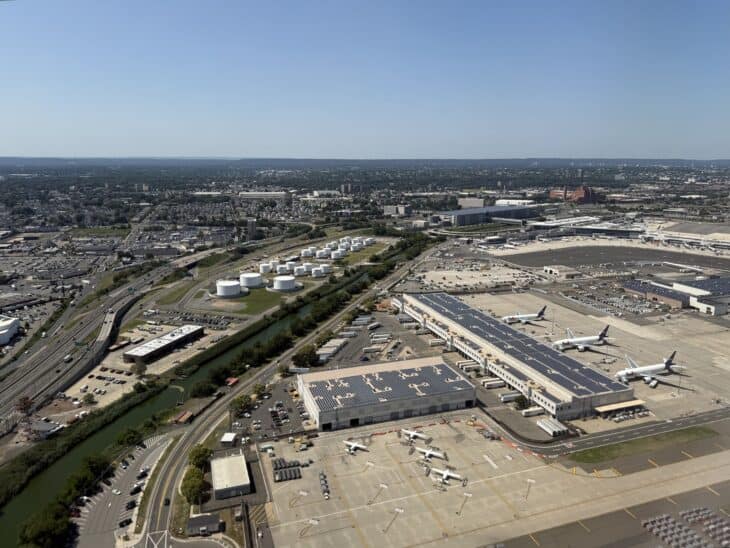

At least five controllers then took trauma leave, the shortage delayed or canceled more than 1,000 flights, and on May 9 the same facility lost radar again, for about 90 seconds. A runway rehabilitation cut schedules further, and Newark ended 2025 with 2 million fewer passengers than in 2024.
The FAA responded by capping Newark in June 2025, and since late 2025 the limit has been 36 arrivals and 36 departures an hour. In June 2026 it extended the cap to October 30, 2027, because the Newark area had 28 of its 46 targeted controllers, or 60.8%.
“Although the staffing pipeline is improving, FAA does not expect the target number of CPCs assigned to EWR to be realized before the end of the Summer 2027 scheduling season.”
Federal Aviation Administration, Newark operating limitations order, June 23, 2026
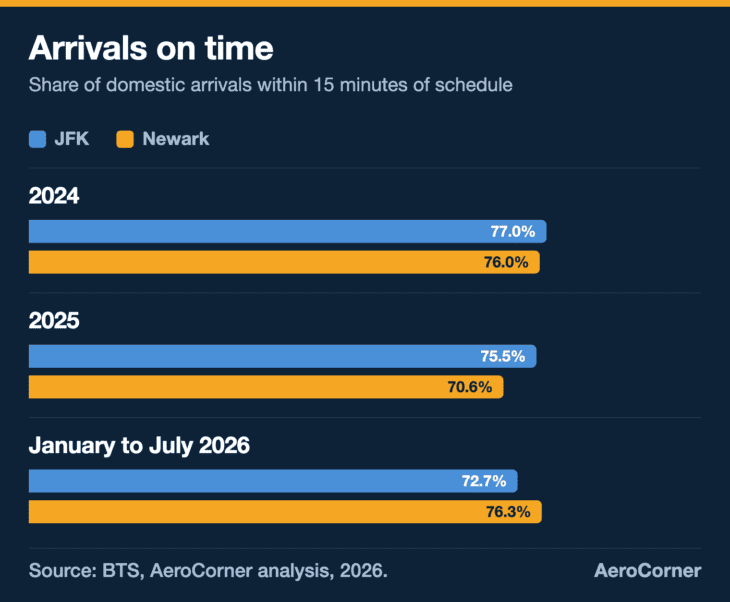
The cap has worked. On domestic flights by US airlines, the two airports were close in 2024, with 77.0% of arrivals on time at JFK and 76.0% at Newark. In 2025 Newark slid to 70.6% while JFK held 75.5%, but from January to July 2026 Newark reached 76.3%, above JFK’s 72.7% and the US average of 75.0%.
Cancellations and taxi times point the same way. In January to July 2026, Newark canceled 3.9% of its domestic departures and JFK 4.6%, and Newark’s flights averaged 23.8 minutes from gate to takeoff, against 27.6 minutes at JFK.
_Terminal_4_Operations.jpg)
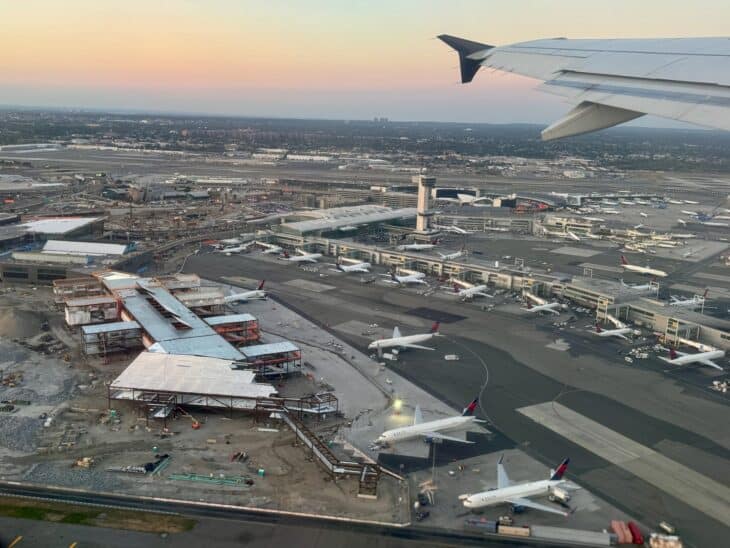
JFK runs under its own limit of 81 scheduled operations an hour, in force since 2008 and now extended to October 2028. Its radar room is short-staffed too: Reuters reported in July 2026 that the New York TRACON, which handles JFK, had just 57% of its targeted certified controllers, part of a nationwide controller shortage.
Newark is still fragile. On September 21, 2026, a failed circuit and a cut backup cable at the Philadelphia TRACON stopped flights at Newark, JFK and three other airports for about seven hours, and about 619 Newark flights were canceled by evening.
Edge: Newark. It was the more punctual airport in 2026 and canceled fewer flights, even though its 2025 record was worse than JFK’s.
Airfares
There is no price gap to speak of. In the second quarter of 2026, BTS put the average domestic itinerary fare from Newark at $495.84 and from JFK at $497.23, a difference of $1.39.
Averages hide route mix, so the honest test is to price your own trip from both airports on the same dates. And count the ground cost too: for a family of four heading to Midtown, Newark’s train costs $22 more than JFK’s subway.
Myth: Flying into Newark is cheaper than JFK
A common tip in travel guides is that Newark is the cheaper airport to fly into. The federal numbers do not show it: in the second quarter of 2026 the average domestic fare was $495.84 from Newark and $497.23 from JFK, according to BTS. Your own route may differ, but on average the two airports cost the same to fly from.
Edge: Even. The two averages are $1.39 apart, so the cheaper airport depends on your route and your dates.
Terminals and the airport itself
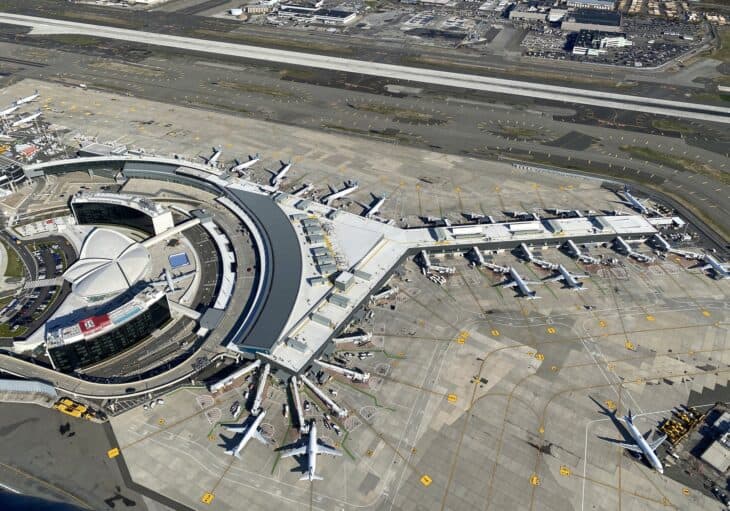
Newark’s newest terminal is its best. Terminal A, with 33 common-use gates, replaced the 1973 original in early 2023, and Skytrax named it the world’s best new airport terminal in 2024. United’s Terminal C has 52 gates, and Terminal B has 25.
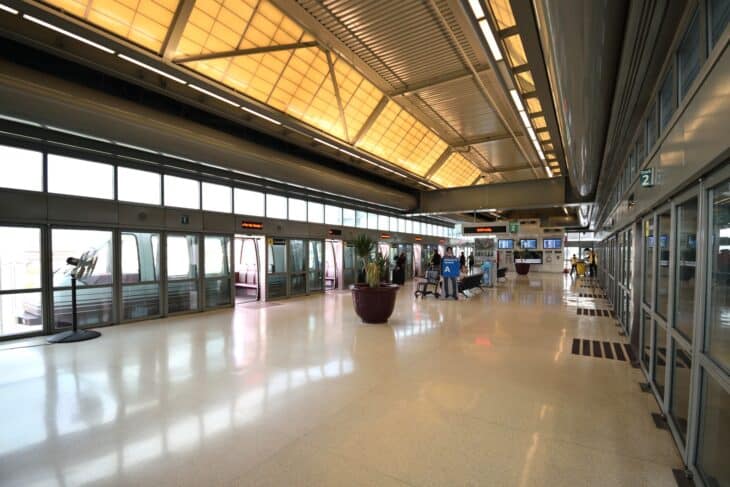

Newark’s AirTrain is its weak spot. The monorail opened in 1996, and the Port Authority calls it outdated and over capacity; its $3.5 billion replacement is due to carry passengers in 2030, and construction has brought weekday shuttle-bus replacements on part of the line.
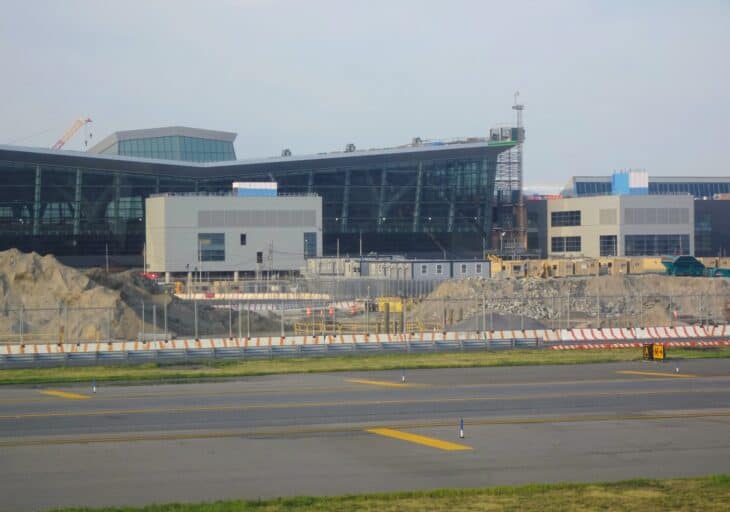
JFK is mid-rebuild, a $19 billion program with two new terminals. The $4.2 billion Terminal 6 is scheduled to open its first five gates in 2026, according to its builder, and the $9.5 billion New Terminal One has slipped to the first quarter of 2027.
,_John_F._Kennedy_Airport_(JFK),_New_York_City,_New_York_(USA)_(54742871129).jpg)
The two big 2026 rankings disagree. J.D. Power’s North America study put JFK 8th of the mega airports with 626 points and Newark tied for last at 585, while Skytrax’s world list ranked Newark 65th and JFK 85th.
Edge: Even. American travelers rated JFK far higher in 2026, but Newark beat JFK in the global Skytrax vote and has the single best terminal of the two.
Who should pick which
| If you… | Pick | Because |
|---|---|---|
| Fly United or one of its partners | Newark | United carries two in three Newark passengers |
| Are staying in New Jersey | Newark | No river crossing, and NJ Transit serves the airport station |
| Are headed to Lower Manhattan | Newark | NJ Transit and PATH reach the World Trade Center in about 45 minutes for $11.75 |
| Want the more punctual airport right now | Newark | 76.3% of domestic arrivals on time from January to July 2026, against 72.7% |
| Are headed to Brooklyn, Queens or Long Island | JFK | The subway and the LIRR start at the AirTrain |
| Want the cheapest ride to Midtown | JFK | $11.75 by AirTrain and subway, against $17.25 by train from Newark |
| Travel as a group of three or four | JFK | Four subway fares cost $47.00 and the flat-fare cab $76.75 before tip, against $69.00 for four Newark train tickets |
| Want the widest choice of international airlines | JFK | 124 international destinations, against 94 |
For most visitors bound for Midtown, Brooklyn or Queens, JFK is the better-connected airport. Newark earns its place for United flyers, New Jersey and Lower Manhattan, and, for now, the better on-time record.
If LaGuardia is also on your list, our JFK vs LaGuardia comparison covers the third airport, and our explainer on why New York has so many airports covers how the three split the work.
FAQ
Sources and references used for research and fact-checking.
- Port Authority of New York and New Jersey, 2025 Airport Traffic Report
- NJ Transit, Newark Liberty International Airport (EWR)
- Newark Liberty International Airport, Public transportation
- Newark Liberty International Airport, AirTrain Newark
- Port Authority of New York and New Jersey, Port Authority advances $3.5 billion AirTrain Newark replacement project
- MTA, JFK Airport guide
- JFK International Airport, AirTrain JFK and public transportation
- NYC Tourism + Conventions, Getting here
- NYC Taxi and Limousine Commission, Taxi fare
- Bureau of Transportation Statistics, Reporting Carrier On-Time Performance (1987-present)
- US Department of Transportation, Air Travel Consumer Report, February 2026
- Bureau of Transportation Statistics, Average Domestic Airline Itinerary Fares, Q2 2026
- Federal Register, Operating limitations at Newark Liberty International Airport, extension of order
- Federal Register, Operating limitations at John F. Kennedy International Airport, extension of order
- Reuters via WDEZ, FAA delaying flights at New York, Philadelphia airports
- CNN via KVIA, Air traffic controllers lose radar and radio contact with planes approaching and departing Newark for 90 seconds again
- AeroCorner, A failed circuit and a cut backup cable stopped flights at five Northeast airports
- Daily Voice, J.D. Power releases 2026 airport traveler satisfaction study
- News 12 New Jersey, Newark Liberty ties for last place in 2026 customer satisfaction study
- Skytrax World Airport Awards, World's Top 100 Airports 2026
- Port Authority (portauthoritybuilds.com), JFK Terminal 6
- Bolt Flight, JFK's $9.5 billion New Terminal One delayed again, opening now set for early 2027
- AeroCorner, New York JFK airport (KJFK)
- AeroCorner, Newark Liberty airport (KEWR)
Get the Newsletter
The latest aviation news and stories sent to your inbox.
About the Author

Tim is the owner and lead editor of AeroCorner since 2019, overseeing aviation content covering aircraft, airlines, airports, and the broader aviation industry. Through years of researching, writing, editing, and publishing aviation-focused content, he has developed extensive practical knowledge of commercial aviation and air travel. Based in Asia and a frequent traveler himself, Tim also brings firsthand passenger experience to AeroCorner’s coverage. Outside of publishing, he has also explored aviation firsthand through hands-on flight training in New Zealand.