

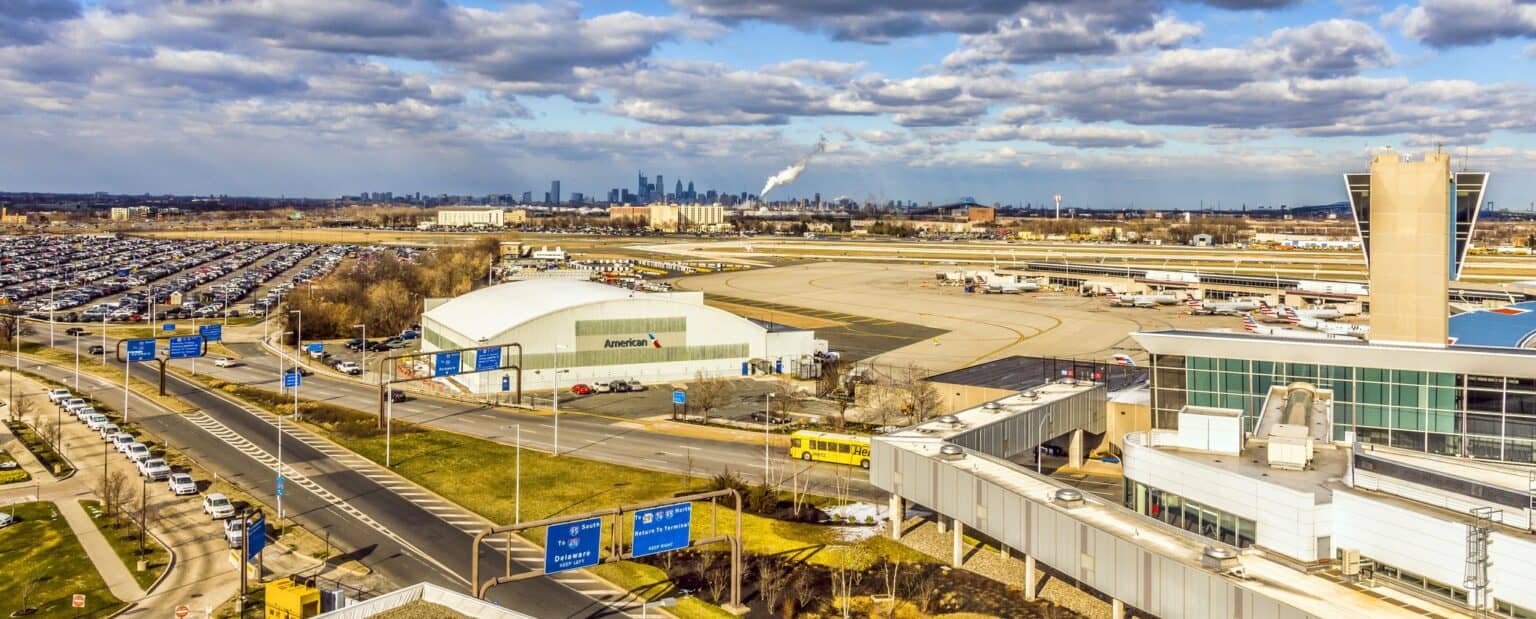
On Monday, September 21, 2026, the FAA halted flights into Newark, Philadelphia, Teterboro, JFK and LaGuardia after the Philadelphia TRACON lost a primary communications circuit and found its backup line already cut. The backup fiber had been severed that morning by a construction crew working beside a rail line in New Jersey.
Transportation Secretary Sean Duffy said shortly after 5 p.m. that the telecom lines were repaired and flights were resuming. Delays carried into the evening as airlines worked through the backlog.
How the day unfolded
Ground stops went into effect at Teterboro and Philadelphia first, with Newark Liberty International Airport following around 10 a.m., NBC News reported. An FAA spokesperson tied those stops to problems with frequencies at Philadelphia TRACON. The stops later spread to JFK and LaGuardia, where they held flights from more than a dozen regions including Chicago, Atlanta, Toronto and Montreal.
Some aircraft already airborne were sent elsewhere. A spokesperson for Boston Logan told CBS New York the airport was “getting a lot of diversions from impacted airports.”
Departure delays at Newark and Philadelphia reached up to 150 minutes on the FAA’s status page. By 6 p.m. Eastern, FlightAware showed about 619 cancellations at Newark and 197 at Philadelphia, according to NBC. Newark had more cancellations than any other airport in the world that day, CNN reported.
The timing was poor. World leaders were flying in for the United Nations General Assembly, and Canadian Prime Minister Mark Carney’s office told CNN his arrival was delayed and he would miss a scheduled summit.
Who cut the cable is disputed
FAA Administrator Bryan Bedford said the primary circuit that failed was one the agency had already slated for replacement. When the system switched to backup, officials found that line broken too, with about 600 feet of fiber damaged between Brunswick and Newark, New Jersey.
Duffy said an Amtrak crew cut the Verizon cable. Amtrak said the work was on NJ Transit property, and NJ Transit said a crew on its Delco Lead project between New Brunswick and North Brunswick severed the cable at about 9:45 a.m. while working roughly 10 feet from the utility markings.
NJ Transit says it is still establishing whether Verizon or the contractor marked the site. Verizon told CNN its cables “were properly placed” and that contractors are responsible for requesting correct markings.
Still unclear
Bedford estimated the fiber break at about 13 hours to repair and said a new circuit was ready to install, yet Duffy declared the lines repaired roughly seven hours after the stops began. The public statements so far do not say which fix restored service, or whether the damaged backup fiber is fully rebuilt.
Why one circuit can stop five airports
A TRACON handles aircraft climbing out of and descending into busy airports, typically within 30 to 50 miles (50 to 80 km). Newark’s approach airspace has been worked from Philadelphia since July 2024, when the FAA moved it out of the understaffed New York TRACON, according to the DOT Inspector General.
That arrangement means the radio frequencies and radar data controllers depend on reach them over telecom circuits. When both the primary and the backup path fail, controllers cannot safely accept normal traffic, so the FAA stops departures bound for the affected airports at their origin, a tool explained in our guide to ground stops and flow control.
It is not the first time this link has failed. The Inspector General opened an audit of the relocation after two outages of about 90 seconds each in 2025.
July 2024
Newark airspace moves. The FAA shifts Newark approach control from the New York TRACON to Philadelphia to address chronic understaffing.
April 28, 2025
First blackout. Controllers lose radar and radio contact for about 90 seconds after a copper wire burns out.
May 9, 2025
Second blackout. Another outage of about 90 seconds follows the failure of both primary and redundant communication links.
Sept. 21, 2026
Five airports stopped. A primary circuit fails and the backup fiber turns out to have been cut that morning.
Bedford framed the failure as a funding problem. “We’re pulling copper up and putting fiber down, but it’s the same data architecture that we’ve had for 50 years,” he said, according to CNN.
Congress made a $12.5 billion down payment on the FAA’s Brand New Air Traffic Control System, and the agency says it needs about $20 billion more to finish by the end of 2028. The telecom layer of that rebuild went to AT&T in August.
Sources and references used for research and fact-checking.
Get the Newsletter
The latest aviation news and stories sent to your inbox.
About the Author

Tim is the owner and lead editor of AeroCorner since 2019, overseeing aviation content covering aircraft, airlines, airports, and the broader aviation industry. Through years of researching, writing, editing, and publishing aviation-focused content, he has developed extensive practical knowledge of commercial aviation and air travel. Based in Asia and a frequent traveler himself, Tim also brings firsthand passenger experience to AeroCorner’s coverage. Outside of publishing, he has also explored aviation firsthand through hands-on flight training in New Zealand.