

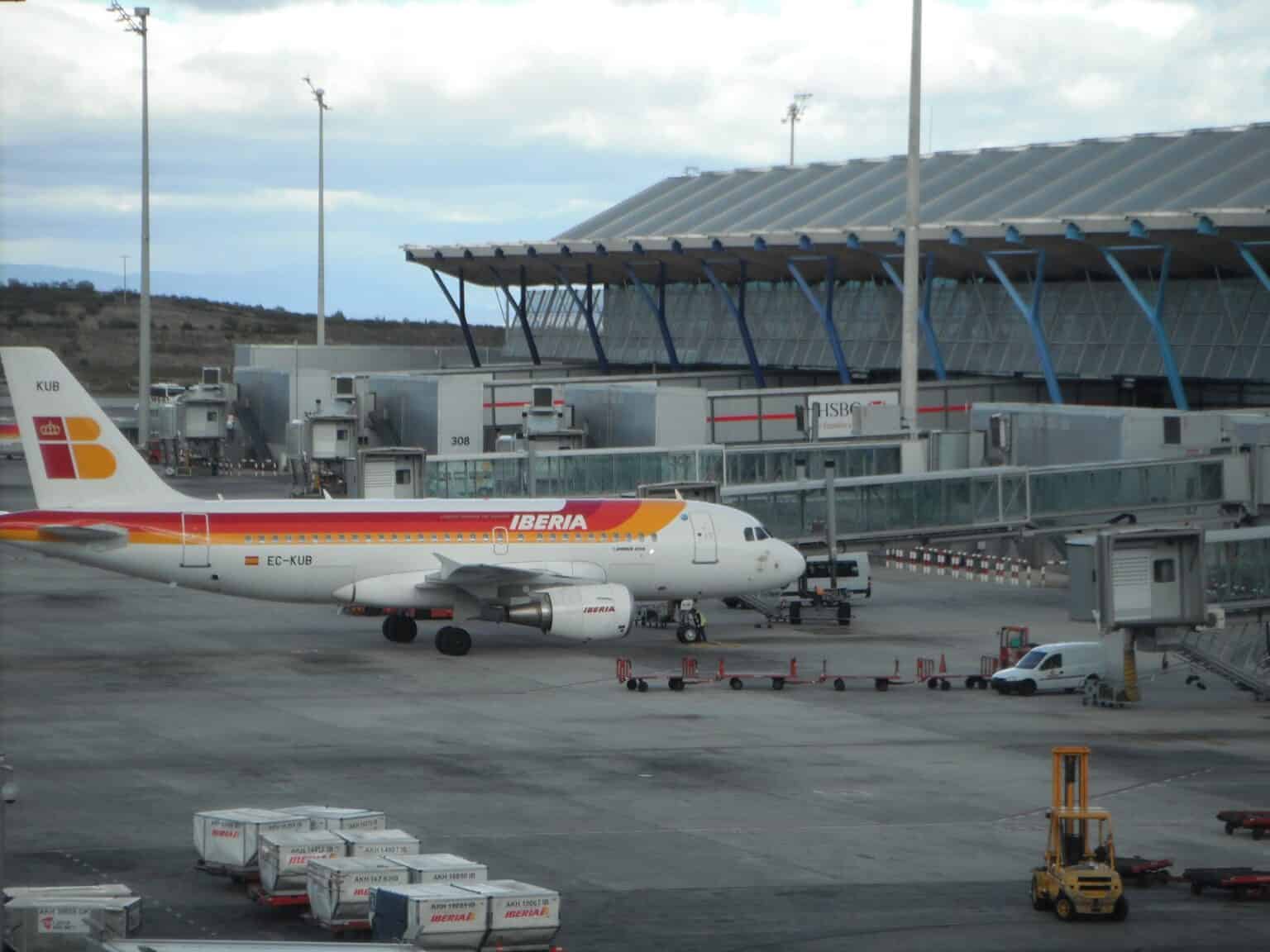
Spain’s main unions, CCOO and UGT, have called a 24-hour nationwide general strike for Wednesday, November 11, 2026. As a general strike, it is open to every worker in the private and public sectors, CCOO says, which includes the people who staff Spain’s airports and airlines.
What the day means for flights depends on one document that does not exist yet. As of November 7, the Transport Ministry had not published the minimum services that set how much of each airport’s schedule must still operate.
What has been called
The unions registered the strike at the Labour Ministry on October 19, alongside CGT, CNT, several smaller unions and the Confederation of Tenants’ Unions, RTVC and EFE reported. Its slogan is “Salarios, vivienda y precios”: wages, housing and prices.
CCOO tells strikers the stoppage runs from 00:00 to 23:59 on November 11, and Demócrata notes that in workplaces that run shifts it can run on into Thursday. It is the two unions’ first joint full-day general strike since 2012: their joint call of October 15, 2025 was for two-hour stoppages per shift, according to the Transport Ministry.
It also lands 18 days before Spain’s snap general election on November 29.
The number that matters has not been set
In Spain, a strike that touches an essential public service runs alongside minimum services that the government imposes. For air transport, the Transport Ministry’s Secretary of State issues them and posts each resolution on the ministry’s strike page.
On November 7 that page carried no resolution for the general strike. Its newest entry covered a cleaning strike at Bilbao airport on October 28.
The order usually arrives close to the date. For the most recent national general strike on the ministry’s list, on October 15, 2025, the resolution was signed on October 10, five days before it.
That 2025 resolution shows how the ministry now works. It does not set one national figure: it protects a share of each airline’s daily flights on each route, airport by airport, with the share depending on how easily travellers could get there another way.
| Airport | Island and public-service routes | International and long domestic routes | Short domestic routes |
|---|---|---|---|
| Madrid-Barajas | 76% | 58% | 33% |
| Barcelona | 72% | 57% | 36% |
| Málaga | 67% | 57% | 33% |
| Palma de Mallorca | 70% | 56% | n/a |
Domestic flights to and from the islands, Ceuta and Melilla fell in the first column, which ranged from 43% to 82% across the airports listed. Overflights, emergency and state flights were protected in full, and assistance for passengers with reduced mobility kept 75% of its staff.
A floor, not a forecast
The 2025 percentages are a guide to the method, not to November 11. CCOO and UGT struck for only two hours per shift that day, while smaller unions struck all day, and each strike gets its own resolution.
What happened the last time both unions struck all day
The closest precedent is November 14, 2012. The government and the two unions agreed minimum services that guaranteed 10% of mainland domestic flights, 50% of routes to the Balearic and Canary Islands, Ceuta and Melilla, 20% of flights to EU destinations and 40% of international flights outside the European Economic Area, Hosteltur reported.
Airlines cut deep. Iberia cancelled 171 flights, Vueling 152 and Air Nostrum 150, and all three relaxed their change and refund rules. Air Europa announced 92 cancellations of its own, according to Hosteltur.
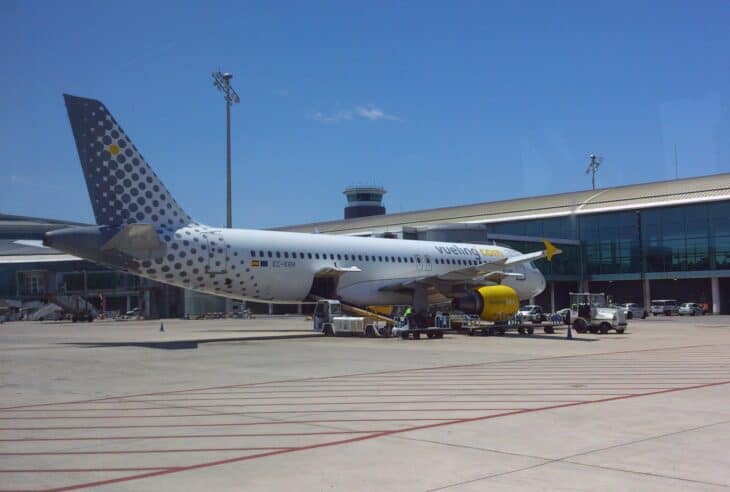

At the big airports, the 2025 shares for mainland and international flights were well above 2012’s. The 2025 resolution itself says the ministry has reworked its approach over the years to reflect rulings by Spain’s National Court (Audiencia Nacional).
Some Spanish airports are already working under strike rules. The ministry’s order for the indefinite SAERCO controllers’ strike covers nine airports, Lanzarote, Fuerteventura and Seville among them, through November 30. Italy faced the same question last month, when its October 30 general strike also included flights.
Your rights if your flight is cancelled
EU Regulation 261/2004 covers every flight departing Spain, on any airline, and flights into Spain on EU airlines. If your flight is cancelled, the airline must offer a refund or a new routing, plus meals and, where needed, a hotel, whatever caused the cancellation.
Cash compensation is different: the airline does not owe it if the cancellation came from extraordinary circumstances. In 2021 the EU Court of Justice ruled in Airhelp v SAS that strikes by air traffic controllers or airport staff can qualify, while a strike by an airline’s own staff over their own demands does not.
That case concerned pilots striking against their own airline. It did not address airline staff joining a nationwide general strike, so claims from November 11 may turn on who actually walked out.
As of November 7, AeroCorner found no airline cancellation list or strike waiver for the day. Anyone flying in or out of Madrid-Barajas, Barcelona or the islands on November 11 should watch for the ministry’s order and their airline’s messages in the days before.
Sources and references used for research and fact-checking.
- CCOO, Huelga general 11 de noviembre: motivos y preguntas frecuentes
- Ministerio de Transportes y Movilidad Sostenible, Resoluciones de servicios mínimos (transporte aéreo)
- Ministerio de Transportes y Movilidad Sostenible, Resolución de servicios mínimos en el transporte aéreo, huelga general del 15 de octubre de 2025
- EUR-Lex, Regulation (EC) No 261/2004
- Court of Justice of the EU (EUR-Lex), Judgment of 23 March 2021, Airhelp v SAS, C-28/20
Get the Newsletter
The latest aviation news and stories sent to your inbox.
About the Author

AeroCorner News is the aviation news desk of AeroCorner.com. It covers accidents and incidents, safety rulings, airline and airport disruption, and new aircraft. It works from primary sources such as the NTSB, FAA, EASA and the manufacturers' own announcements.