

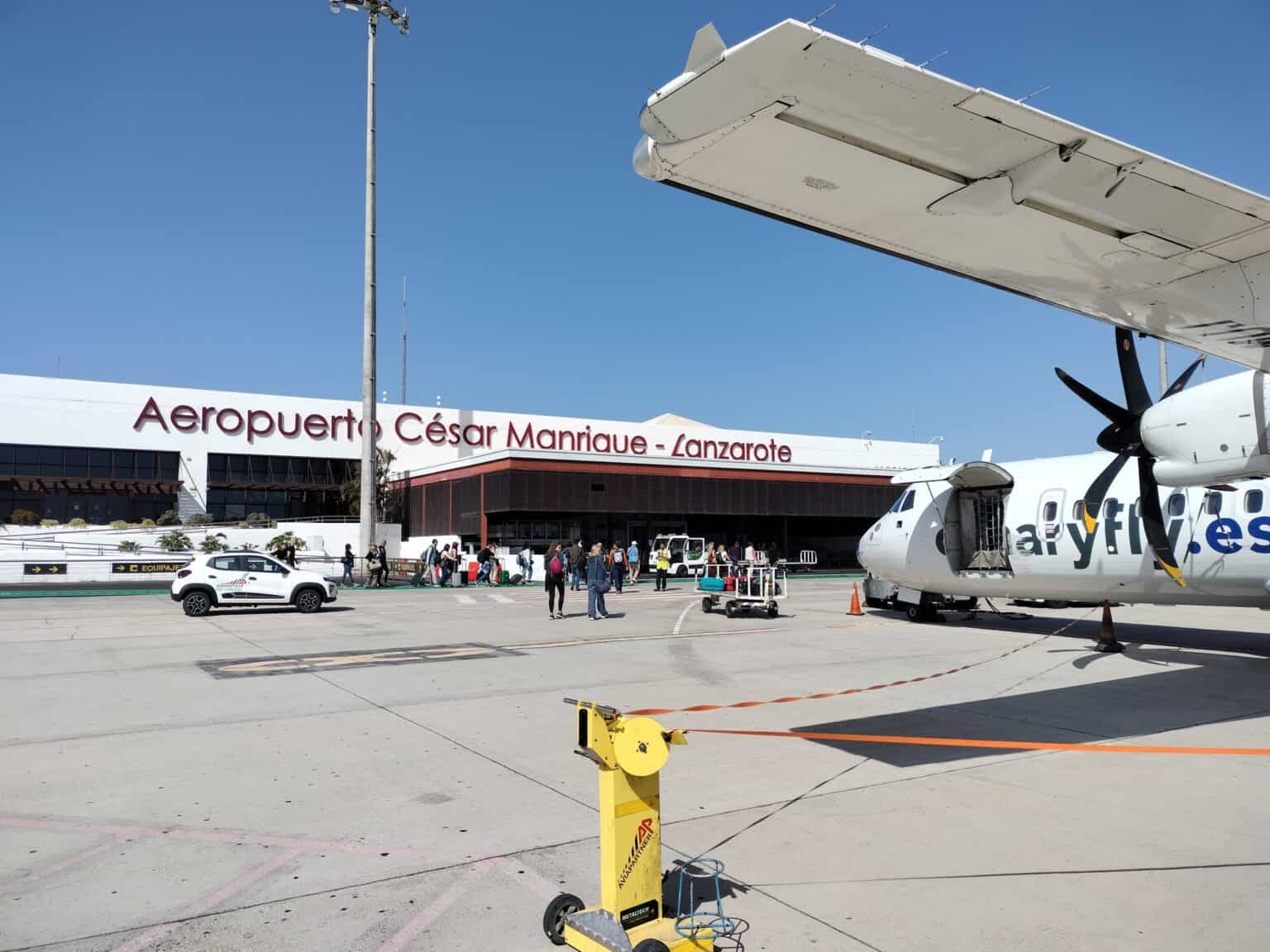
Flights at Lanzarote Airport in Spain’s Canary Islands have been running late since the night of November 4, 2026, as an indefinite strike by the island’s air traffic controllers starts to show up in the winter high season. The controllers work for Saerco, a private company that runs the tower under contract, not for Spain’s state air navigation provider ENAIRE.
Eurocontrol’s records showed Lanzarote as one of only two European airports with serious delays, alongside Athens, where the cause was local, La Voz de Lanzarote reported on November 6. The island had accumulated 2,225 minutes of delay attributed to controller strikes, close to 5% of all delay in the European network, according to the same report.
A strike that began in April
The air traffic controllers’ union USCA and the CCOO union gave notice of the open-ended strike on April 6, and it began at midnight on April 17, according to USCA’s own announcement. The unions cited years of staff cuts, cancelled approved vacations, short-notice shift changes and fatigue, which they said safety cannot rest on.
It covers 104 workers at the nine airports where Saerco handles air traffic: Jerez de la Frontera, A Coruña, Madrid-Cuatro Vientos, Seville and Vigo on the mainland, plus El Hierro, Fuerteventura Airport, Lanzarote and La Palma in the Canaries, as Europa Press reported on the first day.
For months, passengers barely noticed it. On the opening day, the Canary Islands broadcaster RTVC reported that the minimum services imposed on the four island airports had left the strike almost without effect there.
Why the delays are showing now
In Spain, strikes in air traffic control run under minimum services set by the Ministry of Transport and Sustainable Mobility: a share of each kind of flight that must still operate, and so a number of staff who must work. For Lanzarote, La Voz de Lanzarote put those at 76% of inter-island flights in October and 73% in November, and 57% and 53% of mainland and international routes over five hours.
USCA accuses Saerco of an “abusive interpretation” of those orders, aimed at keeping 100% of operations running, and the unions have challenged the minimum-service orders in court as a breach of the right to strike, according to the paper.
The arithmetic changes in winter, when traffic peaks. La Voz de Lanzarote explained that the high-season schedule needs several controllers on each shift, so one of them can now walk out without the tower stopping.
That is why the delay often lands before a passenger reaches the island. When an airport or sector cannot cope with the traffic, flow control measures “frequently result in delays of flights prior to departure”, SKYbrary notes, so a flight bound for Lanzarote can be held at its departure airport elsewhere in Europe.
Staffing is the core of the dispute: the strike committee says the Lanzarote tower has 14 active controllers against the 22 it considers technically required. The unions say that leaves no slack for sick leave or traffic peaks, a version of the controller staffing crisis that has also squeezed US airports.
“We are not asking for salary improvements,” Susana Romero, USCA’s national spokesperson, told La Voz de Lanzarote. She said some towers have a single controller working eight-hour shifts.
Romero also separated the strike from a runway incursion at Lanzarote on September 29, which she put down to an error of interpretation by the aircraft’s crew, not to controller workload.
What is not yet known
The report does not say over what period the 2,225 minutes of delay were counted, or how many flights were held. Saerco, Aena and the transport ministry had not commented in the coverage available at the time of writing, and no end date for the strike has been set.
An old fight over privatized towers
Lanzarote has been here before. In November 2023, during an earlier strike at the privatized towers, the airport was the least punctual in Europe on one Sunday, with an average delay of about 20 minutes per flight, AtlánticoHoy reported.
That walkout lasted 17 months over a blocked collective agreement and was called off in May 2024, once the unions and the employers agreed on an arbitrator, USCA said. By November 2024, the union said Saerco had not complied with the resulting award and had announced a court challenge to it.
This time the unions are aiming at the model itself. USCA and CCOO want a full review of the concession framework, and say that if Saerco cannot guarantee stable staffing, they will ask the government to revoke the contracts and return the towers to ENAIRE.
Controller strikes have hit other European airports this fall, including the Charleroi tower strikes in Belgium. For Lanzarote travelers, the practical advice is to check the flight’s status before leaving for the airport and to allow extra time for connections.
If a flight is cancelled, consumer group Facua says passengers can choose a full refund or rerouting under Article 8 of EU Regulation 261/2004, and can claim meals, refreshments and, if needed, a hotel and transfers under Article 9, as RTVC reported in April.
Sources and references used for research and fact-checking.
- USCA, USCA y CCOO convocan huelga indefinida en SAERCO por recortes de plantilla y riesgos para la seguridad operacional
- USCA, Desconvocada la huelga de controladores aéreos en los aeropuertos de las islas no capitalinas tras la elección de un árbitro
- USCA, USCA anuncia en su Congreso posibles paros ante el incumplimiento del laudo por parte de SAERCO
Get the Newsletter
The latest aviation news and stories sent to your inbox.
About the Author

AeroCorner News is the aviation news desk of AeroCorner.com. It covers accidents and incidents, safety rulings, airline and airport disruption, and new aircraft. It works from primary sources such as the NTSB, FAA, EASA and the manufacturers' own announcements.