

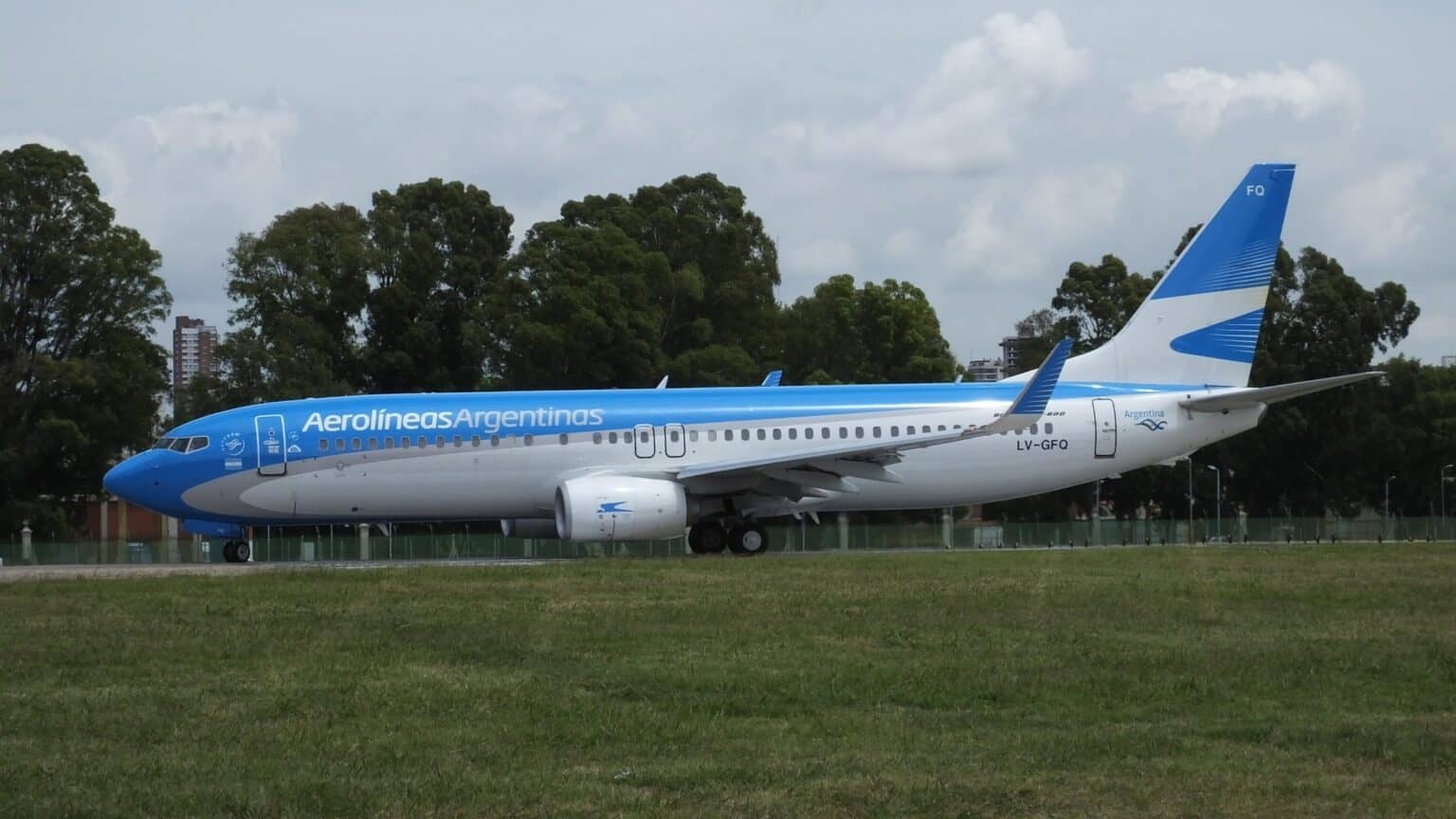
Argentina’s state workers’ union, ATE, has called a day of protest at more than 27 airports on Friday, November 6, and warned that flights could be delayed or canceled. Only medical, humanitarian, organ-transport and official flights are guaranteed during the action, the union said in its November 2 announcement.
The protest is by ATE members who work for ANAC, the national civil aviation authority. It falls two days before Pope Leo XIV is due to arrive in Buenos Aires.
What the union has announced
At most of the airports, ANAC staff will hold back their work, a form of action the union calls a “retención de tareas.” The two Buenos Aires airports get a different treatment.
At Ezeiza International Airport and Aeroparque Jorge Newbery, the union plans a “paro a la japonesa,” a Japanese-style strike. Instead of stopping work, staff will inspect aircraft, ramp equipment, works in progress, runways, taxiways and any activity that bears on operational safety, and more checks than usual can slow the whole operation down.
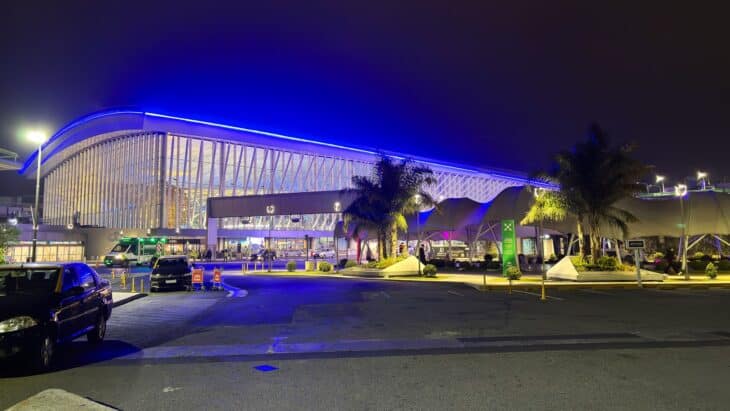

Marcelo Belelli, ATE’s national coordinator at ANAC, described it as checking the whole operation more closely than usual, according to Noticias Argentinas. The union’s statement gives no start or end times and does not list the other airports.
Regional outlet Red43 reported that Bariloche, Neuquén, Comodoro Rivadavia, Trelew, Río Gallegos, El Calafate and Ushuaia are among them. That list comes from the outlet, not from ATE.
“Without a budget there are no safe flights,” said Rodolfo Aguiar, ATE’s national secretary general. He added that every suspended or delayed flight “will be the government’s responsibility,” and the union stressed that its complaint is not aimed at passengers.
Fire trucks, ambulances and a stalled pay round
ATE frames the protest as a safety complaint first. It says the airport in San Luis, Brigadier Mayor César Raúl Ojeda, is out of service because both of its fire trucks have broken down, and that El Pucú airport in Formosa is in a similar position.
Across most of the network, the union says, airports are short of firefighting agents, protective equipment, working ambulances and medical supplies. It argues those gaps run against ICAO and FAA recommendations and has asked the Labor Secretariat, headed by Julio Cordero, for full health and safety inspections.
The money claim sits underneath. ATE says the airport fee raises about 220 billion pesos a year, of which less than 10% comes back to ANAC’s operations and salaries.
It also says the agency’s sector wage talks have not been convened in almost three years, and that ANAC staff earn roughly half the aviation industry’s average. These are the union’s figures.
Why a broken fire truck matters to an airport
Every airport that takes airline flights needs a rescue and firefighting service sized to the largest aircraft it is meant to accept. Under ICAO’s Annex 14 standards, that cover is graded in categories from 1 to 10, set mainly by aircraft length and fuselage width, as SKYbrary explains.
When an airport’s available cover drops below its normal category, the change has to be published in a NOTAM so crews know before they arrive. That is why ATE treats broken fire trucks as a safety issue rather than a maintenance footnote: by its account, San Luis stopped operating once both of its trucks were out.
In Argentina, ANAC staff carry out airport inspections, and the agency supplies equipment to the firefighting and rescue units known as SSEI. Funding for that service and for airport inspections was already among ATE’s demands in September.
A September standoff, and the Pope’s arrival
ATE tried a similar action two months ago. It called a 48-hour protest at more than 27 airports for September 3 and 4, with stoppages from 9 a.m. to noon and 6 p.m. to 9 p.m. each day.
The Labor Secretariat then ordered the union to keep at least 75% of normal service running, citing Law 27.802, which classes air navigation as an essential service, Infobae reported. ATE rejected the order, then postponed the action on September 3 while it sought a hearing with labor authorities, according to El Cronista.
By the morning of November 4, we found no comparable order for Friday’s protest, no response from ANAC and no advisory from Aerolíneas Argentinas, LATAM, Flybondi or JetSMART. Passengers flying on Friday should check their flight status with the airline before leaving for the airport.
The timing adds pressure. Pope Leo XIV is due to land at Aeroparque at 4:30 p.m. on Sunday, November 8, after a stop in Uruguay, according to the Vatican schedule as reported by iProfesional.
His program takes in Buenos Aires, Córdoba and Luján before a farewell at Ezeiza on Wednesday, November 11, and a flight to Lima for the Peru leg of the trip.
Sources and references used for research and fact-checking.
Get the Newsletter
The latest aviation news and stories sent to your inbox.
About the Author

AeroCorner News is the aviation news desk of AeroCorner.com. It covers accidents and incidents, safety rulings, airline and airport disruption, and new aircraft. It works from primary sources such as the NTSB, FAA, EASA and the manufacturers' own announcements.