

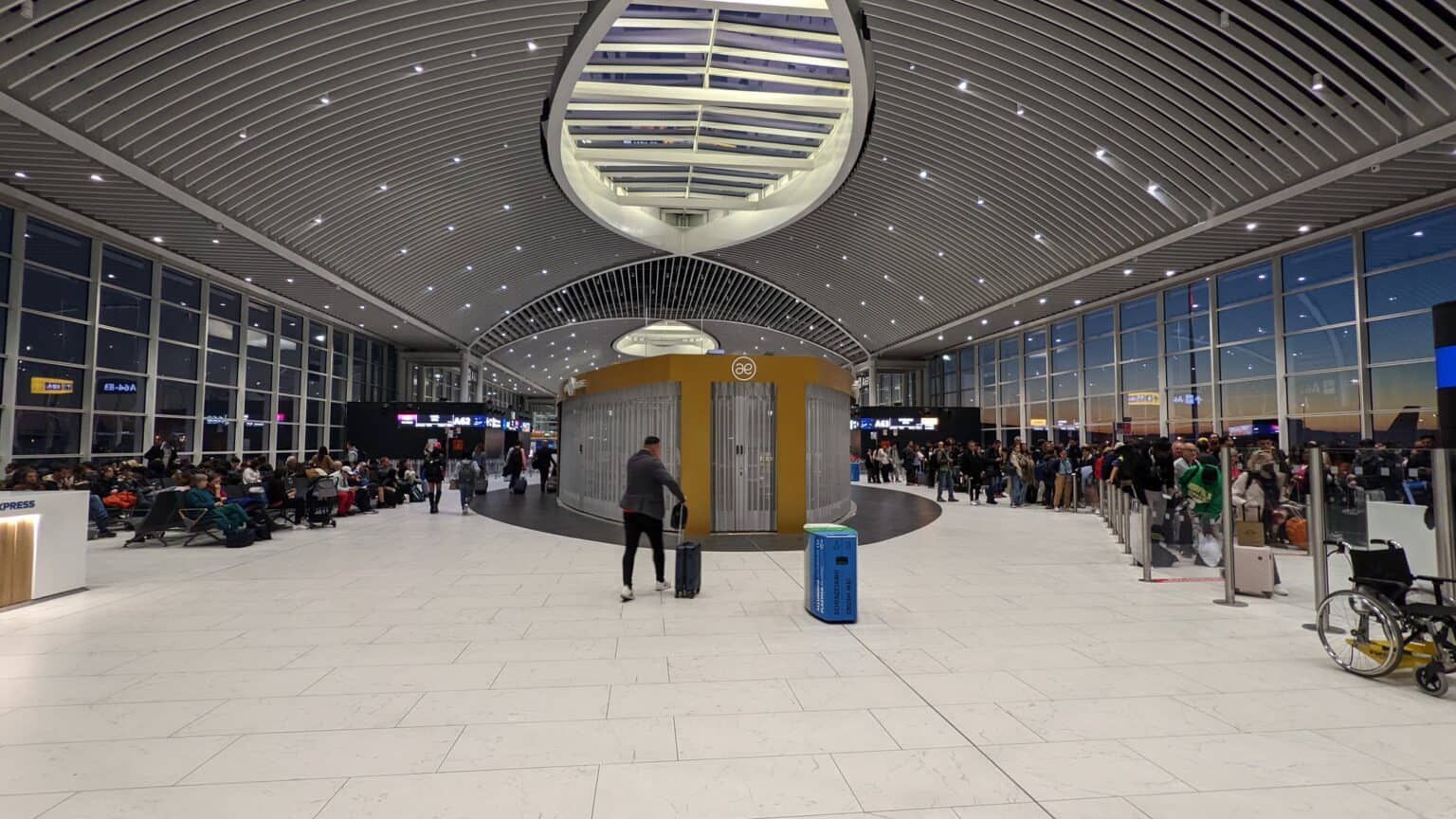
The USB union’s 24-hour general strike on Friday, October 30, 2026, still covers Italian air transport from midnight to 11:59 p.m., according to the transport ministry’s official strike register. A separate 24-hour strike by airport staff at Pisa and Florence is filed for the same day.
Both stoppages fall inside a protected period, October 30 to November 5, when Italy’s aviation strike rules do not allow strikes at all. Italy’s strike guarantee commission has asked the union to leave transport out, and USB has so far refused.
Why reports disagree about flights
Four general strikes are registered for October 30, and three of them leave aviation out. That is why some reports say flights are excluded while others say they are not.
| Notice | Covers air transport? | Hours (local) |
|---|---|---|
| USB general strike, nationwide | Yes | 00:00 to 23:59 |
| USB Lavoro Privato: Toscana Aeroporti, GH Toscana and Consulta staff at Pisa and Florence | Yes | 00:00 to 23:59 |
| USI-CIT general strike | No, air, rail, local transport and maritime excluded | Whole day |
| ADL-Cobas, CLAP, SIAL-Cobas and Cobas general strike | No, air and other transport excluded | 00:01 to 23:59 |
| CIB-Unicobas general strike | No, all transport excluded | Whole day |
USB filed its strike on October 6, with set hours for each mode: flights all day, trains from 9 p.m. on Thursday to 8:59 p.m. on Friday, motorways from 10 p.m. on Thursday. The union is protesting the cost of living and what it calls a war economy, and wants higher wages and pensions.
The Tuscan airport strike was filed on October 12. It covers staff of Toscana Aeroporti, GH Toscana and Consulta working at Pisa International Airport and Florence Peretola. USB Lavoro Privato had also called a 24-hour strike at the two airports for October 16, the day of the easyJet crew strike.

The All Souls rule USB is defying
Italy’s civil aviation authority ENAC publishes a list of periods when air transport strikes cannot be held. They cover Christmas, Easter, the summer peak and October 30 to November 5, the week of All Saints’ Day on November 1 and the Day of the Dead on November 2.
According to Sbircia la Notizia, which read the commission’s decisions, the guarantee commission told USB on October 13 that the date breaks this rule in aviation, rail, local transport and other sectors. USB replied on October 16 and dropped only a handful of transport groups, including ENAV staff at Bari airport.
On October 22 the commission adopted a resolution, numbered 26/320, warning of a well-founded risk of serious and imminent harm to freedom of movement, the same report says. It sent the case to the transport minister, the presidents of both chambers of parliament and the prime minister.
Under Italy’s strike law, the minister can then order a strike moved to another date, shortened, or run with set service levels. Such an order normally has to come at least 48 hours before the strike starts, which for a stoppage beginning at midnight on Friday puts the cutoff around midnight on Tuesday, the outlet calculated.
Status at the time of writing
As of Tuesday, October 27, the ministry register still lists USB’s air transport stoppage for October 30, and we found no published ministerial order postponing or limiting it. An order, or USB withdrawing the air sector, would change the picture before Friday.
Which flights are protected if it goes ahead
If the stoppage does go ahead, Italy’s standard minimum-service rules apply, as they did for the September 30 controllers’ strike. ENAC’s guaranteed-flights page says flights in two daily windows, 7 a.m. to 10 a.m. and 6 p.m. to 9 p.m., must operate during strikes.
For striking airline staff, the rules protect every scheduled departure in those windows and international arrivals due within half an hour of each window closing. Outside the windows, airlines must still fly one intercontinental departure per continent and one daily link to and from the islands.
At airports such as Pisa and Florence, handling and passenger services must run fully in the two windows. Outside them, services cannot fall below 20% of normal, and airport authorities must authorize 20% of scheduled flights.
How many flights are actually canceled will depend on how many workers join. We found no airline cancellation notice for October 30 as of Tuesday.
What passengers can claim
On flights covered by EU passenger rights rules, a canceled flight carries a choice of refund, rerouting or a return flight, plus care at the airport. Cash compensation of €250 to €600 is a different matter.
The European Commission says strikes by an airline’s own staff are not extraordinary circumstances, so they can still trigger compensation. A strike outside the airline, such as one by airport handlers, may count as extraordinary, but the airline has to prove the link and that it could not have avoided the cancellation.
The protected period ends on November 5, and the register already has aviation strikes lined up for November 6: easyJet’s flight crews for 24 hours and ENAV staff at Bari from 1 p.m. to 5 p.m. A national four-hour ENAV strike follows on November 21.
Sources and references used for research and fact-checking.
Get the Newsletter
The latest aviation news and stories sent to your inbox.
About the Author

AeroCorner News is the aviation news desk of AeroCorner.com. It covers accidents and incidents, safety rulings, airline and airport disruption, and new aircraft. It works from primary sources such as the NTSB, FAA, EASA and the manufacturers' own announcements.