

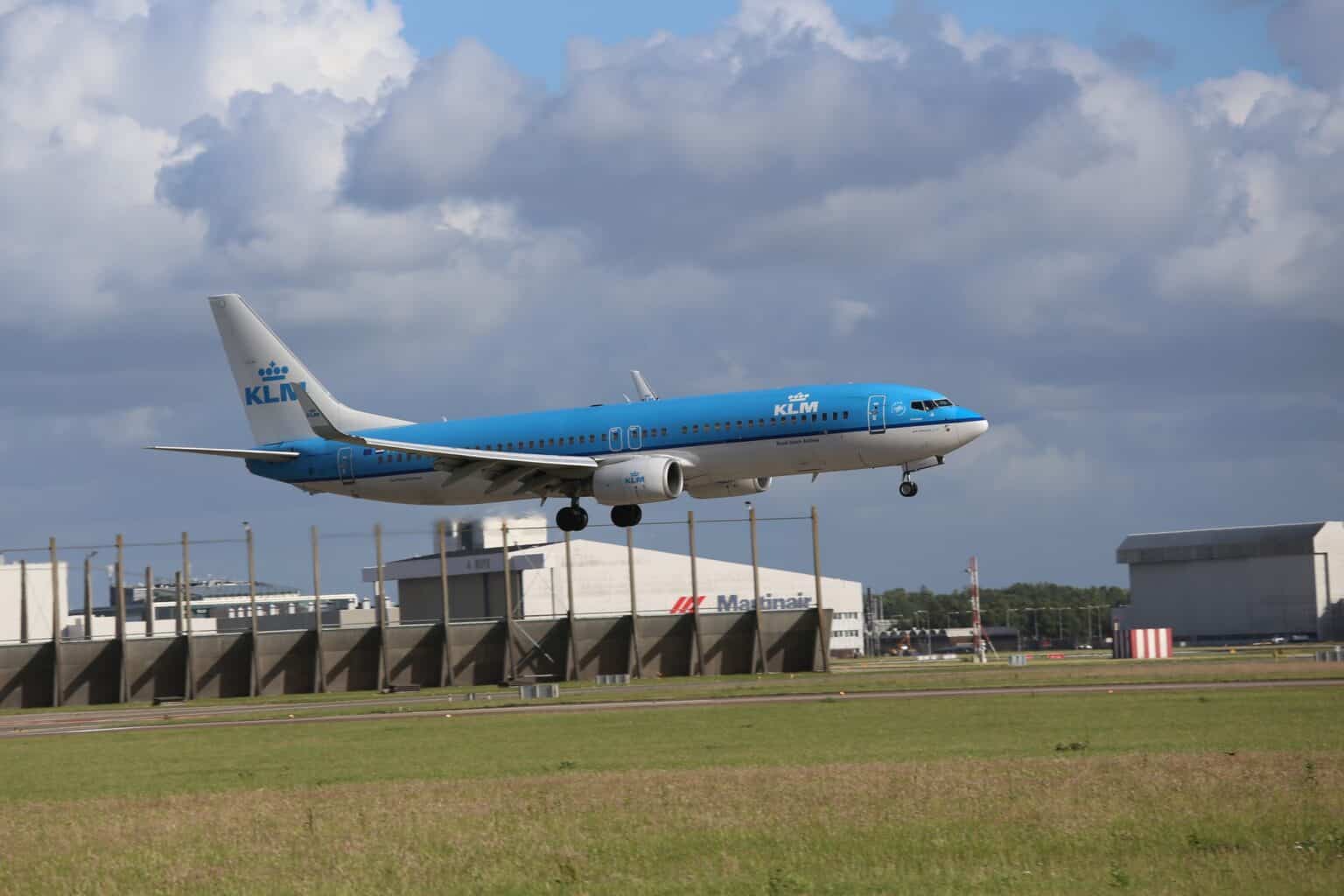
Storm Boelo’s westerly winds cut the number of usable runways at Amsterdam Schiphol on Sunday, October 25, 2026, and KLM cancelled 149 flights to and from the airport. easyJet and Lufthansa also dropped flights, while in northern England easyJet flight EZY7255 from Palma de Mallorca gave up on Newcastle and landed at London Gatwick.
It was Boelo’s second day of airport disruption, a day after the storm sent a Ryanair jet from Edinburgh to Oslo.
What Schiphol and KLM said
A Schiphol spokesperson said that because of the strong westerly wind, not all runways were available, so fewer aircraft could take off and land. Travelers should expect cancellations and delays, the spokesperson said in comments carried by ANP and NH Nieuws.
KLM gave NH Nieuws the figure of 149 cancelled flights. The airline said it had told every affected passenger on Saturday and was rebooking them on the next available flight.
Schiphol’s own flight information showed almost 80 departures cancelled through 5pm, mostly European routes such as Paris, Manchester, Hamburg and Stockholm, NOS reported. NL Times named KLM, Lufthansa and easyJet among the airlines cancelling.
Sunday was the third straight day of KLM cancellations. The airline cut dozens of flights in high winds on Friday and Saturday too, cuts that Dutch outlet TPO put down to Boelo’s predecessor, Storm Austen.
No airport-wide total for the whole of Sunday had been published at the time of writing.
The Dutch weather service KNMI had a code yellow warning in force for the coastal provinces, with gusts of 47 to 56 mph (75 to 90 km/h) from the southwest to west. It gave a small chance of gusts near 62 mph (100 km/h) in the Wadden region on Sunday afternoon, and blamed the low-pressure system Boelo.
Why a west wind costs Schiphol its runways
Schiphol has six runways, and half of them point roughly north to south: the Polderbaan (18R/36L), the Zwanenburgbaan (18C/36C) and the Aalsmeerbaan (18L/36R). In a westerly gale those three take the wind almost square on the side.
The airport’s weather report at 10:55am local time gave a wind from 260 degrees at 29 knots, gusting to 40. On a north-south runway that works out to a crosswind of about 29 knots, with gusts near 39.
Schiphol’s own explainer says that once the crosswind on a runway turns strong, it can no longer use that runway and has to switch to one facing another direction.
Only two of the long runways sit close to that wind: the Kaagbaan (06/24) and the Buitenveldertbaan (09/27), where the same wind leaves a crosswind of roughly 5 to 14 knots, gusts included. The sixth, the Oostbaan (04/22), is about 6,600 feet (2,014 m) long, much shorter than the others.
Air traffic control operator LVNL says Schiphol usually runs three runways in peak hours and two outside them, and that in a storm sometimes only one can be used. Schiphol did not say which runways it ran on Sunday, but fewer runways means fewer slots, and airlines cut flights to fit.
EZY7255: Palma to Newcastle, by way of Gatwick
easyJet flight EZY7255 (U27255), an Airbus A319, took off from Palma de Mallorca at 6:23am local time and was due at Newcastle at 8am, The Northern Echo reported. Citing Flightradar24, the paper gave the registration as OE-LQA.
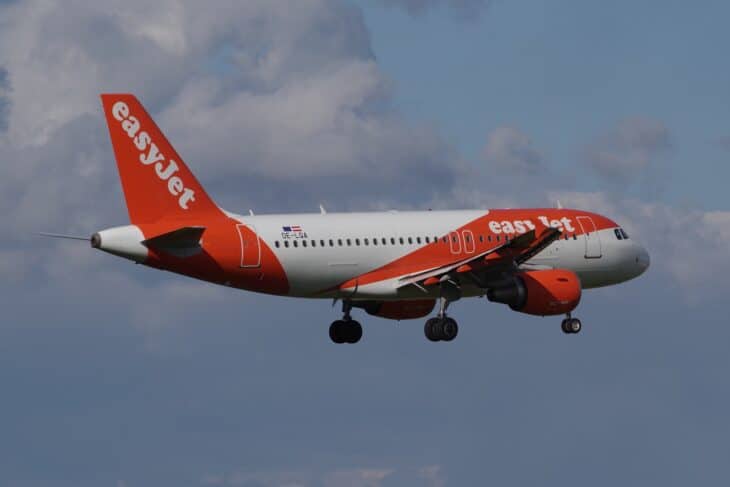

FlightAware’s track shows the jet descending toward Newcastle from the east to about 2,100 feet, roughly 3 miles (5 km) from the airport, at 8:09am. It then climbed away, circled for about 10 minutes and turned south, landing at Gatwick at 9:13am, about 275 miles (445 km) in a straight line from where its passengers expected to be.
easyJet had not explained the diversion at the time of writing. Newcastle’s weather reports that morning gave westerly winds of 32 to 35 knots, gusting to 46 to 49, blowing nearly along its single runway (07/25), so the crosswind stayed under about 17 knots even in the gusts.
Leeds Bradford Airport had a harder geometry. A number of flights were diverted away on Sunday morning, the Yorkshire Evening Post reported. At 681 feet above sea level it is England’s highest commercial airport, and its single runway (14/32) runs northwest to southeast.
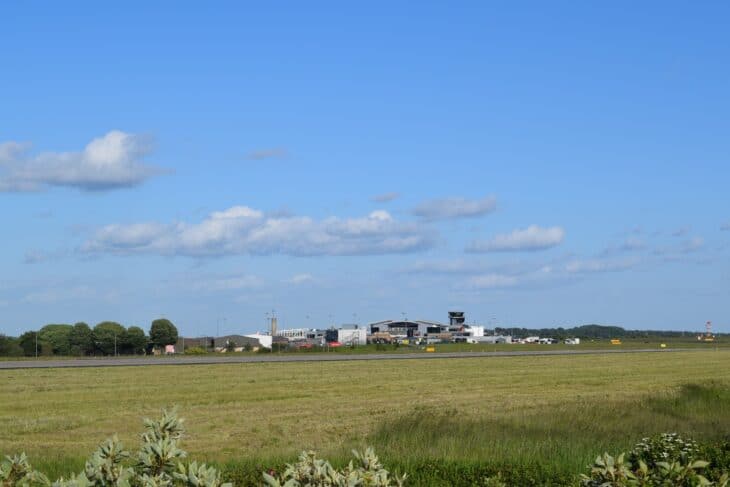

Its 8:50am weather report gave a wind from 270 degrees at 36 knots, gusting to 52. Against runway 32, that is a crosswind of about 28 knots, with gusts near 40.
What passengers are owed
Under EU Regulation 261/2004, which covers every flight leaving an EU airport, a cancelled passenger is entitled to a refund or rerouting, plus meals and, where an extra night is needed, a hotel. Those duties apply whatever caused the cancellation.
The fixed cash compensation is different. Article 5(3) lets an airline off it if the cancellation was caused by extraordinary circumstances that could not have been avoided, and the regulation’s preamble names “meteorological conditions incompatible with the operation” as one such case.
Weather that takes runways out of service fits that description, so airlines can be expected to treat Sunday’s cancellations as exempt, though the regulation puts the burden of proving it on the airline. KNMI expected the strong gusts to fade in the southwest on Sunday evening and to last into Monday night on the northern coast.
Sources and references used for research and fact-checking.
- KNMI, Waarschuwingen (code geel, kustgebieden zware windstoten), issued 25/10/2026 11:32 LT
- LVNL, How does runway use work at Schiphol?
- Royal Schiphol Group, Weather conditions: taking off and landing
- NOAA Aviation Weather Center, METAR EHAM, EGNT, EGNM, October 24-25, 2026
- FlightAware, EZY7255 Palma (LEPA) to Gatwick (EGKK), October 25, 2026
- EUR-Lex, Regulation (EC) No 261/2004
Get the Newsletter
The latest aviation news and stories sent to your inbox.
About the Author

AeroCorner News is the aviation news desk of AeroCorner.com. It covers accidents and incidents, safety rulings, airline and airport disruption, and new aircraft. It works from primary sources such as the NTSB, FAA, EASA and the manufacturers' own announcements.