

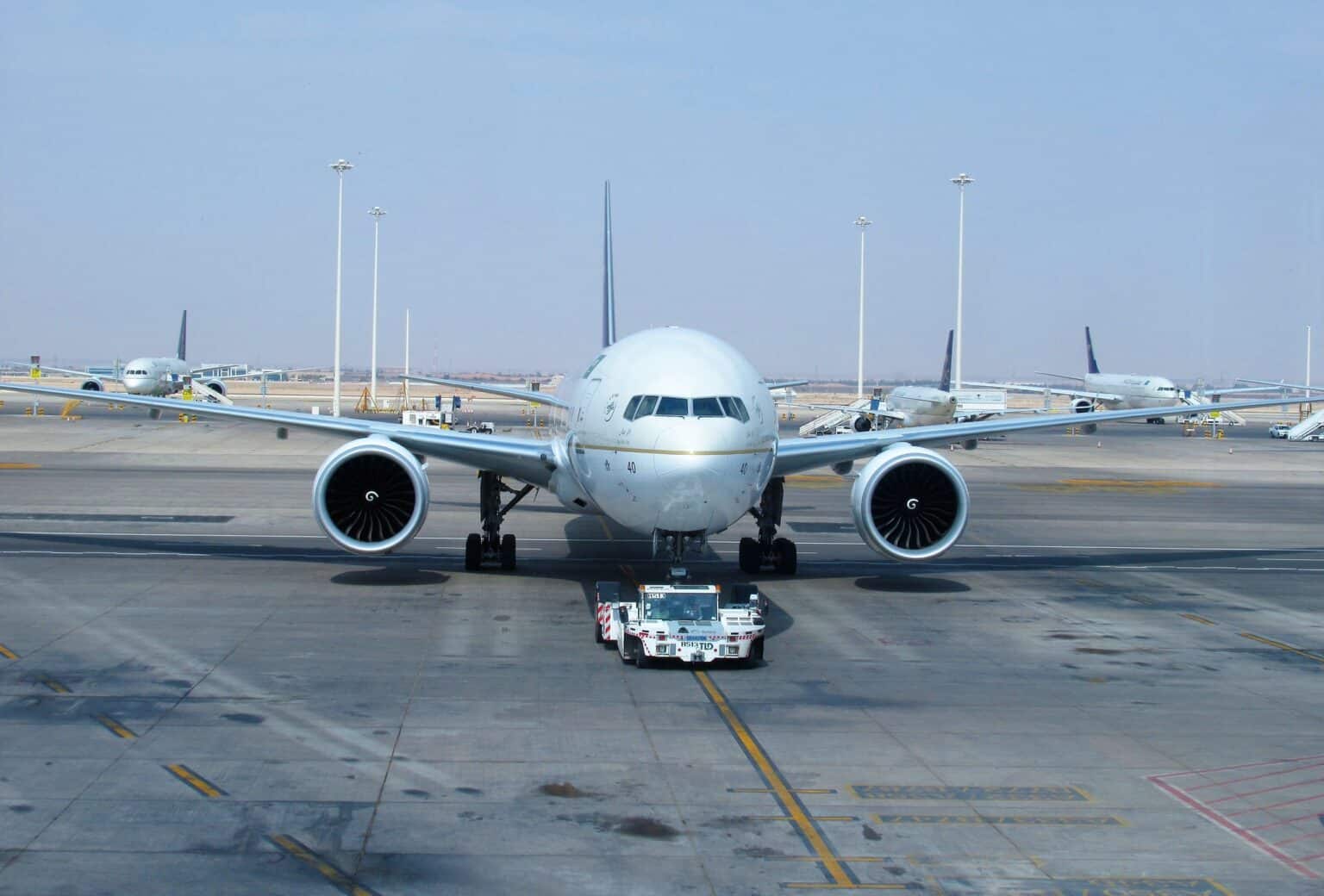
Houthi attacks wiped out 4,071 of the 4,736 departures scheduled at Riyadh’s King Khalid International Airport between October 8 and October 25, 2026, about 86%, according to data from aviation analytics firm Cirium. Across Saudi Arabia, 7,802 of 17,299 scheduled departures were canceled or never flew in the same period, or 45.1%.
The figures were reported on Monday, October 26, by Reuters, a day after the airport partially reopened to Saudi airlines.
What the Cirium numbers show
Cirium’s schedule had about 263 Riyadh departures a day over the period. The 665 departures that were not canceled work out to roughly 37 a day, and on the worst days almost nothing moved.
On Sunday, October 11, the day after the deadliest strike on the terminal, Cirium logged 353 of 354 scheduled Riyadh departures as canceled or not flown, Aerospace Global News reported at the time. Only one departure operated.
Nationally, the worst day was October 12, when cancellations passed 60% of scheduled departures, according to Reuters. Cirium’s rate for the whole kingdom was still 44.23% on October 25, the day Riyadh reopened, according to the full breakdown published by RusTourismNews.
Riyadh alone accounts for 4,071 of the 7,802 canceled departures, just over half. The rest of the country lost about 30% of its schedule, which shows how much of the damage was concentrated at the capital.
Airport by airport
The disruption followed the attacks. Dammam’s King Fahd International, which came under attack last week, lost 42%, and Abha, where the Houthis have also claimed strikes, lost 46.7%.

| Airport | Departures canceled or not flown | Share of schedule |
|---|---|---|
| Riyadh (RUH) | 4,071 of 4,736 | 86.0% |
| Najran (EAM) | All | 100% |
| Taif (TIF) | Not published | 57.4% |
| Abha (AHB) | Not published | 46.7% |
| Dammam (DMM) | 823 of 1,956 | 42.1% |
| Jeddah (JED) | 1,402 of 6,380 | 22.0% |
| Madinah (MED) | Not published | 18.0% |
| All Saudi airports | 7,802 of 17,299 | 45.1% |
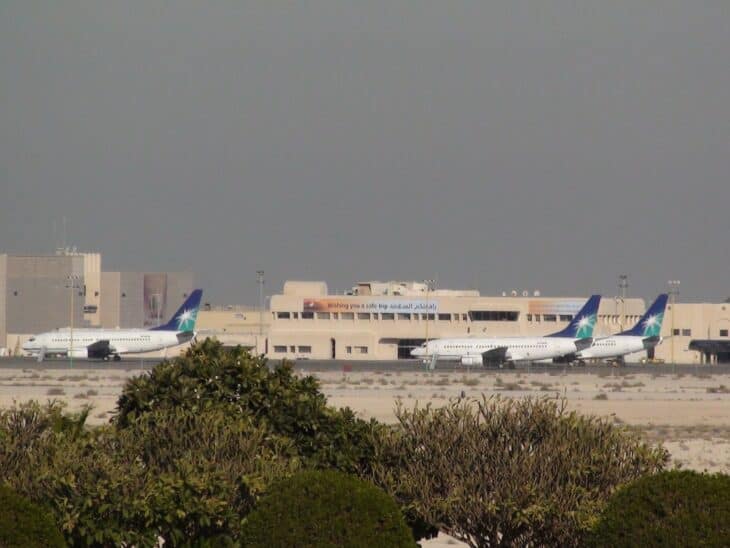
Najran, near the Yemeni border, lost every scheduled flight, Reuters said. Jeddah, the kingdom’s busiest airport, kept almost four in five of its departures.
An earlier Cirium cut showed who carried the losses. Between October 8 and 13, Saudia canceled 1,091 of 2,273 flights, flynas 564 of 1,183 and flyadeal 496 of 975, while Riyadh Air lost 80 of 113, the highest share of any Saudi airline, Khaleej Times reported.
How to read the figures
Cirium counts a flight as disrupted when it is listed as canceled or as “no-fly” against the schedule airlines filed. That is a count of departures that did not happen, not of aircraft parked or passengers stranded.
The data also does not say why each flight was dropped. Some cancellations follow the attacks directly, others follow airline suspensions, closures and permission rules that came after them.
For scale, King Khalid International handled 37 million passengers in 2024, according to the airport. It is the kingdom’s second-busiest after Jeddah.
What is flying now
Since October 25, Terminal 1 has handled domestic flights and Terminal 2 international services by Saudi airlines, under the airport’s phased reopening. The notice covered Saudi airlines only.
On Monday afternoon, FlightAware’s board for Riyadh showed a mostly domestic day. Saudia had flown to Jeddah, Abha, Tabuk and Dammam, flynas to Jeddah and Abha, and flyadeal to Madinah, as on the first day back.
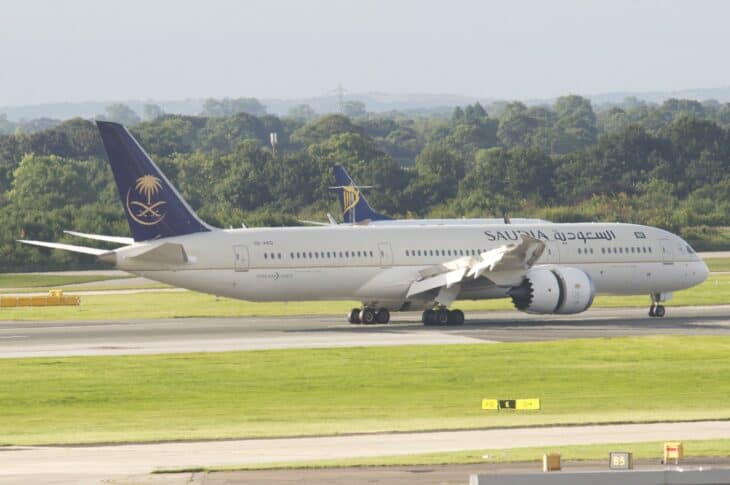
Saudia’s international flying was thin but real: a Boeing 787-9 left for Phuket and an A321 for Cairo, according to the same board. Riyadh Air’s travel page still routes its flights to Cairo, Dhaka, Jeddah, London, Lahore and Islamabad through Al Qassim.
A new attack claim, and suspensions into November
On Monday, Houthi military spokesman Yahya Saree claimed on X that the group fired a ballistic missile at King Khalid International and attacked pumping stations on the East-West pipeline with drones. That is a claim by one side, and Reuters said there was no immediate Saudi confirmation.
Saudi military spokesman Turki Al-Malki said a ballistic missile bound for Riyadh was destroyed and that Saudi forces then struck missile launchers and storage sites in Yemen, according to Aerospace Global News.
Foreign airlines are keeping their distance. Emirates plans to return to Riyadh on November 8, Lufthansa on November 18 and Cathay Pacific not before January 31, 2027, according to an airline roundup published Monday.
Delta Air Lines has pushed its planned Atlanta to Riyadh launch to March 2027, One Mile at a Time reported. The disruption has also forced the postponement or cancelation of events in Riyadh, including the kingdom’s flagship investment conference, Reuters said.
The next Cirium count will show whether the partial reopening moves Riyadh’s numbers at all. For now, the airport’s advice to travelers is unchanged: confirm the flight with the airline before setting out.
Sources and references used for research and fact-checking.
Get the Newsletter
The latest aviation news and stories sent to your inbox.
About the Author

AeroCorner News is the aviation news desk of AeroCorner.com. It covers accidents and incidents, safety rulings, airline and airport disruption, and new aircraft. It works from primary sources such as the NTSB, FAA, EASA and the manufacturers' own announcements.