

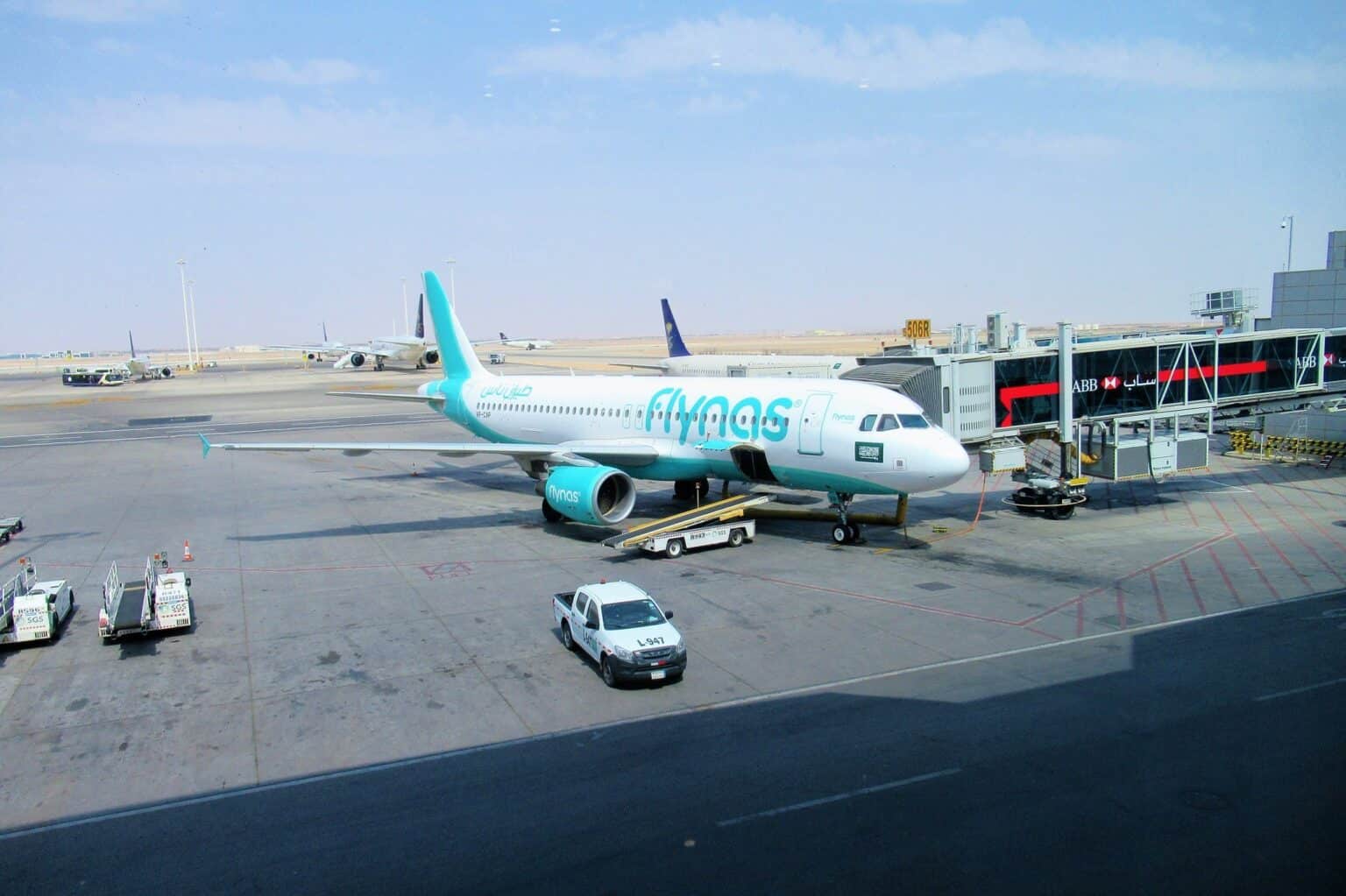
Saudi airlines began flying scheduled services again at Riyadh’s King Khalid International Airport on Sunday, October 25, 2026, after two weeks of closure and limited, permission-only flights, with a Saudia jet leaving for Jeddah shortly after 5:30 a.m. local time. Hours earlier, the Houthis had warned every airline and traveler away from the airport, calling it a “military target.”
The restart ran through a day of Houthi missile fire. The Saudi-led coalition said it intercepted a ballistic missile fired toward the capital and two drones in the Riyadh area overnight, and at least 10 ballistic missiles over the kingdom’s south.
Which flights ran on Sunday
The airport had said on Saturday that Terminals 1 and 2 would reopen to Saudi carriers from Sunday. One of the first departures was Saudia SV1095 to Jeddah, which Siasat reported left at 5:36 a.m. and landed at 7:03 a.m., citing Flightradar24.
By Sunday afternoon, FlightAware’s board for King Khalid International showed a mostly domestic schedule. Saudia had flown to Jeddah again, and flyadeal to Abha and Tabuk, while flynas and flyadeal flights from Jeddah, Dammam, Abha and Taif were landing or due in.
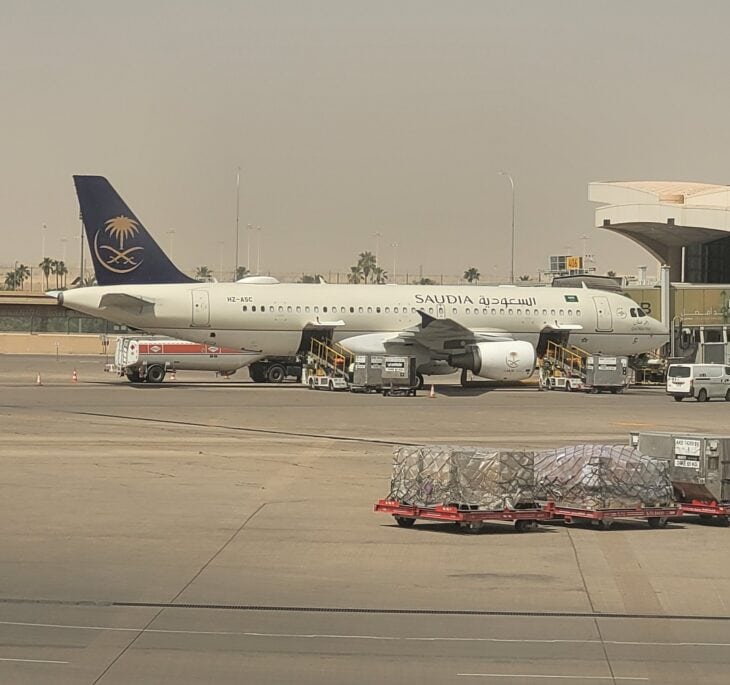
International flying was thinner, and all of it by Saudi airlines. FlightAware listed two Saudia flights from Dhaka among the arrivals and a Saudia flight from Paris Charles de Gaulle en route, with flynas departures to Dubai and Doha and Saudia departures to Hong Kong and Islamabad still on the schedule for later in the day.
Riyadh Air is not back at its home airport. Its travel page says that from October 25 its flights between Riyadh and Cairo, Jeddah, Dhaka, London, Lahore and Islamabad run via Al Qassim Airport.
The Houthi warning and the missile barrage
The Houthi military spokesman, Yahya Saree, posted the warning on X just after midnight Riyadh time, less than two hours after the airport’s reopening notice. In AFP’s translation, he warned “all international, regional and local airlines” and travelers against using the airport, “as it is unsafe and serves as a military target for our forces.”
The post added that Saudi Arabia would bear the consequences of any operations at the airport. Its closing line says the group’s forces will keep up their operations against it.
The threat came with fire. AFP journalists in Riyadh heard three explosions in the early hours of Sunday, and residents received alerts about a “hostile aerial threat,” according to the same AFP report.
The coalition said on X that air defenses “intercepted and destroyed” a ballistic missile fired toward Riyadh. Later it reported a cruise missile intercepted over Khamis Mushait, and Saudi civil defense issued alerts for Abha, Taif, Namas and Jazan.
On Saturday, Saree had claimed missile launches at King Khalid International “in two phases,” plus the airports in Dammam and Najran, in a separate AFP report. That is a claim by one side of the conflict.
At the time of writing, AeroCorner found no statement from the airport, the aviation authority or the coalition reporting a hit on the airport on Sunday. The coalition’s statements described interceptions.
What it means for foreign airlines and travelers
Sunday’s restart was a Saudi-airline operation by design. The airport’s notice covered national carriers only, while the Houthi warning named international, regional and local airlines alike.
Those carriers decide on their own risk assessments, and often on their governments’ advice. The FAA has already told US airlines to use caution over Saudi Arabia, and on Saturday the US embassy in Riyadh said, per AFP, its travel advisory was updated for “an increase in potential armed attacks” by the Houthis.
The first foreign returns are close. The National lists Qatar Airways’ Riyadh suspension as running up to and including October 25, flydubai returning with two daily flights from October 30, and Oman Air and KLM paused through October 31.
Some dates have moved later. The same list puts Emirates’ Riyadh return at November 8 and has Air France’s suspension extended up to and including November 14.
Whether Qatar Airways and flydubai resume as listed this week will be the first sign of how foreign airlines read the new warning.
For travelers, the practical picture is narrow. Saudia, flynas and flyadeal are flying from Terminals 1 and 2, foreign airlines largely are not, and the airport’s own advice is to confirm a flight with the airline before setting out.
The warning carries weight because the airport has been hit before. AFP says the October 10 attack that shut it killed 13 people and wounded more than 300, and AeroCorner’s report on the attack carries the authorities’ first toll.
Sources and references used for research and fact-checking.
Get the Newsletter
The latest aviation news and stories sent to your inbox.
About the Author

AeroCorner News is the aviation news desk of AeroCorner.com. It covers accidents and incidents, safety rulings, airline and airport disruption, and new aircraft. It works from primary sources such as the NTSB, FAA, EASA and the manufacturers' own announcements.