

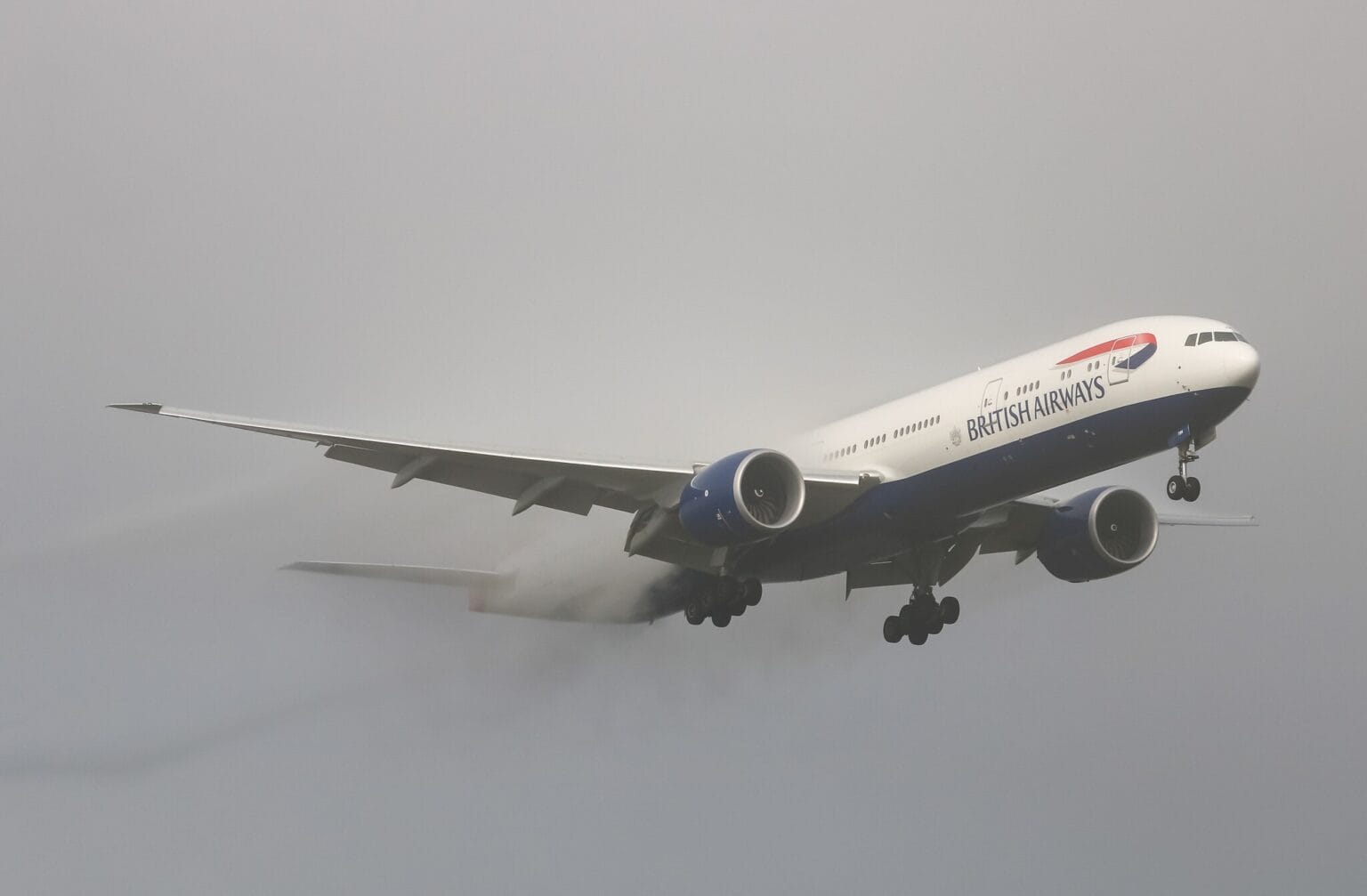
Thick fog over London canceled at least 24 departures from Heathrow and London City airports on Monday morning, November 9, 2026, while a Met Office yellow warning for fog covered the capital until 11am. British Airways operated 18 of the 19 Heathrow flights on a list of cancellations compiled by the Evening Standard as of 8am.
By 6:30am, seven Heathrow flights and three London City flights had already been scrapped, the Standard reported. At London City, arrivals were held and some aircraft diverted to Stansted, the Colchester Gazette reported, with four arrivals canceled.
Which flights were canceled
The Heathrow cancellations on the Standard’s list ran from a 6:15am British Airways departure to Belfast to a noon flight to Hamburg. The others went to Glasgow, Dublin, Edinburgh, Zurich, Paris, Basel, Nice, Manchester, Newcastle, Milan and Frankfurt, plus one Iberia flight to Madrid.
At London City, the five canceled departures on the list were a Luxair flight to Luxembourg, two KLM flights to Amsterdam, a Swiss flight to Zurich and an Air Dolomiti flight to Frankfurt. All were due out between 7:35am and 9:50am.
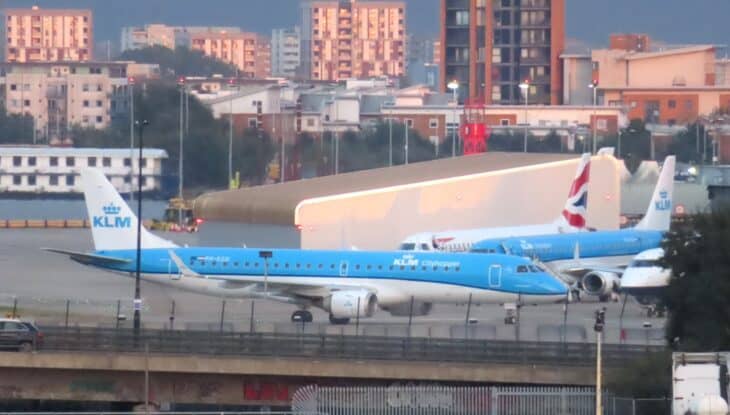
London Heathrow Airport told travelers on social media that overnight fog had affected visibility on the roads around the airport and asked them to allow extra time, GB News reported. It also advised passengers to check with their airline before leaving home.
How thick the fog was
Heathrow’s routine weather reports (METARs) show how bad the night was. Visibility fell to about 160 feet (50 m) at 11:20pm on Sunday and stayed there through 12:20am, with runway visual range readings below that on one runway.
That worst spell came overnight, before the morning schedule began. But visibility was still only about 1,300 feet (400 m) in fog at 5:20am and 5:50am, and about 2,000 feet (600 m) at 6:20am, just as the first departures of the day were due out.
London City’s reports logged about 160 feet (50 m) of visibility from 12:20am to 1:50am, and still about 1,150 feet (350 m) at 6:50am. Stansted, where some London City arrivals were sent, recorded freezing fog with visibility of about 500 to 650 feet (150 to 200 m) in the early hours and was back in fog at half a mile (800 m) at 8:50am.
Met Office operational meteorologist Niamh Murray described light winds, clear skies and long autumn nights as “the perfect recipe” for the fog. For how this kind of fog forms, see our guide to the types of fog in aviation.
Why fog forces cancellations
When sensors show visibility has fallen below a set level, air traffic control brings in low visibility procedures, according to NATS, the UK’s air traffic service. Aircraft are kept further apart, and ground traffic is held back from the runway so the instrument landing system signal guiding arriving jets stays clean.
Wider gaps between arrivals mean fewer landings each hour. NATS describes Heathrow as an airport where operations run at near maximum capacity, so there is little slack to absorb the loss, and it has written that morning delays there set off a domino effect of knock-on delays and cancellations through the day.
The pattern on Monday’s list fits that pressure. Every flight on it was a domestic or European service, and five cities appear twice in a single morning: Belfast, Zurich, Paris, Nice and Newcastle.
Routes flown several times a day give an airline later departures to move passengers onto. A once-daily long-haul flight offers no such fallback, which makes busy short-haul routes the easier place to thin the schedule.
London City Airport has its own constraint. Aircraft flying there must be approved for its steep approach, at an angle of 5.5 degrees or more, and the captain must hold steep approach certification, according to the airport’s aircraft approval requirements.
More fog tonight, and what passengers are owed
By 10:50am, Heathrow’s weather report showed visibility back up to more than 4 miles (7 km) under a cloud base of 500 feet. The Met Office issued a fresh yellow fog warning at 8:45am, valid from 6pm Monday to 10am Tuesday, with visibility below about 330 feet (100 m) in places.
That warning does not list Greater London. It does cover Essex, Luton, Greater Manchester and the West Midlands, home to Stansted, Luton, Manchester and Birmingham airports, and the Met Office says some flight disruption is possible.
Passengers whose canceled flight departed the UK are covered by UK law, according to the Civil Aviation Authority. The airline must offer a refund or an alternative flight, and provide food and drink, plus a hotel if the new flight is the next day, “no matter how long the delay lasts or what has caused it.”
Cash compensation is a different matter. The CAA lists extreme weather among the “extraordinary circumstances” that are not eligible for compensation, and says that if a cancellation was not the airline’s fault, passengers should not expect any.
Sources and references used for research and fact-checking.
- Aviation Weather Center (NOAA), METAR history for EGLL, EGLC and EGSS, November 8-9, 2026
- Met Office, UK weather warnings
- NATS, Low visibility procedures: what you need to know
- NATS, Intelligent Approach
- NATS, The History of Time-Based Separation: 10 years since TBS landed at Heathrow
- London City Airport, Approved aircraft: application process
- UK Civil Aviation Authority, Cancellations
Get the Newsletter
The latest aviation news and stories sent to your inbox.
About the Author

AeroCorner News is the aviation news desk of AeroCorner.com. It covers accidents and incidents, safety rulings, airline and airport disruption, and new aircraft. It works from primary sources such as the NTSB, FAA, EASA and the manufacturers' own announcements.