

Table of Contents
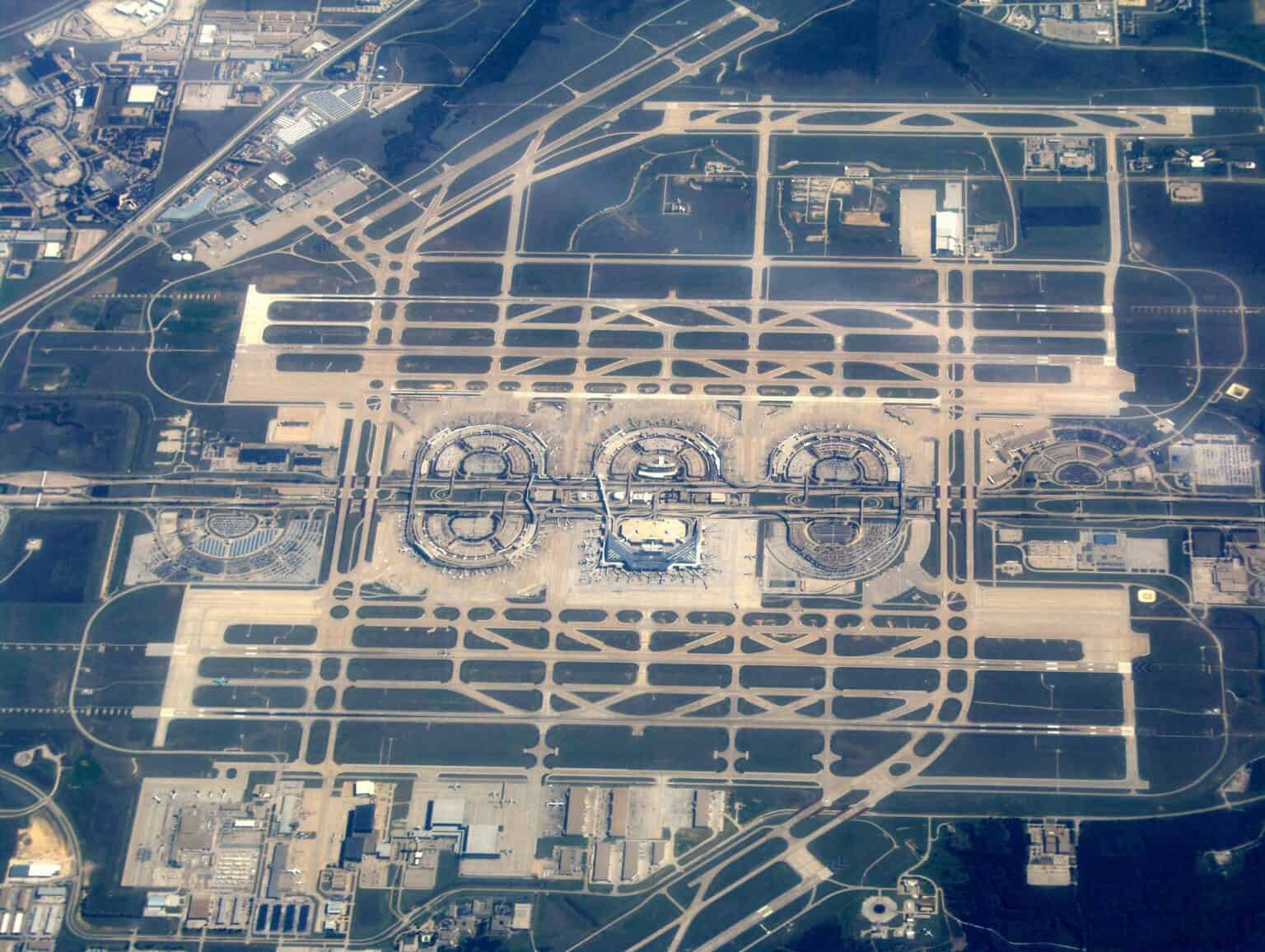
The biggest airport in the world is King Fahd International Airport near Dammam, Saudi Arabia, which covers about 301 square miles (780 km²). That is more than five times the land of second-place Denver International.
This ranking measures one thing: the total land an airport occupies. Passenger traffic is a different list with a different winner, and we cover how the two compare further down.
Figures are as of September 2026 and come from airport operators, government sources, and Guinness World Records wherever they exist. Here are the 12 largest airports on Earth by land area.
| Rank | Airport | Location | Land area |
|---|---|---|---|
| 1 | King Fahd International (DMM) | Dammam, Saudi Arabia | 301 sq mi (780 km²) |
| 2 | Denver International (DEN) | Colorado, USA | 52.4 sq mi (135.7 km²) |
| 3 | King Abdulaziz International (JED) | Jeddah, Saudi Arabia | 43.2 sq mi (112 km²) |
| 4 | Kuala Lumpur International (KUL) | Malaysia | 38.6 sq mi (100 km²) |
| 5 | Istanbul Airport (IST) | Turkey | 29.3 sq mi (76 km²) |
| 6 | Dallas/Fort Worth International (DFW) | Texas, USA | 26.8 sq mi (69.5 km²) |
| 7 | Orlando International (MCO) | Florida, USA | 18.1 sq mi (47.0 km²) |
| 8 | Washington Dulles International (IAD) | Virginia, USA | 17.5 sq mi (45.3 km²) |
| 9 | Beijing Daxing International (PKX) | China | 17.4 sq mi (45 km²) |
| 10 | Kansas City International (MCI) | Missouri, USA | 16.7 sq mi (43.2 km²) |
| 11 | George Bush Intercontinental (IAH) | Houston, USA | 15.6 sq mi (40.5 km²) |
| 12 | Shanghai Pudong International (PVG) | China | 15.4 sq mi (40 km²) |
How this ranking works
Airports are ranked by total land area, using the figure published by the airport operator, a government body, or the most authoritative source available. Only operating commercial passenger airports count. Military air bases are excluded, and so are airports still being built, which get their own section below. Where published figures disagree, we use the official one and say so in the entry.
1. King Fahd International Airport, Dammam, Saudi Arabia
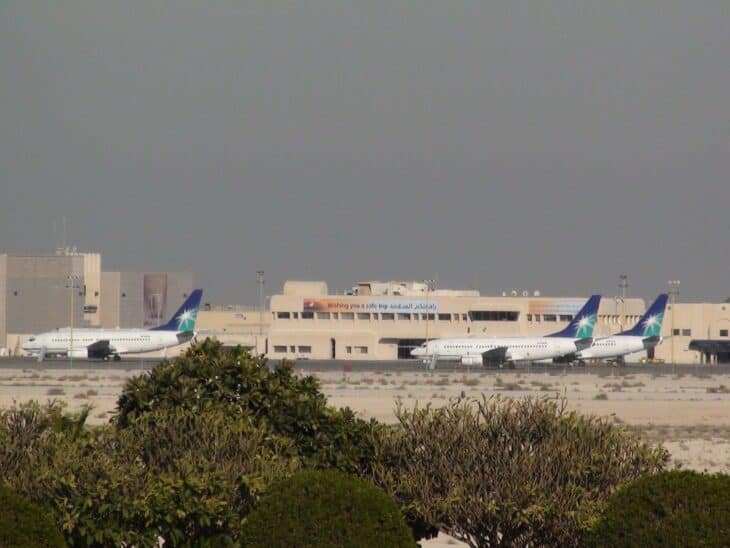

King Fahd International covers about 301 square miles (780 km²) of desert in eastern Saudi Arabia. Guinness World Records lists it as the largest airport in the world by area, a title it took when it opened in 1999.
Almost none of that land is airport in the usual sense. The developed airport covers about 14.2 square miles (36.75 km²), less than 5 percent of the total. The rest is reserved desert.
The developed core is still generous. It has two runways of 13,123 feet each, and the airport handled about 10.9 million passengers in 2023.
Bigger than a country
At 780 km², King Fahd International covers more ground than the entire Kingdom of Bahrain, its island neighbor, according to Guinness World Records. Bahrain fits three airports of its own into less space.
2. Denver International Airport, Colorado, USA
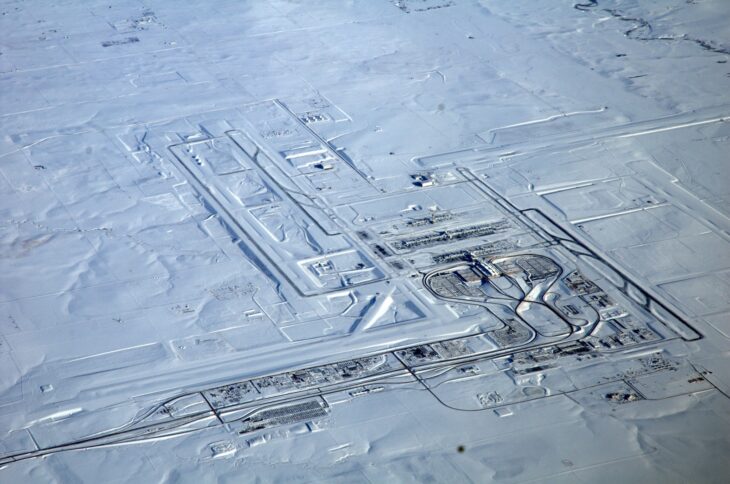

Denver International owns 33,531 acres, or 52.4 square miles (135.7 km²), the most commercial airport land in North America. Dallas/Fort Worth, Chicago O’Hare, Atlanta, and Los Angeles International could all fit inside its boundary with about 500 acres to spare.
The size was a choice, not an accident of traffic. When Denver opened in February 1995, the city had bought far more open prairie than the airport needed at the time. The full story is in why Denver built an airport bigger than a city.
That room shows. Denver runs six runways, including 16R/34L at 16,000 feet, the longest public-use runway in North America, and it handled a record 82.4 million passengers in 2025.
It is also one of three answers to the biggest airport in the US question. Denver wins on land, while Atlanta wins on passengers and Chicago O’Hare on flights.
3. King Abdulaziz International Airport, Jeddah, Saudi Arabia
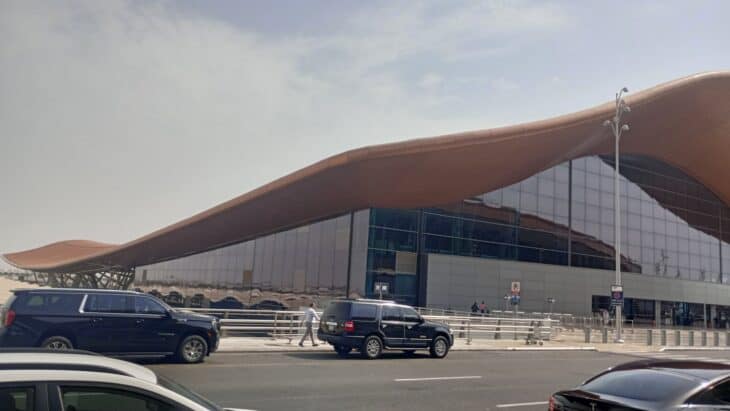

King Abdulaziz International covers about 43 square miles (112 km²) north of Jeddah. It is the entry most other rankings leave out, and it sits comfortably ahead of Kuala Lumpur and Istanbul.
Published figures vary slightly. Airport Suppliers gives about 105 km² (40.5 square miles), which still keeps Jeddah in third place.
Part of that land serves a traffic peak few airports face. Jeddah has a dedicated Hajj Terminal for pilgrims arriving for the annual pilgrimage to Mecca, alongside a Royal Terminal and its regular passenger terminals.
The airport runs three runways of up to 13,123 feet and handled about 53.4 million passengers in 2023. With Dammam at the top, Saudi Arabia holds two of the top three spots, and it held the title before Dammam too, as the Riyadh section below explains.
4. Kuala Lumpur International Airport, Malaysia
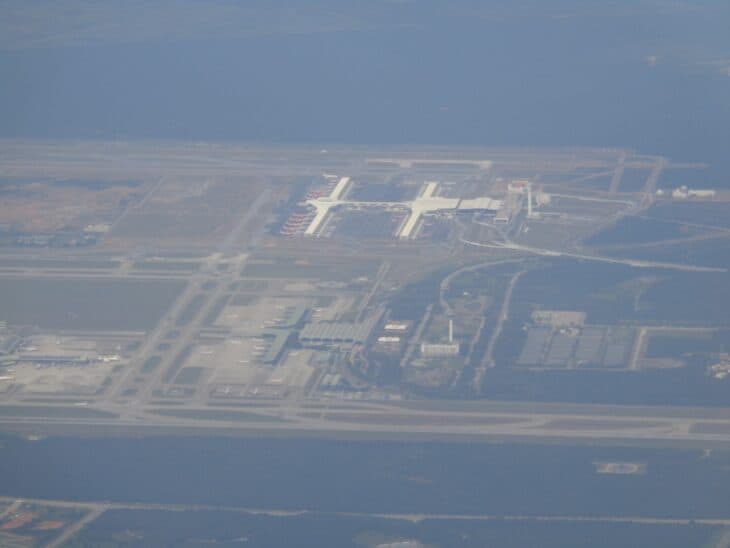

The site of Kuala Lumpur International spans 100 km², about 38.6 square miles. That is roughly three quarters of Denver’s footprint.
KLIA opened in June 1998. It runs three runways between 12,992 and 13,186 feet long and handled about 63.1 million passengers in 2025.
5. Istanbul Airport, Turkey
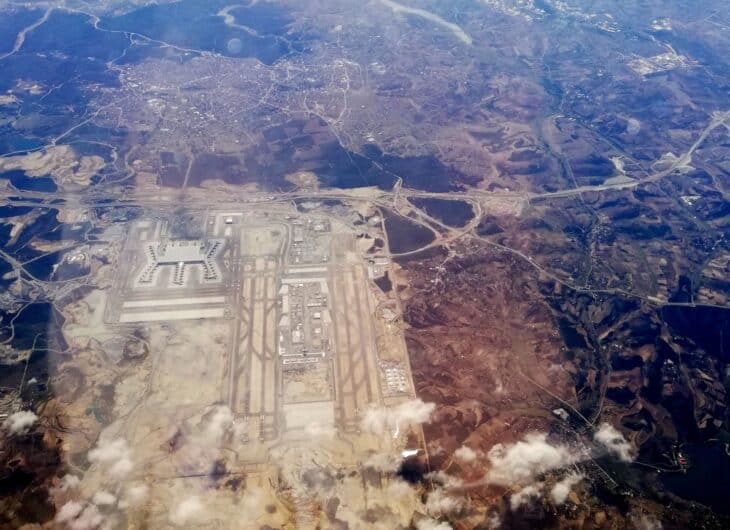

Istanbul Airport sits on a 7,600-hectare site near Lake Terkos, about 29.3 square miles (76 km²). Around 6,172 hectares of it was state-owned forest before construction began.
It opened in October 2018 and completed its full passenger move in April 2019. Five runways are in service today, and 84.5 million passengers passed through in 2025.
Istanbul is still growing into its land. The full plan calls for eight runways, so more of that former forest will eventually be under pavement.
6. Dallas/Fort Worth International Airport, Texas, USA
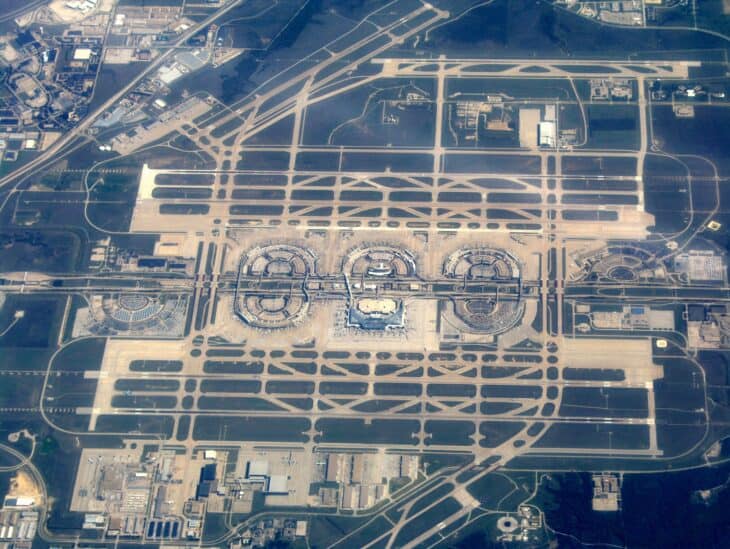

Dallas/Fort Worth lists its real property at 17,183 acres, roughly 27 square miles (69.5 km²). That makes it the second-largest airport in the United States by land, behind Denver.
DFW runs seven runways, and it is one of only two airports on this list that also rank in ACI World’s global top 10 for passengers. It came eighth in 2025.
7. Orlando International Airport, Florida, USA
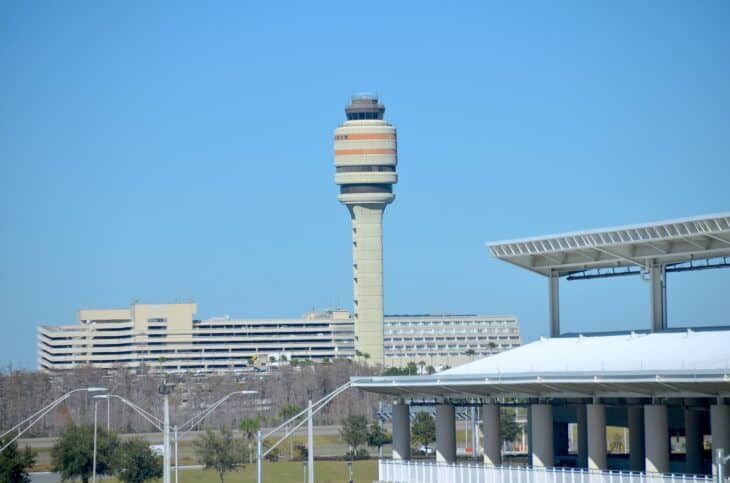

Orlando International covers 11,605 acres, or 18.1 square miles (47.0 km²). One widely shared ranking gives Orlando the same 69.6 km² as DFW, but the airport’s documented acreage is 11,605, which puts it seventh.
Its four runways, the longest at 12,005 feet, served 57.7 million passengers in 2025, making it Florida’s busiest airport. Terminal C, opened in September 2022, added 20 gates.
8. Washington Dulles International Airport, Virginia, USA
,_aerial_2024-08-22.jpg)
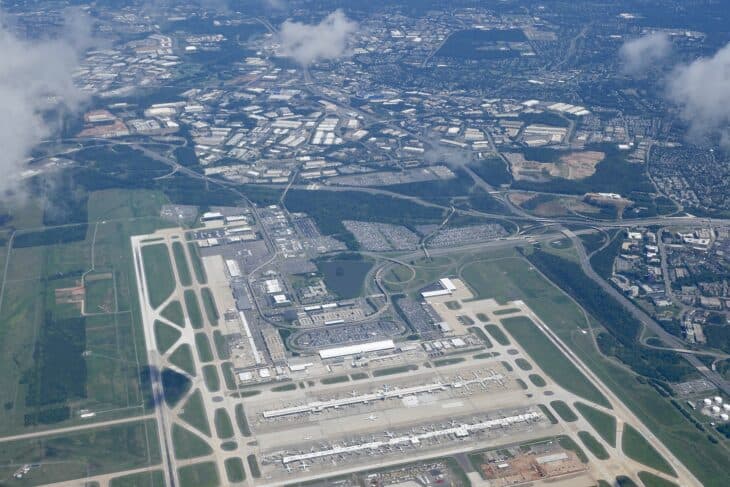
Washington Dulles covers 11,184 acres, about 17.5 square miles (45.3 km²), according to the airport. Only about 3,831 acres of that are used for aircraft operations.
Dulles was dedicated in November 1962 and runs four runways. Like Denver, it holds far more land than it currently flies from.
9. Beijing Daxing International Airport, China
.jpg)
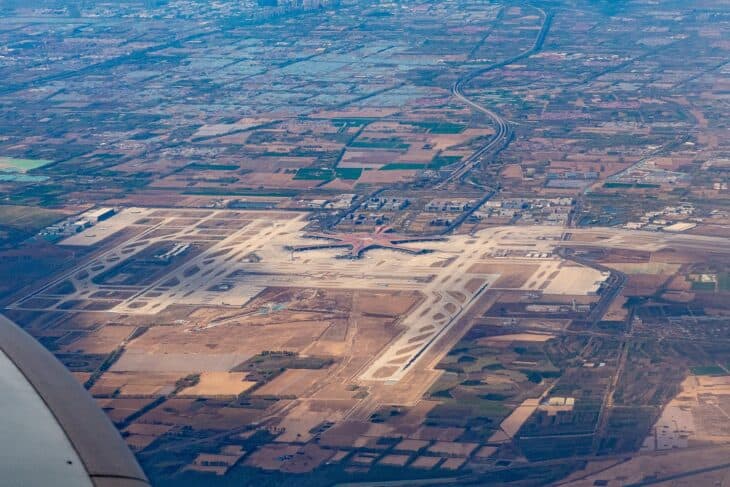
Beijing’s municipal government says Beijing Daxing covers 45 square kilometers, about 17.4 square miles. That official figure is the one we rank it on.
Not every source agrees. Airport Technology gives a 2,679-hectare site, only about 10.3 square miles (26.8 km²), which would drop Daxing out of this top 12. Neither source says where its boundary is drawn.
Either way, the terminal is the headline. Daxing opened in September 2019 with a 7.5 million square foot (700,000 m²) terminal, often billed as the largest single-building airport terminal in the world, and handled 53.6 million passengers in 2025.
10. Kansas City International Airport, Missouri, USA
.jpg)
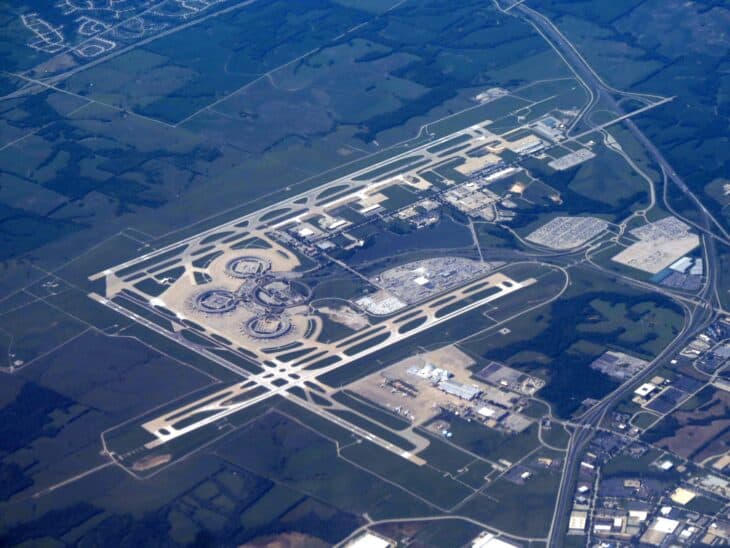
Kansas City International covers 10,680 acres, or 16.7 square miles (43.2 km²). It is missing from almost every other list of the world’s biggest airports.
The contrast with its traffic is stark. Kansas City runs three runways and set a record of 12.1 million passengers in 2024, roughly a ninth of Atlanta’s 2025 total.
That makes it the cleanest example of this list’s central point: land area measures what a city once bought, not what airlines fill today.
11. George Bush Intercontinental Airport, Houston, USA
_-_Houston,_TX_(54984753271).jpg)
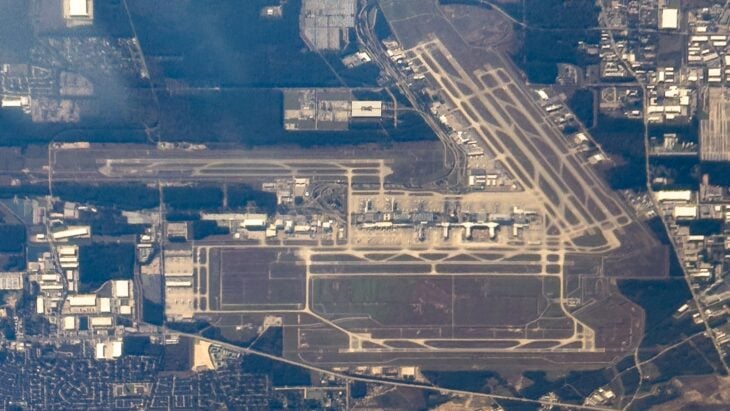
Houston’s George Bush Intercontinental covers 10,000 acres, about 15.6 square miles (40.5 km²), and runs five runways. It handled 48.1 million passengers in 2025.
Houston and Shanghai Pudong are effectively tied. Both are published at about 10,000 acres, and Houston edges ahead only once the round figures are converted.
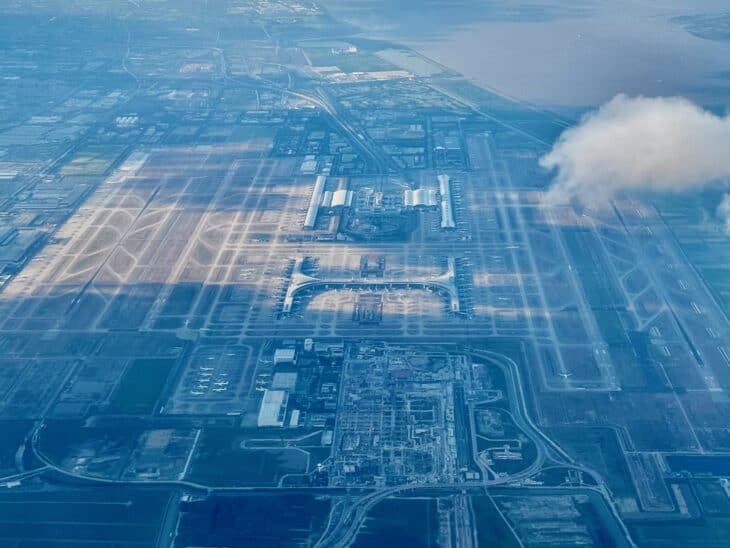
12. Shanghai Pudong International Airport, China
.jpg)
Shanghai Pudong sits on a 40 km² site in eastern Shanghai, about 15.4 square miles. It opened in September 1999, the same year as King Fahd.
It is the busiest airport on this list. Pudong handled 85.0 million passengers in 2025, fifth in the world according to ACI World, and it is the world’s second-busiest cargo airport.
Just outside the top 12
Cairo International covers about 14.3 square miles (37 km²), and Bangkok Suvarnabhumi covers 8,700 acres, about 13.6 square miles (35.2 km²). Both sit just below the cutoff.
We could not find a reliable published land figure for Seoul Incheon or Chengdu Tianfu, so neither is ranked. If an official figure appears, this list will be updated.
The airports that will change this list
The biggest shake-up is coming in Dubai. In April 2024, Dubai approved a 128 billion dirham ($35 billion) plan for Al Maktoum International, which is set to cover 27 square miles (70 km²) when completed, with five parallel runways and 400 gates.
That would place it around sixth by land, level with DFW. Headlines calling it the world’s largest airport are about capacity: up to 260 million passengers a year, with all of Dubai International’s operations due to move there.
Riyadh is next. The King Salman International Airport master plan, unveiled in November 2022, covers about 57 km² (22 square miles) including 12 km² of support facilities, with six parallel runways. It is expected to use the existing King Khalid terminals and targets 120 million passengers by 2030.
The biggest airports of the past
When it opened in 1983, King Khalid International in Riyadh covered 225 km² (87 square miles), the largest airport site in the world at the time, according to Airport Technology. Dammam took the title in 1999.
Riyadh’s current master plan defines a far smaller 57 km² airport, which is why the 1983 figure is not ranked here. Our oldest airports in the world list covers the other end of airport history.
The airport that took more land than Montreal
In 1969, Canada moved to expropriate 97,000 acres (39,250 ha) for Montreal-Mirabel, an area larger than the entire city of Montreal, making it the world’s largest airport by property area. Only about 17,000 acres were ever used for airport operations. In 1989, 81,000 acres were deeded back to their original owners, and the last commercial passenger flight left Mirabel on October 31, 2004.
Biggest is not busiest
Land and traffic barely overlap. Of ACI World’s ten busiest airports by passengers in 2025, only Dallas/Fort Worth and Shanghai Pudong make this top 12.
The busiest airport on Earth, Hartsfield-Jackson Atlanta, handled 106.3 million passengers in 2025. King Fahd, the biggest by land, handled about 10.9 million in 2023, around a tenth of that. We explain Atlanta’s lead in why the world’s busiest airport is in Atlanta.
If “biggest” means aircraft rather than people, Chicago O’Hare ranked first in the world for aircraft movements in 2025. AeroCorner’s live ranking of the busiest airports in the world by flights per day tracks that measure.
What about military air bases?
They are bigger, and they are excluded here. Eglin Air Force Base in Florida covers 463,128 acres, about 724 square miles, more than twice the area of King Fahd International. Air bases are ranked on their own terms, because most of their land does a different job than a commercial airport’s.
For the military side, see our ranking of the largest air force bases in the US, led by Eglin.
FAQ
Sources and references used for research and fact-checking.
- Guinness World Records, Largest airport (area)
- Wikipedia, King Fahd International Airport
- Wikipedia, Denver International Airport
- Wikipedia, King Abdulaziz International Airport
- Airport Suppliers, King Abdulaziz International Airport
- Wikipedia, Kuala Lumpur International Airport
- Wikipedia, Istanbul Airport
- Dallas Fort Worth International Airport, DFW Airport Facts
- Wikipedia, Orlando International Airport
- Washington Dulles International Airport (MWAA), Airport Overview
- Beijing Municipal Government, Daxing Airport
- Airport Technology, Beijing Daxing International Airport
- Wikipedia, Beijing Daxing International Airport
- Wikipedia, Kansas City International Airport
- Wikipedia, George Bush Intercontinental Airport
- Wikipedia, Shanghai Pudong International Airport
- Wikipedia, Cairo International Airport
- Wikipedia, Suvarnabhumi Airport
- CNBC, Dubai's new airport will be five times the size of its current one and aims to be the largest in the world
- Airport Technology, King Salman International Airport, Saudi Arabia
- Airport Technology, King Khaled International Airport, Riyadh
- Wikipedia, Montréal-Mirabel International Airport
- Airports Council International (ACI World), World's busiest airports revealed in latest global rankings
Get the Newsletter
The latest aviation news and stories sent to your inbox.
About the Author

Tim is the owner and lead editor of AeroCorner since 2019, overseeing aviation content covering aircraft, airlines, airports, and the broader aviation industry. Through years of researching, writing, editing, and publishing aviation-focused content, he has developed extensive practical knowledge of commercial aviation and air travel. Based in Asia and a frequent traveler himself, Tim also brings firsthand passenger experience to AeroCorner’s coverage. Outside of publishing, he has also explored aviation firsthand through hands-on flight training in New Zealand.