

Table of Contents
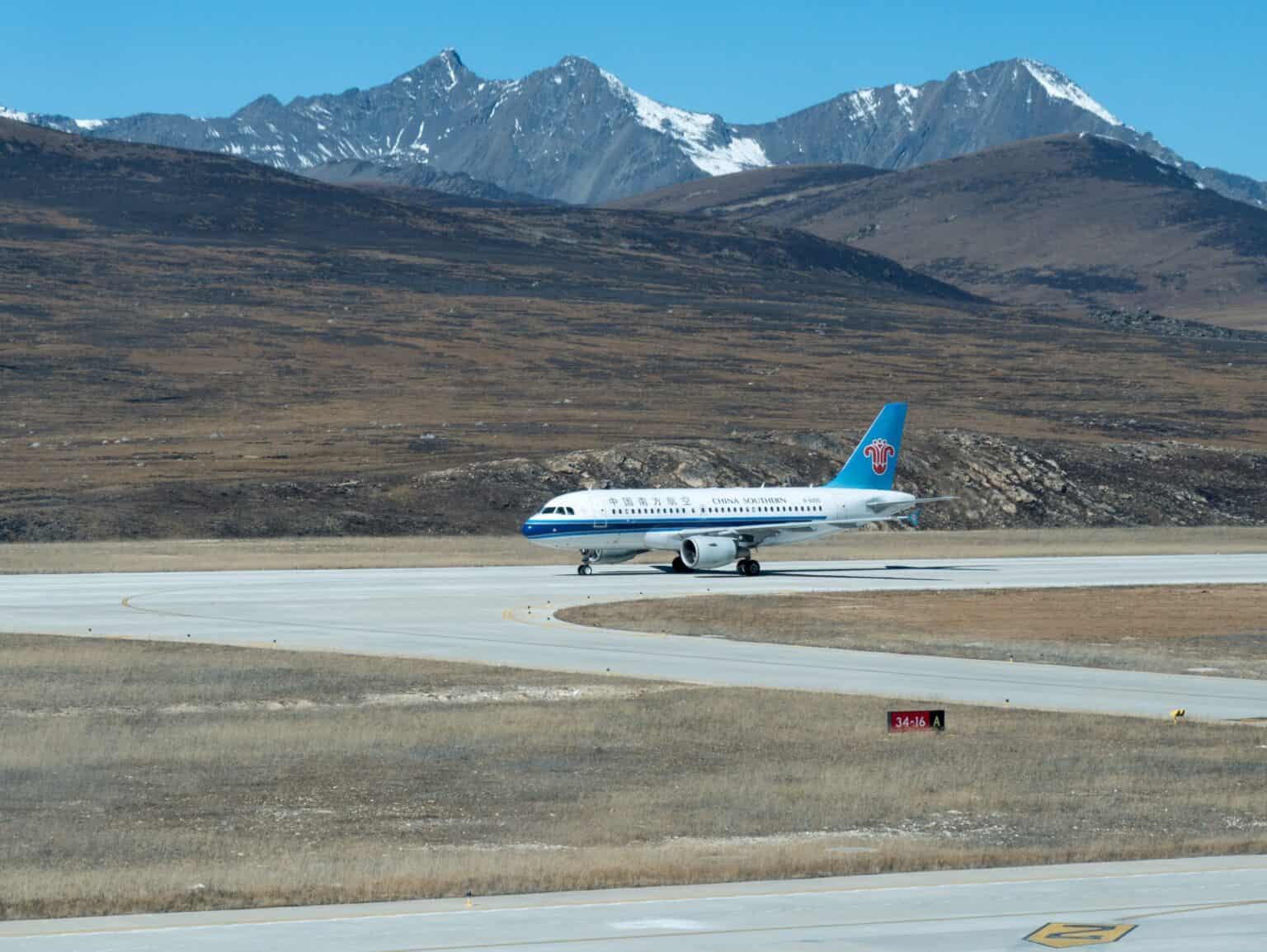
The highest airport in the world is Daocheng Yading Airport in China’s Sichuan province, at 14,472 feet (4,411 m) above sea level. It has held the record since its first flights in September 2013.
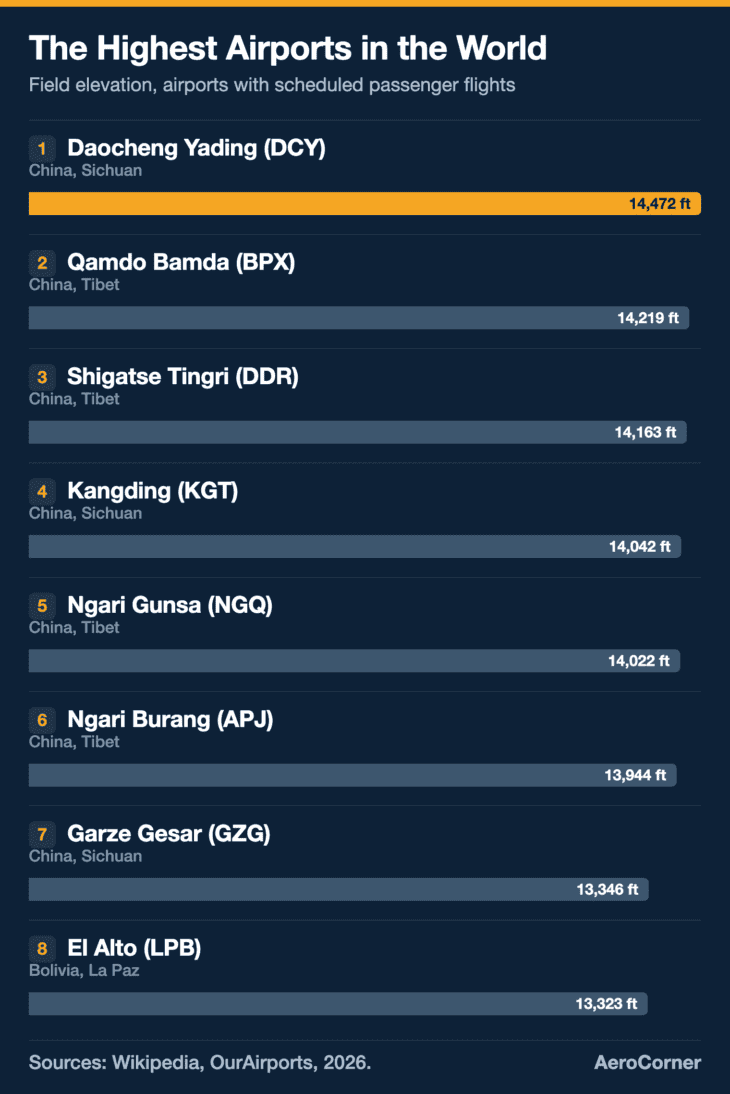
This list ranks airports with scheduled passenger flights by field elevation, as of November 2026. Seven of the top eight are on the Tibetan Plateau, and the one that breaks the pattern is El Alto in Bolivia, the highest international airport on Earth.
Further down, you will find the highest airport in the United States, the highest airfields with no airline service at all, and the Tibetan project that could one day take the record.
| Rank | Airport (IATA) | Location | Elevation |
|---|---|---|---|
| 1 | Daocheng Yading (DCY) | Sichuan, China | 14,472 ft (4,411 m) |
| 2 | Qamdo Bamda (BPX) | Tibet, China | 14,219 ft (4,334 m) |
| 3 | Shigatse Tingri (DDR) | Tibet, China | 14,163 ft (4,317 m) |
| 4 | Kangding (KGT) | Sichuan, China | 14,042 ft (4,280 m) |
| 5 | Ngari Gunsa (NGQ) | Tibet, China | 14,022 ft (4,274 m) |
| 6 | Ngari Burang (APJ) | Tibet, China | 13,944 ft (4,250 m) |
| 7 | Garze Gesar (GZG) | Sichuan, China | 13,346 ft (4,068 m) |
| 8 | El Alto International (LPB) | La Paz, Bolivia | 13,323 ft (4,061 m) |
| 9 | Shannan Longzi (LGZ) | Tibet, China | 12,959 ft (3,950 m) |
| 10 | Yushu Batang (YUS) | Qinghai, China | 12,762 ft (3,890 m) |
| 11 | Inca Manco Cápac International (JUL) | Juliaca, Peru | 12,552 ft (3,826 m) |
| 12 | Golog Maqin (GMQ) | Qinghai, China | 12,428 ft (3,788 m) |
| 13 | Shigatse Peace (RKZ) | Tibet, China | 12,408 ft (3,782 m) |
| 14 | Juan Mendoza (ORU) | Oruro, Bolivia | 12,146 ft (3,702 m) |
| 15 | Uyuni (UYU) | Uyuni, Bolivia | 12,024 ft (3,665 m) |
| 16 | Lhasa Gonggar International (LXA) | Tibet, China | 11,713 ft (3,570 m) |
How this ranking works
The measure is field elevation, the published height of the airport above mean sea level. The main list only includes airports with scheduled passenger flights, including seasonal ones, because that is what most readers mean by an airport. Military strips, mine airstrips and fields with no airline service are covered separately below. Elevations come from Wikipedia’s compiled list and are cross-checked against the OurAirports database; where the two disagree, the entry says so.
1. Daocheng Yading Airport, China: 14,472 feet
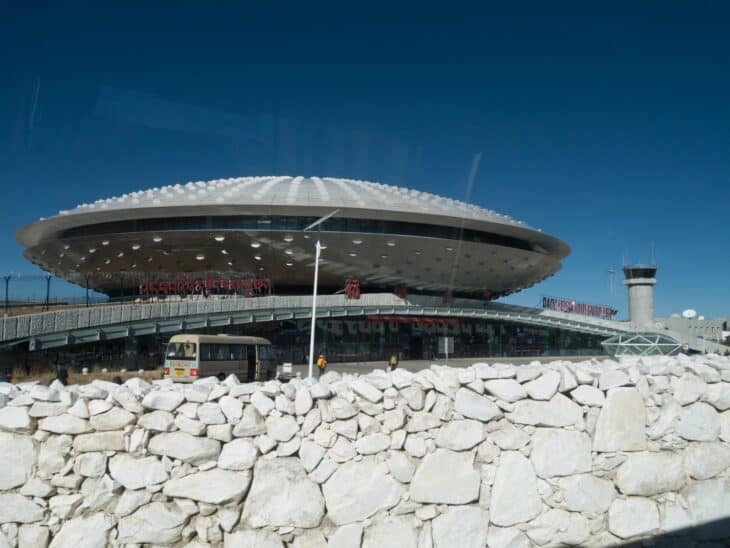

Daocheng Yading (DCY) sits at 14,472 feet (4,411 m) in the Garzê Tibetan Autonomous Prefecture of western Sichuan. Commercial flights began on September 16, 2013, and it has been the world’s highest civilian airport ever since.
It was built for tourism to the Yading nature reserve. When it opened, it cut the journey from Chengdu from about two days by road to roughly an hour by air.
Its margin over second place is 253 feet. That sounds small, but at this height every few hundred feet takes a measurable bite out of what an airliner can lift off the runway.
2. Qamdo Bamda Airport, China: 14,219 feet
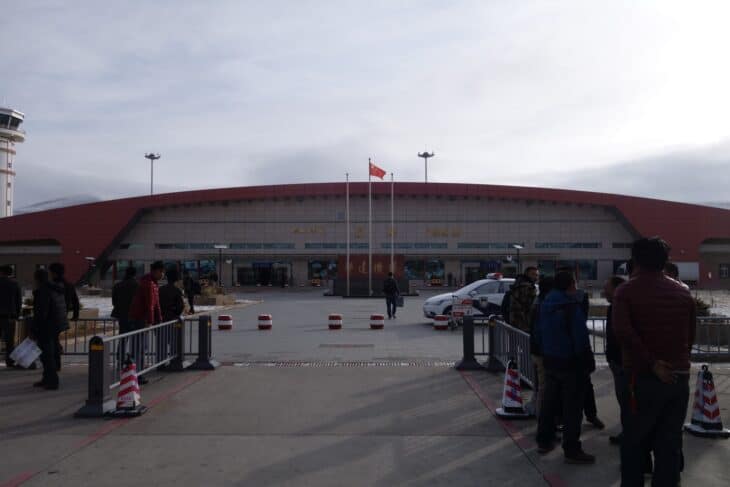

Qamdo Bamda (BPX) in eastern Tibet stands at 14,219 feet (4,334 m). It held the title of world’s highest airport until Daocheng Yading opened in 2013.
Bamda is better known for its runway. Guinness World Records lists it as the longest civil airport runway, at 5.5 km (3.4 miles), a length its altitude explains.
Why high airports need such long runways
Thin air hurts an airplane twice. The wings make less lift at a given speed, so the aircraft must roll faster before it can fly, and the engines make less thrust, so it takes longer to get there. The same physics stretches the landing roll. That is why Qamdo Bamda was built with a runway measured in miles, and why airliners at the highest fields often leave with less than a full load.
3. Shigatse Tingri Airport, China: 14,163 feet
Shigatse Tingri (DDR) is the newest airport in the top three. It opened on December 24, 2022, in Tingri County, about 32 miles (52 km) from Everest Base Camp on the north side of the mountain.
Its published elevation varies a little by source. Wikipedia’s list gives 14,163 feet (4,317 m), while OurAirports records 14,108 feet; it ranks third on either figure.
Travel guides describe its flights as seasonal and heavily affected by mountain weather, so check the current schedule before planning around it.
4. Kangding Airport, China: 14,042 feet
Kangding (KGT) serves the capital of the Garzê prefecture in Sichuan, at 14,042 feet (4,280 m). No other prefecture on this list has three airports above 13,000 feet: Daocheng Yading, Kangding and Garze Gesar.
5. Ngari Gunsa Airport, China: 14,022 feet
Ngari Gunsa (NGQ) serves Gar County in the far west of Tibet, at 14,022 feet (4,274 m). Kangding sits just 20 feet higher, the narrowest gap in the top ten.
For years it was the main air link to the remote Ngari region. Since late 2023 it has shared that job with a second airport even closer to Mount Kailash.
6. Ngari Burang Airport, China: 13,944 feet
Ngari Burang (APJ), also written Purang, opened on December 27, 2023, at 13,944 feet (4,250 m). It is the closest airport to Mount Kailash and Lake Manasarovar, both major pilgrimage sites.
Service is thin. Wikipedia lists Lhasa as its only destination, and travel guides describe flights running from March to October only.
7. Garze Gesar Airport, China: 13,346 feet
Garze Gesar (GZG) is the third of the Garzê prefecture’s high airports, at 13,346 feet (4,068 m). It sits just 23 feet above El Alto, which keeps Bolivia out of the top seven by the narrowest of margins.
8. El Alto International Airport, Bolivia: 13,323 feet
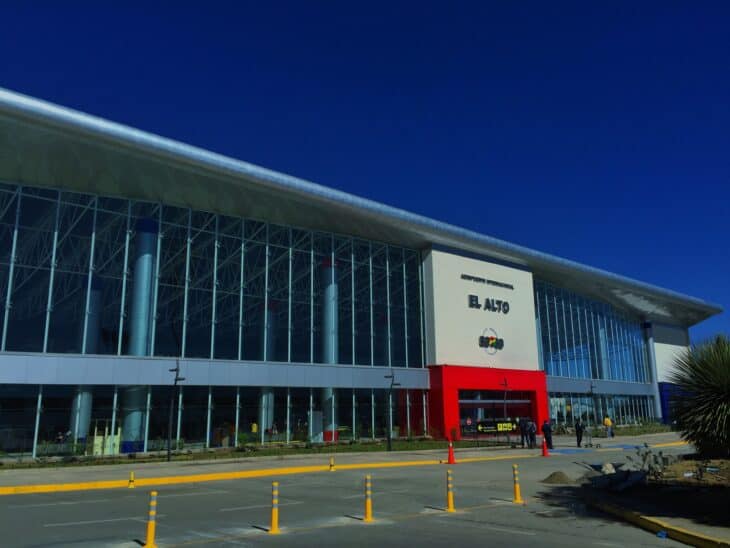

El Alto (LPB) serves La Paz at 13,323 feet (4,061 m), and it is the highest international airport in the world. Every airport above it on this list handles domestic flights only.
Its main runway is 13,123 feet (4,000 m) long. Even so, most widebody airliners cannot take off from it at full load, because the thin air cuts both lift and engine thrust.
9. Shannan Longzi Airport, China: 12,959 feet
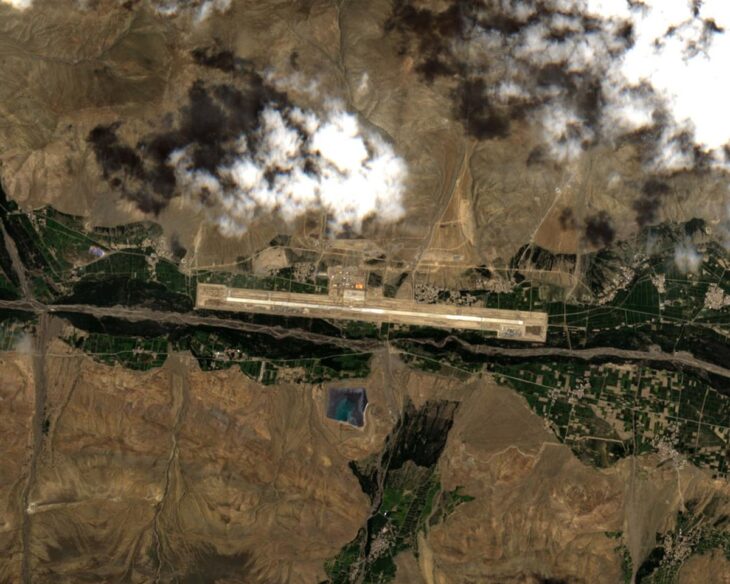

Shannan Longzi (LGZ) serves Lhünzê County in southern Tibet, at 12,959 feet (3,950 m).
10. Yushu Batang Airport, China: 12,762 feet
Yushu Batang (YUS) is the highest airport in Qinghai province, at 12,762 feet (3,890 m). It is the first Chinese entry on the list outside Tibet and Sichuan.
11. Inca Manco Cápac International Airport, Peru: 12,552 feet
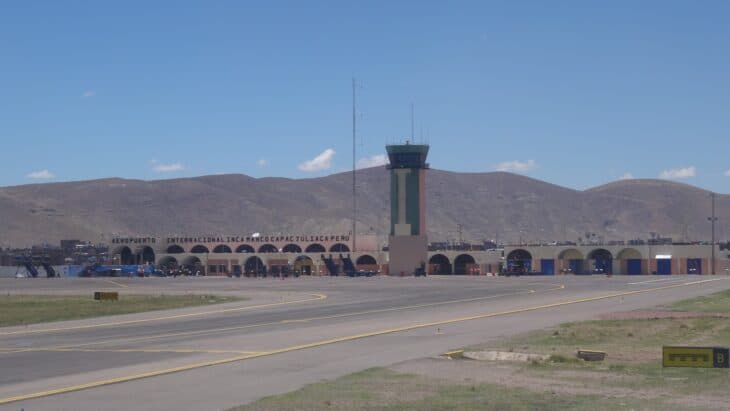

Juliaca’s airport (JUL) sits at 12,552 feet (3,826 m) and is the gateway to Puno and Lake Titicaca. It is the highest airport in Peru with airline service, more than 1,600 feet above Cusco.
12. Golog Maqin Airport, China: 12,428 feet
Golog Maqin (GMQ) serves the Golog prefecture of Qinghai at 12,428 feet (3,788 m). It edges out Shigatse Peace Airport, in 13th place, by just 20 feet.
Rounding out the table, Shigatse Peace, Oruro and Uyuni in Bolivia, and Lhasa Gonggar all sit between 11,713 feet (3,570 m) and 12,408 feet (3,782 m). Lhasa, the only airport in Tibet with international flights, does not even make the top 15.
Isn't La Paz the highest airport in the world?
No, although it is often described that way. El Alto is the highest international airport, and it was the highest airport of any kind until Qamdo Bamda opened in Tibet in the mid-1990s. Today seven Chinese airports with scheduled flights sit above it. The record may also move again: Nagqu Dagring Airport in Tibet has been planned at about 14,554 feet (4,436 m), higher than Daocheng Yading, but its construction was reported delayed in 2015 and it has not opened.
The highest airports outside China and the Andes
Below the top 16, the list stays dominated by the Tibetan Plateau and the Andes. Cusco in Peru sits at 10,860 feet (3,310 m), and Leh in India’s Ladakh region, the highest Indian airport with airline service, sits at 10,682 feet (3,256 m).
In the United States, the highest airport with scheduled passenger flights is Telluride Regional in Colorado, at about 9,070 feet (2,765 m) by the FAA figure. Denver Air Connection flies it to Denver.
Mountain airports like Telluride ask more of pilots than a flat-country field, a theme we cover in our guide to the hardest runways to land on.
The highest airport in the US overall is Lake County Airport in Leadville, Colorado, at about 9,928 feet (3,026 m). It once had scheduled airline service but has none today.
The highest airfields of any kind
Drop the airline requirement and the record moves to a military strip. Daulat Beg Oldi, an Indian Air Force advanced landing ground in Ladakh near the Karakoram Pass, is generally described as the highest airstrip in the world.
Its published height varies from about 16,200 to 16,800 feet (4,940 to 5,120 m), depending on the source. That is more than 1,700 feet above Daocheng Yading on any of the figures.
The strip is unpaved. An Indian Air Force C-130J Super Hercules landed there on August 20, 2013.
Peru and Bolivia also have high mine and private airstrips with no airline service. Vicco Airport in Peru, at 13,461 feet (4,103 m), sits higher than El Alto but sees no scheduled flights.
In Nepal, Syangboche Airport above Namche Bazaar sits at 12,402 feet (3,780 m), on the trekking route to Everest. It has no scheduled service, and most Everest trekkers fly into Lukla Airport lower down the valley instead.
Altitude is only one of the things that make an airfield hard work for pilots. Terrain, weather and short runways matter just as much, which is why our ranking of the most dangerous airports in the world weighs far more than elevation.
What altitude does to an airplane
The air at Daocheng Yading is far thinner than at a sea-level airport. Pilots account for this with density altitude, a correction built on the pressure altitude that tells them how high the airplane “feels” it is.
On a warm afternoon, a high airport’s density altitude climbs well above its field elevation. Airports and airlines answer with longer runways and lighter loads, and often schedule departures for the cool morning hours, when the air is densest.
Passengers feel it too. Stepping off the airplane at more than 13,000 feet, without time to acclimatize, is a common trigger for altitude sickness, so visitors to these airports are usually told to take the first day slowly.
FAQ
Sources and references used for research and fact-checking.
- Wikipedia, List of highest airports
- OurAirports, Airports data (airports.csv)
- Wikipedia, Daocheng Yading Airport
- ch-aviation, New world's highest airport Daocheng Yading to launch on Sept 16
- SBS News, China opens world's highest airport
- Guinness World Records, Longest runway
- Wikipedia, Qamdo Bamda Airport
- Wikipedia, Shigatse Tingri Airport
- Tibet Tour, Shigatse Dingri Airport Guide
- Wikipedia, Ngari Burang Airport
- Tibet Travel, Lhasa to Ngari Flight
- Wikipedia, El Alto International Airport
- Wikipedia, Nagqu Dagring Airport
- Wikipedia, Telluride Regional Airport
- Visit Telluride, Telluride Regional Airport (TEX)
- Wikipedia, Lake County Airport (Colorado)
- Wikipedia, Daulat Beg Oldi
- GlobalSecurity.org, IAF lands C-130J Super Hercules plane at world's highest airstrip
Get the Newsletter
The latest aviation news and stories sent to your inbox.
About the Author

Tim is the owner and lead editor of AeroCorner since 2019, overseeing aviation content covering aircraft, airlines, airports, and the broader aviation industry. Through years of researching, writing, editing, and publishing aviation-focused content, he has developed extensive practical knowledge of commercial aviation and air travel. Based in Asia and a frequent traveler himself, Tim also brings firsthand passenger experience to AeroCorner’s coverage. Outside of publishing, he has also explored aviation firsthand through hands-on flight training in New Zealand.