

Table of Contents
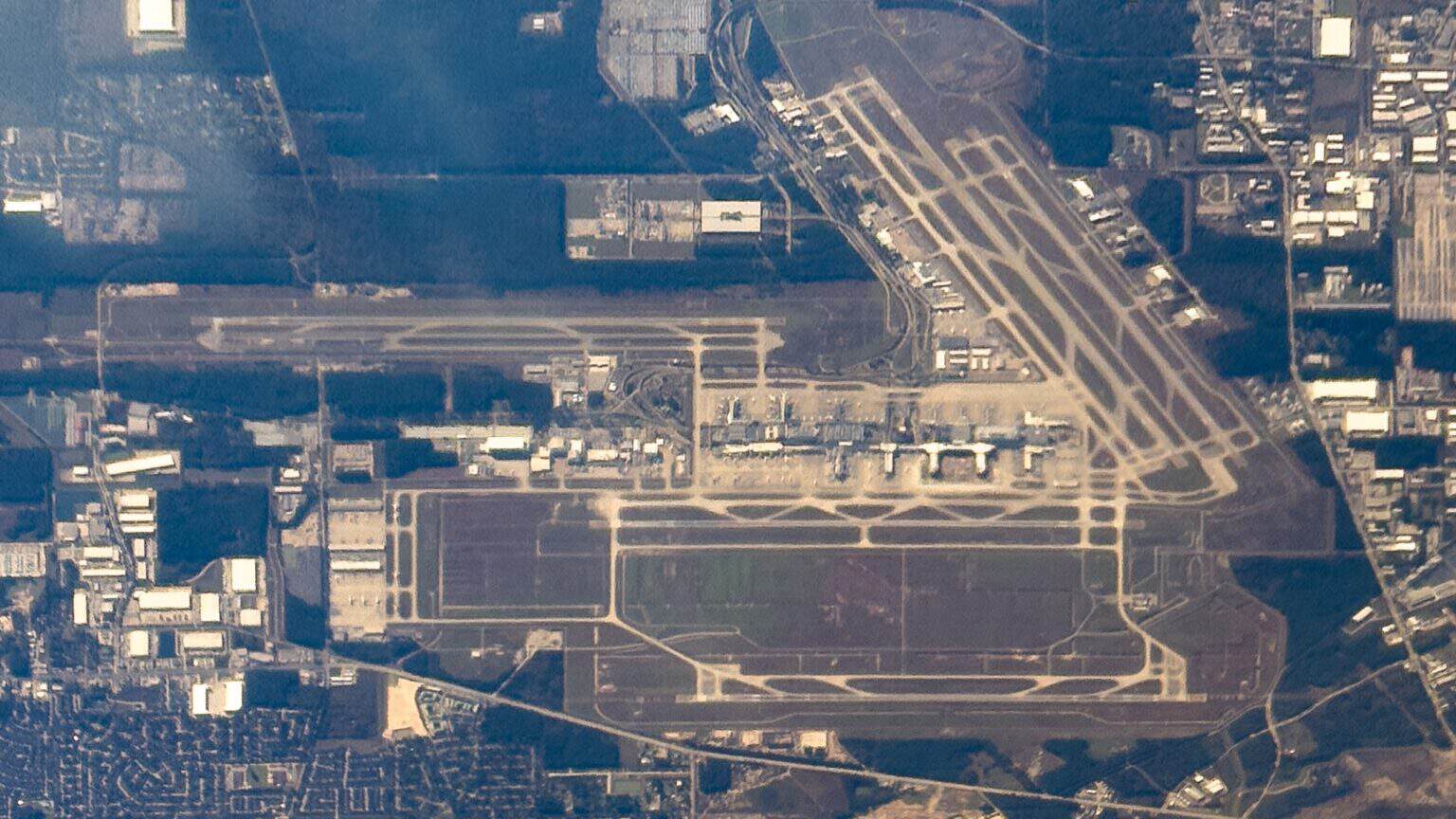
Houston has two airports with airline flights: George Bush Intercontinental (IAH) and William P. Hobby (HOU). Together they served 62.1 million passengers in 2025, according to Houston Airports, the city department that runs them.
That is the answer most travelers want. It is not the whole count. The city owns a third airport, and the FAA’s airport records, effective October 29, 2026, list 53 landing facilities with Houston as their city: 13 runway airports and 40 heliports.
How Many Airports Are in Houston?
It depends on which airports you mean, and each answer is correct for a different question. Two have scheduled passenger flights. Three belong to the City of Houston: IAH, Hobby and Ellington Airport (EFD), which is also the Houston Spaceport.
Twelve runway airports filed under Houston are open to any pilot, and one more is private. Add the heliports and the FAA total is 53. Across the nine-county Houston metro area, the same records hold 196 open landing facilities.
The count at a glance
2 airports with airline flights (IAH and Hobby). 3 owned by the City of Houston (IAH, Hobby, Ellington). 12 public-use runway airports filed under Houston by the FAA. 53 landing facilities filed under Houston, heliports included. 196 open landing facilities in the nine-county metro. FAA data effective October 29, 2026.
Houston’s 53 Landing Facilities, Broken Down
The FAA assigns every landing facility an “associated city,” the place it serves, which is not always the place it sits. That is how a field in Conroe or Sugar Land ends up in the Houston column.
| Facility type | Filed under Houston | Nine-county metro |
|---|---|---|
| Public-use airports | 12 | 28 |
| Private-use airports | 1 | 68 |
| Heliports | 40 | 95 |
| Seaplane, glider and ultralight sites | 0 | 5 |
| Total | 53 | 196 |
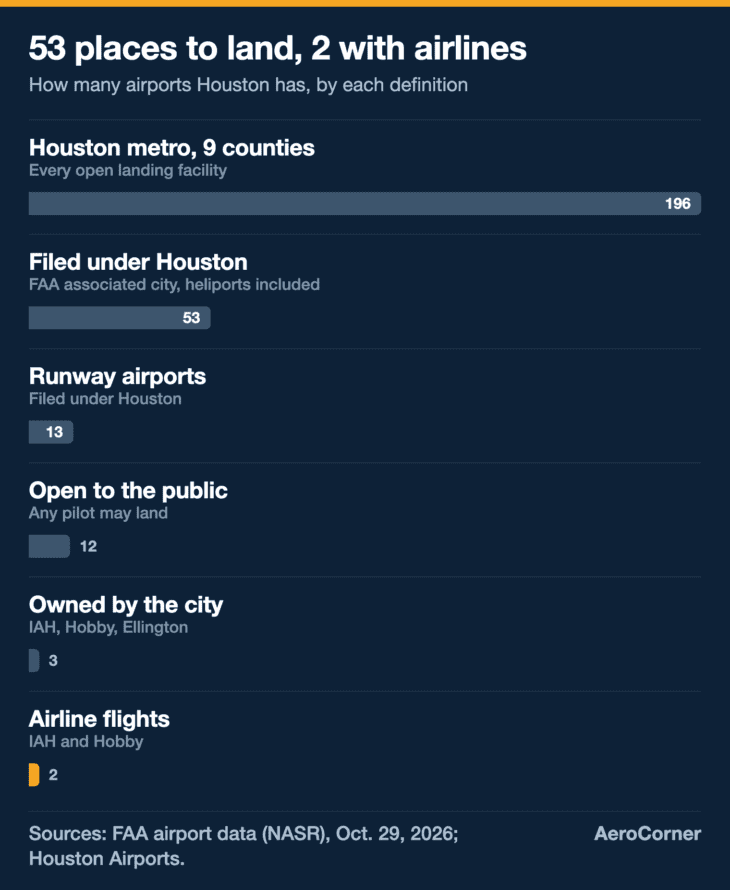
Heliports are three in four of the Houston total, and all 40 are private-use: hospital pads, corporate roofs and industrial sites. You cannot fly to any of them without the owner’s permission.
The 12 public-use airports are the ones a pilot can actually plan a trip to. Only five of them are publicly owned. The other seven are private businesses that open their runways to anyone.
| Airport | Code | County | Owner |
|---|---|---|---|
| George Bush Intercontinental | IAH | Harris | City of Houston |
| William P. Hobby | HOU | Harris | City of Houston |
| Ellington | EFD | Harris | City of Houston |
| Sugar Land Regional | SGR | Fort Bend | City of Sugar Land |
| Conroe-North Houston Regional | CXO | Montgomery | Montgomery County |
| David Wayne Hooks Memorial | DWH | Harris | Private |
| Houston Executive | TME | Waller | Private |
| West Houston | IWS | Harris | Private |
| Pearland Regional | LVJ | Brazoria | Private |
| Dan Jones International | T51 | Harris | Private |
| Houston/Southwest | AXH | Fort Bend | Private |
| Houston Fort Bend | 2H5 | Fort Bend | Private |
Seven of the 12 have a control tower, including Hooks, Houston Executive, Sugar Land Regional and Conroe-North Houston Regional. They are busy business-jet and flight-training fields, which is why so many of them carry “Houston” in the name.
The Two Airports With Airline Flights
George Bush Intercontinental is the big one. It handled about 48 million passengers in 2025, 12.4 million of them international, a record for the airport.
AeroCorner’s analysis of airline schedule data puts IAH at an average of 674 departures a day across four sample weeks from August to November 2026. It served 173 destinations in the November week, and its busiest route is Chicago O’Hare at about 21 departures a day.
IAH also has room. The FAA lists it at 10,000 acres (40.5 square km) with five runways, the longest 12,001 feet (3,658 m). That is a lot of land, though it is not the record: our guide to the biggest airport in the US covers which field is.
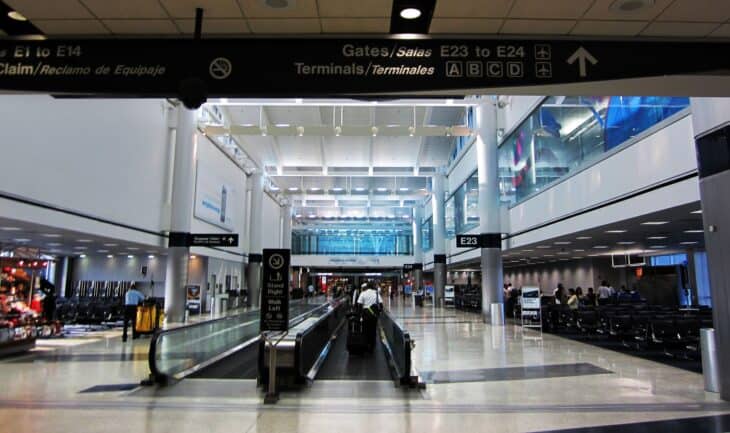

Hobby is the close-in airport, 24 miles (38 km) from IAH. It handled about 14 million passengers in 2025 on 1,304 acres and three runways. It averaged 193 departures a day over the same four sample weeks in AeroCorner’s analysis, and its busiest route is Dallas Love Field at about 20 a day.
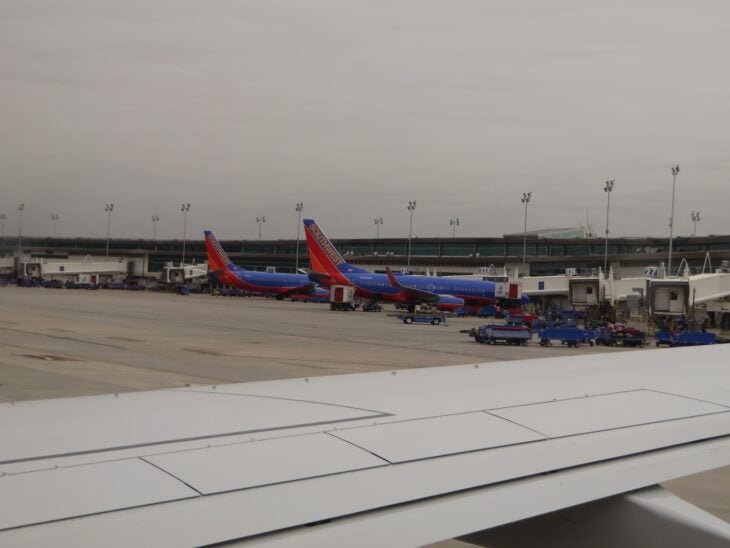

The two airports split by airline. United, which flies mainly from IAH, held 60 percent of Houston Airports’ domestic market and 65 percent of the international market in January 2026. Southwest left IAH in August 2024 and now serves Houston only from Hobby, where it already had more than 93 percent of the market. The United vs Southwest choice is, in Houston, mostly a choice of airport.
The third city airport is a spaceport
Ellington Airport received an FAA launch site license on June 30, 2015, making it the 10th licensed commercial spaceport in the US. Its Houston Spaceport tenants include Axiom Space, Intuitive Machines and Collins Aerospace. The field also hosts the Texas Air National Guard’s 147th Attack Wing, Coast Guard Air Station Houston and NASA Johnson Space Center’s aircraft, including its T-38 jets.
Why Other Sites Give a Different Number
Search the question and you will see two, three and lists of a dozen or more. None is wrong. Each counts a different thing.
Two is the travel answer: the airports where you can buy an airline ticket. Three is the city’s answer, the airports Houston Airports runs. Ellington holds an FAA Part 139 certificate, as IAH and Hobby do, but in Class IV, which covers unscheduled large-aircraft flights only, so no airline sells seats there.
Ellington is not a third airline airport
Ellington is often listed next to IAH and Hobby as one of ‘Houston’s three airports.’ It is one of the city’s three airports, but it has no scheduled passenger service. Travelers flying into Houston land at IAH or Hobby.
Lists of “airports near Houston” add Ellington, Sugar Land, Conroe, Baytown or La Porte to the airline pair, so their totals depend on the radius. The larger counts come from the FAA’s records, where “Houston” means the city a field serves. Pearland Regional sits in Brazoria County, Houston Executive in Waller County and Conroe-North Houston in Montgomery County, yet all three are filed under Houston.
County lines give yet another answer. Harris County, which holds most of the city, has 72 open landing facilities: 12 runway airports, 59 heliports and one private seaplane base in Seabrook. Baytown and La Porte Municipal are in Harris County but filed under their own towns, not Houston.
The same split, two airline airports and several general aviation fields, runs through most big US cities. New York has three major airports for its own reasons, and nationally the US has 19,445 airports, only 518 of them certified for airline flights.
Is the Number Going to Change?
The airline count is stable. No third Houston airport is planned for scheduled flights, and the city’s spending goes into the two it has, such as the new Terminal B North Concourse that United uses at IAH.
Passenger numbers move more. Houston’s two airline airports set a record of 63.1 million passengers in 2024, then dipped to 62.1 million in 2025 as Hobby lost traffic and IAH’s international flights kept growing. The heliport count moves most of all, as private pads open and close every FAA cycle.
FAQ
Sources and references used for research and fact-checking.
- Federal Aviation Administration, NASR 28-day subscription: airport data (APT CSV), effective October 29, 2026
- Houston Airports, Houston Airports Fast Facts
- Houston Airports, Houston Airports closes 2025 with strong international growth, record cargo
- Houston Airports, Houston Airports shatters passenger record with 63.1 million travelers in 2024
- Houston Airports, Houston Spaceport at 10: propelling innovation and exploration
- collectSPACE, Houston Spaceport gets FAA license
- Wikipedia, Ellington Field Joint Reserve Base
- Houston First, Air travel starts 2026 with a slight uptick
- Jetsetter Guide, Southwest exits Houston Intercontinental, here's why
Get the Newsletter
The latest aviation news and stories sent to your inbox.
About the Author

Tim is the owner and lead editor of AeroCorner since 2019, overseeing aviation content covering aircraft, airlines, airports, and the broader aviation industry. Through years of researching, writing, editing, and publishing aviation-focused content, he has developed extensive practical knowledge of commercial aviation and air travel. Based in Asia and a frequent traveler himself, Tim also brings firsthand passenger experience to AeroCorner’s coverage. Outside of publishing, he has also explored aviation firsthand through hands-on flight training in New Zealand.