

Table of Contents
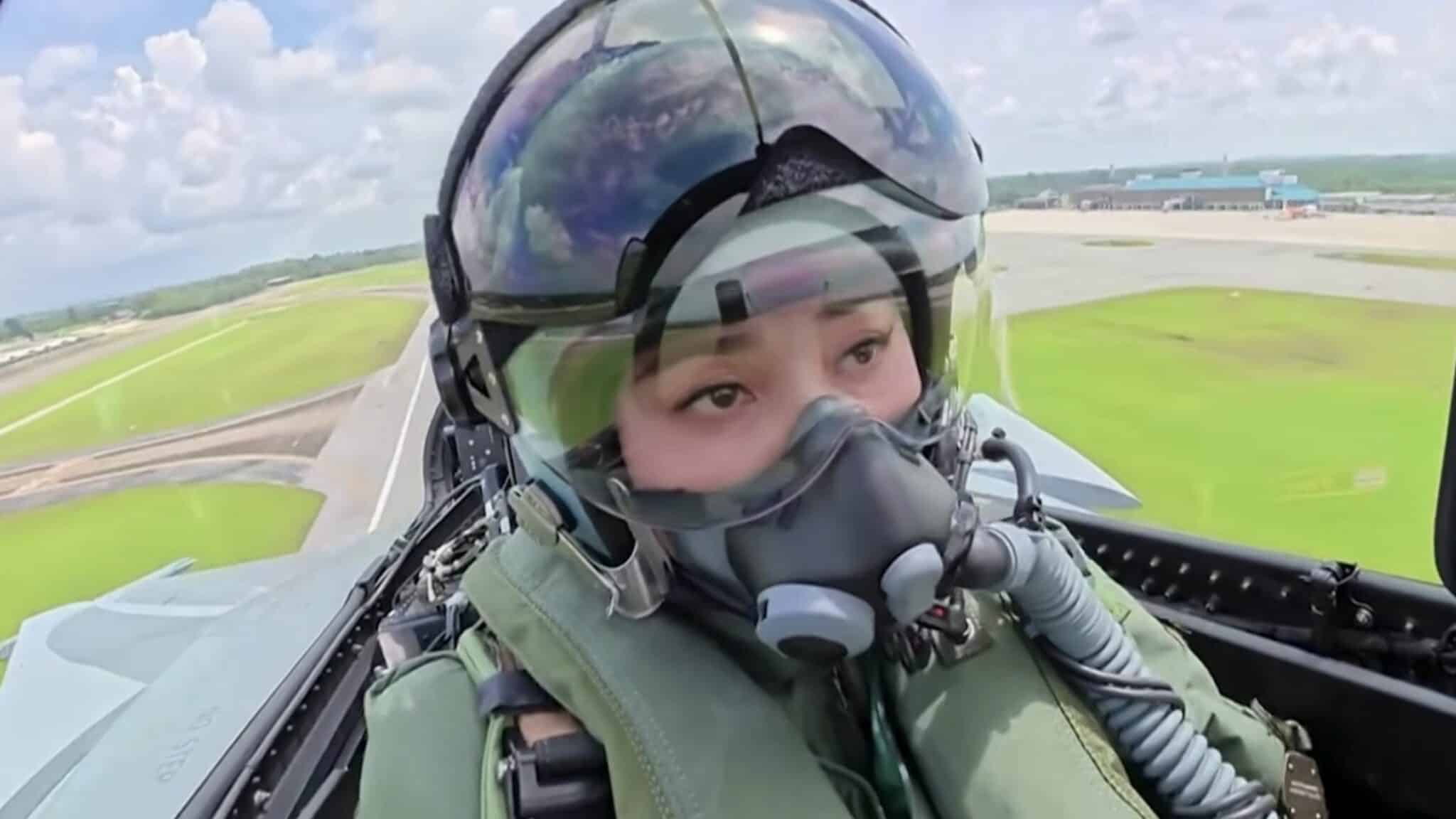
Sixteen years after her first lesson in a Cessna trainer, the Queen of Thailand took a supersonic fighter up alone for 41 minutes.
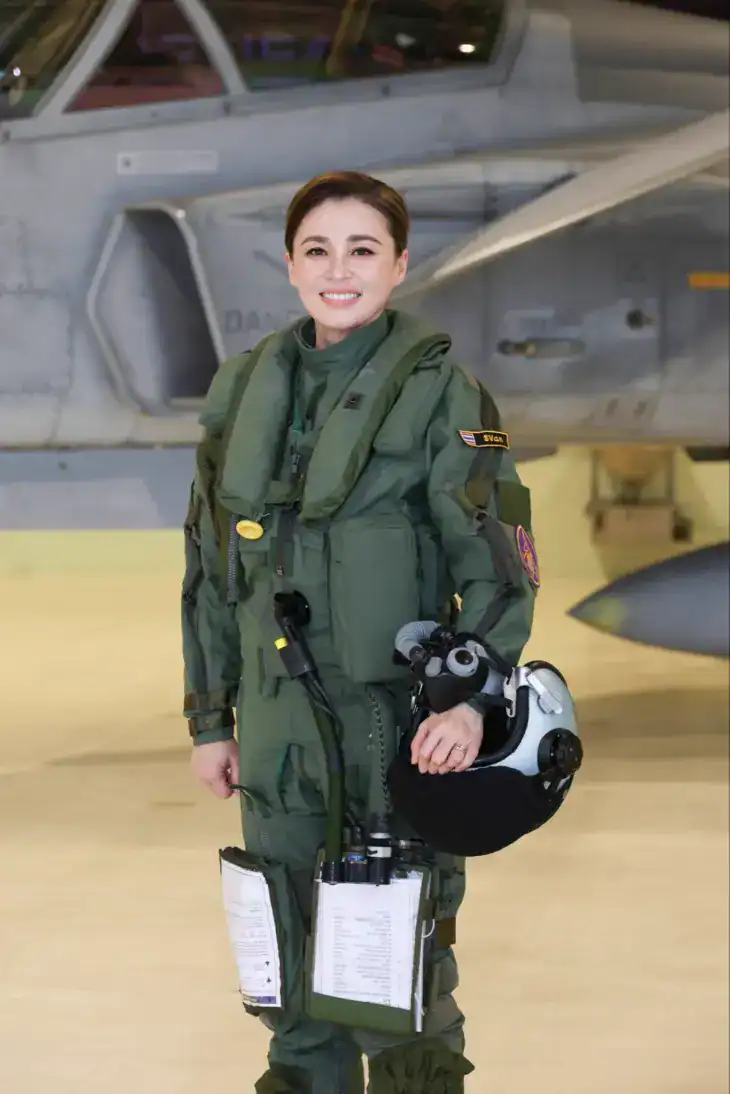
On October 8, 2026, Queen Suthida flew a single-seat Saab JAS 39C Gripen solo from Royal Thai Air Force Wing 7 in Surat Thani province. She took off from Runway 22 that morning and landed 41 minutes later, according to the Bureau of the Royal Household.
King Maha Vajiralongkorn watched the takeoff and the landing. The palace says the flight makes her Thailand’s first female Gripen pilot.
Before the solo, she logged about 10 hours in the two-seat JAS 39D with an instructor in the back. That number sounds impossibly small for a fighter. It is not the whole story.
From the Airline Cabin to the Gripen Cockpit
Suthida began her aviation life on the other side of the cockpit door. She worked as a flight attendant for JALways, a Japan Airlines subsidiary, from 2000 to 2003, then for Thai Airways International until 2008.
She joined the military in 2010 and rose through the Royal Security Command to the rank of general by 2016. She became Queen of Thailand on May 1, 2019, and was made an air chief marshal in March 2025.
Her flying started in the same year as her military career. Her first flight was on May 13, 2010, in a Cessna T-41D with Squadron 604 at Wing 6 in Bangkok.
From there she moved through the ladder a military pilot climbs: the CT-4E Airtrainer, then the Pilatus PC-9 turboprop, plus a Mooney M20M and a twin-engine Piper Seneca.
Her single biggest block of time is in airliners. The palace’s log credits her with more than 450 hours on the Boeing 737-800, flown as co-pilot beside the King on royal flights at home and abroad.
One of those flights was the state visit to Bhutan, where the King flew as pilot in command and the Queen as co-pilot into Paro International Airport, ringed by mountainous terrain.
The Numbers Behind 41 Minutes Alone
The palace published the training record in unusual detail. The conversion course followed the Royal Thai Air Force’s standard syllabus for the Gripen, which the air force designates Fighter-Attack Aircraft Type 20.
- 45 academic and emergency-procedure subjects, studied in June and July 2026
- 20 sorties in the Gripen simulator
- About 10 hours of dual flying in the JAS 39D at Wing 7, in two blocks: August 20 to September 4, and September 25 to October 8
- One solo sortie in the single-seat JAS 39C: 41 minutes
Her total logbook, including the Gripen training, stands at more than 1,188 hours across all types, per the Royal Household figures.
That is the context the 10-hour figure needs. She did not go from a standing start to a fighter in a month. She arrived with more than a thousand hours, including turboprop military trainers and a heavy jet.
What a first solo is, and is not
A first solo means the instructors judged that the pilot can take off, fly and land the aircraft safely alone. It is not a combat qualification. Air forces train fighter pilots for many more months before they fly tactical missions.
The jet itself is no gentle trainer. The JAS 39C is a single-engine multirole fighter powered by a Volvo RM12, a licence-built derivative of the General Electric F404, and it can reach Mach 2 at 50,000 feet.
After she landed, the King presented her with flowers and fixed the gold-embroidered Gripen Order patch to her sleeve. The Gripen Order is a Swedish honorary association for people who have flown the type.
Why the Gripen Means So Much to Thailand
The aircraft she flew is the backbone of a deliberate bet. In 2007, Thailand’s parliament approved up to 34 billion baht to replace the air force’s aging Northrop F-5 fighters.
The air force chose Sweden’s Gripen. It ordered six jets in February 2008, two single-seat C models and four two-seat D models, then six more JAS 39Cs in November 2010.
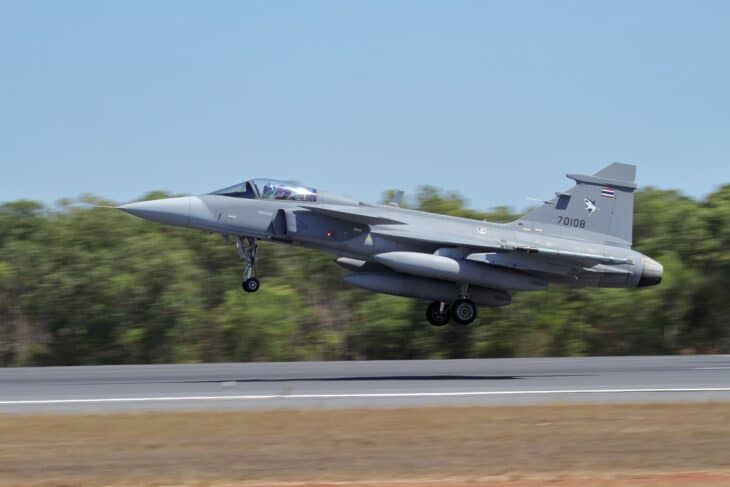

The first was delivered on February 22, 2011, and the last batches arrived in 2013. All of them went to one squadron at Wing 7 in Surat Thani, the base the Queen flew from.
Thailand received 12 Gripens and operates 11. One JAS 39C crashed at Hat Yai International Airport during a Children’s Day air show on January 14, 2017, killing its pilot.
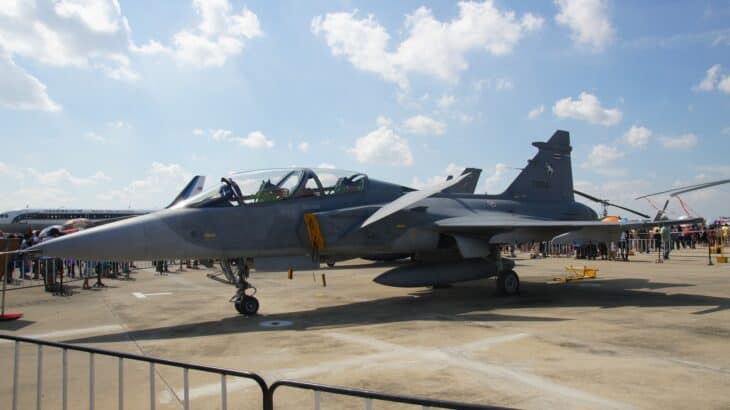

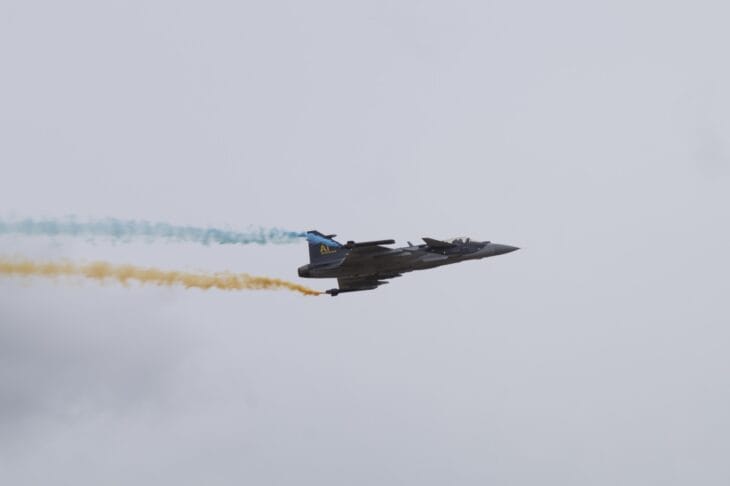
Wing 7’s Gripen squadron marked 15 years in service on July 20, 2026. The jet the Queen flew carried special tail art for that anniversary.
Putting the Queen in that cockpit in that anniversary year is a statement. The Gripen is no longer a niche Swedish import in Thailand; it is the fighter the country has chosen for its future.
Next Up: Thailand’s Gripen E
In August 2024, the Royal Thai Air Force picked the newer Gripen E/F over the F-16 Block 70/72 to replace its older F-16s. The plan, as reported at the time, is 12 jets in three batches.
The first batch is signed. On August 25, 2025, Saab announced an order worth about SEK 5.3 billion for three single-seat Gripen Es and one two-seat Gripen F, with deliveries between 2025 and 2030.
In May 2026, a delegation led by air force commander Air Chief Marshal Seksan Kantha, who also watched the Queen’s solo, saw assembly begin on the first Thai Gripen E at Saab’s plant in Linköping, Sweden.
The Gripen E is the newer, heavier development of the C model Thailand flies today, and it ranks eighth in our list of the best fighter jets in the world.

Her name now belongs alongside the famous female pilots who made it into a fighter cockpit. She got there the slow way, one type at a time, starting in a Cessna trainer in 2010.
Sources and references used for research and fact-checking.
- AeroTime, Thailand's Queen Suthida completes first solo Gripen flight
- Aerospace Global News, Thailand's Queen Suthida Flies Solo in Supersonic JAS 39C Gripen Fighter Jet
- Thai PBS World, Queen Suthida completes first solo flight in Gripen fighter jet
- Aviation A2Z, Thailand's Queen Suthida Flies Saab Gripen Fighter Solo for 1st Time
- Saab, Saab receives Gripen E/F order for Thailand
- Wikipedia, Saab JAS 39 Gripen
- Wikipedia, Suthida
Get the Newsletter
The latest aviation news and stories sent to your inbox.
About the Author

Tim is the owner and lead editor of AeroCorner since 2019, overseeing aviation content covering aircraft, airlines, airports, and the broader aviation industry. Through years of researching, writing, editing, and publishing aviation-focused content, he has developed extensive practical knowledge of commercial aviation and air travel. Based in Asia and a frequent traveler himself, Tim also brings firsthand passenger experience to AeroCorner’s coverage. Outside of publishing, he has also explored aviation firsthand through hands-on flight training in New Zealand.