

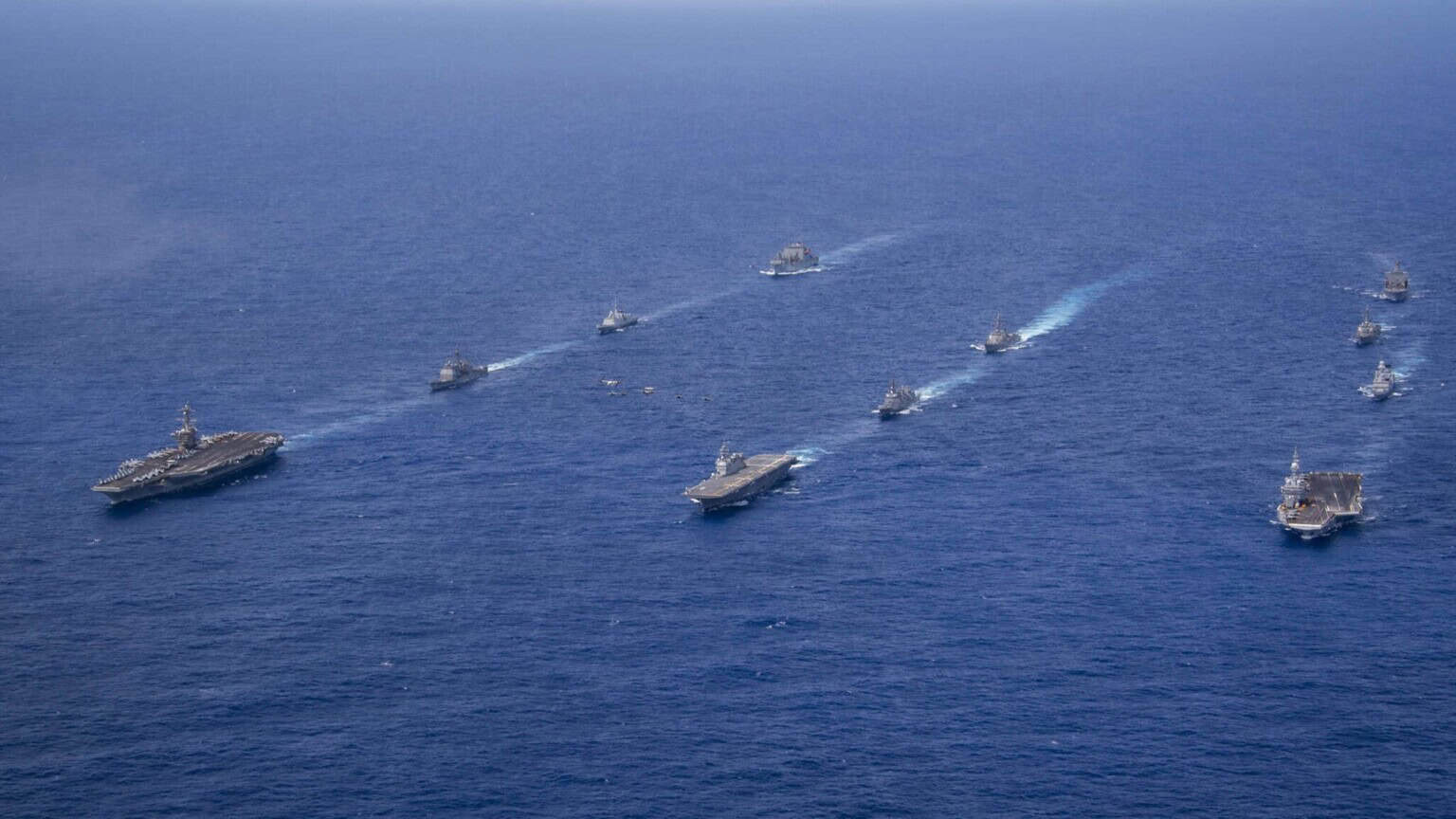
Table of Contents
China has the largest navy in the world. The Pentagon says so in plain language, crediting the People’s Liberation Army Navy with a battle force of more than 370 ships and submarines, including over 140 major surface combatants.
The United States Navy is third on hull count and first on everything that weighs something. Its fleet displaces roughly 8.3 million tonnes, about two and a half times China’s 3.2 million.
That gap between the two answers is the whole story of this ranking. The list below counts total vessels, the measure the question usually means, and shows tonnage beside it so you can see where hull counts mislead. Figures are current as of September 2026.
| Rank | Country | Total vessels | Warships | Tonnage |
|---|---|---|---|---|
| 1 | China | 841 | 405 | 3,192,411 |
| 2 | Russia | 747 | 283 | 1,426,539 |
| 3 | United States | 465 | 232 | 8,265,799 |
| 4 | India | 343 | 100 | 631,989 |
| 5 | Indonesia | 338 | 245 | 324,754 |
| 6 | North Korea | 332 | 195 | Outside top 20 |
| 7 | Thailand | 304 | Not in top 15 | Outside top 20 |
| 8 | Italy | 285 | 57 | 387,892 |
| 9 | Sweden | 279 | Not in top 15 | Outside top 20 |
| 10 | Sri Lanka | 275 | Not in top 15 | Outside top 20 |
How this ranking works
Navies are ranked here by total vessels in service, because that is what most people mean by the largest navy. Two other measures appear alongside it. Warship counts exclude auxiliaries and support vessels, and tonnage measures how much fleet a country actually floats. No single figure is the honest answer on its own, which is why all three are shown. Vessels on order but not delivered are excluded throughout.
1. China: 841 vessels
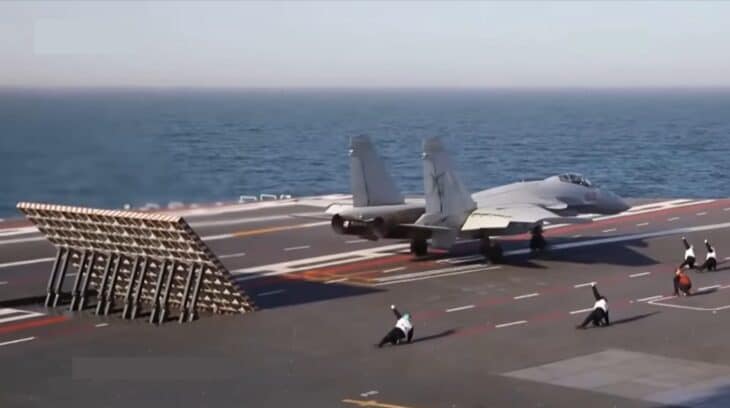

China tops every count of naval hulls, and it is the only country whose lead is uncontested across both of the counting methods used here. GlobalFirepower puts the total fleet at 841 vessels, and the World Directory of Modern Military Warships counts 405 warships.
The Department of Defense uses a stricter measure. Its most recent published count credits the PLA Navy with a battle force of over 370 platforms, a figure that pointedly excludes roughly 60 HOUBEI class missile patrol craft.
That same assessment projected the battle force would reach 395 ships by 2025 and 435 by 2030, with most of the growth in major surface combatants. China passed the US Navy in battle force ships sometime between 2015 and 2020.
The carrier arm is the newest part of it. China commissioned its third carrier, the 80,000 ton Fujian, on 5 November 2025 at Sanya, and it is the first Chinese carrier with electromagnetic catapults instead of a ski jump ramp. We compare the two carrier forces in detail in US vs China aircraft carriers.
The number behind the number
It is not the ship count that worries US planners so much as the yards building them. Congress’s own researchers report US military officials expressing concern about the pace of Chinese naval shipbuilding and the capacity of China’s shipbuilding industry compared with America’s. Ships can be sunk. Shipyards decide who replaces them.
2. Russia: 747 vessels
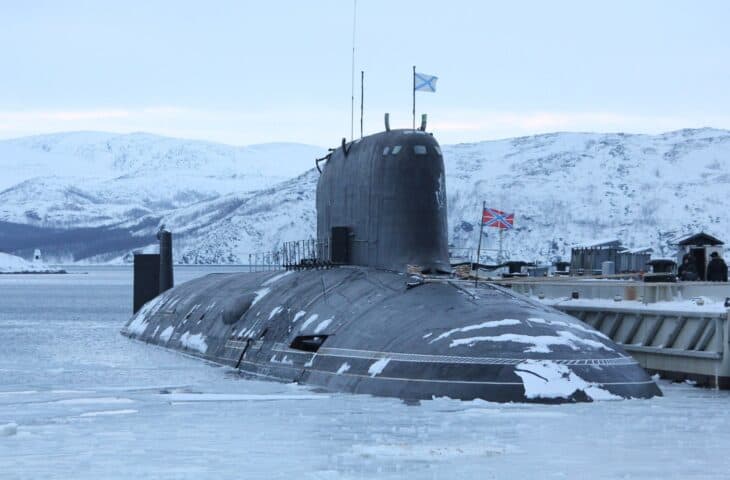

Russia is second on total hulls and a distant third on tonnage, at 1.43 million tonnes. The spread between its 747 total vessels and its 283 warships is the widest of any major fleet, which tells you how much of the count is small craft and auxiliaries.
The real strength is under the surface. The Russian Navy fields roughly 66 submarines alongside about 230 surface warships, and the submarine force is the part Western planners take most seriously.
Its one aircraft carrier is not a factor. The Admiral Kuznetsov has been non-operational since at least September 2024, and as of 2025 was reported unlikely to return to service at all.
3. United States: 465 vessels
_Flight_Deck_Operations_(9517148).jpg)
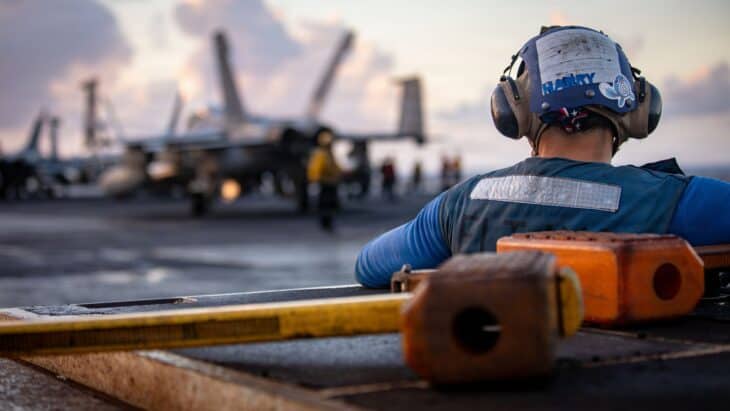
The US Navy is third on hulls and first by a margin nothing else approaches on tonnage, at 8,265,799 tonnes. That is more than China and Russia combined, and roughly two and a half times China’s total.
By the Navy’s own counting rules the fleet is smaller than any of those numbers suggest. Congressional Research Service figures put the battle force at 296 ships as of 30 September 2024 and again in January 2025, with the Navy projecting 287 by the end of that fiscal year.
What those 296 ships include is the difference. Eleven nuclear powered aircraft carriers, a large nuclear submarine force, and the amphibious and logistics ships that let the fleet operate a long way from home for a long time. Our guide to how many aircraft carriers the US has covers how few of them are at sea on a given day.
The US Navy is below its own legal minimum
A 355 ship fleet has been formal US policy since the 2018 National Defense Authorization Act, and the Navy’s own preferred goal since 2023 is 381 manned ships. The actual battle force has sat between 270 and 300 ships since 2003. The law set a floor the fleet has never reached.
4. India: 343 vessels
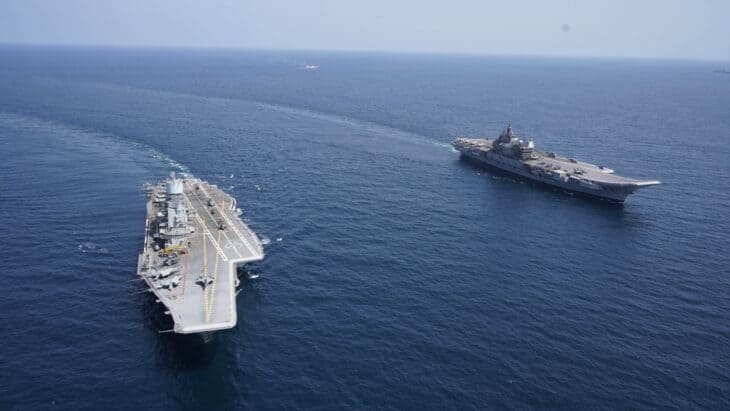
_and_INS_Vikramaditya_(R33)_during_exercise.jpg)
India is the largest navy in the Indian Ocean and fifth in the world by tonnage at 631,989 tonnes. The fleet runs to roughly 250 ships including auxiliaries, with about 300 aircraft.
It is one of only a handful of navies operating more than one aircraft carrier, with two in service as of 2025. Below them sit around 13 destroyers, 17 frigates and 18 corvettes.
India also belongs to the small group of navies with nuclear powered submarines, fielding three alongside 17 conventional boats. That combination of carriers and nuclear submarines puts it in company only China, Russia, the United States, the United Kingdom and France otherwise keep.
5. Indonesia: 338 vessels
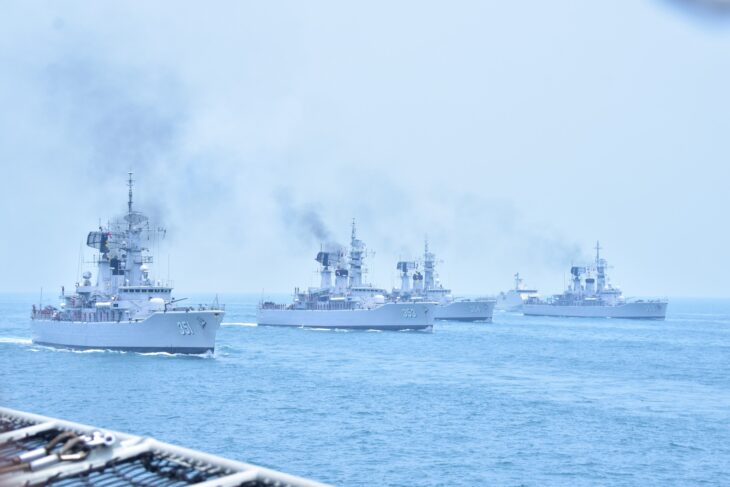

Indonesia is the first fleet on this list whose ranking is mostly a function of geography. The country is an archipelago of thousands of islands, and its navy is sized to patrol them rather than to cross oceans.
The composition shows it. Alongside 4 submarines, 10 frigates and 26 corvettes sit roughly 205 patrol boats and 25 fast attack craft, which is where most of the hull count comes from.
At 324,754 tonnes the entire Indonesian fleet displaces about 4 percent of what the US Navy does, despite being only 127 hulls short of it.
6. North Korea: 332 vessels
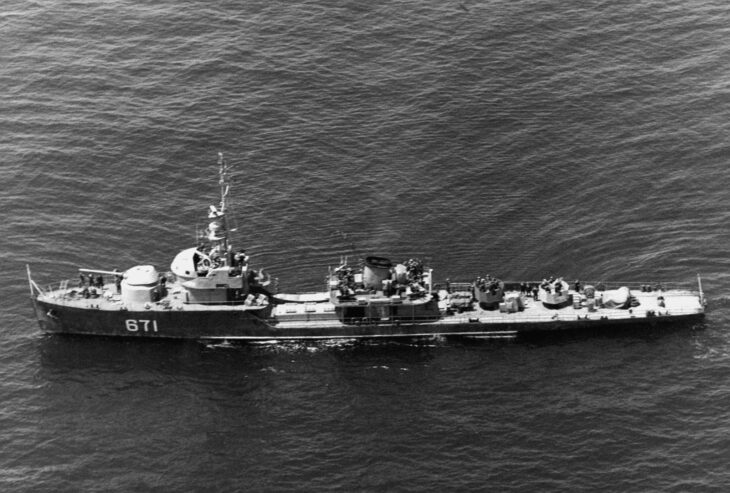
North Korea is the clearest case of a large navy that is not a naval power. Its hull count places it sixth in the world, and it does not appear in the top 20 by tonnage at all.
Estimates of its size vary enormously depending on who is counting and when, from around 332 vessels up to 780. What the estimates agree on is the shape: mostly small patrol craft, torpedo boats and landing craft, plus roughly 70 mostly aging submarines.
It is classified as a brown water navy, meaning it operates close inshore. Its east and west coast squadrons cannot reinforce each other in wartime, and a shortage of replenishment oilers rules out sustained operations away from home.
7. Thailand: 304 vessels
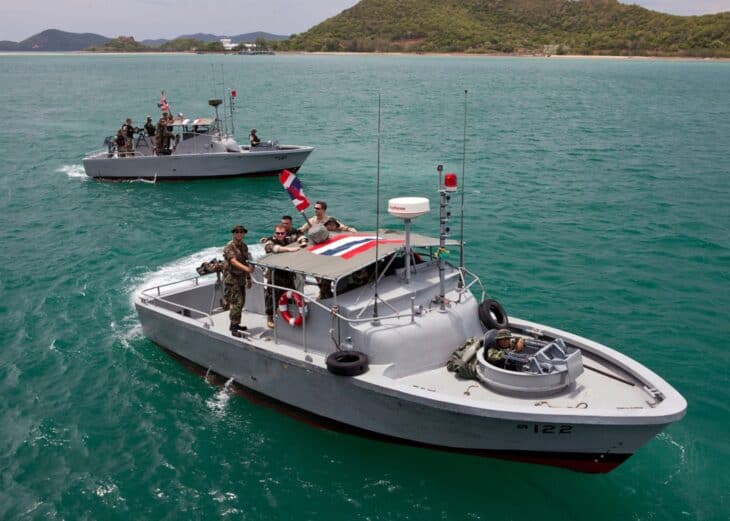

Thailand rounds out the group of large fleets built from small boats. It places seventh in the world on total vessels and does not reach the top 15 warship fleets or the top 20 by tonnage.
Its position on this list is a good test of what a hull count is worth. A navy can rank above Italy, Japan or the United Kingdom on vessels and still float a fraction of their combat power.
8. Italy: 285 vessels
_underway_in_the_Ionian_Sea_on_17_March_2022_(220317-N-DH793-1475).JPG)
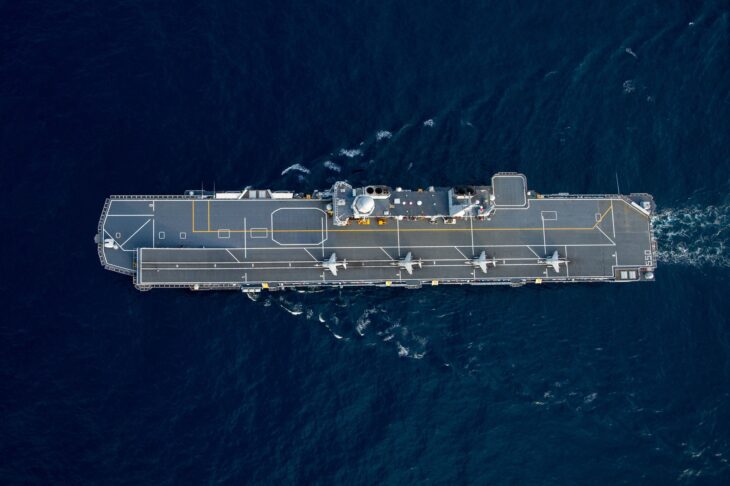
Italy is the highest ranked European fleet on this list and ninth in the world by tonnage at 387,892 tonnes. Its 285 total vessels resolve to just 57 warships, one of the sharpest drops in the table.
That is a fleet built around quality rather than quantity, which is the normal European pattern. It is also a reminder that the warship column, not the vessel column, is where serious navies separate themselves.
9. Sweden: 279 vessels
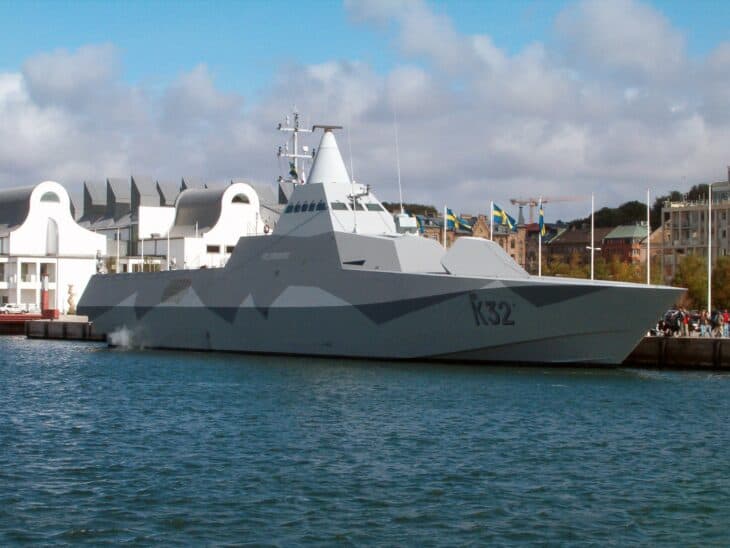

Sweden operates the ninth largest fleet in the world by vessel count and appears in neither the top 15 warship fleets nor the top 20 by tonnage.
The explanation is the Baltic. A navy designed for shallow, cluttered archipelago waters buys many small craft rather than few large ones, and hull counts reward that choice far beyond what it means in open ocean.
10. Sri Lanka: 275 vessels
.jpg)
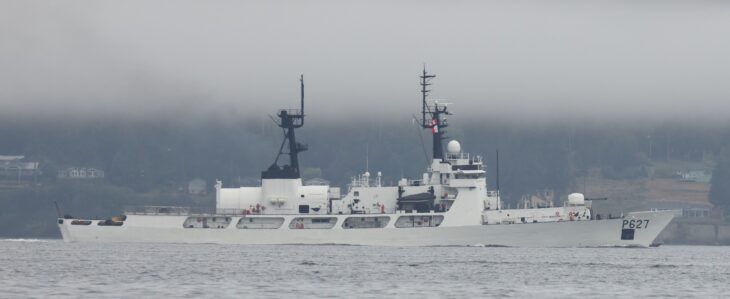
Sri Lanka completes the top 10 with 275 vessels, ahead of France, the United Kingdom and Japan on that measure alone.
It reaches neither the top 15 warship fleets nor the top 20 by tonnage. If a ranking puts Sri Lanka in the world’s 10 largest navies and leaves out Japan, the ranking is measuring boats, not navies.
The navies the hull count hides
Four serious fleets miss the top 10 by vessel count and belong in any honest discussion of the world’s largest navies.
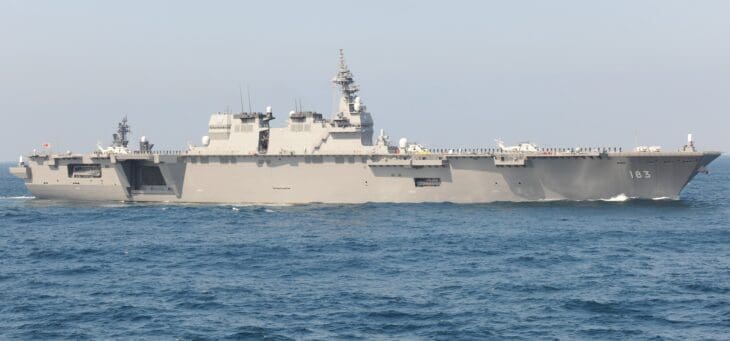
Japan is fourth in the world by tonnage at 798,062 tonnes, from about 160 ships and 50,800 personnel. Its 24 submarines are among the most capable conventional boats afloat, and its two Izumo class ships were reclassified in 2025 as multi role aircraft carrying cruisers as they convert to operate F-35B fighters.
.jpg)
France is sixth by tonnage at 487,471 tonnes across about 180 ships. The carrier Charles de Gaulle is the only nuclear powered aircraft carrier in service outside the US Navy, and the fleet includes four ballistic missile submarines and five nuclear attack submarines.
South Korea is seventh by tonnage at 427,946 tonnes, with 147 warships and about 80,000 personnel, and it faces the North Korean fleet ranked sixth above. The best carrier based fighter jets increasingly show up in this region rather than the Atlantic.
The United Kingdom is eighth by tonnage at 406,308 tonnes from one of the smallest hull counts of any major navy. As of July 2026 the Royal Navy had 60 active commissioned ships including submarines, among them two Queen Elizabeth class carriers, four Vanguard class ballistic missile submarines and six Astute class attack submarines.
The same navies ranked by tonnage
Rank the world’s fleets by what they displace instead of how many hulls they float and the order changes almost completely. This is the ranking most naval analysts would call the meaningful one.
| Rank | Country | Tonnage | Rank by vessels |
|---|---|---|---|
| 1 | United States | 8,265,799 | 3 |
| 2 | China | 3,192,411 | 1 |
| 3 | Russia | 1,426,539 | 2 |
| 4 | Japan | 798,062 | Outside top 10 |
| 5 | India | 631,989 | 4 |
| 6 | France | 487,471 | Outside top 10 |
| 7 | South Korea | 427,946 | Outside top 10 |
| 8 | United Kingdom | 406,308 | Outside top 10 |
| 9 | Italy | 387,892 | 8 |
| 10 | Turkey | 349,739 | Outside top 10 |
Five of the top 10 by tonnage do not appear in the top 10 by vessel count. Five of the top 10 by vessel count do not appear here.
So is China's navy stronger than the US Navy?
Bigger and stronger are not the same claim, and the honest answer is that nobody knows, because neither fleet has fought a peer opponent at sea in generations. What the numbers support is narrower. China has more ships and is building them faster. The United States floats more than twice the tonnage, operates 11 nuclear powered carriers to China’s 3 conventionally powered ones, and is built to fight a long way from home, which is the harder problem. Anyone claiming certainty beyond that is guessing.
Why the numbers disagree so much
Published fleet counts for the same navy in the same year can differ by a factor of two, and the reason is almost always the counting rule rather than a dispute about facts.
.jpg)
GlobalFirepower counts everything that floats in a naval role, including patrol craft and auxiliaries, which is how China reaches 841 and Russia 747. The World Directory of Modern Military Warships counts warships, which cuts Russia to 283 and Italy to 57.
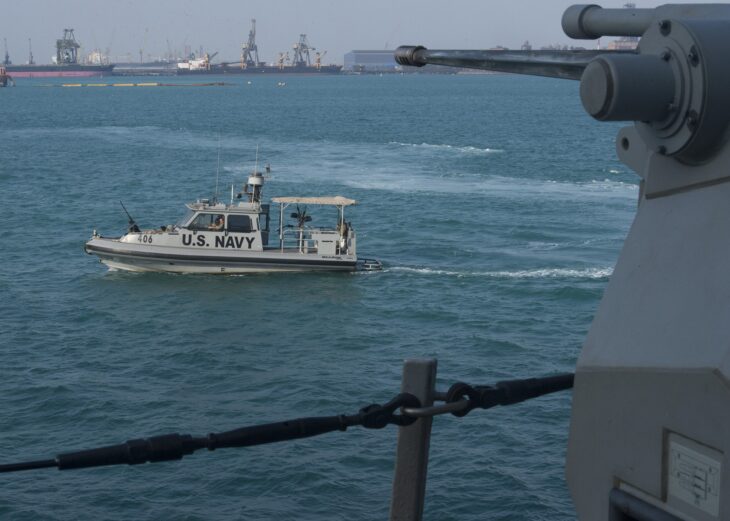
The Pentagon’s battle force standard is stricter again and excludes patrol boats outright. It is the rule that produces the 296 ship US Navy and the 370 plus ship Chinese one, and because it applies the same test to both, it is the fairest direct comparison available.
Read any naval ranking by asking which of those three rules it used. A list that does not say is not worth much. The same problem affects air arms, which we untangle in the largest air forces in the world.
FAQ
Sources and references used for research and fact-checking.
- U.S. Department of Defense, Military and Security Developments Involving the People's Republic of China 2024
- U.S. Department of Defense, Annual Report to Congress: Military and Security Developments Involving the People's Republic of China 2025
- Congressional Research Service, China Naval Modernization: Implications for U.S. Navy Capabilities (RL33153)
- Congressional Research Service, Navy Force Structure and Shipbuilding Plans (RL32665)
- GlobalFirepower, Navy Fleet Strength by Country (2026)
- GlobalFirepower, Navy Fleet by Tonnage by Country (2026)
- World Directory of Modern Military Warships, Global Naval Powers Ranking (2026)
- Naval News, Chinese Navy Takes Aircraft Carrier Fujian Into Active Service in Hainan
- The Aviationist, China Commissions the Fujian, Bringing CATOBAR Capability to PLAN Fleet
- Wikipedia, Russian Navy
- Wikipedia, Korean People's Army Naval Force
- Wikipedia, Indian Navy
- Wikipedia, Indonesian Navy
- Wikipedia, Japan Maritime Self-Defense Force
- Wikipedia, French Navy
- Wikipedia, Royal Navy
- Wikipedia, Republic of Korea Navy
Get the Newsletter
The latest aviation news and stories sent to your inbox.
About the Author

Tim is the owner and lead editor of AeroCorner since 2019, overseeing aviation content covering aircraft, airlines, airports, and the broader aviation industry. Through years of researching, writing, editing, and publishing aviation-focused content, he has developed extensive practical knowledge of commercial aviation and air travel. Based in Asia and a frequent traveler himself, Tim also brings firsthand passenger experience to AeroCorner’s coverage. Outside of publishing, he has also explored aviation firsthand through hands-on flight training in New Zealand.