

Table of Contents
Ask how many aircraft carriers the United States has and you will get the same answer everywhere: eleven. It is the number in the budget documents, the number in the encyclopedia entry, and the number written into federal law.
Now pull up a fleet tracker on an ordinary weekday and count the ones actually at sea. In mid-August 2026, the answer was three.
That is not a scandal, a readiness crisis, or a sign that eight carriers are broken. It is the arithmetic of how a nuclear-powered warship the size of a small town is kept running for fifty years. Here is where the other eight are, and why the fleet count and the deployable count were never going to match.
How Many Aircraft Carriers Does the US Have?
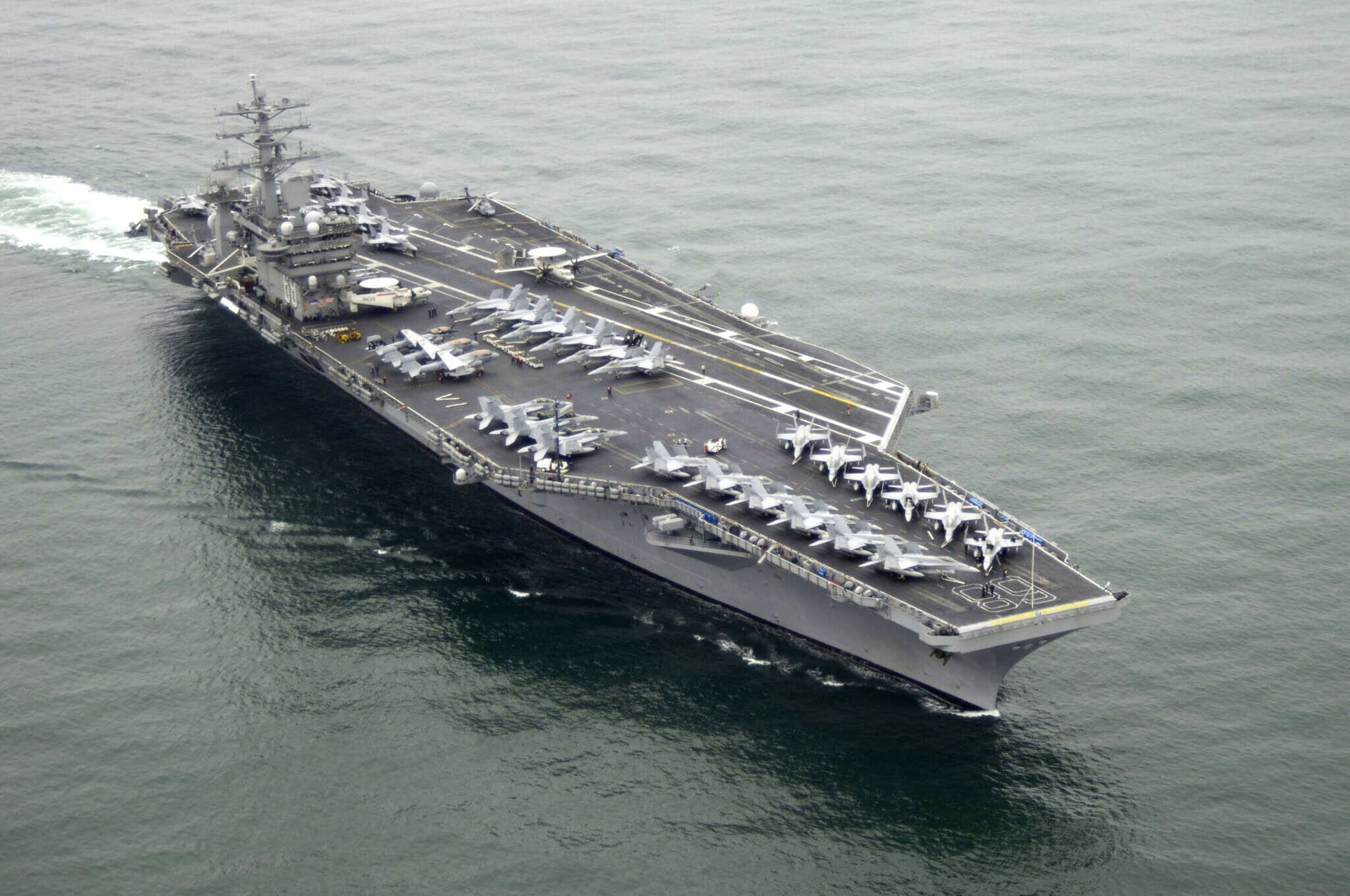
The US Navy has eleven commissioned aircraft carriers: ten Nimitz-class ships and one Ford-class, the USS Gerald R. Ford. All eleven are nuclear-powered supercarriers, a category no other navy operates at all.
But a carrier spends most of its life not deployed. Between deployments it goes through maintenance, then training, then workups, in a cycle that runs three years or longer and yields roughly eight months at sea. Multiply that across eleven ships and you land where the Navy usually lands: two to four carriers deployed at any moment.
The count at a glance
Eleven carriers are commissioned. In mid-August 2026, three were deployed, three were at their home ports working up toward a deployment, four were in maintenance or overhaul, and one had been reduced to a training ship. That distribution is normal, not exceptional.
Where all eleven carriers actually were
Rankings and counts mean very little without a date attached, so here is the whole fleet as it stood in mid-August 2026. Read down the status column and the eleven-versus-three gap explains itself.
| Carrier | Hull | Status, mid-August 2026 |
|---|---|---|
| USS Nimitz | CVN-68 | Training carrier at Norfolk, will not deploy again |
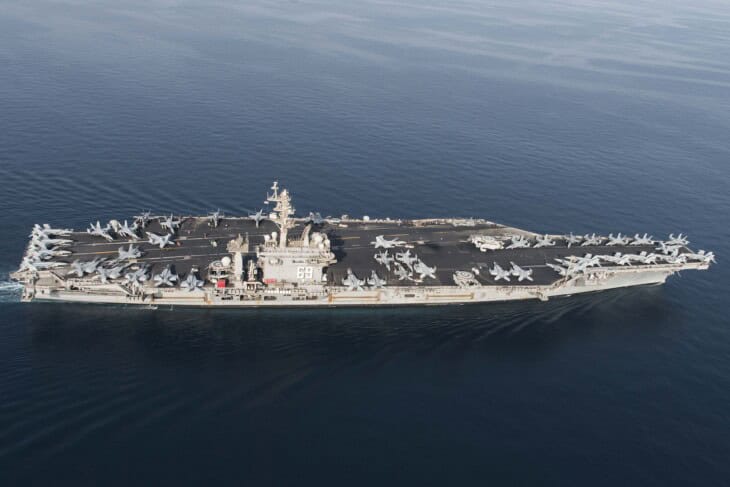
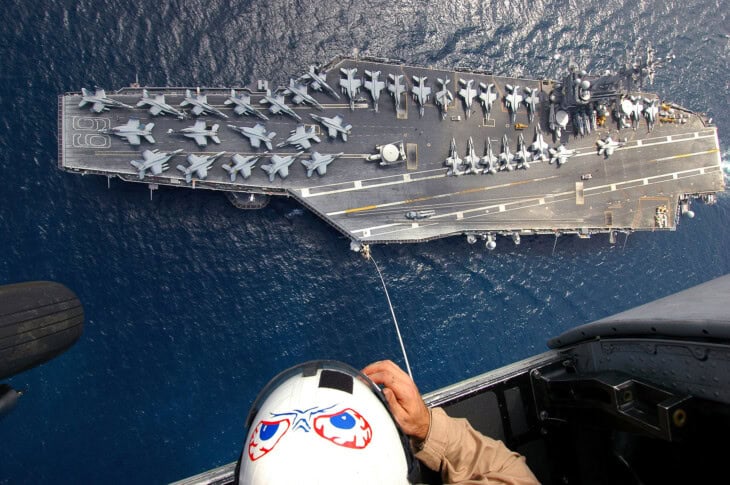
| USS Dwight D. Eisenhower | CVN-69 | Out of maintenance, flying carrier qualifications |
| USS Carl Vinson | CVN-70 | San Diego, working up at sea |
| USS Theodore Roosevelt | CVN-71 | San Diego, pierside |
| USS Abraham Lincoln | CVN-72 | Deployed, Arabian Sea |
| USS George Washington | CVN-73 | Deployed, Indian Ocean |
| USS John C. Stennis | CVN-74 | Newport News, in midlife overhaul since 2021 |
| USS Harry S. Truman | CVN-75 | Norfolk, staging for its own midlife overhaul |
| USS Ronald Reagan | CVN-76 | Bremerton, in dry dock |
| USS George H.W. Bush | CVN-77 | Deployed, Middle East |
| USS Gerald R. Ford | CVN-78 | Norfolk Naval Shipyard, post-deployment maintenance |
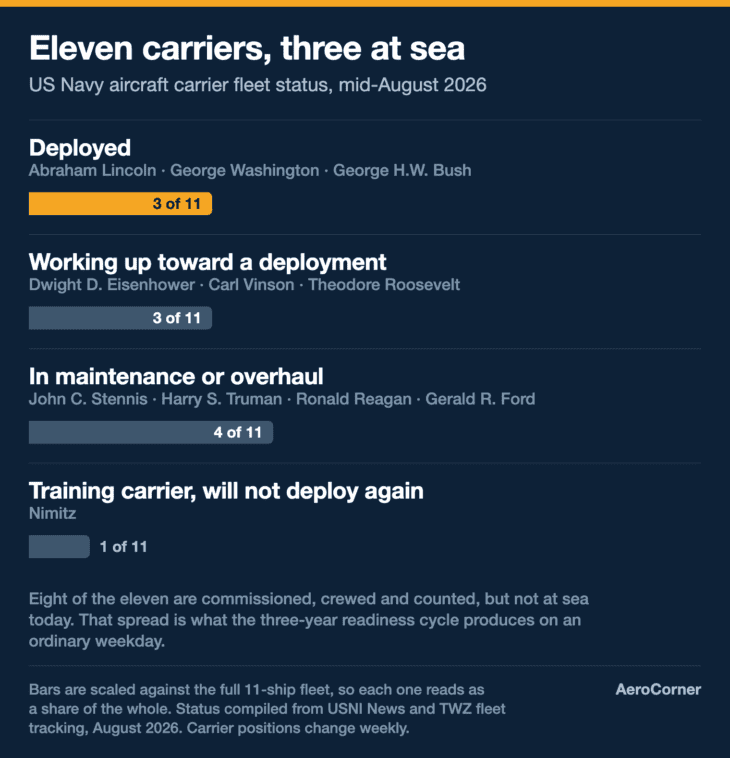
Three deployed. Three available but not yet ready. Four in the yards. One retired in everything but name.
The three-year cycle that buys eight months at sea
The mechanism behind that spread is the Optimized Fleet Response Plan, the schedule the Navy uses to run its carrier strike groups. On paper it is a 36-month loop with four phases.
A carrier comes home and goes straight into maintenance, which can run the better part of a year. Then it enters basic training, where the ship and its crew requalify from scratch, because a third of the crew has rotated off since the last deployment.
Then come integrated workups, where the carrier finally trains alongside its destroyers, its submarine, and its air wing of roughly 60 to 70 aircraft. Only after all of that is it certified to deploy, for about eight months. Then the loop starts again.
Eight of those 36 months are the part the public sees. The other 28 are the price of the eight.
And 36 months is the optimistic version. In practice the cycle has been running closer to 42 to 44 months, because maintenance periods overrun. Navy leadership has floated stretching the official cycle substantially rather than keep missing a target the shipyards cannot hit.
The four-year gap in the middle of every carrier’s life
Ordinary maintenance is not what removes carriers from the board for years at a time. That is the Refueling and Complex Overhaul, the midlife rebuild every Nimitz-class ship goes through at around the 25-year mark.
The reactors are cut open and refuelled with enough uranium for another 25 years. The propulsion plant, the electronics, the combat systems, and the living spaces are all torn out and replaced. Only one yard in the world can do it: Newport News Shipbuilding in Virginia.
It is scheduled for about four years and costs upward of $3 billion. During those years the ship is legally a commissioned US aircraft carrier and militarily a hole in the ground with a hull in it.
Five and a half years in the shipyard
USS John C. Stennis entered its midlife overhaul in 2021 with the work due to finish in August 2025. Pandemic disruption and shipyard staffing shortages pushed it more than a year past that. The ship has now been out of the fleet longer than most of its sailors have been in the Navy.
Truman is next in the queue, which is why it spent August 2026 offloading ammunition at Norfolk rather than doing anything useful with it. When it goes in, its overhaul is expected to run to at least 2029.
So at any given time, one or two of the eleven are not in the readiness cycle at all. They are years from being ships again.
The myth: that eleven is a readiness number
The most common misreading of the carrier count is that it describes fighting strength. It does not. It describes inventory, and the law that mandates it says so explicitly.
What the statute actually counts
Federal law requires the Navy to maintain not fewer than 11 operational aircraft carriers. The same section then defines an operational carrier to include one that is temporarily unavailable for worldwide deployment because of routine or scheduled maintenance or repair. A carrier in dry dock with its reactors open still counts toward the eleven.
That definition is not a loophole somebody slipped in. It is the only way the requirement makes sense, because a fleet where every ship is simultaneously deployable is a fleet where every ship is falling apart.
The practical rule of thumb is roughly a third: with eleven carriers you can reliably keep three or so at sea, surge to five or six for a while if something serious happens, and pay for that surge afterward in deferred maintenance.
This is also the reason raw hull counts are a poor way to compare the US and Chinese carrier fleets. A count of ships says nothing about how many are crewed, worked up, and within sailing distance of anywhere that matters.
What happens when you skip the maintenance
The cycle is not a bureaucratic preference. When demand forces the Navy to run carriers past their schedule, the bill arrives later with interest.
USS Gerald R. Ford came home to Norfolk in May 2026 after 326 days at sea, the longest continuous carrier strike group deployment since the Vietnam War. Seven weeks later it entered a public shipyard for a maintenance period that could sideline it for well over a year.
USS Abraham Lincoln, meanwhile, had been deployed since November 2025 and was still in the Arabian Sea nine months later. Long deployments are how you get more carrier-days out of eleven ships, and they are also how you get fewer available ships a year afterward.
The distances involved make this harder than it looks on a map. A carrier cruising at around 20 knots needs roughly two to three weeks to cross the Pacific, so a ship that is not already in the neighbourhood is not a fast answer to anything.
Why the number is about to become ten
Eleven is not even stable. USS Nimitz, commissioned in 1975, finished its last operational deployment in 2026 and now serves as a training carrier at Norfolk, flying qualification landings for fleet aviators. Inactivation begins in March 2027.
Its replacement is the second Ford-class ship, the future USS John F. Kennedy, which completed acceptance sea trials in August 2026. Delivery has slipped roughly two years, from July 2025 to March 2027, largely over certification of its advanced arresting gear and weapons elevators.
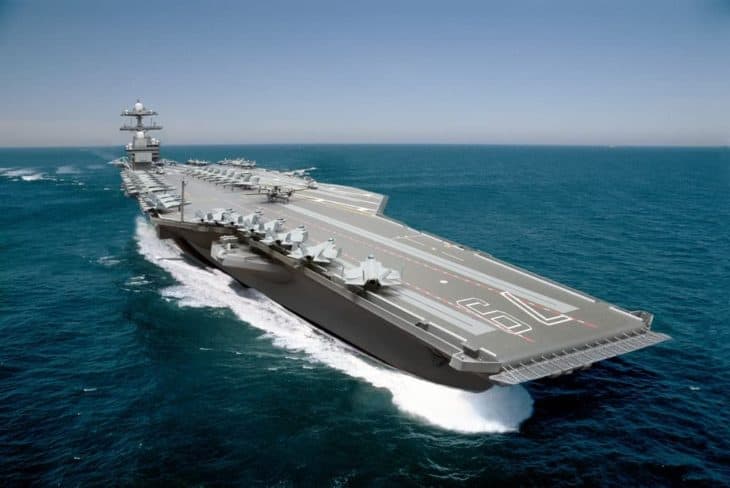
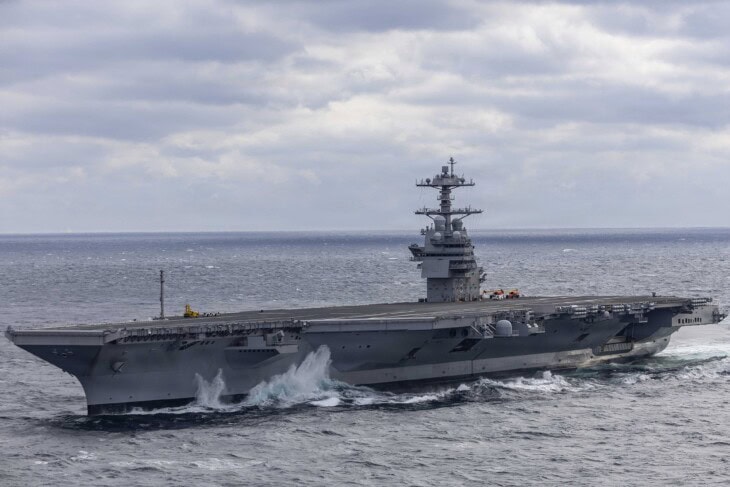
Those two dates were deliberately aligned so that one ship arrives as the other leaves. If either slips, the Navy spends about a year at ten carriers, below the number federal law requires.
The third Ford-class ship, the future USS Enterprise, has slipped too, from 2029 to 2030 or later. Supercarriers are the longest-lead item in the US military, and the schedule has very little slack in it.
So the honest answer to how many aircraft carriers the US has is: eleven today, ten for part of 2027, eleven again once Kennedy is commissioned, and three or four at sea through all of it.
Next time a headline reports that the United States has moved a carrier somewhere, it is worth remembering what that sentence conceals. Somewhere behind it, a maintenance period got shorter, a crew’s shore time got cancelled, or a ship that was supposed to be working up went early instead.
Eleven carriers is an inventory. Three at sea is the navy.
Sources and references used for research and fact-checking.
- Office of the Law Revision Counsel, US House of Representatives, 10 U.S.C. § 8062: United States Navy: composition; functions
- Stars and Stripes, Supercarrier snapshot: Where they are, what they are doing, what's next
- The War Zone, Where Are The Aircraft Carriers?: August 17, 2026
- USNI News, Carrier John F. Kennedy Delivery Delayed 2 Years, Fleet Will Drop to 10 Carriers For 1 Year
- USNI News, Navy Extends USS Nimitz Service Life to 2027, in Line with Carrier John F. Kennedy's Delivery
- USNI News, Carrier USS Gerald R. Ford Starts First Major Post-Deployment Maintenance Period
Get the Newsletter
The latest aviation news and stories sent to your inbox.
About the Author

Tim is the owner and lead editor of AeroCorner since 2019, overseeing aviation content covering aircraft, airlines, airports, and the broader aviation industry. Through years of researching, writing, editing, and publishing aviation-focused content, he has developed extensive practical knowledge of commercial aviation and air travel. Based in Asia and a frequent traveler himself, Tim also brings firsthand passenger experience to AeroCorner’s coverage. Outside of publishing, he has also explored aviation firsthand through hands-on flight training in New Zealand.