

Table of Contents
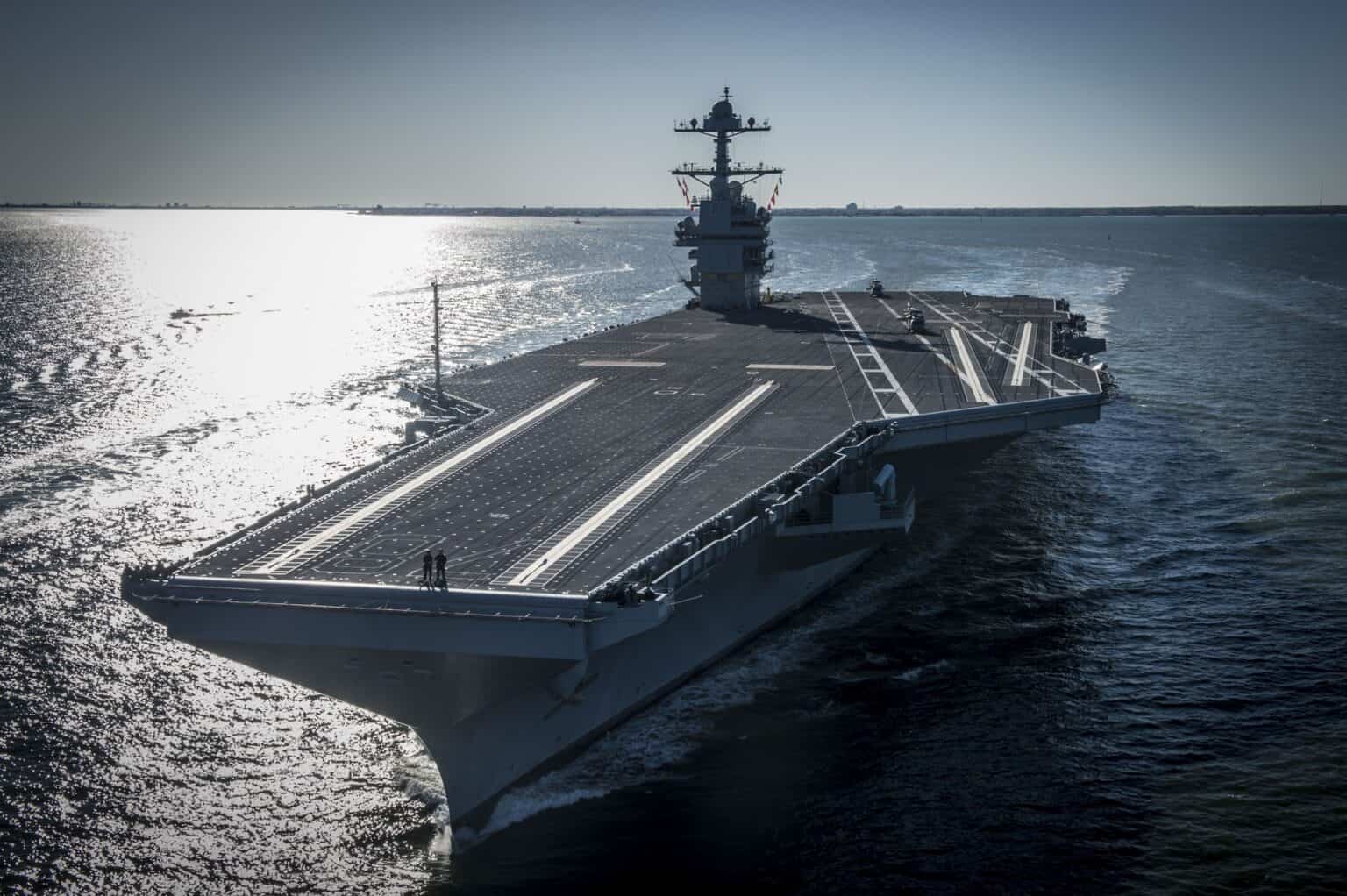
The largest warship in the world is the USS Gerald R. Ford, a US Navy aircraft carrier that displaces about 101,600 metric tons fully loaded. It is 1,092 feet (333 m) long.
The top 10 is almost all aircraft carriers, because nothing else at sea comes close. The biggest surface combatant that is not a carrier or an amphibious ship, the US destroyer Zumwalt, is less than a sixth of the Ford’s weight.
We rank warships in service as of October 2026 by full-load displacement, the weight of the water a ship pushes aside when fully fueled and armed. For which carriers fight best rather than weigh most, see our ranking of the best aircraft carriers in the world.
| Rank | Ship or class | Country | Full-load displacement | In service |
|---|---|---|---|---|
| 1 | Gerald R. Ford class | United States | About 101,600 t | 1 |
| 2 | Nimitz class | United States | About 88,000 t | 10 |
| 3 | Fujian | China | About 80,000 t (estimate) | 1 |
| 4 | Shandong | China | About 66,000 t (estimate) | 1 |
| 5 | Queen Elizabeth class | United Kingdom | 65,000 t | 2 |
| 6 | Liaoning | China | About 60,000 t (estimate) | 1 |
| 7 | INS Vikrant | India | About 45,000 t | 1 |
| 8 | INS Vikramaditya | India | 44,500 t | 1 |
| 9 | America class | United States | 44,449 t | 2 |
| 10 | Wasp class | United States | Up to 42,442 t | 7 |
How this ranking works
Ships are ranked by full-load displacement in metric tons, using each navy’s published figure for the heaviest ship of the class. The US Navy publishes in long or short tons, so we converted. Only ships in commission count: ships on sea trials, laid up or awaiting scrap are covered separately below.
1. Gerald R. Ford Class: The Biggest Warship Afloat
_underway_in_the_Atlantic_Ocean_on_9_October_2022_(221009-N-TL968-1248).JPG)
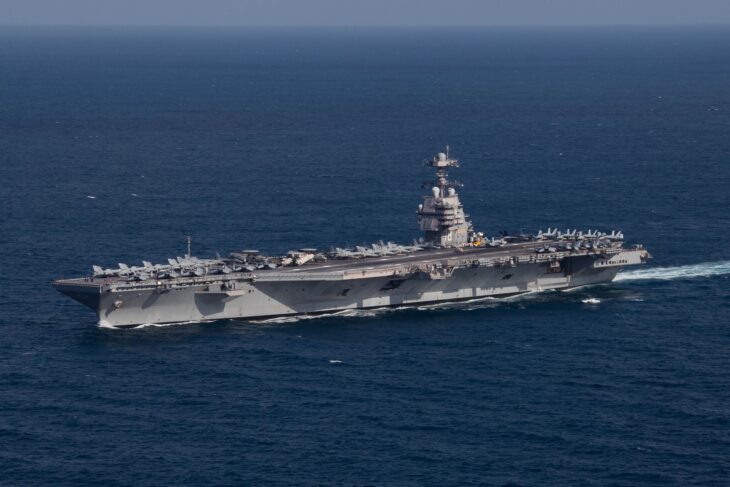
The US Navy puts the Gerald R. Ford at about 100,000 long tons fully loaded, roughly 101,600 metric tons. It was commissioned on July 22, 2017, and is still the only ship of its class in service.
Size is only half the point. The Navy says the Ford can generate 33% more sorties than a Nimitz-class carrier with almost 600 fewer crew, and it was the first carrier designed with all-electric utilities.
The second Ford-class ship, the John F. Kennedy, left the shipyard for builder’s sea trials in January 2026 and is due to be delivered to the Navy in March 2027.
2. Nimitz Class: Ten Giants, One Aging Out
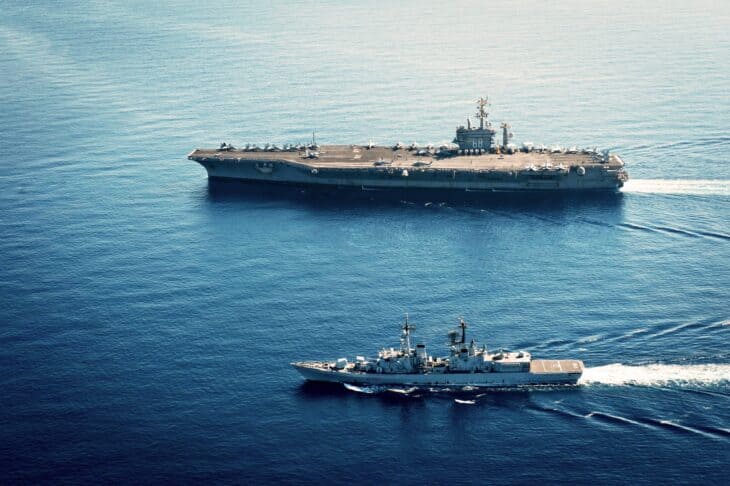

The Navy lists the Nimitz class at about 97,000 tons fully loaded, which its own conversion puts at 87,997 metric tons. The ships are exactly as long as the Ford, 1,092 feet (333 m).
Ten are in service, and together with the Ford they make up the Navy’s 11 carriers. The Navy itself calls the Nimitz and Ford classes “the largest warships in the world,” each built for about 50 years of service with a single mid-life refueling.
USS Nimitz, commissioned in 1975, is the Navy’s oldest active carrier. Its service has been extended to March 2027, when it will retire after about 52 years.
The tons trap
The US Navy lists the Ford at 100,000 long tons and the Nimitz at 97,000 tons, which makes them look almost equal. They are not: the Nimitz figure is in short tons, so in metric terms the Ford outweighs the Nimitz by about 13,600 tons.
3. Fujian: China’s First Supercarrier
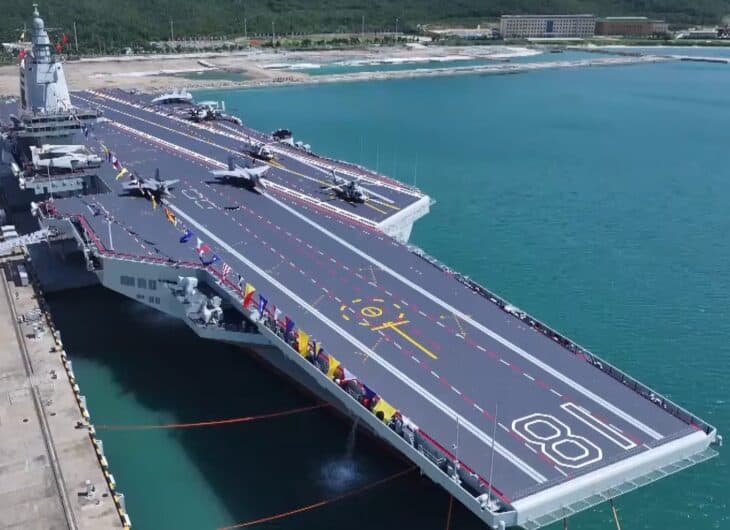

China commissioned the Fujian, its third aircraft carrier, on November 5, 2025. It displaces roughly 80,000 tons, according to the Center for Strategic and International Studies (CSIS), making it the largest warship outside the US Navy.
It is China’s first carrier with catapults instead of a ski-jump ramp. It took about 104 months from the start of construction to commissioning, CSIS calculates, compared with 72 months for the Shandong.
China publishes no official displacement for any of its carriers, so every Chinese figure here is an outside estimate. For the full fleet, see how many aircraft carriers China has.
4. Shandong: China’s Second Carrier
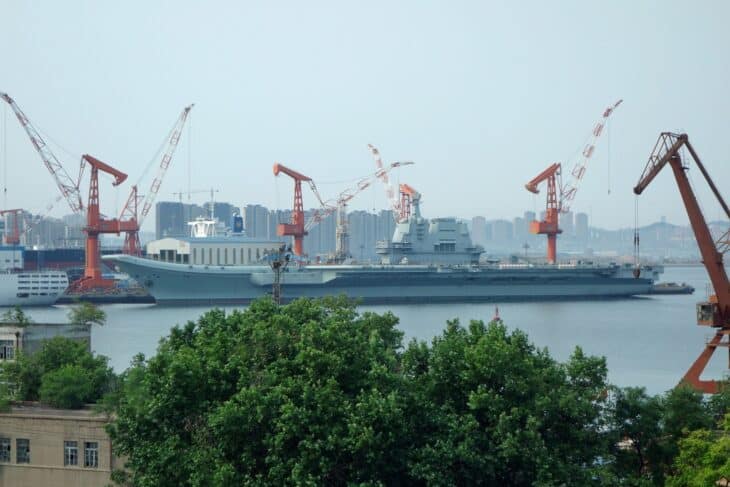

The Shandong was commissioned at Sanya on December 17, 2019. CSIS estimates its displacement at roughly 66,000 to 70,000 tons, which puts it ahead of Britain’s carriers even at the low end.
It entered service seven years after the Liaoning and six years before the Fujian.
5. Queen Elizabeth Class: Britain’s Biggest Ever
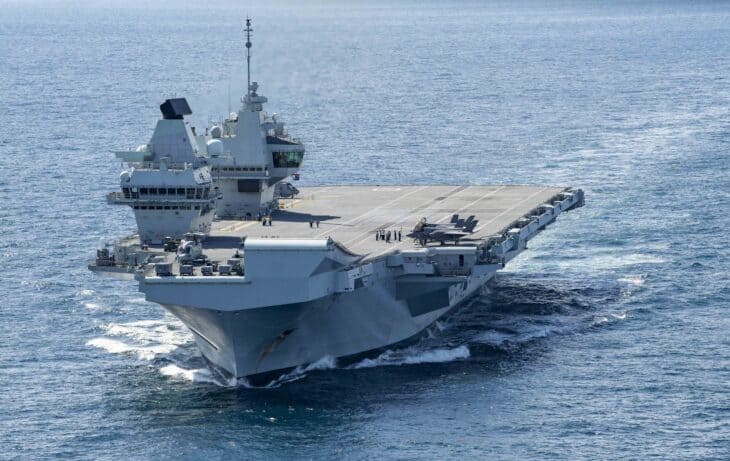
_underway_in_the_Atlantic_Ocean_on_17_October_2019_(191017-N-QI061-2210).JPG)
HMS Queen Elizabeth and HMS Prince of Wales displace 65,000 tonnes each and are 932 feet (284 m) long, according to the Royal Navy. When Prince of Wales was commissioned on December 10, 2019, the Navy called it the largest warship ever built for Britain.
HMS Queen Elizabeth can carry up to 40 aircraft from a flight deck of four acres, and each of its two propellers weighs 33 tonnes. It returned to sea in April 2026 after a major refit.
6. Liaoning: The Soviet Hull China Finished
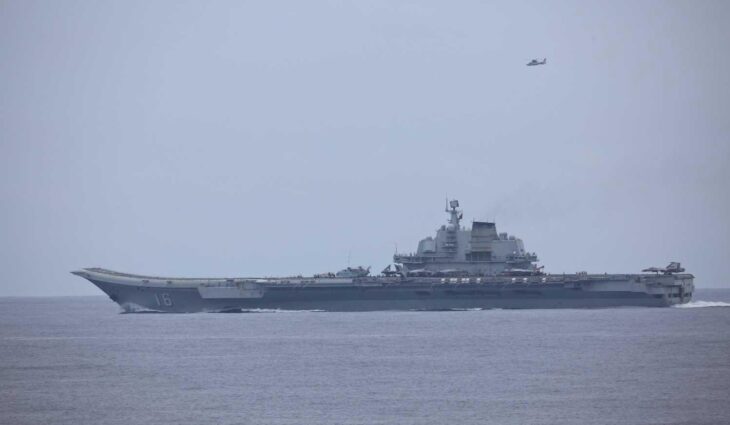
_20220508.jpg)
The Liaoning displaces roughly 60,000 metric tons, CSIS estimates. It began life as the unfinished Soviet carrier Varyag, which China bought from Ukraine in 1998 and commissioned in September 2012.
7. INS Vikrant: India’s First Homebuilt Carrier
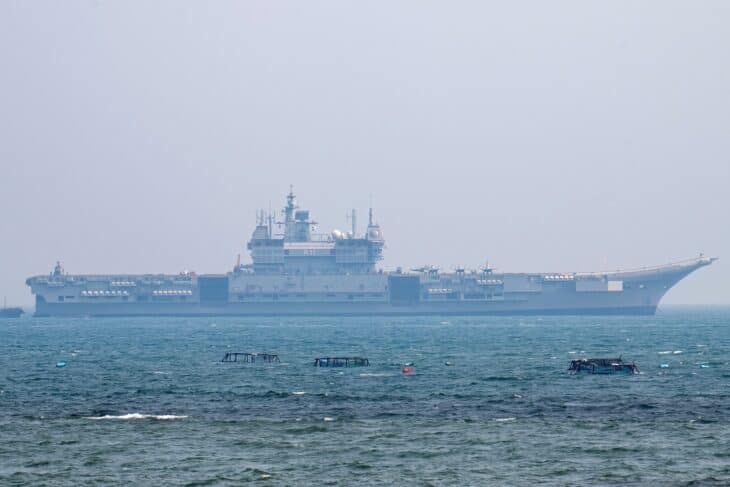

INS Vikrant is 860 feet (262 m) long and displaces close to 45,000 tonnes fully loaded, according to India’s government. It was commissioned on September 2, 2022, the first aircraft carrier built in India.
8. INS Vikramaditya: Commissioned in Russia
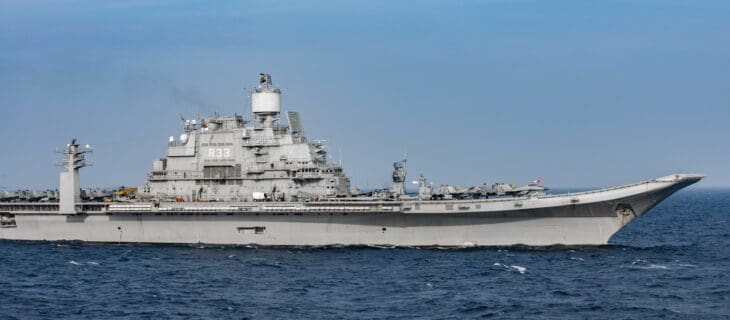
_steams_in_formation_while_participating_in_Malabar_2020_(2).jpg)
India’s other carrier displaces 44,500 tonnes and is about 932 feet (284 m) long, standing roughly 20 stories tall, according to the Indian Navy. It was commissioned at the Sevmash shipyard in Russia in November 2013.
India signed a refit contract for it with Cochin Shipyard in November 2024.
9. America Class: The Carrier the Navy Calls an Assault Ship
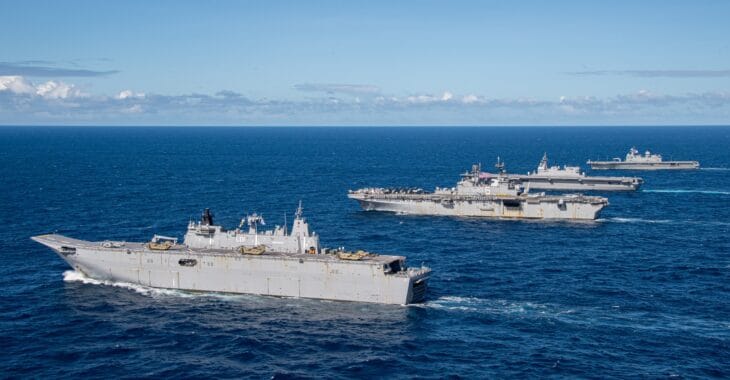

The America-class amphibious assault ships displace about 43,745 long tons fully loaded, 44,449 metric tons, and are 855 feet (261 m) long. USS America was commissioned on October 11, 2014, and USS Tripoli on July 15, 2020.
They outweigh every aircraft carrier outside the US, Chinese, British and Indian navies. The first two dropped the well deck that landing craft use, trading it for a bigger hangar and more aviation fuel.
10. Wasp Class: Seven Ships, Still Top 10
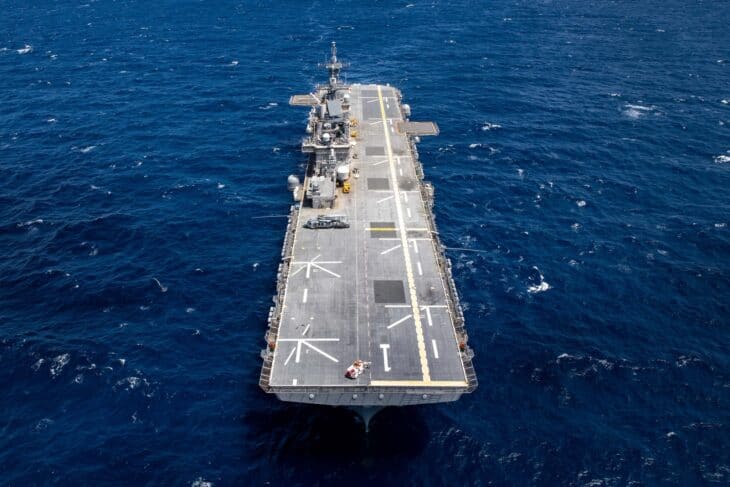

The Wasp-class amphibious assault ships are 844 feet (257 m) long and displace up to 41,772 long tons, 42,442 metric tons, for the last ship of the class, according to the Navy. USS Wasp was commissioned in July 1989, and seven ships of the class are in service.
Of the 27 ships in this top 10, 20 belong to the US Navy. Our ranking of the largest navies in the world shows how that compares by fleet size.
Just Outside the Top 10
Charles de Gaulle, France’s nuclear-powered carrier, displaces about 42,000 tonnes. Its successor, France Libre, will displace about 80,000 tonnes and is targeted for 2038.
Italy’s Cavour displaces 28,100 tons fully loaded, according to its builder Fincantieri, and Spain’s Juan Carlos I displaces 27,079 tonnes in its amphibious role. Japan’s Izumo class, rebuilt in 2026 with a carrier-style rectangular bow, is officially listed only at a standard displacement of 19,950 tonnes, so it cannot be ranked on the same basis.
The Biggest Surface Combatants That Are Not Carriers
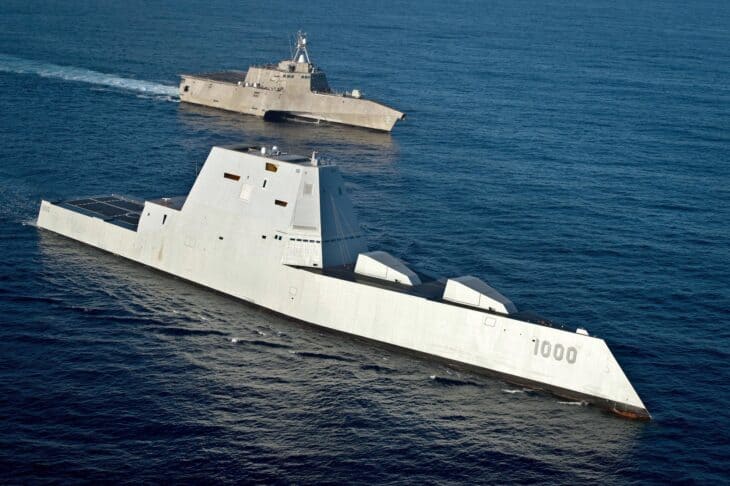
The US Navy calls its Zumwalt-class destroyer “the largest and most technologically advanced surface combatant in the world.” It displaces 15,995 metric tons, is 610 feet (186 m) long, and needs a crew of only 197.
.jpg)
China’s Type 055 destroyer is close behind, at 13,000 tonnes fully loaded and 591 feet (180 m), heavier than any US cruiser or destroyer except the Zumwalt.
Russia’s Kirov-class battlecruisers, at about 28,000 tons, would be larger than both, but none is active. Admiral Nakhimov was on its final sea trials in June 2026 after nearly three decades out of service, and its sister Pyotr Velikiy has been laid up since 2022.
The Biggest Warships Ever Built
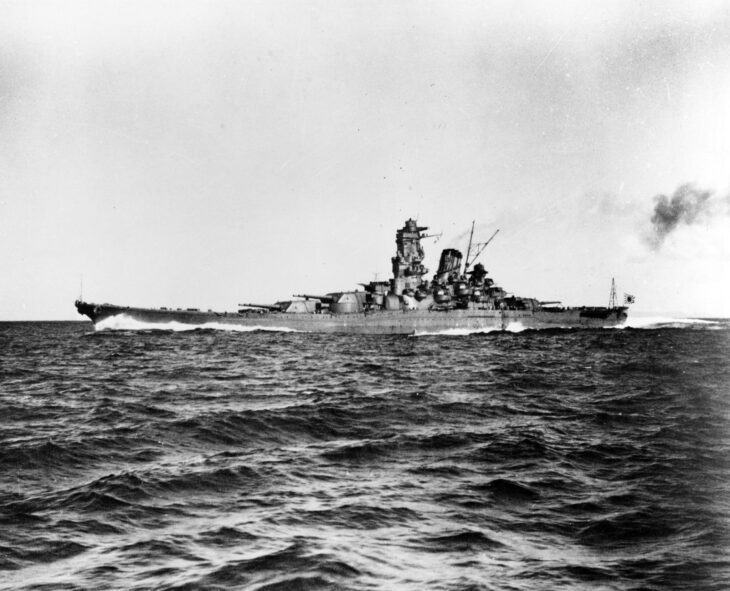
The largest battleship ever was Japan’s Yamato, commissioned on December 16, 1941. Figures published by Japanese naval officers give a full-load displacement of 72,809 tons and a length of 863 feet (263 m).
.jpg)
Japan wanted a ship so large that any American ship built to answer it “could not pass through the Panama Canal.” It sank on April 7, 1945, when one of its magazines exploded, and 3,055 of its 3,332 crew were lost.
What about the largest submarine?
That is the Soviet Typhoon class, which displaced up to 48,000 tons submerged and was 558 to 564 feet (170 to 172 m) long. The last one, Dmitry Donskoy, was decommissioned in February 2023, and Russian media reported in 2025 that it will become a museum.
Russia’s only carrier, the 58,600-ton Admiral Kuznetsov, would also make this list on size. It has been out of service since 2017 and may be scrapped, as our look at Russia’s lone aircraft carrier explains.
FAQ
Sources and references used for research and fact-checking.
- US Navy, Aircraft carriers (CVN) fact file
- US Navy, USS Gerald R. Ford commissioned
- USNI News, Carrier USS John F. Kennedy gets underway for first time ahead of builder's trials
- Breaking Defense, Aircraft carrier Nimitz gets service life extension
- USNI News, Navy extends USS Nimitz service life to 2027
- US Navy, Amphibious assault ships (LHD/LHA) fact file
- US Navy, Destroyers (DDG 1000) fact file
- CSIS ChinaPower, China's Type 003 Fujian aircraft carrier
- CSIS ChinaPower, China's Type 001A aircraft carrier
- CSIS ChinaPower, What do we know about China's aircraft carrier program?
- USNI Proceedings, China's first supercarrier
- Naval Technology, Type 055 class destroyers
- Royal Navy, Queen Elizabeth class
- Royal Navy, HMS Prince of Wales commissioned
- Royal Navy, HMS Queen Elizabeth
- Naval Today, UK's aircraft carrier returns to sea after major refit
- Naval News, France's next-generation aircraft carrier officially named France Libre
- Press Information Bureau, India, INS Vikrant delivered to the Indian Navy
- CNN, India commissions its first domestically built aircraft carrier
- Indian Navy, Navy's largest ship INS Vikramaditya commissioned
- Naval Technology, Kuznetsov class aircraft carrier
- The War Zone, Russia may finally abandon its cursed aircraft carrier
- Naval Technology, Kirov class battlecruiser
- Army Recognition, Admiral Nakhimov sea trials
- The Barents Observer, Nuclear-powered battle cruiser sails again
- Fincantieri, Cavour class
- Naval Technology, Juan Carlos I
- Japan Maritime Self-Defense Force, DDH Izumo
- USNI Proceedings, Design and construction of the Yamato and Musashi
- Combined Fleet, IJN Yamato: tabular record of movement
- Federation of American Scientists, Project 941 Typhoon
- TASS, Dmitry Donskoy decommissioned from the Russian Navy
- Rossiyskaya Gazeta, Dmitry Donskoy will be turned into a museum
Get the Newsletter
The latest aviation news and stories sent to your inbox.
About the Author

Tim is the owner and lead editor of AeroCorner since 2019, overseeing aviation content covering aircraft, airlines, airports, and the broader aviation industry. Through years of researching, writing, editing, and publishing aviation-focused content, he has developed extensive practical knowledge of commercial aviation and air travel. Based in Asia and a frequent traveler himself, Tim also brings firsthand passenger experience to AeroCorner’s coverage. Outside of publishing, he has also explored aviation firsthand through hands-on flight training in New Zealand.