

Table of Contents
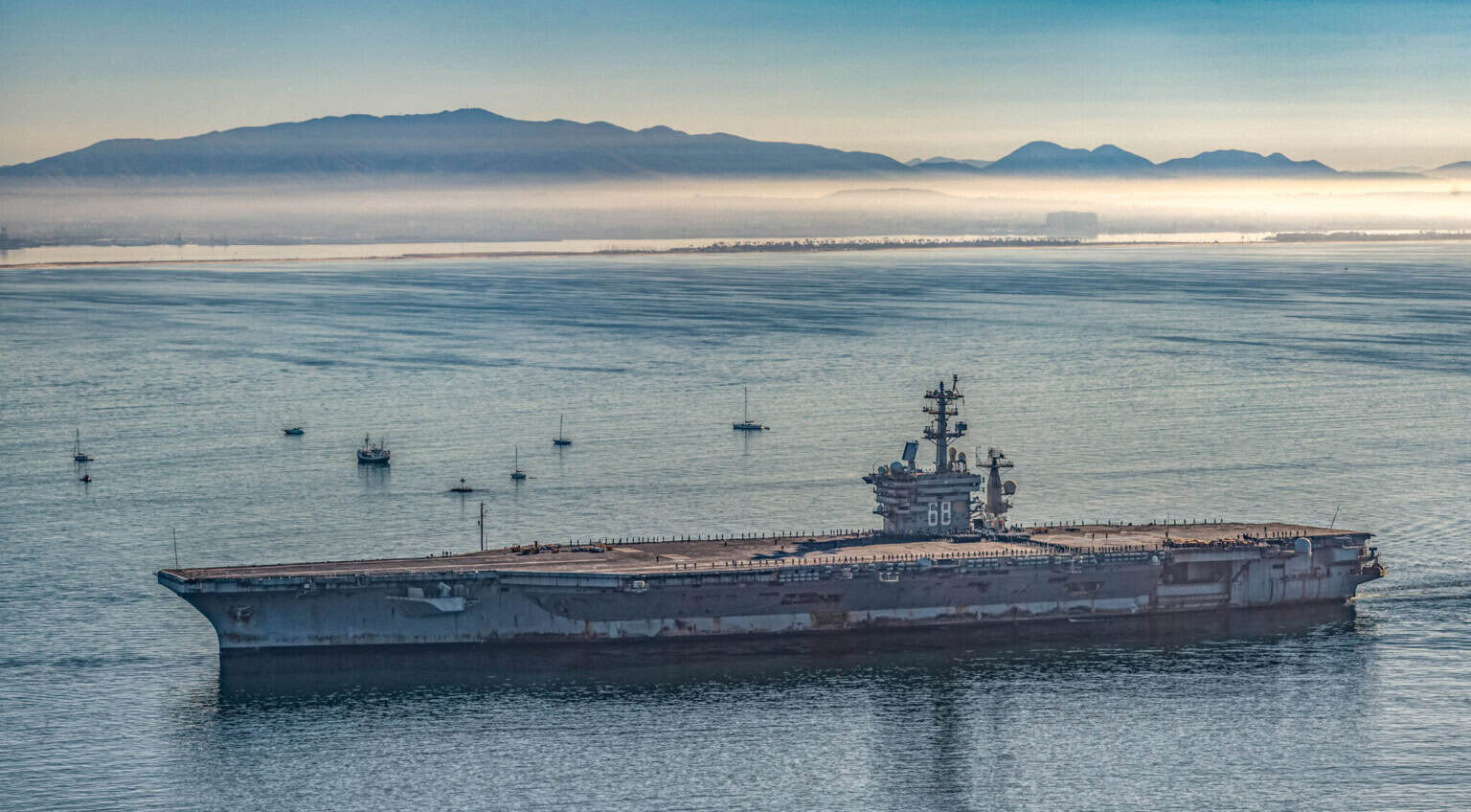
The Navy’s oldest carrier just flew the most demanding deployment of its final years. It came home to Norfolk with nowhere to go, and a law says it cannot leave the fleet yet.
USS Nimitz was commissioned on May 3, 1975, and was due to retire in May 2026 after 51 years. Instead, the Navy is keeping it in commission until March 2027, tied directly to the delayed delivery of its replacement, USS John F. Kennedy. The reason is not that the Navy still needs Nimitz at sea.
Federal law, 10 U.S.C. § 8062(b), requires the fleet to hold at least 11 operational aircraft carriers at all times, and Kennedy will not arrive in time to keep that count without Nimitz. The carrier flew its last combat deployment in 2025, then sailed home to a berth it will not leave for a year.
Why the Navy is keeping a 51-year-old carrier in commission
Nimitz was due to retire on its original May 2026 schedule. That timeline only worked if USS John F. Kennedy, the second Ford-class carrier, was ready to take its place.
Kennedy was supposed to deliver by mid-2025. Navy budget documents filed in July 2025 pushed that date back nearly two years, to March 2027, citing certification of the ship’s new Advanced Arresting Gear and unfinished work on its Advanced Weapons Elevators.
If Nimitz had retired on schedule, the fleet would have dropped to 10 carriers for close to a year before Kennedy arrived. Federal law does not allow that.
The law behind the extension
10 U.S.C. § 8062(b) requires the Navy’s combat forces to include not less than 11 operational aircraft carriers at all times, even ones sidelined for routine maintenance.
So the Navy moved the other number instead. Nimitz stays in commission until Kennedy is ready, and the two dates now line up on paper: both March 2027.
This isn’t unprecedented. When USS Enterprise ended its active career in 2012, the fleet ran at 10 carriers for five years while the first Ford-class ship worked through its own delayed delivery, finally commissioning in 2017. This time, the Navy chose not to repeat that gap.
What Nimitz’s last deployment actually looked like
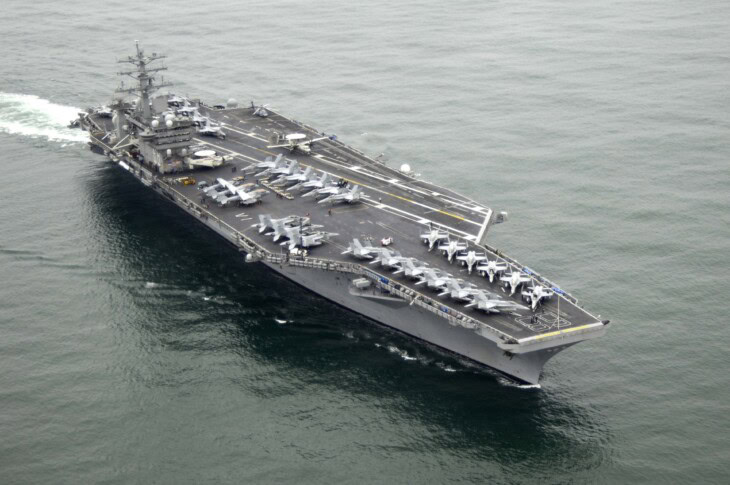
Nimitz left Bremerton, Washington, on March 21, 2025, leading Carrier Strike Group 11 with Destroyer Squadron 9 and Carrier Air Wing 17. It came home on December 16, 2025, after nearly nine months at sea.
In that time the strike group covered more than 82,000 nautical miles, flew over 8,500 sorties, and logged more than 17,000 flight hours. The air wing’s F/A-18E/F Super Hornets and EA-18G Growlers flew four transits of the Strait of Hormuz and took part in 50 replenishments at sea.
The deployment’s sharpest moment came in June 2025, when the strike group arrived in the Arabian Sea the same day the United States struck three Iranian nuclear sites in Operation Midnight Hammer. Nimitz’s aircraft helped hold the wider regional posture steady while B-2 bombers flew the strike itself from outside the theater.
The same air wing also flew missions against ISIS targets in Somalia for U.S. Africa Command, a mission a long way from the carrier’s original Cold War job of shadowing Soviet fleets. Aircraft like these are why Nimitz’s air wing still counts among the world’s best carrier-based fighter jets, deployment after deployment.
Why the wait exposes how thin the fleet’s margin really is
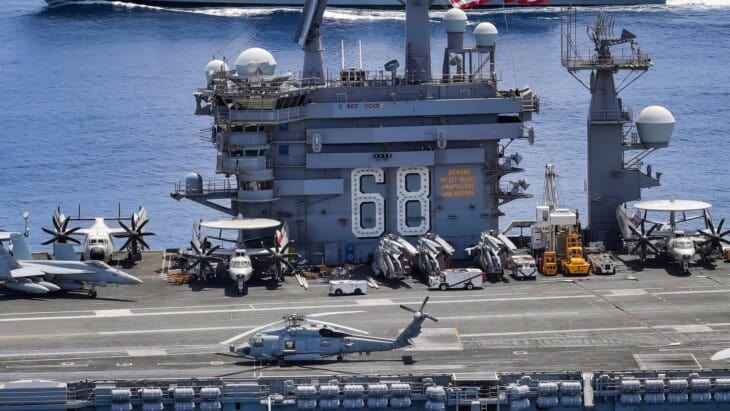
Congress set the 11-carrier floor because the number of ships in commission and the number actually at sea are two different figures. On a typical day, only about three of the 11 are deployed; the rest are training up, in the yard, or between assignments.
That gap is exactly why Kennedy’s delay put Nimitz in this position. Losing even one hull for a year does not just cost the Navy a ship at sea, it costs a ship working through the maintenance and training cycle that keeps the other ten ready.
Ford-class construction has now missed its own schedule twice in a row: first with USS Gerald R. Ford itself, delivered years late in 2017, and now with Kennedy. Keeping an aging carrier in commission a little longer is turning into the Navy’s standard fix for a shipbuilding program that keeps running behind.
Nimitz is not staying in the fleet because it still has fighting left to do. It is staying because the ship meant to replace it is still finishing sea trials.
Where the USS Nimitz is now
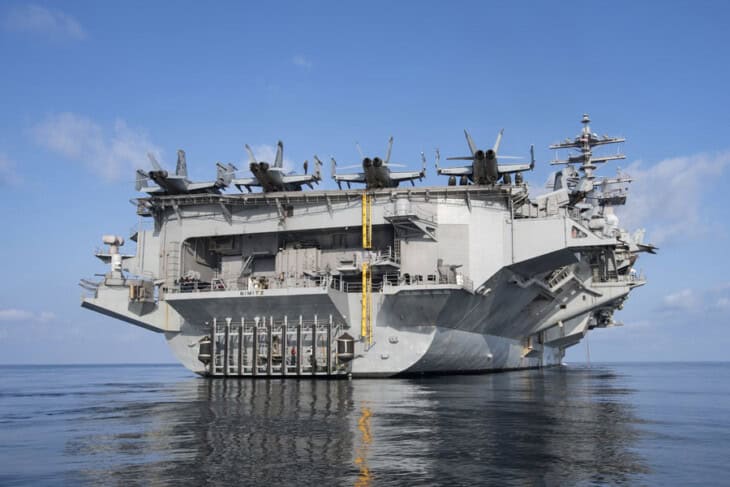
Nimitz left Bremerton for the last time on March 7, 2026, on a transit to its new homeport of Naval Station Norfolk. Nimitz-class carriers are too wide for the Panama Canal, so the ship rounded Cape Horn and the Strait of Magellan instead, a roughly 12,400-nautical-mile voyage.
The Navy folded that transit into a named deployment, Southern Seas 2026, with port calls and exercises across Central and South America along the way. Nimitz arrived at Norfolk on July 9, 2026, and has not deployed since.
On March 13, 2026, the Navy signed a $95.7 million contract with HII’s Newport News Shipbuilding, the yard that built Nimitz in 1975, to begin advance planning for its eventual inactivation and defueling. That work does not extend the ship’s service; it only prepares for the shutdown once March 2027 arrives.
Until Kennedy is delivered, Nimitz stays on the Navy’s books as one of the 11 carriers required by law, tied up at the same East Coast region that will build its successor, more than 50 years after it first put to sea.
Sources and references used for research and fact-checking.
- USNI News, Navy Extends USS Nimitz to 2027, in Line with Carrier John F. Kennedy's Delivery
- Marine Insight, U.S. Navy's Oldest Aircraft Carrier Concludes Final Deployment After 9-Months At Sea
- Forbes, USS Nimitz, The US Navy's Oldest Supercarrier, Began Her Final Voyage
- Forbes, USS Nimitz, The US Navy's Oldest Carrier, Has Arrived In Norfolk
- The Maritime Executive, Decommissioning of USS Nimitz Delayed Until 2027
- USNI News, Carrier John F. Kennedy Delivery Delayed 2 Years, Fleet Will Drop to 10 Carriers For 1 Year
Get the Newsletter
The latest aviation news and stories sent to your inbox.
About the Author

Tim is the owner and lead editor of AeroCorner since 2019, overseeing aviation content covering aircraft, airlines, airports, and the broader aviation industry. Through years of researching, writing, editing, and publishing aviation-focused content, he has developed extensive practical knowledge of commercial aviation and air travel. Based in Asia and a frequent traveler himself, Tim also brings firsthand passenger experience to AeroCorner’s coverage. Outside of publishing, he has also explored aviation firsthand through hands-on flight training in New Zealand.